Canadians should wear masks to protect others when in public: Tam

Advertisement

Advertise with us

OTTAWA - Canada's public health experts are now fully recommending Canadians wear non-medical face masks in public when they aren't sure they will be able to keep their distance from others.

Read this article for free:


By clicking the button above, an account will be created and you will begin to receive some of our recommended newsletters. You may opt out of any newsletter by visiting your Email and Communication Preferences page or by clicking "unsubscribe" at the bottom of any email.

or

Already have an account? Log in here »

To continue reading, please subscribe:

Digital Subscription

One year of digital access for only $1.44 a week*

  • Enjoy unlimited reading on winnipegfreepress.com
  • Read the E-Edition, our digital replica newspaper
  • Access News Break, our award-winning app
  • Play interactive puzzles

*Billed as $5.77 plus GST every four weeks. After 52 weeks, price increases to the regular rate of $19.95 plus GST every four weeks. Offer available to new and qualified returning subscribers only. Cancel any time.

To continue reading, please subscribe:

Add Free Press access to your Brandon Sun subscription for only an additional

$1 for the first 4 weeks*

  • Enjoy unlimited reading on winnipegfreepress.com
  • Read the E-Edition, our digital replica newspaper
  • Access News Break, our award-winning app
  • Play interactive puzzles
Start now

*Your next Brandon Sun subscription payment will increase by $1.00 and you will be charged $17.95 plus GST for four weeks. After four weeks, your payment will increase to $24.95 plus GST every four weeks.

Hey there, time traveller!
This article was published 20/05/2020 (2354 days ago), so information in it may no longer be current.

OTTAWA – Canada’s public health experts are now fully recommending Canadians wear non-medical face masks in public when they aren’t sure they will be able to keep their distance from others.

Dr. Theresa Tam, the chief public health officer for Canada, said Wednesday the recommendation comes as stay-at-home orders are lifting in different provinces and more people are going outside, riding public transit, or visiting stores.

“This will help us reopen and add another layer to how you go out safely,” Tam said Wednesday in her daily briefing to Canadians on the COVID-19 pandemic.
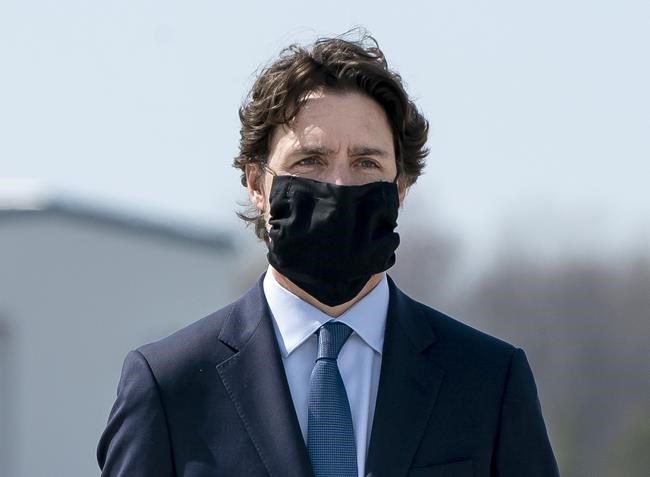
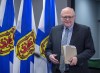
Prime Minister Justin Trudeau wears a mask at a repatriation ceremony for the six Canadian Armed Forces members killed in a helicopter crash off of Greece during Operation Reassurance, at CFB Trenton, Ont. on Wednesday, May 6, 2020. Trudeau says a national recommendation on when and where Canadians should be wearing face masks is coming later today. THE CANADIAN PRESS/Frank Gunn

She stressed that a face mask is not to replace other measures like physical distancing, handwashing and staying out of public places when you can. And she said people should see it as a way to protect other people, noting when two people are both wearing masks, they are each protecting the other.

“It is an added layer of protection,” she said.

The advice is slightly stronger than the suggestions over the last couple of weeks that people should consider wearing a face mask in public and comes with a national consensus of all federal and provincial chief medical officers of health.

It is a complete turnaround from her advice seven weeks ago that people who are not sick should not be wearing a face mask at all. Canadian officials were reluctant to suggest face masks early in the virus outbreak for a number of reasons, including the need to ensure medical-grade masks were restricted for use by front-line health workers. There were also fears that wearing masks would prompt people to touch their faces more often and stay apart from others less often.

Tam also said initially it was believed the novel coronavirus was only spreading from people showing symptoms. That understanding has changed, as it is now known people without symptoms can transmit the virus to others.

She said in future respiratory outbreaks, wearing face masks might become a normal part of the public health response. She did not suggest she regrets recommending against using face masks earlier. She said the tried-and-true public health measures of testing, contact tracing, handwashing and physical distancing have worked to slow the spread of COVID-19 in Canada.

The new recommendation remains specific to non-medical masks, often made of cloth. There has been an explosion in the production of such masks this spring. Old Navy now sells face masks in its online shop and Vistaprint, an online printing company, has added face masks to its promotional items like business cards, mouse pads and coffee mugs.

Tam began to shift the advice in early April, and over the last week or so, several provinces specifically told people they should begin wearing non-medical face coverings when in public. Wednesday was the first time there was a national consensus on the matter.

Mask wearing became a normal activity in a number of places around the world, including Hong Kong and South Korea, almost as soon as the new coronavirus appeared. More than 50 countries have now made wearing one mandatory, including the Czech Republic, Venezuela and Spain,which enacted such a rule just this week.
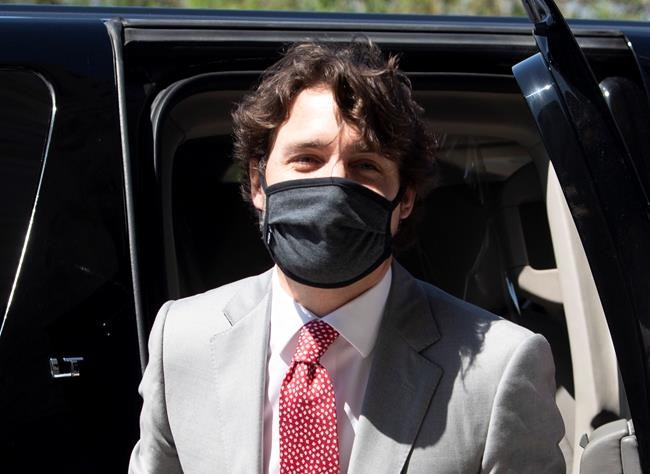
Prime Minister Justin Trudeau arrives on Parliament Hill in Ottawa, Wednesday, May 20, 2020. THE CANADIAN PRESS/Adrian Wyld

Canada is not making it mandatory, said Tam, though local health officials can do so if they believe it warranted, particularly in places where community transmission of the virus is continuing.

The shift in advice came Wednesday with the sight of more MPs and cabinet ministers arriving in masks on Parliament Hill for the weekly in-person COVID-19 committee sitting. Prime Minister Justin Trudeau said he will be wearing a face mask whenever he feels he can’t stay two metres away from others outside his home. He arrived on the Hill in a mask Wednesday afternoon and wore it into the House of Commons before taking it off for the sitting. He put it back on when he left.

“That’s my personal choice that is aligned, I think, with what public health is recommending,” he said. “I think we all need to adjust to what works in our circumstances and keep safety at the forefront of what we’re doing.”

Tam said accessibility is one of the considerations regarding mandatory mask use, because not everyone can wear a mask. Some disabilities make wearing a mask very hard, such as people who are hearing-impaired and rely on lip-reading from an interpreter to communicate.

“Please be very aware of those with different types of cognitive, intellectual disabilities, those who are hearing-impaired and others,” she said. “So just be patient, and don’t assume that someone who isn’t wearing a mask or is wearing something different doesn’t have an actual reason for it.”

This report by The Canadian Press was first published May 20, 2020.

Report Error Submit a Tip

More Stories

Building healthier Canadians

Jason M. Sutherland 4 minute read 2:00 AM CDT

Ottawa is betting that billions of taxpayer dollars spent on steel, asphalt and concrete will secure Canada’s economic future and prosperity. Through the $51 billion Build Communities Strong fund, the federal government is paying for roads, bridges, water systems and transit to boost productivity and attract capital from Europe and Asia.

As the shovels hit the ground from Halifax to Vancouver, Canadians should be asking themselves: What good does it do to build a stronger country if we are not building healthier Canadians?

The fund’s $5 billion allocation for health infrastructure is welcome news, as many of our hospitals and long-term care homes across the country are showing severe signs of aging, and modern care centres are much needed. But pouring concrete for new facilities is not the same as building a healthy population.

A ribbon-cutting at a modern hospital does not guarantee you see a family doctor when you need one, keep a rural emergency department open overnight, or shorten the wait for a knee replacement keeping someone off the job or robbing a retiree of independence.

Health officials ponder next steps as COVID cases surge in Southern Health region

Katie May 5 minute read Preview

Health officials ponder next steps as COVID cases surge in Southern Health region

Katie May 5 minute read Wednesday, Nov. 3, 2021

Public-health officials say they're trying to avoid ordering another lockdown in southern Manitoba, where COVID-19 infection rates are surging.

Deputy chief provincial public health officer Dr. Jazz Atwal told a news conference Wednesday he doesn't anticipate more lockdowns and suggested he will prioritize keeping schools open when considering future restrictions.

But he couldn't say what the next step will be in an area of the province where hospitalizations among unvaccinated residents are on the rise.

Average daily case counts in the southern part of the province are higher now than they were before lockdown measures went into effect last November, and officials are still figuring out what to do.

Read
Wednesday, Nov. 3, 2021

Must-see Folk Fest workshops

16 minute read Preview

Must-see Folk Fest workshops

16 minute read Thursday, Jul. 5, 2018

Workshops have always been an integral part of the Winnipeg Folk Festival.

They are magic-moment makers; a curated group of musicians — sometimes friends, sometimes strangers — on one stage playing together, supporting each other, creating something that will only exist for an hour or two. No one knows what will come out of the collaboration, but usually it’s something special.

When the Free Press spoke to Winnipeg Folk Festival artistic director Chris Frayer ahead of the lineup release in early March, he noted he would be paying some extra attention to workshops this year, as some of the special projects occurring during the past couple of festivals had pulled some of his attention away.

And with 37 workshops on the books, it would seem he followed through on his promise.

Read
Thursday, Jul. 5, 2018

A timeline of the WE Charity controversy

The Canadian Press 9 minute read Wednesday, Aug. 19, 2020

OTTAWA - A timeline of events regarding the Canada Student Service Grant program, based on public documents, events and statements from cabinet ministers, government officials, and WE Charity:

March 6, 2020: WE Charity staff prepare a concept paper on service learning for public servants at Employment and Social Development Canada.

April 5: Finance Minister Bill Morneau and Prime Minister Justin Trudeau talk over the phone about how to help students whose summer job and volunteer opportunities were vanishing due to the COVID-19 pandemic. Finance Department officials are tasked with considering options the next morning.

April 7: Small Business Minister Mary Ng and WE co-founder Craig Kielburger have an introductory phone call in which Ng asks WE to send what it calls a ``pre-established proposal'' to help young people launch businesses.

Meteorologist behind Rob’s Obs is moving weather station to Ontario

Ben Waldman 7 minute read Preview

Meteorologist behind Rob’s Obs is moving weather station to Ontario

Ben Waldman 7 minute read Monday, Jun. 13, 2022

In a Winnipeg winter, there are always at least two certainties: it will be cold, and it will snow. A third certainty: the people will talk endlessly about how frigid the temperature is, and argue about how much snow is cloaking their driveways. Is it colder than it ever has been? Is there more snow today than the same time last year?

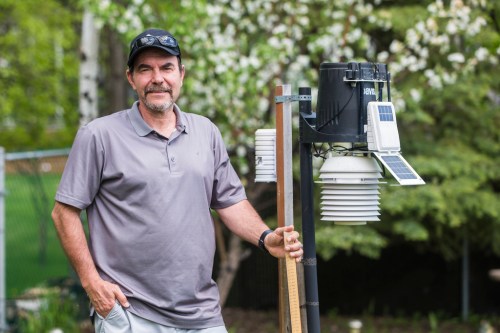
Rob Paola likely knows the answers to those questions.

Paola possesses no super powers. He is but a man with a metre stick and 40 years of professional meteorological experience, in the midst of a lifelong love affair with Mother Nature, a most turbulent mistress who rarely, if ever, reciprocates.

Each year when snow begins to fall, Paola heads outside his Charleswood home to figure out how much. He sticks his ruler in the ground, grabs his clipboard, and clicks his pen. In neat script, he records the temperature, what time precipitation began, how deep the powder is stacked. Then, he shares his data and insights online with thousands of followers who want a clear answer to the eternal questions: Why is this happening? When will it stop? How much snow has fallen in the city of Winnipeg?

Read
Monday, Jun. 13, 2022

Fact Check

1 minute read Thursday, Nov. 30, 2023

Fact Check

Having problems with the form?Contact Us Directly |