

The long and winding road
Advertisement
Read this article for free:
or
Already have an account? Log in here »
To continue reading, please subscribe:
Digital Subscription
One year of digital access for only $1.44 a week*
- Enjoy unlimited reading on winnipegfreepress.com
- Read the E-Edition, our digital replica newspaper
- Access News Break, our award-winning app
- Play interactive puzzles
*Billed as $5.77 plus GST every four weeks. After 52 weeks, price increases to the regular rate of $19.95 plus GST every four weeks. Offer available to new and qualified returning subscribers only. Cancel any time.
To continue reading, please subscribe:
Add Free Press access to your Brandon Sun subscription for only an additional
$1 for the first 4 weeks*
- Enjoy unlimited reading on winnipegfreepress.com
- Read the E-Edition, our digital replica newspaper
- Access News Break, our award-winning app
- Play interactive puzzles
*Your next Brandon Sun subscription payment will increase by $1.00 and you will be charged $17.95 plus GST for four weeks. After four weeks, your payment will increase to $24.95 plus GST every four weeks.
Read unlimited articles for free today:
or
Already have an account? Log in here »
As theatre goes, it sent a strong message.
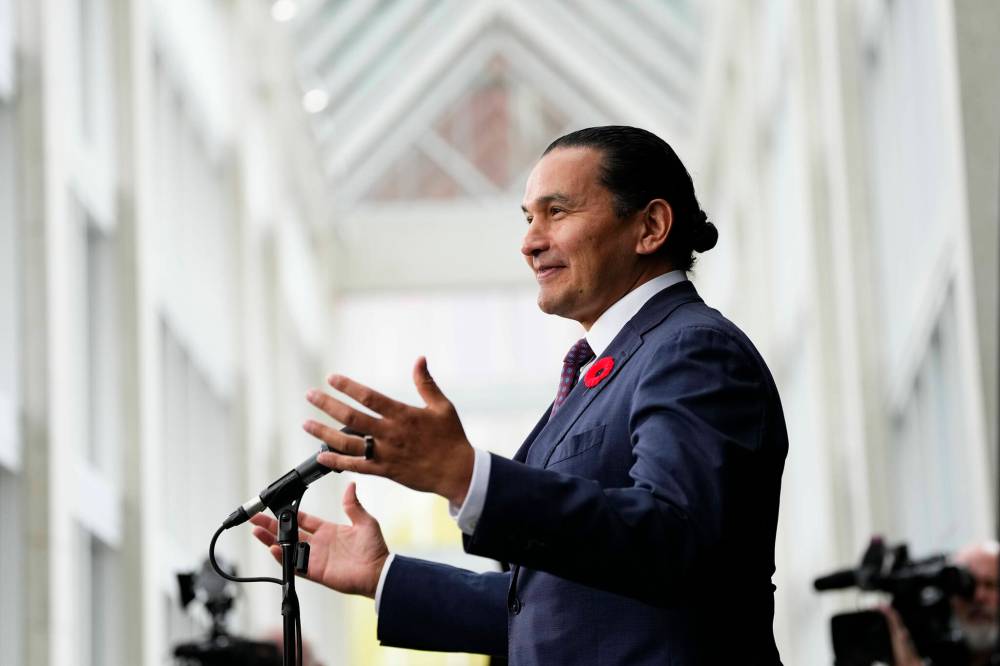
Manitoba Premier Wab Kinew, standing in front of microphones and television cameras, holding up his Indigenous status card and saying that he didn’t feel Canada should have “a race-based form of identification in this country, but that is a reality,” adding that it was time to abolish the Indian Act.
“I think it’s time to abolish the Indian Act, get rid of the Indian Act, move past the Indian Act, and it needs to be done with First Nations people and First Nations governments, of course. I think it’s long overdue that we have a relationship with Indigenous Peoples in Canada that reflects who we are as Canadians today,” he said.
The Indian Act — the name alone suggests how out-dated and out of place the law has become. Originally dating from 1876, the law was put in place to “amend and consolidate the laws respecting Indians” and gave the Minister of the Interior the responsibility to “control and management of the reserves, lands, moneys and property of Indians in Canada.”
It enshrined in law — and still does, despite amendments over the years — different treatment for a racially-identified group.
Prime Minister Mark Carney has said he is “very open to” getting rid of the act.
“Not everybody, but other participants raised the desirability. So it’s already starting from the right place in that it’s not the federal government deciding something should be done. It’s responding to a request,” Carney said. “I think this was the spirit of this meeting — certainly the spirit I took — the ability to sit down together and develop that co-development, gives me hope that we can we can finally move forward from this.”
But even among First Nations leadership there are differences of opinion about how changes to the Indian Act should be handled — and whether the Assembly of First Nations should be leading the process.
“First Nations must determine their own path toward self-determination. That cannot be a process designed in Ottawa and presented to our nations for approval. It must be developed with us, respect our treaty relationships and proceed only with our free, prior and informed consent,” Chief Pete Chief of the Onion Lake Cree Nation said in a media statement on Monday. “But that future must be determined by First Nations themselves, not dictated by the federal government or negotiated on our behalf by organizations we have not authorized to represent us.”
Attempts have been made before to remove the act, but they have bogged down under the sheer weight and complexity of the range of different goals sought by the many different parties involved.
It is an epic tangle that should only be undone with great care and careful attention.
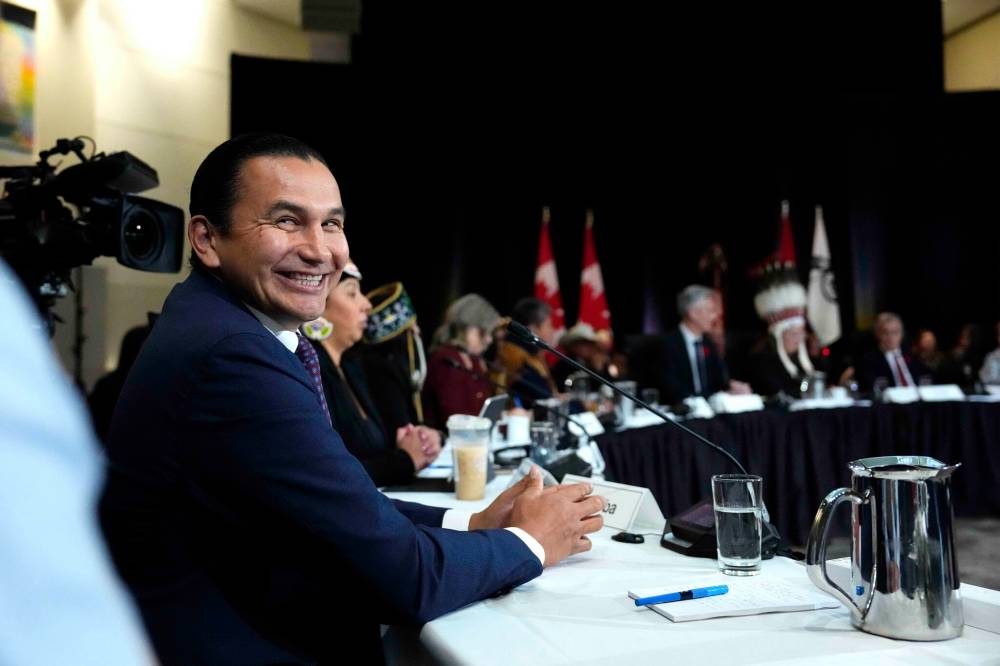
Justin Tang / THE CANADIAN PRESs fileS
Premier Wab Kinew called for the Indian Act to be abolished on Monday.

The temptation may be to address this knot the way that Alexander the Great was mythologized to have used to untie the legendary Gordian Knot — by simply cutting through its tightly-tied twists and turns with the edge of his sword.
But that would be a colossal mistake.
Dramatic gestures like Kinew’s are only the very start of what should be a broad range of consultations and negotiations between the federal government, First Nations leadership, and First Peoples themselves. To be fair, Kinew said that.
It will be difficult and complex
And while holding up a status card and calling for change may be a great way to focus attention on the issue, it is only the latest beginning of what has been, and will be, a very long — and necessary — process.