Editorials

Human rights and learning to read

Editorial 4 minute read Thursday, Nov. 13, 2025

It’s a human rights issue, plain and simple.

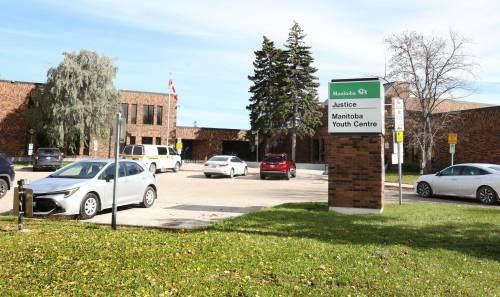
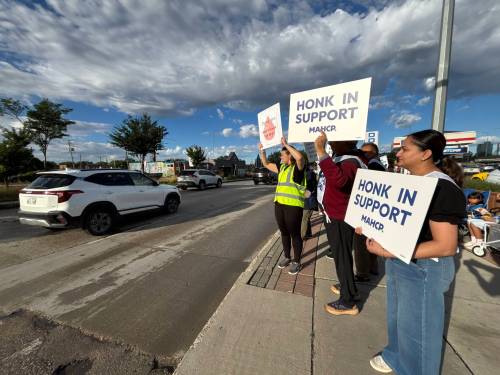
A report released late last month by the Manitoba Human Rights Commission makes clear the province is failing young students and their families by not providing adequate assessment and supports related to basic reading skills.

And reading, the report declares, is as fundamental as education gets.

“Reading is the foundation of learning and a fundamental skill that shapes every aspect of life,” the document’s executive summary states. “Students who cannot read well are more likely to face challenges in school, work and everyday life. When students cannot access reading instruction, it affects their confidence, mental health and long-term opportunities.”

Advertisement

Advertise With Us

Weather

Feb. 2, 6 PM: -23°c Clear Feb. 3, 12 AM: -26°c Cloudy

Winnipeg MB

-17°C, Cloudy

Full Forecast

Federal budget makes some health spending vanish

Editorial 4 minute read Preview

Federal budget makes some health spending vanish

Editorial 4 minute read Wednesday, Nov. 12, 2025

The federal government’s decision not to renew a multi-year health-care agreement with the provinces amounts to a quiet — but very real — funding cut.

Dubbed “Working Together to Improve Healthcare for Canadians,” the agreement was launched in 2023. It provided provinces with targeted funding — on top of the regular Canada Health Transfer — to hire more frontline staff, reduce wait times and modernize health care technology.

For Manitoba, that translated into almost $150 million a year in additional federal funding.

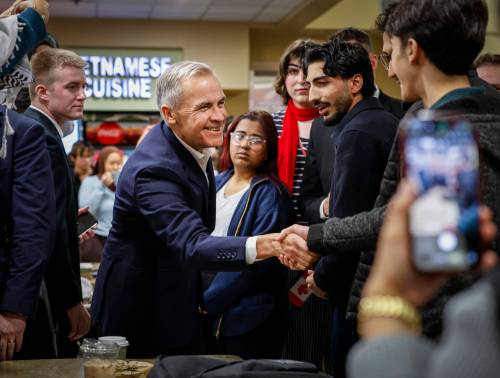
But nowhere in Prime Minister Mark Carney’s first federal budget did the Liberal government indicate the program will be renewed.

Read
Wednesday, Nov. 12, 2025

THE CANADIAN PRESS/Sammy Kogan

Prime Minister Mark Carney

THE CANADIAN PRESS/Sammy Kogan
                                Prime Minister Mark Carney

Changed names, the law and sex offenders

Editorial 4 minute read Preview

Changed names, the law and sex offenders

Editorial 4 minute read Monday, Nov. 10, 2025

The NDP government of Manitoba cannot say why it passed — but did not enact — a 2024 law preventing citizens convicted of child sexual offences from legally changing their names. All we know is that government is now scrambling to put this law into effect after its shortcoming was fully revealed to the public.

Last week, the Free Press reported how a mother had learned that a man she had befriended and allowed to spend time with her preteen son was actually a convicted child sex offender who had legally changed his name.

Ryan Knight, who was charged this past July with allegedly making and possessing child pornography, sexual interference and aggravated sexual assault, had legally changed his name from Ryan Gabourie, apparently to conceal the fact that nearly 20 years ago, he spent seven years in prison for sexually molesting five young boys.

It took less than a day for Premier Wab Kinew to announce the law would soon be put into action. Kinew said the delay was due to the fact the regulations needed to accompany the new law had not yet been drafted.

Read
Monday, Nov. 10, 2025

MIKE DEAL / FREE PRESS files

Premier Wab Kinew

MIKE DEAL / FREE PRESS files
                                Premier Wab Kinew

Other encampment options possible

Editorial 4 minute read Preview

Other encampment options possible

Editorial 4 minute read Saturday, Nov. 8, 2025

Authorities in Winnipeg will soon launch their latest response to homeless encampments, though sadly actual solutions to the problem remain elusive.

Beginning in mid-November, the city will roll out its new policy for dealing with the encampments, in an effort to prevent them from being established and presenting risks near sensitive sites and public spaces. The system outlines three different levels of encampment response, each calling for a different degree of involvement from police, fire-paramedics and support workers. Some responses call only for outreach, rather than removal of encampments.

The new policy is sure to bring relief to Winnipeggers who have been alarmed by the emergence of homeless encampments in public spaces, near schools, or other at other locations where they may present unwanted risks to residents in the area.

What it does not do, however, is get the city any closer to a long-term solution to its homelessness crisis. The number of homeless people in Winnipeg nearly doubled last year — End Homelessness Winnipeg’s annual street census reported that about 2,469 people are homeless in the city. The Manitoba government has implemented a strategy to get people into housing, but the process has been slow and the results to date underwhelming. About 100 people had been successfully placed in housing as of the end of October, but that still leaves more than 2,000 people living rough.

Read
Saturday, Nov. 8, 2025

Ruth Bonneville / Free Press files

An encampment near St. John’s Park this summer.

Ruth Bonneville / Free Press files 
                                An encampment near St. John’s Park this summer.

Many Canadian eyes on America’s top court

Editorial 4 minute read Preview

Many Canadian eyes on America’s top court

Editorial 4 minute read Thursday, Nov. 6, 2025

When oral arguments were presented Wednesday morning to the Supreme Court of the United States, Canada was just one of many interested parties listening intently to what was said.

The issue at hand before America’s highest court was tariffs — specifically, the legality of the manner in which U.S. President Donald Trump has unilaterally imposed them on virtually every one of his nation’s global trading partners.

In order to bypass the congressional approvals that are routinely required on matters of taxation and revenue, Trump has invoked the International Emergency Economic Powers Act. The 1977 law allows the president to regulate economic transactions during national emergencies; in order to invoke the law as the rationale for his wide-ranging and whim-motivated penalties, Trump has stretched the definitions of “national emergency” and “national security” to encompass pretty much anything or anyone in the global marketplace he doesn’t like at a particular moment in time.

Trump’s tariff strategy has been challenged by numerous small business groups, as well as at least a dozen states, and lower courts have consistently ruled against the punitive policy. The Supreme Court case — which will require lengthy deliberation and likely won’t produce a decision for several months — will be a defining moment for Trump.

Read
Thursday, Nov. 6, 2025

win mcnamee / getty images Files

The U.S. Supreme Court

win mcnamee / getty images Files
                                The U.S. Supreme Court

Focus on the verdict, not political posturing

Editorial 4 minute read Preview

Focus on the verdict, not political posturing

Editorial 4 minute read Wednesday, Nov. 5, 2025

This may not be popular — after all, politicians from Conservative Leader Pierre Poilievre to Manitoba Premier Wab Kinew to Ontario Premier Doug Ford have gone full-bore to wind up the public on this issue.

Kinew even went so far as to suggest invoking “the code of the streets” and the need for some convicted criminals to be buried “under the prison.”

The object of their attacks? A Supreme Court of Canada verdict that overturned a mandatory minimum one-year prison sentence for convictions involving child pornography.

The verdict is getting plenty of heat beyond the politicians.

Read
Wednesday, Nov. 5, 2025

Mike Deal/Winnipeg Free Press files

Premier Wab Kinew

Mike Deal/Winnipeg Free Press files
                                Premier Wab Kinew

Restrained protesting — difficult, but necessary

Editorial 4 minute read Preview

Restrained protesting — difficult, but necessary

Editorial 4 minute read 2:00 AM CST

There is something truly remarkable happening on the streets of Minneapolis, as protesters continue to frustrate the extrajudicial arrests, detainments and fatal shootings orchestrated by U.S. President Donald Trump’s fearsome ICE army.

Over his first year in office, Trump poured billions of dollars into the Immigration and Customs Enforcement agency, creating what is in effect an army that operates outside the oversight of congress, and in many instances, outside legal due process. More importantly, the ICE army is Trump’s preferred tool of provocation.

The process goes something like this: the president disparages “blue” cities, urban centres that have traditionally supported the Democratic Party. Then, Trump dispatches the FBI, Homeland Security, National Guard or ICE officers to patrol the streets and perform random sweeps for illegal migrants. In some instances, like Washington D.C., these federal officers also arrest people suspected of minor criminal offences. It’s all done in quick and brutal fashion.

However, it’s become obvious now that Trump is not really concerned about unearthing illegal migrants or combating street crime. The president wants to provoke the city into violent protests. With enough video and photos of looted stores, burning cars and violent confrontations with federal agents, Trump can contemplate the activation of various federal laws aimed at quashing insurrection.

Read
2:00 AM CST

Anthony Souffle/The Minnesota Star Tribune/TNS

U.S. Border Patrol’s Greg Bovino

Anthony Souffle/The Minnesota Star Tribune/TNS
                                U.S. Border Patrol’s Greg Bovino

Cutting back on food safety has risks

Editorial 4 minute read Preview

Cutting back on food safety has risks

Editorial 4 minute read Saturday, Jan. 31, 2026

There are some things you just can’t — or shouldn’t — cheap out on.

Unfortunately, governments often fail to feel the same way.

The Agriculture Union is voicing its concerns following news that staff at the Canada Food Inspection Agency have been told 1,371 agency jobs — about one-fifth of its workforce — are about to be cut, as part of a federal cost-cutting initiative. Ottawa is looking to cut approximately $60 billion in programs and administrative costs over the next five years, which includes cutting public service jobs by 40,000.

Some of these cuts are not so disagreeable; for example, a 20 per cent cut in spending on “management and consulting services” per the Canadian Press, can probably be managed without much pain.

Read
Saturday, Jan. 31, 2026

THE CANADIAN PRESS/

Prime Minister Mark Carney

THE CANADIAN PRESS/
                                Prime Minister Mark Carney

More than just slipping through the cracks

Editorial 4 minute read Preview

More than just slipping through the cracks

Editorial 4 minute read Friday, Jan. 30, 2026

There are cases that fall through the cracks in any bureaucracy. We hear about them in health care, in policing, in other parts of the justice system, in municipal government — basically, anywhere where many hands manage people navigating many different and often unique situations.

But when those cracks endanger impressionable children and young adults in an environment where we should have every expectation of their safety — in our schools — the issue has to be addressed, quickly.

The Free Press has been reporting on the case of Braeden Martens, who was a teacher at Steinbach Regional Secondary School. He taught in that school’s vocational program and served as a coach for the school’s football teams, and for the province’s elite under-18 team.

At least, he taught and coached until allegations of luring and invitation to sexual touching involving two teenage girls surfaced last January.

Read
Friday, Jan. 30, 2026

MIKAELA MACKENZIE / FREE PRESS files

Education Minister Tracy Schmidt

MIKAELA MACKENZIE / FREE PRESS files
                                Education Minister Tracy Schmidt

Crown Royal dust-up a story of tariffs and tempers

Editorial 4 minute read Preview

Crown Royal dust-up a story of tariffs and tempers

Editorial 4 minute read Thursday, Jan. 29, 2026

“We’re a big family,” Ontario Premier Doug Ford declared on Monday. “Sometimes, brothers and sisters may disagree, but at the end of the day, make no mistake about it: we are one country. We’re Team Canada.”

Ford’s message of unity was offered during a pizza-shop photo op after he and Prime Minister Mark Carney met to discuss a number of topics and, it was hoped, assuage the Ontario premier’s concerns about Carney’s recent dealings with China and their potential impact on Canada’s auto sector.

Ford had earlier expressed something akin to outrage after Carney’s trip to China resulted in an agreement to allow importation of up to 49,000 Chinese electric vehicles at a much-reduced tariff rate in exchange for a pledge to lower tariffs on Canadian canola exports from 85 per cent to 15 per cent.

When that agreement was announced earlier this month, Ford characterized it as “a lopsided deal” and “a terrible, terrible miscalculated decision” that will “hurt our economy and lead to job losses.”

Read
Thursday, Jan. 29, 2026

Nathan Denette / The Canadian Press

Ontario Premier Doug Ford

Nathan Denette / The Canadian Press
                                Ontario Premier Doug Ford

Justice must be seen to be done

Editorial 4 minute read Preview

Justice must be seen to be done

Editorial 4 minute read Wednesday, Jan. 28, 2026

Justice. It not only has to be done, it has to be seen to be done.

It’s a concept that has, at its core, the idea of protecting the public’s belief that every effort has been made to ensure criminal investigations, court cases and judicial decisions are clear, fair and transparently made. That’s because we have to trust the justice system: everyone in it has to bend over backwards to ensure there is no reason whatsoever to doubt that it always strives for fairness.

The concept springs from a 1924 court decision by British King’s Bench Justice Lord Hewitt, and boils down to his clear statement “Nothing is to be done which creates even a suspicion that there has been an improper interference with the course of justice.”

And right now, that’s not the case to the south of us.

Read
Wednesday, Jan. 28, 2026

Elizabeth Flores/The Minnesota Star Tribune/TNS

Thousands of people march together in a rally calling for ICE to leave Minnesota.

Elizabeth Flores/The Minnesota Star Tribune/TNS
                                Thousands of people march together in a rally calling for ICE to leave Minnesota.

Doctor retention matters — just like recruitment

Editorial 4 minute read Preview

Doctor retention matters — just like recruitment

Editorial 4 minute read Tuesday, Jan. 27, 2026

Manitoba deserves credit for finally showing some momentum on doctor recruitment. Bringing 13 U.S.-trained physicians into the province in a matter of months — a development announced last week — is no small achievement, particularly for a jurisdiction that has long struggled to compete for medical talent.

It’s also a record: more than double Manitoba’s best previous year for American recruits.

But the applause needs to be brief. Because while Manitoba is getting better at attracting doctors, it remains one of the worst places in the country at keeping them.

That uncomfortable truth sits beneath last week’s upbeat news conference at the legislature, where Premier Wab Kinew leaned into symbolism and values, including paraphrasing words from the Statue of Liberty as he welcomed American physicians “yearning to be free.”

Read
Tuesday, Jan. 27, 2026

MIKE DEAL / FREE PRESS

Health, Seniors and Long-Term Care Minister Uzoma Asagwara

MIKE DEAL / FREE PRESS
                                Health, Seniors and Long-Term Care Minister Uzoma Asagwara

In Davos, Canada speaks truth to power

Editorial 4 minute read Preview

In Davos, Canada speaks truth to power

Editorial 4 minute read Monday, Jan. 26, 2026

Following to a particularly prickly speech by Canadian Prime Minister Mark Carney at the World Economic Forum, U.S. President Donald Trump disinvited Canada from his billion-dollar-per-plate Board of Peace.

Neither Carney nor anyone from his office responded to the news, but you might imagine in Ottawa that there were some sighs of relief.

Getting disinvited from Trump’s cringeworthy Board of Peace is like having an invitation cancelled to a party that you really, really didn’t want to go to anyway. In fact, getting excluded from Trump’s preposterous peace board was just one victory in a week of extraordinary victories for Carney and Canada.

The week began with new and more forceful demands from Trump that Greenland be surrendered to the U.S. on the eve of the World Economic Forum in Davos, Switzerland. Both Carney and Trump were booked as marquee speakers to the annual gathering of the world’s richest and most powerful people from both business and government.

Read
Monday, Jan. 26, 2026

Sean Kilpatrick / The Canadian Press

Prime Minister Mark Carney

Sean Kilpatrick / The Canadian Press
                                Prime Minister Mark Carney

The Trump-go-round . . . anything but merry

Editorial 4 minute read Preview

The Trump-go-round . . . anything but merry

Editorial 4 minute read Saturday, Jan. 24, 2026

We should have seen it coming, because we’ve seen it before.

After months of making the international community scramble to respond to his growing insistence on the U.S. taking ownership of Greenland, U.S. President Donald Trump travelled to Switzerland, gave a rambling speech in which he repeated his desires, met NATO’s Secretary General Mark Rutte … and then abruptly dropped the whole thing.

“Based upon a very productive meeting that I have had with the Secretary General of NATO, Mark Rutte, we have formed a framework of a future deal with respect to Greenland,” Trump posted to his social media platform, Truth Social.

Details of what this “framework” entails are sparse, but what has been said suggests this is a similar outcome to Trump’s earlier bloviating about a supposed wave of fentanyl being trafficked into the U.S. from Canada and Mexico. In response to Trump’s gesturing at an illusory problem, his target agrees to do “more,” proceeds to do what they were going to do anyway, and Trump goes home feeling like he scored a deal, utterly apathetic to the fear and uncertainty he spread in the process.

Read
Saturday, Jan. 24, 2026

President Donald Trump speaks during a meeting of Global Business Leaders at the Annual Meeting of the World Economic Forum in Davos, Switzerland, Wednesday, Jan. 21, 2026. (AP Photo/Evan Vucci)

President Donald Trump speaks during a meeting of Global Business Leaders at the Annual Meeting of the World Economic Forum in Davos, Switzerland, Wednesday, Jan. 21, 2026. (AP Photo/Evan Vucci)

The U.S., a big borrower, can’t risk losing lenders

Editorial 4 minute read Preview

The U.S., a big borrower, can’t risk losing lenders

Editorial 4 minute read Friday, Jan. 23, 2026

Follow the money. You hear that a lot, and it’s good advice: money, who gets it and where it goes is so often at the core of decisions which otherwise make no obvious sense.

Following the money often — well, sadly, almost always — takes you to the core of the decision-making process.

Pension funds in Denmark and Sweden announced they were getting out of U.S. Treasury bonds. The Danish AkademikerPension said it would move to other types of short-term U.S. funds, citing poor fiscal performance by the U.S. government and insisting that while the move wasn’t as a result of U.S. attempts to seize Greenland, “but of course that didn’t make it more difficult to take the decision.” It was a relatively small investment, compared to the size of U.S. treasury bond debt, only US$100 million.

Sweden’s largest commercial pension fund, Alecta, also said this week it had moved out of U.S. treasury bonds, with chief investment officer Pablo Bernengo telling the New Republic in an emailed statement that “This is connected to the decreased predictability of U.S. policy in combination with large budget deficits and a growing national debt.” Alecta had somewhere around US$8 billion in the bonds before it undertook what it described as a staged exit from the bonds.

Read
Friday, Jan. 23, 2026

Evan Vucci / The Associated Press

U.S. President Donald Trump

Evan Vucci / The Associated Press
                                U.S. President Donald Trump

Yet again, Trump rambles at the world

Editorial 4 minute read Preview

Yet again, Trump rambles at the world

Editorial 4 minute read Thursday, Jan. 22, 2026

Well, if it wasn’t completely out in the open before, it most certainly is now.

On Wednesday at the World Economic Forum in Davos, Switzerland, U.S. President Donald Trump delivered perhaps the most blunt declaration to date of his ambition — or might that be obsession? — for his country to acquire the autonomous Danish-controlled territory of Greenland.

Citing, as he repeatedly has without logical explanation, national and global security concerns, Trump called his demand for Denmark to turn over control of Greenland (to which he referred several times as Iceland during the rambling 75-minute address) a “very small ask” for “a piece of ice” that has crucial strategic importance to the United States.

After criticizing the North Atlantic Treaty Organization (NATO) for having done nothing for the U.S. and describing Europe as “not heading in the right direction,” Trump demanded immediate negotiations aimed at transferring ownership of Greenland.

Read
Thursday, Jan. 22, 2026

Alex Brandon / The Associated Press

U.S. President Donald Trump

Alex Brandon / The Associated Press
                                U.S. President Donald Trump

LOAD MORE