

RRC Polytech program cuts take bite out of hospitality, tourism sector

Advertisement
Read this article for free:
or
Already have an account? Log in here »
To continue reading, please subscribe:
Monthly Digital Subscription
$1 per week for 24 weeks*
- Enjoy unlimited reading on winnipegfreepress.com
- Read the E-Edition, our digital replica newspaper
- Access News Break, our award-winning app
- Play interactive puzzles
*Billed as $4.00 plus GST every four weeks. After 24 weeks, price increases to the regular rate of $19.95 plus GST every four weeks. Offer available to new and qualified returning subscribers only. Cancel any time.
Monthly Digital Subscription
$4.99/week*
- Enjoy unlimited reading on winnipegfreepress.com
- Read the E-Edition, our digital replica newspaper
- Access News Break, our award-winning app
- Play interactive puzzles
*Billed as $19.95 plus GST every four weeks. Cancel any time.
To continue reading, please subscribe:
Add Free Press access to your Brandon Sun subscription for only an additional
$1 for the first 4 weeks*
- Enjoy unlimited reading on winnipegfreepress.com
- Read the E-Edition, our digital replica newspaper
- Access News Break, our award-winning app
- Play interactive puzzles
*Your next Brandon Sun subscription payment will increase by $1.00 and you will be charged $17.95 plus GST for four weeks. After four weeks, your payment will increase to $24.95 plus GST every four weeks.
Read unlimited articles for free today:
or
Already have an account? Log in here »
Manitoba’s tourism industry is bracing for the disappearance of hospitality training programs — once-popular courses among international students.
Citing budgetary challenges related to a shift in federal immigration policy, Red River College Polytechnic is scrapping 11 programs and scaling back three others in 2026-27. Its hospitality business management diploma is one of seven permanent casualties.
The announcement, while unsurprising, is but the latest blow to a sector trying to “build back the workforce” in the wake of the COVID-19 pandemic, said Michael Juce, president of the Manitoba Hotel Association.
MIKAELA MACKENZIE / FREE PRESS FILES
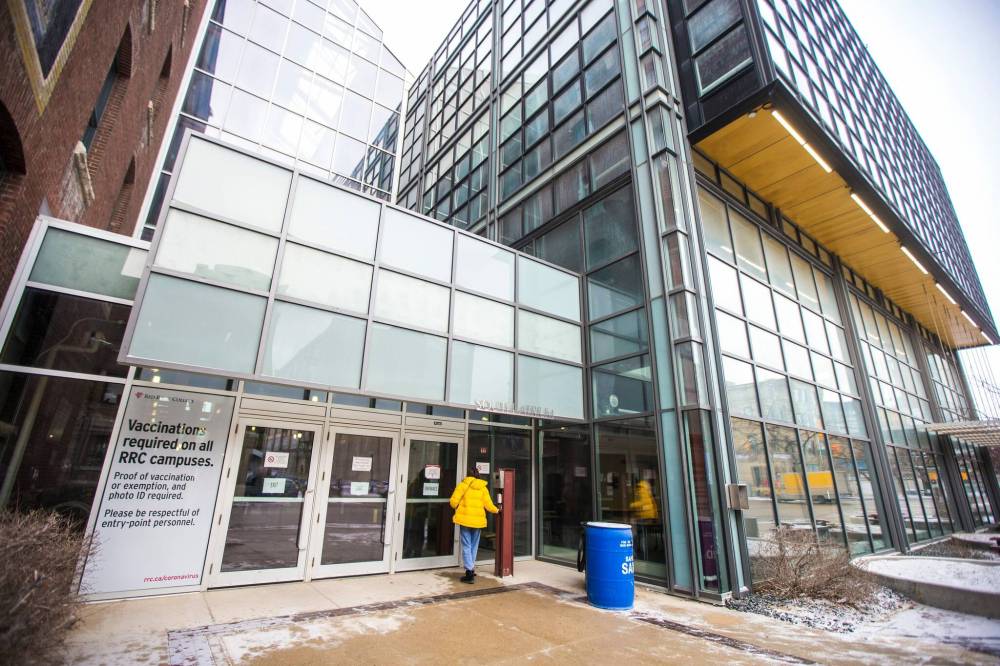
RRC Polytech admitted almost 300 fewer international students this fall compared to 12 months earlier.
“Are people going to go outside of Manitoba for training? And if they leave, are they going to come back?” Juce said, adding that rural hotels in particular are already grappling with staffing shortages.
The Manitoba Institute of Trades and Technology, which previously trained students for careers in event, hotel and restaurant management, is in the process of being absorbed into RRC Polytech.
Assiniboine Community College has frozen its hospitality business management program indefinitely.
Shaun Jeffrey, executive director of the Manitoba Restaurant and Foodservices Association, said this trend represents “a monumental loss.”
“These are major, major reductions of pathways into our industry. It’s very disappointing. Nothing surprises me anymore, unfortunately, in the punches we continue to take in our industry,” he said.
There’s never been a more difficult time to find qualified people for supervisor positions, Jeffrey added, reflecting on his 20-year career in the service industry.
“We’re disappointed. We know that there’s need in the sector,” said Elise Wood, manager of tourism growth initiatives at Travel Manitoba.
“There’s lots and lots of opportunity in the tourism industry, ranging from first-time jobs for students and young people and new Canadians to long-term, successful careers.”
Travel Manitoba estimates visitor spending, which reached a record-breaking $1.89 billion in 2024, generates about 25,000 local jobs.
Wood said RRC Polytech’s co-op program — was hugely helpful for employers to fill those positions.
There were 57 international students enrolled in the program at the start of the fall semester in 2023. Two years later, that number was five.
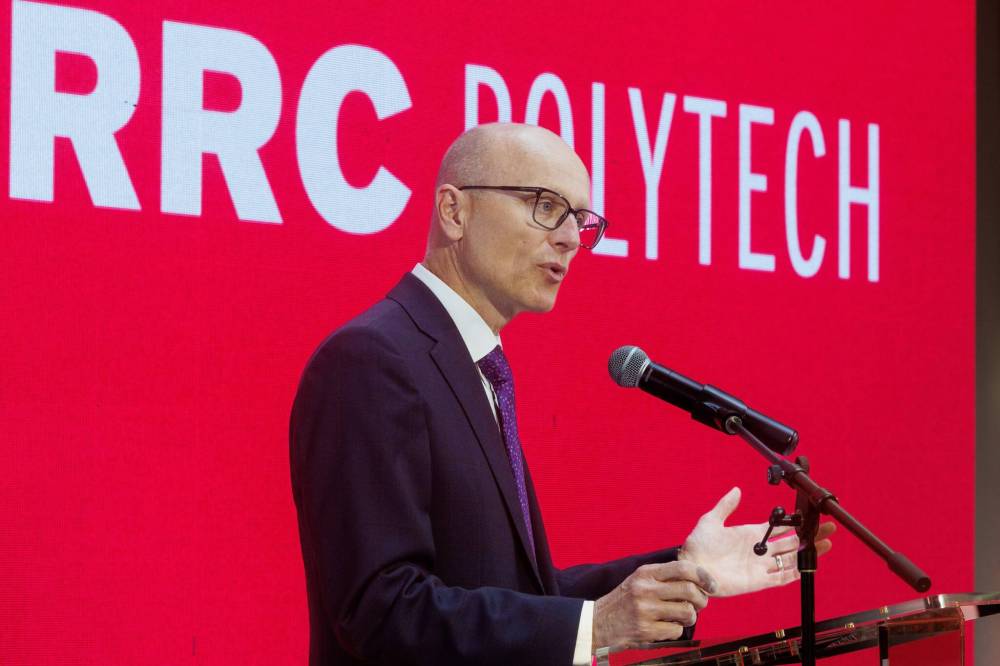
“By that math, it just isn’t a program that is viable anymore,” said Fred Meier, president of RRC Polytech.
While noting stakeholder concerns about the closure are “on our radar,” Meier said the business administration program’s new tourism major stream, introduced last year, remains available.
Ottawa’s caps on study permits have impacted the size and make-up of post-secondary programs across Canada since they came into effect in 2024.
MIKE DEAL / FREE PRESS FILES
Fred Meier, president of RRC Polytech.
Federal leaders have insisted restrictions are necessary to stabilize population growth, alleviate pressure on housing and social services and shut down diploma mills.
Local post-secondary leaders and government officials have criticized the one-size-fits-all approach, arguing Manitoba doesn’t face the same problems other provinces do.
RRC Polytech admitted almost 300 fewer international students this fall compared to 12 months earlier.
They now represent 14 per cent of the overall student population, down from 19 per cent in 2024-25 —“a pretty dramatic drop,” in Meier’s words.
“We still have strong domestic interest in our programs. Domestic enrolment continues to increase for us, so that’s the good news,” the president said.

“The underlying fact is that international student revenue, international student tuition is much, much higher — about three times.”
Meier noted that the federal government’s evolving criteria for post-graduation work permits and the unpredictability of approvals has been especially “destabilizing.”
As far as he’s concerned, all of RRC Polytech’s programs are designed to meet current and emerging labour market needs. But Meier said that, if a government must be involved in identifying eligible programs, it makes far more sense for provincial leaders to do so.
The president’s office confirmed plans to raise tuition by four per cent next year to address the loss of international student revenue and rising costs.
maggie.macintosh@freepress.mb.ca
Maggie Macintosh reports on education for the Winnipeg Free Press. Funding for the Free Press education reporter comes from the Government of Canada through the Local Journalism Initiative.
Our newsroom depends on a growing audience of readers to power our journalism. If you are not a paid reader, please consider becoming a subscriber.
Our newsroom depends on its audience of readers to power our journalism. Thank you for your support.
Maggie Macintosh reports on education for the Winnipeg Free Press. Funding for the Free Press education reporter comes from the Government of Canada through the Local Journalism Initiative.
Our newsroom depends on a growing audience of readers to power our journalism. If you are not a paid reader, please consider becoming a subscriber.
Our newsroom depends on its audience of readers to power our journalism. Thank you for your support.
Advertisement Advertise With Us
Advertisement Advertise With Us