

Court ruling concludes Canadian Wheat Board saga

Advertisement
Read this article for free:
or
Already have an account? Log in here »
To continue reading, please subscribe:
Digital Subscription
One year of digital access for only $1.44 a week*
- Enjoy unlimited reading on winnipegfreepress.com
- Read the E-Edition, our digital replica newspaper
- Access News Break, our award-winning app
- Play interactive puzzles
*Billed as $5.77 plus GST every four weeks. After 52 weeks, price increases to the regular rate of $19.95 plus GST every four weeks. Offer available to new and qualified returning subscribers only. Cancel any time.
To continue reading, please subscribe:
Add Free Press access to your Brandon Sun subscription for only an additional
$1 for the first 4 weeks*
- Enjoy unlimited reading on winnipegfreepress.com
- Read the E-Edition, our digital replica newspaper
- Access News Break, our award-winning app
- Play interactive puzzles
*Your next Brandon Sun subscription payment will increase by $1.00 and you will be charged $17.95 plus GST for four weeks. After four weeks, your payment will increase to $24.95 plus GST every four weeks.
Read unlimited articles for free today:
or
Already have an account? Log in here »
It remains to be seen whether the recent court ruling in a lawsuit filed after Canadian Wheat Board’s dissolution in 2012 puts the whole debate to rest, as some no doubt hope.
But either way, the dust has settled on the post-CWB world. The sun still rises and a new generation of farmers on the land only knows by name an institution that for generations influenced every aspect of Prairie grain farming.
The first Rural Revival column I wrote for this newspaper more than 30 years ago was about a thousand farmers from Western Canada demonstrating in support of the Wheat Board. It was in the aftermath of the Western Grain Marketing Panel report, one of several efforts that eventually included a plebiscite to help the federal government decide what to do about a vocal minority of farmers who wanted marketing “freedom.”
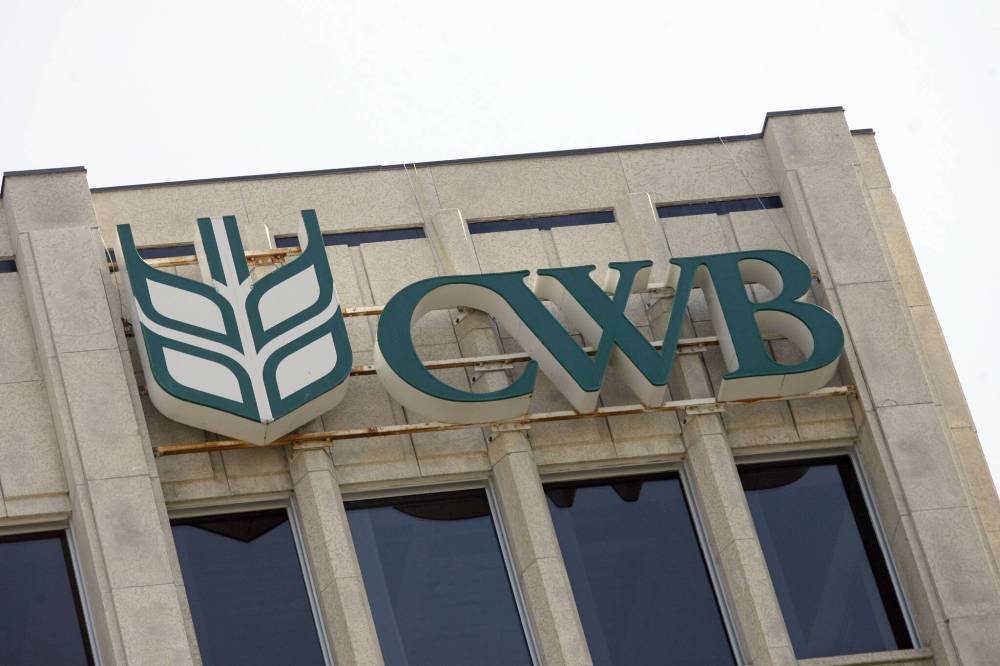
The polls at the time suggested about two-thirds of farmers were comfortable enough with the single-desk system for food wheat and barley to keep it around. It served as a counterbalance to canola, which they sold on the open market. They essentially had a dual market.
However, whereas supporters of the board saw the single desk as their collective marketer, opponents felt confined to a single buyer. Legitimate philosophical arguments cut both ways. Studies showed price pooling and averaging of sales generally resulted in more money for farmers; Canada’s competitors complained it gave Prairie farmers an unfair advantage.
But that didn’t matter to those who wanted marketing freedom.
Ralph Goodale, the agriculture minister at the time, was faced with the reality that a significant number of farmers were no longer willing to partner with the board regardless of its legislative mandate. Already there were headlines featuring farmers who had deliberately breached the Customs Act to run the U.S. border with their grain trucks, complaining they were thrown in jail for selling wheat.
“Ultimately, if Goodale moves to diminish the Canadian Wheat Board, it won’t be because there is a shortage of farmers who support it. It will be because he can’t figure out what to do with the ones who don’t,” I wrote at the time.
It’s not unlike the festering separatist discontent facing Alberta Premier Danielle Smith following the recent referendum that should have settled things. Or the anarchy that rolled into Ottawa with the so-called freedom convoy during the COVID-19 pandemic.
The grain marketing panel recommended a politically popular solution, but one that was logistically implausible: a voluntary single desk.
In 1998, the legislation was amended to try it. Farmers could sell into the pooled accounts and receive an initial price followed by incremental top-ups over a year of sales or they could choose a one-time fixed price.
Those one-time purchases exposed the board to more risk, as it forced it to become a grain trader rather than marketer. So, it was directed to withhold funds from sales to support a contingency that would have covered any losses from the open trade. That later became the focus of the lawsuit.
Ultimately, the Harper Conservatives axed the single desk in 2012. The board was privatized and, in 2015, turned over to G3, a consortium of a subsidiary of the Saudi Arabian government and international grain trader Bunge.
Farmers who continued to deliver to the privatized company received $5 per tonne in equity. About 13,000 farmers still hold equity in the firm’s Farmers Equity Trust, but as of this year, they are no longer able to cash out because it lacks the necessary funds.

The lawsuit led by Manitoba farmer Andrew Dennis didn’t quibble with the federal government’s authority to abolish the board. It was about what happened to those contingency funds.
The lawsuit claimed they rightfully belonged to Prairie farmers and were wrongfully transitioned into working capital to sweeten the board’s sale. The judge ruled in favour of the government.
The ruling this month quite possibly closes the books on what amounted to giving a national asset away to foreign interests.
It’s a reminder that even in well-functioning democracies, the majority may win elections but it is often minorities that drive the agenda.
Laura Rance-Unger is editor emeritus for Glacier FarmMedia. She can be reached at lrance@farmmedia.com
Laura Rance is editorial director at Farm Business Communications.
Our newsroom depends on a growing audience of readers to power our journalism. If you are not a paid reader, please consider becoming a subscriber.
Our newsroom depends on its audience of readers to power our journalism. Thank you for your support.
Advertisement Advertise With Us
Advertisement Advertise With Us