Death in B.C. care home believed to be first COVID-19 fatality in Canada
Advertisement
Read this article for free:
or
Already have an account? Log in here »
To continue reading, please subscribe:
Digital Subscription
One year of digital access for only $1.44 a week*
- Enjoy unlimited reading on winnipegfreepress.com
- Read the E-Edition, our digital replica newspaper
- Access News Break, our award-winning app
- Play interactive puzzles
*Billed as $5.77 plus GST every four weeks. After 52 weeks, price increases to the regular rate of $19.95 plus GST every four weeks. Offer available to new and qualified returning subscribers only. Cancel any time.
To continue reading, please subscribe:
Add Free Press access to your Brandon Sun subscription for only an additional
$1 for the first 4 weeks*
- Enjoy unlimited reading on winnipegfreepress.com
- Read the E-Edition, our digital replica newspaper
- Access News Break, our award-winning app
- Play interactive puzzles
*Your next Brandon Sun subscription payment will increase by $1.00 and you will be charged $17.95 plus GST for four weeks. After four weeks, your payment will increase to $24.95 plus GST every four weeks.
Read unlimited articles for free today:
or
Already have an account? Log in here »
Hey there, time traveller!
This article was published 09/03/2020 (2411 days ago), so information in it may no longer be current.
Canada reported its first COVID-19 death on Monday after a man died at a long-term care home in North Vancouver as the federal government asked provincial and territorial leaders to share their state of readiness to deal with the new coronavirus.
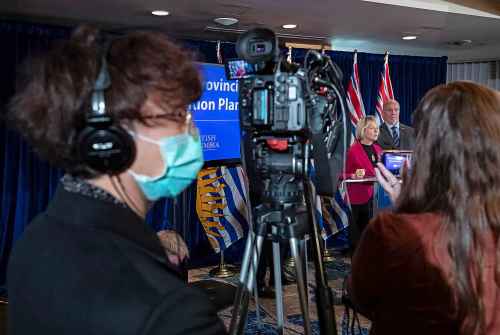
Dr. Bonnie Henry, British Columbia’s provincial health officer, and Health Minister Adrian Dix announced news of the death at the Lynn Valley Care Centre on Sunday night. The man’s symptoms were detected some time between Thursday and early Friday.
“He was a man in his 80s and he had a number of underlying health conditions, unfortunately, so (he was) in that risk group for people who are more likely to have severe disease with this,” Henry told a news conference in Victoria.
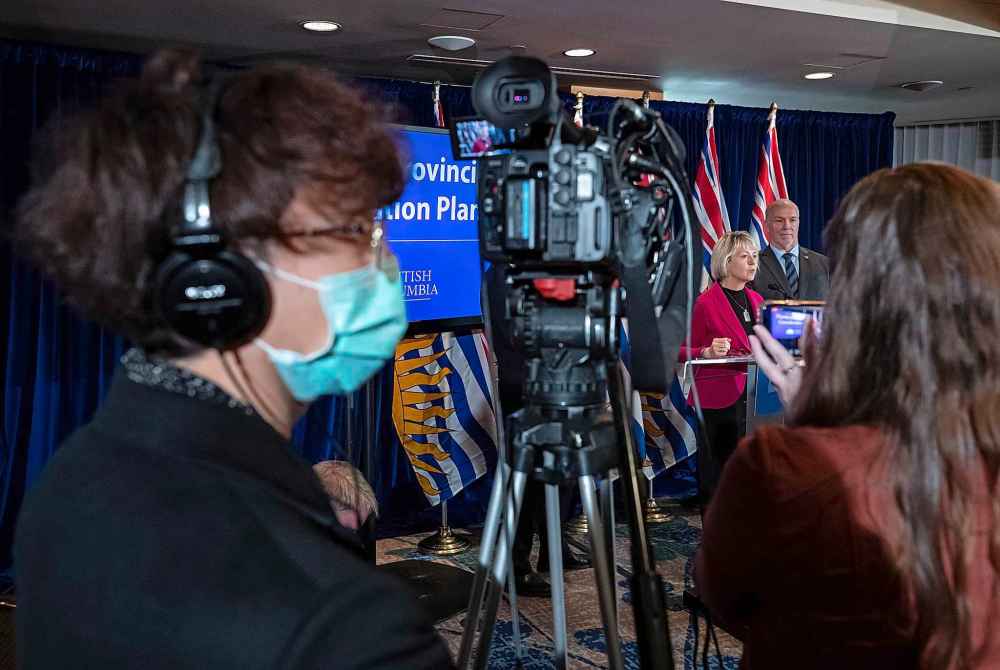
Another resident in her 70s who tested positive at the same facility also had pre-existing conditions but is in stable condition, Henry said, adding the “outbreak” is especially concerning because it involves transmission in the community, not through travel.
A second health-care worker from the same facility has also been tested positive for COVID-19 and is in isolation at home. The initial worker is believed to have worked at two other care homes.
“There is investigation, obviously, ongoing in those facilities to determine exactly who had contact with whom and whether she worked when she was ill,” Henry said.
Prime Minister Justin Trudeau said his condolences go out to the family of the man who died in B.C.
“We are co-ordinating with provincial authorities, we are working together, we are ensuring Canada’s actions are consistent with what the World Health Organization and global experts are saying,” he said.
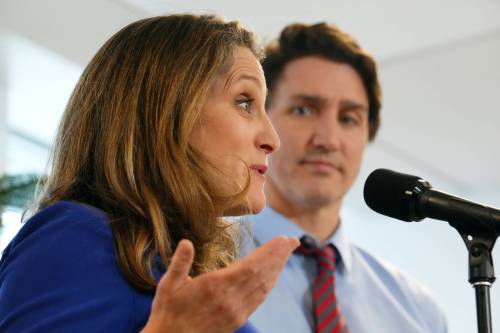
Deputy Prime Minister Chrystia Freeland wrote the provinces and territories asking them to inform the federal government of their state of readiness and any shortages they’re facing ahead of Friday’s first ministers meeting in Ottawa. The meeting will include discussions on the potential impact of the spreading virus on the country’s health-care system and its economy.
In her letter, she noted the federal government is already leading a bulk procurement of personal protective equipment.
Finance Minister Bill Morneau said the Canadian economy is strong enough to weather the economic impacts of the novel coronavirus.
The federal government has enough wiggle room in its finances to help individuals and businesses deal with the fallout, Morneau said, without providing details of any plans or when the federal budget will be released.
He also would not reveal whether he expects the deficit to be bigger than previously projected, given the sharp decline in oil prices and the hit to the markets on Monday, saying only that Ottawa is in a position to respond to challenges like COVID-19, and the budget is only part of the response.
The government is being urged to ease access to federal sick leave benefits, along with tax credits and other breaks, to help workers who can’t afford to stay home when sick, as well as to help small businesses that might not have the cash flow to manage the effects of the outbreak.
In British Columbia, neighbouring Washington state reported 22 deaths on Monday, with some of the cases linked to a care home in Kirkland, about a 20-minute drive north of Seattle. At least 169 cases infections from the virus have also been reported, raising concerns about transmission of more cases to B.C.
One person visiting from Seattle was tested positive for the virus in British Columbia last week but Henry said she is not concerned about spread of COVID-19 from Washington, where the infection is believed to have occurred.
“But it is clear that their strategy has been a challenging one in the U.S., and there’s no way we could stop people going back and forth,” Henry said. “There are many Canadians who live in Washington state.”
Canada now has at least 78 cases of the respiratory illness: 32 in British Columbia, 35 in Ontario, seven in Alberta and four in Quebec.
Earlier Monday, the country’s top doctor urged Canadians to avoid travelling on all cruise ships to protect against the spread of the novel coronavirus.
Chief public health officer Dr. Theresa Tam had previously advised Canadians to think twice about cruises, but she toughened her warning due to what she described as a changing global situation.
“Cruise ships have passengers from around the world who may be arriving from areas with known or unknown spread of the novel coronavirus,” she told a news conference.
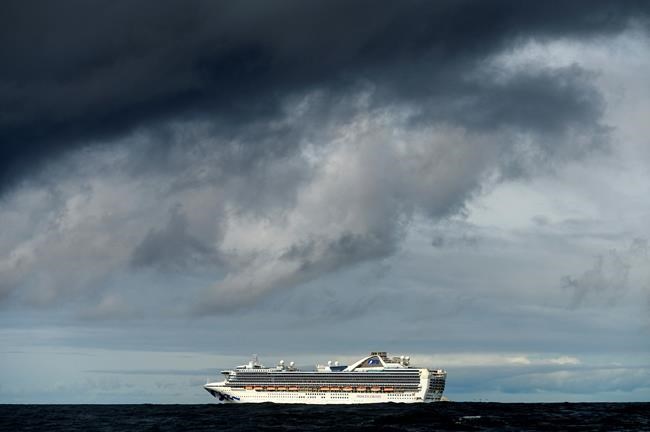
The update came as Canada prepared to repatriate 237 Canadians aboard a cruise ship that docked in California on Monday afternoon.
Foreign Affairs Minister Francois-Philippe Champagne confirmed the government has chartered a plane to fly the Canadians aboard the Grand Princess to the air force base in Trenton, Ont.
There are 21 people diagnosed with COVID-19 aboard the Grand Princess, which is carrying more than 3,500 people from 54 countries. There’s no word on the nationalities of the patients.
Tam said passengers will be screened for symptoms before they board the plane, and those who exhibit them will stay in the U.S. for further assessment. Passengers without any symptoms will be quarantined for 14 days upon their arrival in Canada.
However, Champagne warned Canadian travellers there is no guarantee more government flights will come to the rescue in the future.
“People will be on notice, obviously, of the danger associated with getting into a cruise line at this stage, and therefore we will look at cases on a case-by-case basis,” he said.
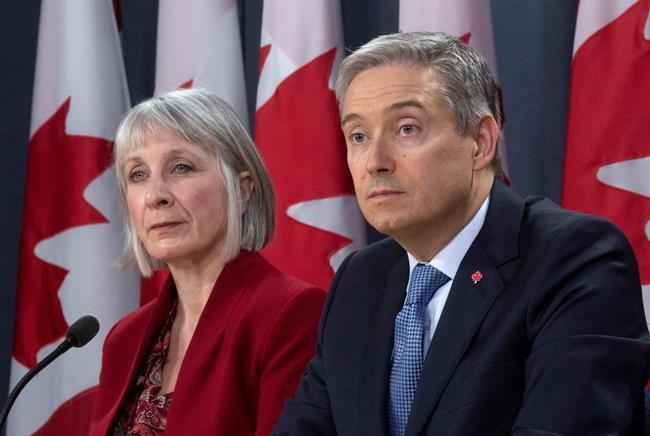
He said the circumstances involved in the repatriation of citizens from the Grand Princess are “exceptional,” in part because the American government asked for Canada’s help and the cruise line will be paying the cost.
As of Monday, there were six cases of COVID-19 in Canada believed to be linked to the previous voyage of the Grand Princess cruise ship.
That included a man in his 40s from the Edmonton area who was confirmed as a patient on Sunday. He had recently travelled to the United States, but health officials believe the source of the infection is more likely to have been a travel companion who had sailed on the Grand Princess.
A presumptive case reported in Quebec on Sunday was also likely linked to cruise travel, although officials did not specify which ship.

Anxiety over the virus contributed to new plunges in volatile North American stock markets, which nosedived as the price of oil collapsed. The loonie also plunged against the U.S. dollar.
The rout at the start of trading triggered circuit breakers on the stock markets in Canada and the United States, which temporarily put a halt to trading.
There are now more than 110,000 cases worldwide, with the largest group still in China. But massive outbreaks have developed outside the virus’s epicentre, including in South Korea, Iran and Italy.
This report by The Canadian Press was first published March 9, 2020.
— With files from Camille Bains, Laura Osman, Morgan Lowrie, Teresa Wright, Joanna Smith and The Associated Press.
Related Articles
Looking inward is not the answer






Advertisement Advertise With Us
Advertisement Advertise With Us