Ontario confirms four new COVID-19 cases; provincial total now 35

Advertisement

Advertise with us

TORONTO - Ontario health officials announced four new cases of the novel coronavirus Monday, bringing the total in the province to 35, but the health minister said she is not recommending a ban at this time on large, public gatherings.

Read this article for free:


or

Already have an account? Log in here »

To continue reading, please subscribe:

Subscribe and receive a limited-edition Free Press branded hat or tote.

Digital Subscription

One year of digital access for only $205*

  • Enjoy unlimited reading on winnipegfreepress.com
  • Read the E-Edition, our digital replica newspaper
  • Access News Break, our award-winning app
  • Play interactive puzzles

*First annual payment billed as $205.00 + GST for one year. This annual subscription will automatically renew at $233.00 + GST every 52 weeks (10% off the regular annual price of $259.35). Offer available to new and qualified returning subscribers only. Cancel any time.

To continue reading, please subscribe:

Add Free Press access to your Brandon Sun subscription for only an additional

$1 for the first 4 weeks*

  • Enjoy unlimited reading on winnipegfreepress.com
  • Read the E-Edition, our digital replica newspaper
  • Access News Break, our award-winning app
  • Play interactive puzzles
Start now

*Your next Brandon Sun subscription payment will increase by $1.00 and you will be charged $17.95 plus GST for four weeks. After four weeks, your payment will increase to $24.95 plus GST every four weeks.

Hey there, time traveller!
This article was published 09/03/2020 (2403 days ago), so information in it may no longer be current.

TORONTO – Ontario health officials announced four new cases of the novel coronavirus Monday, bringing the total in the province to 35, but the health minister said she is not recommending a ban at this time on large, public gatherings.

Christine Elliott said the advice right now from Ontario’s top health officials is that it is not required. The virus isn’t circulating locally. All of the cases have been linked to recent travel or have been in close contacts — such as spouses — of those infected while travelling.

“I think it’s really important that we respond to the situation that’s happening in Ontario and not move according to what other countries have been doing, because they have their own particular circumstances,” Elliott said.
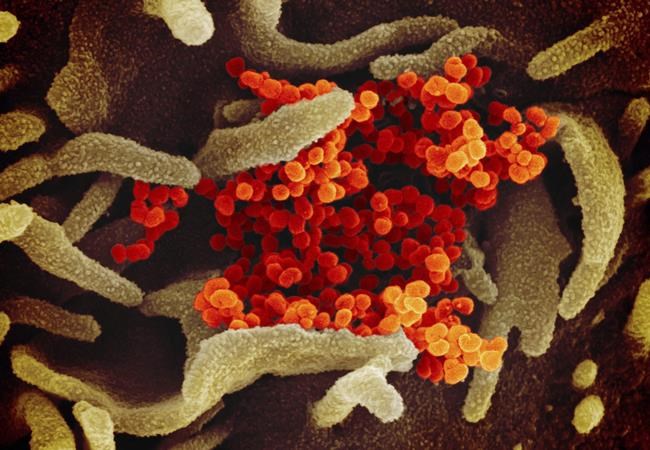
This undated electron microscope image made available by the U.S. National Institutes of Health in February 2020 shows the Novel Coronavirus SARS-CoV-2, orange, emerging from the surface of cells, green, cultured in the lab. THE CANADIAN PRESS/HO - NIAID-RML via AP

“We do have a plan in place and we will escalate as — and when — we see the need to do so.”

Elliott made the comments moments before public health officials in British Columbia announced a man had died of COVID-19 at a long-term care home in North Vancouver — believed to be the first fatality caused by the new coronavirus in Canada.

Ontario is, however, ramping up screening and monitoring at long-term care homes. The province decided Monday to issue guidance to facilities to put in place “active surveillance,” meaning staff, volunteers, visitors and residents who may come and go are checked for symptoms and asked about travel history.

Chief medical officer of health Dr. David Williams said the province is also doing COVID-19 testing on samples from long-term care homes where there is any respiratory outbreak.

He stressed that the advice to the general public about frequent hand washing and other protections isn’t just about people protecting themselves, but protecting the most vulnerable.

“If people are casual about their travel protection, casual about their contact protection and are less than vigilant on staying home when they’re ill and that kind of thing, then we can put that population at risk,” he said.

“By being vigilant, by keeping at that, you can protect them.”

Ontario’s newest cases are a man in his 50s who recently travelled to Germany, a man in his 80s and a woman in her 70s who were recently in Iran, and a woman in her 30s who is a close contact of another confirmed case. All of the patients have been released into self-isolation.

Premier Doug Ford said Monday that every government ministry is putting together an emergency plan to deal with the spread of COVID-19 in order to be prepared.

“The worst thing to do is put a scare out there, everyone starts panicking,” Ford said during a fireside chat at a tech hub in Kitchener, Ont.

“Even today, half of us didn’t know whether we were shaking hands or fist pumping or head bumping or whatever it might be. But we have to be cautious and we’re all over this.”

Elliott said her ministry has the command in terms of health issues, and the solicitor general’s office is working on issues regarding police presence. There are also back-up plans in place to re-direct certain types of care to other hospitals in case one facility is overwhelmed or needs to be locked down, she said.

Finance Minister Rod Phillips, who is to deliver Ontario’s budget on March 25, said COVID-19 is clearly having economic impacts in Ontario, but it is too soon to predict exactly how it will affect the province’s finances.

“Economic forecasts that the budgets are based on are over a month old and we’re in a very dynamic environment,” he said. “One of the reasons that we’ve put in place the balanced, prudent plan we have is so that we could make adjustments if they were necessary.”

Government House Leader Paul Calandra said if the need arises, he will work with the other parties’ house leaders and the legislative assembly for any contingency plans for the legislature.

This report by The Canadian Press was first published March 9, 2020.

Report Error Submit a Tip

More Stories

Three Manitoba nurses censured for inappropriate behaviour

Morgan Modjeski 3 minute read Monday, Oct. 5, 2026

A Manitoba nurse has been disciplined for inappropriate behaviour towards students including what is being described as unwanted touching.

The College of Registered Nurses of Manitoba listed three recent censures of Manitoba nurses. The most recent details a supervising nurse’s unprofessional conduct while he worked as a clinical education facilitator at the University of Manitoba in 2023.

The behaviour, examined by a college complaints committee, included reports from several students of unwanted touching, violating the confidentiality of students in a group chat and failing to properly report a needlestick injury.

The committee made the decision of censure — a discipline record applied to a nurse’s license — on April 9.

AI governance: Canada’s next structural test

Anne Thompson 4 minute read 2:00 AM CDT

Artificial intelligence is accelerating faster than the governance structures meant to contain it. Canada now faces a structural test — whether our institutions can protect autonomy, dignity, and continuity in an era when decision-making is increasingly mediated by systems we did not design, cannot fully audit, and do not yet constitutionally constrain.

This is not a technological problem. It is a governance problem.

AI systems influence how information flows, how institutions behave, and how decisions are made. They shape the conditions under which harm becomes predictable. They amplify both the strengths and weaknesses of the systems into which they are deployed. And they do all of this at a scale and speed that outpaces traditional regulatory tools.

Canada’s current approach to AI governance relies heavily on policy, guidelines, and sector-specific regulation. These are important, but they are not sufficient. What is missing is structural clarity — a constitutional-grade framework that defines authority, responsibility, accountability, and the minimum conditions under which AI systems may operate without undermining human dignity or institutional credibility.

Essential workers ruling raises questions

Editorial 4 minute read Preview

Essential workers ruling raises questions

Editorial 4 minute read Yesterday at 2:00 AM CDT

Ever been to a Dynacare clinic? Most of us have been. It’s an amazing demographic and ethnic slice of the city we’ve become. Old patients. Young patients. New arrivals. Long-time Canadians. People who know the ropes — others who are startled by the crowds and the noise and the lockstep forward motion of professionals doing what they have been trained to do. It seems, all at the same time, both chaotic and diagnostic, as names of patients are steadily called out and thousands of tests are performed.

But Dynacare is at the centre of a new kind of test and this time, we’re all in the test tube together.

It’s the first real test for new labour law put in place by the government of Premier Wab Kinew in 2024 — a law that redefined what essential services are for provincially-regulated workplaces. Under this law, companies and their employee and unions must have an agreement of which employees are essential — which ones must stay on the job during a legal strike for the protection of the health and safety of the public.

Dynacare had that kind of essential employee agreement with its staff and union — the company and the union had agreed the employees were not essential.

Read
Yesterday at 2:00 AM CDT

Letters, Oct. 6

6 minute read Yesterday at 2:00 AM CDT

High road not so easy

Re: Khan should’ve taken high road: Goertzen (Oct. 3)

Politics is a tough game. Just ask former provincial Liberal leader Dougald Lamont. He got thrown under the bus by a prominent Manitoba/Canadian Liberal who advised people to vote NDP in the last provincial election.

As Lamont said when he lost the election, he is “human” and what happened to him “hurt.” Khan is also human. It is easy to criticize him for not taking the “high road.”

Entering Beijing's Olympics bubble is a surreal experience

The Associated Press 4 minute read Preview

Entering Beijing's Olympics bubble is a surreal experience

The Associated Press 4 minute read Thursday, Jan. 27, 2022

BEIJING (AP) — For the thousands of athletes, journalists and others descending on Beijing for the Winter Olympics, China’s strict pandemic measures are creating a surreal and at times anxious experience.

China is isolating everyone coming from abroad from any contact with the general public for the duration of the Games, which open next week. That means being taken from the Beijing airport in special vehicles to a hotel surrounded by temporary barricades that keep participants in and the public out.

“I know the only experience of Beijing I’m going to experience is the Beijing I will see out of my bus window and my hotel window,” said Associated Press photo editor Yirmiyan Arthur, who arrived this week. “I’m not really going to experience China, I’m just going to experience the Olympics within the bubble.”

The experiences of AP journalists who have arrived or are preparing to depart offers a glimpse into life inside the bubble.

Read
Thursday, Jan. 27, 2022

The challenge of aging

Mac Horsburgh 4 minute read Saturday, Apr. 18, 2026

Time stops for no one. It keeps ticking away like a perpetual motion machine erasing our youth. Aging is entropy inevitably moving us into a state of disorder.

We wake up one morning and say, “What happened?” Our friends ask us: “Are you living the dream?” Retirement is supposed to be the pot of gold at the end of the rainbow. Except it often doesn’t feel like that.

Suddenly, we are contending with hip and knee replacements, angioplasty or by-pass surgery, chemotherapy and cancer surgery, cataract surgery, emergency visits to the hospital, not to mention cognitive and physical decline associated with degenerative illnesses.

And then there are the numerous medications we are required to take to help us cope with these various medical disorders, all of which have side effects. To counter these side effects, we need to take a different set of medications. We live a life of neverending alarms going off telling us which meds we need to take and when.