

Manufacturers face ‘double whammy’
Brandon plant says Canadian steel in demand, but high costs, long delivery times hit hard

Advertisement
Read this article for free:
or
Already have an account? Log in here »
To continue reading, please subscribe:
Digital Subscription
One year of digital access for only $1.44 a week*
- Enjoy unlimited reading on winnipegfreepress.com
- Read the E-Edition, our digital replica newspaper
- Access News Break, our award-winning app
- Play interactive puzzles
*Billed as $5.77 plus GST every four weeks. After 52 weeks, price increases to the regular rate of $19.95 plus GST every four weeks. Offer available to new and qualified returning subscribers only. Cancel any time.
To continue reading, please subscribe:
Add Free Press access to your Brandon Sun subscription for only an additional
$1 for the first 4 weeks*
- Enjoy unlimited reading on winnipegfreepress.com
- Read the E-Edition, our digital replica newspaper
- Access News Break, our award-winning app
- Play interactive puzzles
*Your next Brandon Sun subscription payment will increase by $1.00 and you will be charged $17.95 plus GST for four weeks. After four weeks, your payment will increase to $24.95 plus GST every four weeks.
Read unlimited articles for free today:
or
Already have an account? Log in here »
Something’s different in a Brandon plant.
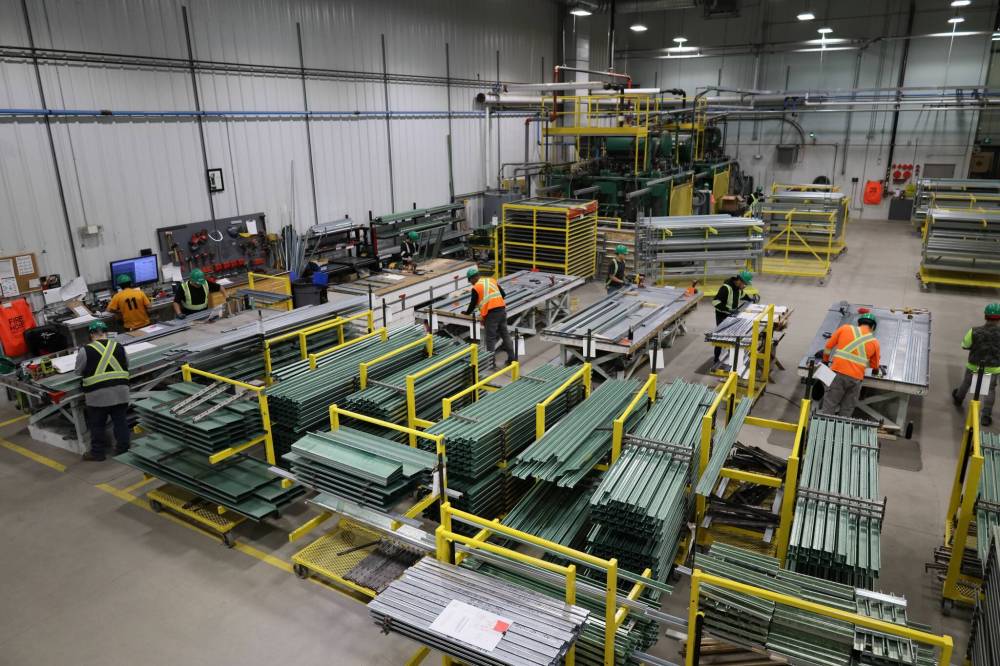
Building envelope panels — or shells for homes and commercial buildings — keep being produced at Greenstone Building Products.
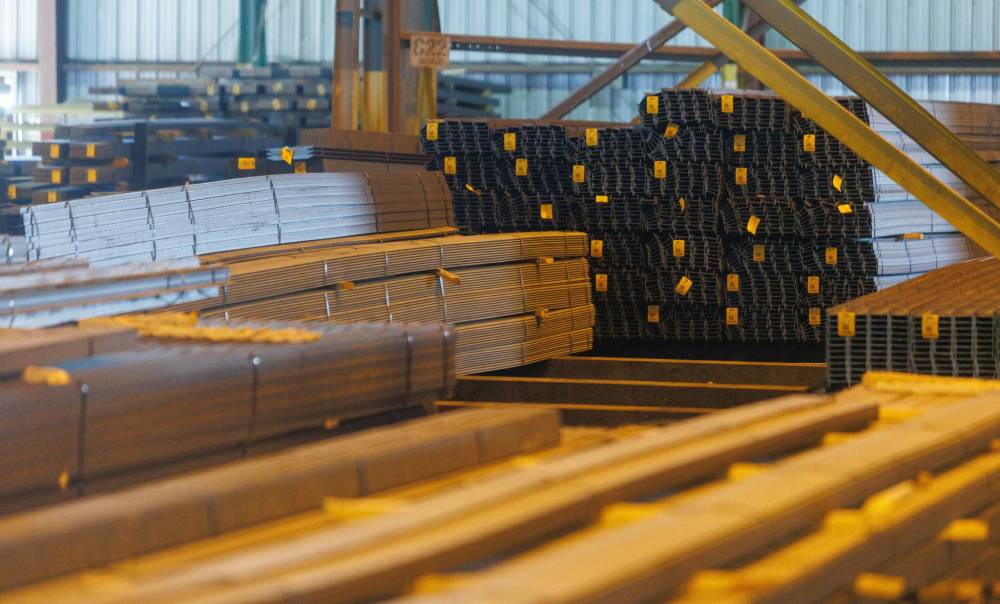
But the galvanized steel used by workers has been arriving later and the price is constantly increasing, according to company leadership.
SUPPLIED
Greenstone Building Products creates roughly 20,000 building envelope panels annually which are used to build homes and other buildings in Nunavut, Manitoba and British Columbia.
“It’s just a little bit nerve-wracking for us to hear the opposite narrative,” said Tilda Fortier, Greenstone Building Products’ business manager.
She’s been watching the news out of Hamilton: Stelco announced plans last month to lay off up to 500 Ontario workers. It’s blamed the ongoing U.S.–Canada trade war, saying the Canadian market is too small to handle galvanized steel production between it and its Canadian competitor.
U.S. parent company Cleveland-Cliffs has said the market is flooded with international steel.
“That is just not our experience,” Fortier said.
Greenstone Building Products creates roughly 20,000 panels annually. The wares end up in homes and other buildings in Nunavut, Manitoba and British Columbia.
Some panels are shipped south, to states including New York and Texas, but 25 per cent tariffs are blunting business.
Greenstone Building Products uses a distributor to source its steel. Lately, everything has been from Canada, Fortier said.
She’s noticed prices increasing and wait times lengthening since the summer.
“Every time you ask for a price, it’s only good for the day,” Fortier said, adding prices used to hold for at least two weeks.
Meantime, steel is taking four months to arrive instead of the typical two weeks, Fortier said.
“It just feels like a political manoeuvre to try and get a deal done,” she said of Cleveland-Cliffs’s comments. “Maybe that would be good, but in the meantime, the price of steel is going up, the uncertainty increases.”
Greenstone Building Products is now ordering steel in larger batches and running “less lean,” Fortier said.
Longer wait times and higher prices have become regular issues for Dave Copp, president of Manitoba-based steel supplier Dave Copp Steel.
He services hundreds of Canadian manufacturers and steel fabricators, largely in Manitoba. Customer demand declined last year, due to tariffs and uncertainty, but it’s been bouncing back since spring of 2026, Copp said.
He pointed to institutional builds such as hospitals and schools.
“Now we have fairly high demand (and) limited availability, because most distributors are sourcing primarily from Canada,” he said.
Tariffs and quotas on offshore steel have restricted imports, Copp noted. The federal government introduced quotas on steel imports last year.
Steel coming from Asia and Europe also generally takes longer to reach Canada than a U.S.-based shipment.
Copp said roughly a quarter of the steel he orders travels overseas, up from the five per cent he’d buy pre-U.S. tariff war.
Three-quarters of the raw material he sources comes from Canada, up from roughly 65 per cent. About a quarter of the company’s steel used to ship from the United States; now, Copp says he’s “virtually bought none.”
Price increases and wait times vary by product, Copp noted. He doesn’t deal much with galvanized steel but said large Canadian steel mills are “making money like crazy right now.”
Cleveland-Cliffs reported its highest revenues in three years in its 2026 third quarter report.
MIKE DEAL / FREE PRESS Files
Management at Greenstone Building Products says the galvanized steel they use in their building envelope panels has been arriving later and the price is constantly increasing.
Over in Selkirk, the Gerdau steel mill appears to be continuously busy, Mayor Larry Johannson said.
“Lots of steel loaded on trailers. Semis coming in and out of the plant,” Johannson said. “I’m taking that as a good, good sign.”
The mill produces structural steel. Johannson said he hopes to take a “temperature check” with management soon.
“I think the steel industry is doing well,” the mayor said. “There’s a lot of building going on in the country and beyond.”
The Canadian Steel Producers Association represents 17 companies, including Gerdau. It didn’t accommodate an interview this week.
A spokesperson for the Canadian Manufacturers and Exporters said they haven’t heard enough about the issue.
Canadian steel production can be specialized, making it difficult to match suppliers and customers in the country, noted Barry Prentice, a University of Manitoba supply chain management professor.
“Specialization was the whole idea behind free trade agreements,” Prentice said.
In August, the feds launched a $100 million rebate program for interprovincial transport of Canadian steel. Many shipments come from Ontario, so the rebate — which covers 50 per cent of eligible rail and marine costs — should help Manitoba businesses, Prentice said.
Broadly, manufacturers are feeling a “double whammy” of trade uncertainty and higher costs, said Andrew Smith, the CME’s vice-president of policy and government relations for the Prairies.
Despite this, Manitoba has added 1,000 manufacturing jobs since March 2025. It bucks a national trend: Canada has counted 27,100 manufacturing job losses, a CME spokesperson said.
Ottawa is threatening legal action against Stelco’s parent company if it doesn’t reverse its layoffs. Cleveland-Cliffs, which bought Stelco in 2024, confirmed it’s laid off 175 workers.
The federal government says layoffs violate the company’s binding promises, including one to keep Stelco’s unionized employee count the same through 2029.

Cleveland-Cliffs says it’s in full compliance of undertakings.
Its chief executive says he hopes to recall staff by Christmas if a plan to boost sales of Canadian-made steel within Canada succeeds.
Most galvanized and coated steel imports — 54.1 per cent — came from the United States, not overseas imports, in the first nine months of 2026, the Canadian Press reported this week.
Members of the Canadian Steel Producers Association produce 13 million tonnes of primary steel per year, the entity says online. It’s a $15-billion industry.
gabrielle.piche@winnipegfreepress.com
Gabby is a big fan of people, writing and learning. She graduated from Red River College’s Creative Communications program in the spring of 2020.
Our newsroom depends on a growing audience of readers to power our journalism. If you are not a paid reader, please consider becoming a subscriber.
Our newsroom depends on its audience of readers to power our journalism. Thank you for your support.
Advertisement Advertise With Us
Advertisement Advertise With Us