Ottawa still mulling whether officials will attend Olympics, days before it starts
Advertisement
Read this article for free:
or
Already have an account? Log in here »
To continue reading, please subscribe:

Digital Subscription
One year of digital access for only $205*
- Enjoy unlimited reading on winnipegfreepress.com
- Read the E-Edition, our digital replica newspaper
- Access News Break, our award-winning app
- Play interactive puzzles
*First annual payment billed as $205.00 + GST for one year. This annual subscription will automatically renew at $233.00 + GST every 52 weeks (10% off the regular annual price of $259.35). Offer available to new and qualified returning subscribers only. Cancel any time.
To continue reading, please subscribe:
Add Free Press access to your Brandon Sun subscription for only an additional
$1 for the first 4 weeks*
- Enjoy unlimited reading on winnipegfreepress.com
- Read the E-Edition, our digital replica newspaper
- Access News Break, our award-winning app
- Play interactive puzzles
*Your next Brandon Sun subscription payment will increase by $1.00 and you will be charged $17.95 plus GST for four weeks. After four weeks, your payment will increase to $24.95 plus GST every four weeks.
Read unlimited articles for free today:
or
Already have an account? Log in here »
Hey there, time traveller!
This article was published 18/07/2021 (1869 days ago), so information in it may no longer be current.
OTTAWA – With five days to go before the Olympics Games kick off, the Canadian government still isn’t saying whether a federal delegation is heading to Tokyo.
A rising rate of infection over the past month and ever evolving rules and restrictions in Japan have kept Ottawa on edge about sending over its usual contingent of dignitaries. Meanwhile skepticism lingers at home about whether the Liberal government has played as strong a role as it might have in overseeing health measures linked to the Games.
“We need to take into account the context for these Games, which is different from any previous Games, in our decision-making process, the Heritage Department said in an email July 8.
“We expect a final decision to be reached closer to start of the Olympic Games.”
The department did not answer follow-up questions sent Friday morning by press time Sunday, with the opening ceremonies slated for this coming Friday.
Ottawa’s ongoing ambivalence comes after U.S. first lady Jill Biden announced last week she will head to Tokyo to lead the U.S. delegation, though her husband, President Joe Biden, will not tag along.
Eric Myles, chief sport officer at the Canadian Olympic Committee (COC), was doubtful of a government presence.
“Right now it’s not in the plan. I don’t expect there’s going to be any dignitaries,” he said in a recent interview.
Legislators and civil servants aren’t the only ones staying home. Only a handful of the COC members who would typically head overseas are boarding a plane.
Chief executive David Shoemaker, president Tricia Smith and a smattering of other COC executives will be there, Myles said.
“They’re not even in the village,” he noted. “We’re not going to see each other. Because me, I’m with the athletes, and they will not be in contact with the athletes.”
The first case of COVID-19 at the athletes’ village has been confirmed after a foreign personnel member tested positive Saturday. Officials say the individual, who is not an athlete, is now in quarantine.
Since July 1, the Tokyo organizing committee has registered 14 new infections connected to the Olympics.
Earlier this month the Japanese government announced that spectators cannot attend the events. Thousands of volunteers will no longer be participating. And access to the athletes’ village is tightly restricted.
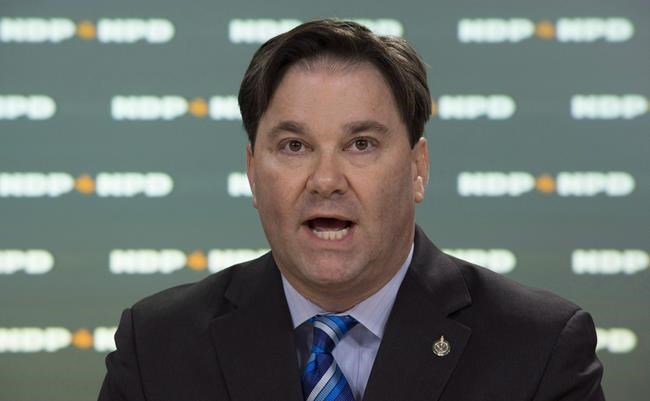
Nonetheless, New Democrat health critic Don Davies said the government should have played a more direct role in setting guidelines for Canadians attending or competing in the Games.
“Normally matters of international sport are not squarely within the sights of government. But I think given the context in which these Games are being taken and the fact that it engages direct federal policy on a number of fronts, it really should have received more attention by parliament and by the government,” Davies said in an interview.
“You have a lot of indoor contact in buildings that are not designed perhaps with COVID considerations. So it’s a fairly ideal breeding ground for virus transmission.”
Davies is calling on the Liberal government to convene epidemiologists, immunologists and public safety officials to take a “very quick and comprehensive survey” of the conditions facing Canadian athletes and make “extraordinary recommendations” if necessary.
The COC says it’s in close touch with Sport Canada, a branch of the Heritage Department, to troubleshoot any problems.
“It’s almost daily, honestly … There’s not a week we don’t speak and we’re not connected,” Myles said, adding that there’s “direct connection” with Heritage Minister Steven Guilbeault’s office.
Chief public health officer Dr. Theresa Tam noted that “nothing is completely risk free.”
“There are safety protocols at play within the Olympic fence,” she told reporters July 8. “We do still have to watch the epidemiologic situation from day to day and have the flexibility to adapt as needed.”
Tokyo reported its highest daily COVID-19 numbers in six months last week, with officials confirming 1,308 new cases on Thursday. But the city’s ongoing state of emergency — its fourth since the pandemic began — allows bars and restaurants to stay open until 8 p.m. as employees continue to head to work on crowded subways, with international delegations arriving daily.
Athletes and other Games attendees cannot shop at airport stores, hug, or chat during group meals or elevator rides. However, vaccination is not a prerequisite for Olympics participation, with many competitors arriving from countries with virtually no vaccine access. Meanwhile the percentage of Japanese who are fully vaccinated has barely breached 20 per cent, compared to more than 50 per cent of Canadians.
Colin Furness, an infection control epidemiologist and assistant professor at the University of Toronto, said athletes and the broader Japanese public have cause for concern, despite the daily testing of competitors.
“Travel and large gatherings, those are the two boogeymen. Well, the Olympics has plenty of both,” he said in an interview.
“It seems impossible that you’re not going to be importing COVID” — despite the two negative tests from the 96-hour period preceding a flight that are required to board.

“You can pretend that you can put an iron ring around a long-term care home, and you can’t. They’re permeable, because people work there and have to go home. Well with the Olympics the same thing is true, but obviously on a much larger scale,” Furness said.
By Wednesday, city officials said seven staff had tested positive at a hotel where Brazilian athletes were lodged.
Meanwhile players on the Russian women’s rugby sevens team were in isolation after their masseur tested positive, according to an RIA news agency report from Moscow. And most of the South African men’s rugby sevens squad is now at a quarantine hotel after learning they were seated near an infected plane passenger.
Canada is sending over 371 competitors — the largest contingent since the Los Angeles Summer Games in 1984 — part of a broader delegation of 840 Canadians in total.
This report by The Canadian Press was first published July 18, 2021.
Related Articles
Rivard won't be fazed by no fans in Tokyo










Advertisement Advertise With Us
Advertisement Advertise With Us