Ottawa still mulling whether officials will attend Olympics, days before it starts

Advertisement

Advertise with us

OTTAWA - With five days to go before the Olympics Games kick off, the Canadian government still isn’t saying whether a federal delegation is heading to Tokyo.

Read this article for free:


or

Already have an account? Log in here »

To continue reading, please subscribe:

Subscribe and receive a limited-edition Free Press branded hat or tote.

Digital Subscription

One year of digital access for only $205*

  • Enjoy unlimited reading on winnipegfreepress.com
  • Read the E-Edition, our digital replica newspaper
  • Access News Break, our award-winning app
  • Play interactive puzzles

*First annual payment billed as $205.00 + GST for one year. This annual subscription will automatically renew at $233.00 + GST every 52 weeks (10% off the regular annual price of $259.35). Offer available to new and qualified returning subscribers only. Cancel any time.

To continue reading, please subscribe:

Add Free Press access to your Brandon Sun subscription for only an additional

$1 for the first 4 weeks*

  • Enjoy unlimited reading on winnipegfreepress.com
  • Read the E-Edition, our digital replica newspaper
  • Access News Break, our award-winning app
  • Play interactive puzzles
Start now

*Your next Brandon Sun subscription payment will increase by $1.00 and you will be charged $17.95 plus GST for four weeks. After four weeks, your payment will increase to $24.95 plus GST every four weeks.

Hey there, time traveller!
This article was published 18/07/2021 (1867 days ago), so information in it may no longer be current.

OTTAWA – With five days to go before the Olympics Games kick off, the Canadian government still isn’t saying whether a federal delegation is heading to Tokyo.

A rising rate of infection over the past month and ever evolving rules and restrictions in Japan have kept Ottawa on edge about sending over its usual contingent of dignitaries. Meanwhile skepticism lingers at home about whether the Liberal government has played as strong a role as it might have in overseeing health measures linked to the Games.

“We need to take into account the context for these Games, which is different from any previous Games, in our decision-making process, the Heritage Department said in an email July 8.
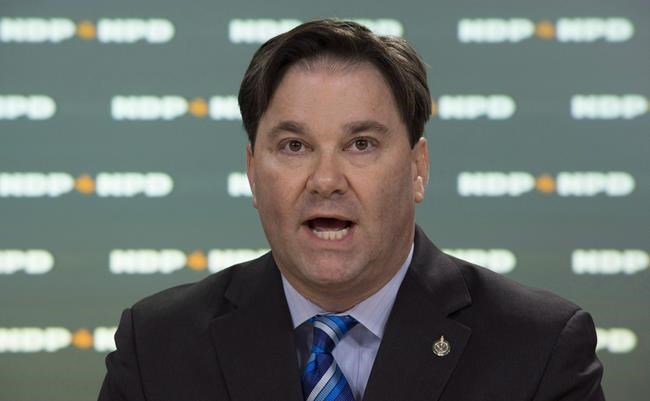
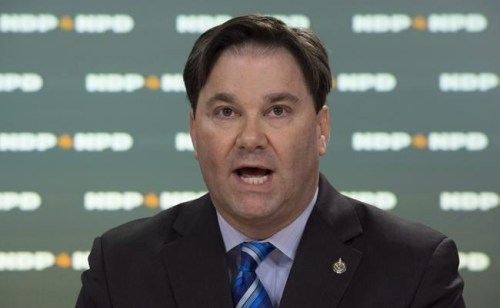
NDP MP Don Davies speaks during a news conference on blood plasma clinics in Ottawa, Tuesday, Nov. 15, 2016. Davies said the federal government should have played a more direct role in setting guidelines for Canadians attending or competing in the Tokyo Games.THE CANADIAN PRESS/Adrian Wyld

“We expect a final decision to be reached closer to start of the Olympic Games.”

The department did not answer follow-up questions sent Friday morning by press time Sunday, with the opening ceremonies slated for this coming Friday.

Ottawa’s ongoing ambivalence comes after U.S. first lady Jill Biden announced last week she will head to Tokyo to lead the U.S. delegation, though her husband, President Joe Biden, will not tag along.

Eric Myles, chief sport officer at the Canadian Olympic Committee (COC), was doubtful of a government presence.

“Right now it’s not in the plan. I don’t expect there’s going to be any dignitaries,” he said in a recent interview.

Legislators and civil servants aren’t the only ones staying home. Only a handful of the COC members who would typically head overseas are boarding a plane.

Chief executive David Shoemaker, president Tricia Smith and a smattering of other COC executives will be there, Myles said.

“They’re not even in the village,” he noted. “We’re not going to see each other. Because me, I’m with the athletes, and they will not be in contact with the athletes.”

The first case of COVID-19 at the athletes’ village has been confirmed after a foreign personnel member tested positive Saturday. Officials say the individual, who is not an athlete, is now in quarantine.

Since July 1, the Tokyo organizing committee has registered 14 new infections connected to the Olympics.

Earlier this month the Japanese government announced that spectators cannot attend the events. Thousands of volunteers will no longer be participating. And access to the athletes’ village is tightly restricted.

Nonetheless, New Democrat health critic Don Davies said the government should have played a more direct role in setting guidelines for Canadians attending or competing in the Games.

“Normally matters of international sport are not squarely within the sights of government. But I think given the context in which these Games are being taken and the fact that it engages direct federal policy on a number of fronts, it really should have received more attention by parliament and by the government,” Davies said in an interview.

“You have a lot of indoor contact in buildings that are not designed perhaps with COVID considerations. So it’s a fairly ideal breeding ground for virus transmission.”

Davies is calling on the Liberal government to convene epidemiologists, immunologists and public safety officials to take a “very quick and comprehensive survey” of the conditions facing Canadian athletes and make “extraordinary recommendations” if necessary.

The COC says it’s in close touch with Sport Canada, a branch of the Heritage Department, to troubleshoot any problems.

“It’s almost daily, honestly … There’s not a week we don’t speak and we’re not connected,” Myles said, adding that there’s “direct connection” with Heritage Minister Steven Guilbeault’s office.

Chief public health officer Dr. Theresa Tam noted that “nothing is completely risk free.”

“There are safety protocols at play within the Olympic fence,” she told reporters July 8. “We do still have to watch the epidemiologic situation from day to day and have the flexibility to adapt as needed.”

Tokyo reported its highest daily COVID-19 numbers in six months last week, with officials confirming 1,308 new cases on Thursday. But the city’s ongoing state of emergency — its fourth since the pandemic began — allows bars and restaurants to stay open until 8 p.m. as employees continue to head to work on crowded subways, with international delegations arriving daily.

Athletes and other Games attendees cannot shop at airport stores, hug, or chat during group meals or elevator rides. However, vaccination is not a prerequisite for Olympics participation, with many competitors arriving from countries with virtually no vaccine access. Meanwhile the percentage of Japanese who are fully vaccinated has barely breached 20 per cent, compared to more than 50 per cent of Canadians.

Colin Furness, an infection control epidemiologist and assistant professor at the University of Toronto, said athletes and the broader Japanese public have cause for concern, despite the daily testing of competitors.

“Travel and large gatherings, those are the two boogeymen. Well, the Olympics has plenty of both,” he said in an interview.

“It seems impossible that you’re not going to be importing COVID” — despite the two negative tests from the 96-hour period preceding a flight that are required to board.

“You can pretend that you can put an iron ring around a long-term care home, and you can’t. They’re permeable, because people work there and have to go home. Well with the Olympics the same thing is true, but obviously on a much larger scale,” Furness said.

By Wednesday, city officials said seven staff had tested positive at a hotel where Brazilian athletes were lodged.

Meanwhile players on the Russian women’s rugby sevens team were in isolation after their masseur tested positive, according to an RIA news agency report from Moscow. And most of the South African men’s rugby sevens squad is now at a quarantine hotel after learning they were seated near an infected plane passenger.

Canada is sending over 371 competitors — the largest contingent since the Los Angeles Summer Games in 1984 — part of a broader delegation of 840 Canadians in total.

This report by The Canadian Press was first published July 18, 2021.

Report Error Submit a Tip

More Stories

Letters, Aug. 28

7 minute read 2:00 AM CDT

Use Brady methane as fuel?

Re: Plan for city to sell landfill gas backed up (Aug 25); Aren’t there other power options? (Think Tank, Aug, 26)

It strikes me that there may be a way to solve both the city’s methane problem at the Brady landfill and Manitoba Hydro’s need for affordable fuel for a gas-fired back-up generator at the same time. It might even have some environmental advantages.

Years (decades?) ago, I heard there was a study done to pipe the Brady landfill methane to the University of Manitoba to burn in its central boilers to help heat the campus. I think that at the time it was not deemed economical, due to the cost of the underground pipes that would be needed between Brady and the U of M campus.

Former Beer Mile world champion wins Manitoba Marathon

Taylor Allen 6 minute read Preview

Former Beer Mile world champion wins Manitoba Marathon

Taylor Allen 6 minute read Sunday, Jun. 17, 2018

Corey Gallagher has won another big race, but this time, he didn't have to chug a couple beers along the way.

Gallagher is a former beer mile world champion and record holder, a sport where you run four laps around a track and have to down a beer after each lap. But no beer was required on Sunday at the 40th annual Manitoba Marathon and the 31-year old Winnipeg native still led the pack, despite the fact it was the first time Gallagher had ever ran a full marathon. But the lack of experiene was no problem, as he was the first to cross the finish line inside Investors Group Field to win the men's full marathon at 2:37:48.5.

"This is pretty high up there," said an exhausted Gallagher, ranking his marathon victory to his 2014 Beer Mile world championship. "I was always scared of a full (marathon). I'm just happy to get it done and check it off the bucket list."

Gallagher ran the half marathon at the event for years, before missing the last three or four due to several injuries. Gallagher was just happy to finally be healthy enough to be competiting again, although he's not so sure if he will defend his title at next year's marathon as he said "nothing can prepare you for (a full marathon) properly."

Read
Sunday, Jun. 17, 2018

Jody Wilson-Raybould’s testimony puts PM in hot seat

Editorial 4 minute read Preview

Jody Wilson-Raybould’s testimony puts PM in hot seat

Editorial 4 minute read Thursday, Feb. 28, 2019

For Prime Minister Justin Trudeau, Wednesday was a disaster whose epic proportions will take a while to be fully understood.

If the testimony of former justice minister and attorney general Jody Wilson-Raybould before the House of Commons justice committee is to be believed, what was laid bare Wednesday was a calculated and systematic attempt, by the prime minister and his most senior officials, to undermine judicial process for partisan political purposes and then to deceive the Canadian public about the nature and magnitude of the interference.

In nearly four hours of testimony that was meticulously prepared, deeply detailed, unflappably delivered and impenetrable to those who sought to challenge its substance, Ms. Wilson-Raybould succeeded in presenting herself as someone who should be believed.

And in so doing, she essentially cast as opportunistic liars Mr. Trudeau and staffers in the Prime Minister’s Office who had previously sought to declare their dealings with the former attorney general, in relation to the prosecution of the Quebec-based engineering firm SNC-Lavalin, as acceptable in both legal and ethical terms.

Read
Thursday, Feb. 28, 2019

Hydro announces CEO out after two years

Chris Kitching 7 minute read Preview

Hydro announces CEO out after two years

Chris Kitching 7 minute read Updated: 5:18 PM CDT

Allan Danroth is out as Manitoba Hydro’s president and CEO — a departure that came as a surprise to some observers — just two years after he was hired.

Danroth left for personal reasons, the Crown corporation’s board chair, Jamie Wilson, said Friday, while announcing chief operating officer Hal Turner as interim president and CEO ahead of a national and international search for a replacement.

“Today’s one of those days where you have a lot of mixed emotions,” Turner told reporters at Hydro’s downtown Winnipeg headquarters. “I just want to say on behalf of all the employees in Manitoba Hydro, we very much appreciate Allan’s leadership over the last two years.”

Turner wouldn’t say whether he will apply to be the next permanent CEO.

Read
Updated: 5:18 PM CDT

Eagle feathers ‘an implement of justice in Manitoba’

Katie May 4 minute read Preview

Eagle feathers ‘an implement of justice in Manitoba’

Katie May 4 minute read Thursday, Sep. 26, 2019

An Indigenous symbol of truth is now an official way to testify in Manitoba's courts, as the justice system continues to grapple with its role in reconciliation.

Manitobans can testify by holding an eagle feather, rather than swearing on the Bible or simply stating their promise to tell the truth in court. The eagle feather has already been accepted in some court trials for several months, but with the Supreme Court of Canada's visit casting a national spotlight on Manitoba courts this week, a joint session between the provincial court and the Manitoba Court of Queen's Bench was called Thursday to officially recognize it.

Forty-five eagle feathers were blessed and gifted to Manitoba courts during a sunrise smudging ceremony at The Forks Thursday morning, and a courthouse presentation Thursday afternoon brought together all nine visiting Supreme Court justices and every sitting judge in Winnipeg. Indigenous drummers were welcomed for a first-of-its-kind courtroom ceremony in which chief judges promised their work isn't done when it comes to working with Indigenous people and making room for culturally appropriate practices.

Barry French, a longtime Indigenous advocate and one of the individuals who gifted eagle feathers to the court, emphasized the progress the move represents in Manitoba's court process.

Read
Thursday, Sep. 26, 2019

Grim new protocols will force doctors to make unthinkable choices

Tom Brodbeck 4 minute read Preview

Grim new protocols will force doctors to make unthinkable choices

Tom Brodbeck 4 minute read Tuesday, Apr. 7, 2020

Provincial officials are developing a new triage protocol to help doctors decide who gets critical care and who could be denied life-saving treatment if hospitals become overwhelmed with COVID-19 patients.

It’s a stark and terrifying proposition.

But with cases continuing to rise (and knowing the kind of rationing of critical care that occurred in countries like Italy), Manitoba officials have no choice but to prepare for a worst-case scenario,

“Like other jurisdictions, Manitoba is developing an ethical framework to help determine the criteria and decision-making processes for allocating resources during COVID-19, including critical care,” a spokesperson for Shared Health Manitoba stated in an email to the Free Press. “Discussions continue amongst clinical leadership and ethicists.”

Read
Tuesday, Apr. 7, 2020