Challenges at southern border may be drag on efforts to reopen Canada-U.S. frontier
Advertisement
Read this article for free:
or
Already have an account? Log in here »
To continue reading, please subscribe:

Digital Subscription
One year of digital access for only $205*
- Enjoy unlimited reading on winnipegfreepress.com
- Read the E-Edition, our digital replica newspaper
- Access News Break, our award-winning app
- Play interactive puzzles
*First annual payment billed as $205.00 + GST for one year. This annual subscription will automatically renew at $233.00 + GST every 52 weeks (10% off the regular annual price of $259.35). Offer available to new and qualified returning subscribers only. Cancel any time.
To continue reading, please subscribe:
Add Free Press access to your Brandon Sun subscription for only an additional
$1 for the first 4 weeks*
- Enjoy unlimited reading on winnipegfreepress.com
- Read the E-Edition, our digital replica newspaper
- Access News Break, our award-winning app
- Play interactive puzzles
*Your next Brandon Sun subscription payment will increase by $1.00 and you will be charged $17.95 plus GST for four weeks. After four weeks, your payment will increase to $24.95 plus GST every four weeks.
Read unlimited articles for free today:
or
Already have an account? Log in here »
Hey there, time traveller!
This article was published 20/07/2021 (1906 days ago), so information in it may no longer be current.
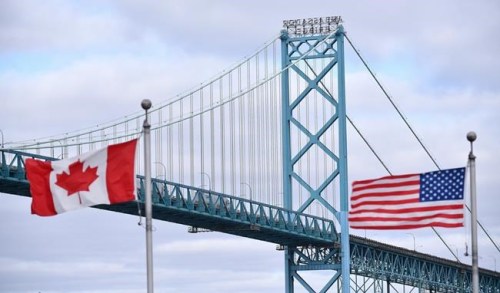
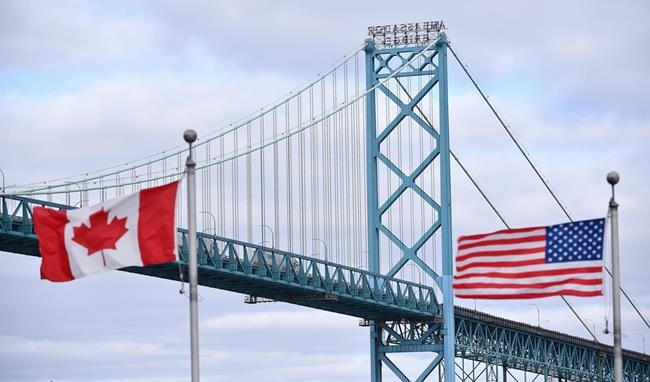
WASHINGTON – Canadians wondering why the United States doesn’t appear to be rushing to ease travel restrictions at their shared border should cast a gaze further south, where the frontier with Mexico fosters far thornier political questions for the White House than its northern counterpart.
Allowing travel to resume at only one of America’s two shared borders could be seen as playing favourites between the country’s two closest neighbours, observers say. And the risk of a flood of travellers from Mexico would risk exacerbating a long-standing refugee crisis in the southern U.S.
Still, the Biden administration’s stand-pat approach to restricting visitors from Canada, despite the federal Liberal government’s plan to start allowing fully vaccinated U.S. visitors next month, has raised eyebrows in both countries, including among experts.
“It’s a black box on the U.S. side,” said Laurie Trautman, director of the Border Policy Research Institute at Western Washington University in Bellingham, Wash.
“I’ve spoken with colleagues at Department of Homeland Security headquarters who say (a decision) is sitting in the White House — and it’s sitting with, probably, multiple entities in the White House. So there’s been really no information and no communication on which way the U.S. is leaning.”
Canada announced Monday that as of Aug. 9, fully vaccinated U.S. citizens and permanent residents will be allowed to enter the country, with the rest of the world to follow Sept. 7. Rules for entering the U.S., however, remain unchanged.
That has already prompted U.S. lawmakers and others who are anxious to see the travel restrictions eased further to begin pressuring the White House to follow Canada’s lead.
“On Jan. 21 of this year, we were promised a plan would be developed by the United States to address travel to Canada within 14 days … we are still waiting for that plan,” New York Rep. Brian Higgins, a Democrat opposed to the border restrictions, said Tuesday on the floor of the House of Representatives.
“It’s time for the United States to align its border policy with the science, with the facts and with the data. Action is long overdue. Open the U.S. border to our Canadian neighbours.”
Canadian officials say the 14-day quarantine requirement will be waived beginning the second week of August for eligible travellers who are currently residing in the U.S. and have received a full course of a COVID-19 vaccine approved for use in Canada.
The move comes two weeks after the Canada Border Services Agency began waiving quarantine rules for fully vaccinated Canadian citizens and permanent residents.
The pandemic-era restrictions, imposed in March 2020, are due to expire Wednesday. Public Safety Minister Bill Blair said earlier this week he expects the U.S. to extend the measures, much as the two countries have done on a monthly basis ever since.
Even Justin Trudeau’s tone on the travel restrictions is evolving: on Tuesday, the prime minister offered a rare acknowledgment that the approaches taken by the two countries have been much more “asymmetrical” than most people seem to realize.
While crossing the border by land for non-essential purposes has been largely prohibited in both directions for the duration of the COVID-19 crisis, Canadians — vaccinated or otherwise — were never forbidden from flying to the U.S. for whatever reason, Trudeau said.
“The asymmetry in the relationship has always been there, but that hasn’t prevented us from working very, very closely to align ourselves,” he told a news conference in Hamilton.
“They will follow their science, they will make their own decisions, and we will work with them. … But Canada is not going to any more dictate what the U.S. should be doing around its border policy than we would accept the U.S. to dictate to us around our border policy.”
While domestic U.S. politics is likely playing a role, it’s worth remembering that Customs and Border Protection is a large, slow-moving bureaucracy that might not be well-equipped to deal with policies that differ between the two borders, Trautman said.
“The way the organization works, they’re a huge bureaucracy, and I don’t think they want to sort of piecemeal and kind of cut and paste from one place to another,” she said.
“I’m not sure that the Biden administration really has figured out what to do on the southern border and how to handle a lot of the asylum seekers and refugee claims. There’s probably a sense that, ‘If we open it up, then there’ll be more.'”
The recent changes to the Canadian rules also mean children under 12 who are accompanied by fully vaccinated and eligible family members will be exempt from quarantine upon entering Canada, provided they wear a mask in public places and avoid indoor group settings.
All travellers will still be required to submit a negative COVID-19 test result and proof of vaccination prior to arrival by way of the ArriveCAN smartphone app or web portal, but post-travel test results will no longer be necessary for those who are fully vaccinated.
Canada Border Services Agency officials will also be subjecting vaccinated travellers to a mandatory molecular test upon arrival on a random basis.

As of Aug. 9, airports in Halifax, Quebec City, Ottawa, Winnipeg and Edmonton will also be added to the list of Canadian cities where international flights are permitted to land. Air travellers will no longer be required to spend the first three nights of their quarantine at a government-approved hotel.
Trautman said eventually, it’s likely that border authorities in both countries will have to figure out a way to process vaccinated and unvaccinated travellers separately, such as a variation on the Nexus system, which allows eligible, pre-cleared travellers to cross the border more quickly.
“I do think that that’s being looked at,” she said.
“Not every border crossing’s going to have necessarily the infrastructure or the physical capability to do something like that. But at the really busy ones, there is the option for that.”
This report by The Canadian Press was first published July 20, 2021.
Related Articles
Priority is protecting most vulnerable
Advertisement Advertise With Us
Advertisement Advertise With Us