Olympic travel a big challenge for some Pacific Island teams

Advertisement

Advertise with us

WELLINGTON, New Zealand (AP) — Famous athletes in sports like tennis and golf heading to the Tokyo Olympics will probably arrive in Japan at the front of the plane.

Read this article for free:


By clicking the button above, an account will be created and you will begin to receive some of our recommended newsletters. You may opt out of any newsletter by visiting your Email and Communication Preferences page or by clicking "unsubscribe" at the bottom of any email.

or

Already have an account? Log in here »

To continue reading, please subscribe:

Digital Subscription

One year of digital access for only $1.44 a week*

  • Enjoy unlimited reading on winnipegfreepress.com
  • Read the E-Edition, our digital replica newspaper
  • Access News Break, our award-winning app
  • Play interactive puzzles

*Billed as $5.77 plus GST every four weeks. After 52 weeks, price increases to the regular rate of $19.95 plus GST every four weeks. Offer available to new and qualified returning subscribers only. Cancel any time.

To continue reading, please subscribe:

Add Free Press access to your Brandon Sun subscription for only an additional

$1 for the first 4 weeks*

  • Enjoy unlimited reading on winnipegfreepress.com
  • Read the E-Edition, our digital replica newspaper
  • Access News Break, our award-winning app
  • Play interactive puzzles
Start now

*Your next Brandon Sun subscription payment will increase by $1.00 and you will be charged $17.95 plus GST for four weeks. After four weeks, your payment will increase to $24.95 plus GST every four weeks.

Hey there, time traveller!
This article was published 07/07/2021 (1927 days ago), so information in it may no longer be current.

WELLINGTON, New Zealand (AP) — Famous athletes in sports like tennis and golf heading to the Tokyo Olympics will probably arrive in Japan at the front of the plane.

It’s a style to which the athletes of the Pacific Islands are unaccustomed. Fiji’s gold medal-winning men’s rugby sevens team will arrive in Tokyo along with the other members of their national team on Thursday on a cargo/freight flight which is hauling mostly frozen fish.

Commercial passenger flights to and from Pacific nations have become scarce during the pandemic. Lorraine Mar, the chief executive of the Fiji Association of Sports and National Olympic Committee, said Wednesday that arranging travel for the Fiji team to Tokyo has been a “logistical challenge.”
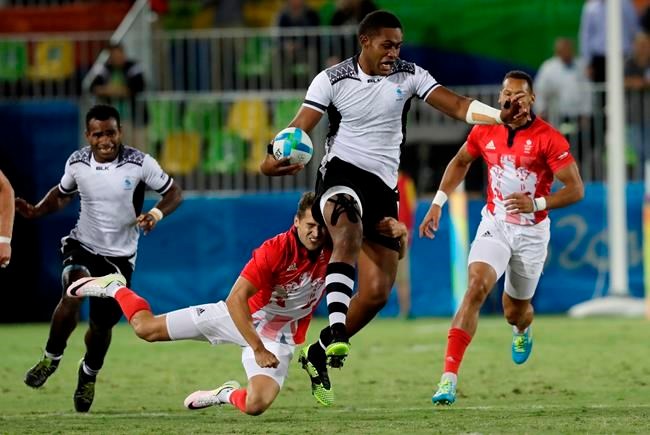
FILE - In this Aug. 11, 2016, file photo, Viliame Mata of Fiji evades a tackle during the gold medal mens rugby sevens match against Britain at the 2016 Summer Olympics in Rio de Janeiro, Brazil. It was rugby in fast forward and it generated millions of new fans across the world. Rugby sevens made its Olympic debut in Rio de Janeiro in 2016 bringing all the usual hard-hitting tackles, collisions and swerving runs but leaving out the slow-mo elements of the traditional 15-a-side game. (AP Photo/Robert F. Bukaty, File)

Mar said around 51 athletes and officials, mostly the Fiji men’s and women’s sevens squad, will be on Thursday’s flight from Fiji’s principal international airport at Nadi. It’s a regularly-scheduled freight flight which has some capacity for passengers.

The sevens teams recently have been based in Australia where the Fiji men won the Oceania Sevens title in Townsville, Queensland two weeks ago. The men’s team gave Fiji its first-ever Olympic gold medal when it won the inaugural Olympic rugby sevens tournament in Rio de Janeiro in 2016.

The Fiji teams were originally expected to fly directly from Australia to Tokyo, but plans were changed at the last minute due to new COVID-19-related restrictions in Asia.

Apart from the sevens teams, the Fiji team includes one track and field athlete, two swimmers, a female table tennis player and a judo competitor who currently is based in Japan.

Mar said dealing with athletes’ departures from Japan also is a challenge. The IOC requires athletes to vacate the Olympic village within 48 hours of the conclusion of their events.

Fiji has a flight booked from Tokyo to Nadi on July 29, after the sevens tournament has concluded and which could also carry other athletes who have been eliminated or have finished competing. Another flight is booked on Aug. 10.

Mar hopes the IOC will grant dispensation for athletes who are unable to immediately obtain flights home to remain in the village until travel is available.

Among other Pacific Island nations, Samoa has already withdrawn its three-member weightlifting from the games because all are based in Samoa and the Samoa government is concerned about the spread of COVID-19 in Japan. Eight Samoan athletes who are based overseas will still compete.
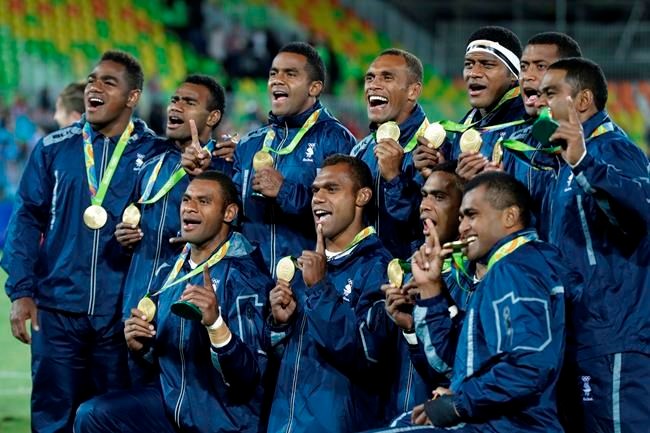
FILE - In this Aug. 11, 2016, file photo, Fiji rugby players show off their gold medal after defeating Britain in the gold medal mens rugby sevens match against Britain at the 2016 Summer Olympics in Rio de Janeiro, Brazil. It was rugby in fast forward and it generated millions of new fans across the world. Rugby sevens made its Olympic debut in Rio de Janeiro in 2016 bringing all the usual hard-hitting tackles, collisions and swerving runs but leaving out the slow-mo elements of the traditional 15-a-side game. (AP Photo/Robert F. Bukaty, File)

They comprise two boxers based in Australia, four sailors and canoeists based in New Zealand, a track athlete based in the United States and a judoka based in Japan.

Tonga will send six competitors, all but two of whom are based overseas. They include Pita Taufatofua — the “naked Tongan” — who was a bare-chested sensation when he carried the Tongan flag in the opening ceremony of the Rio games.

Taufatofua, who will compete in taekwondo in Tokyo, also represented Tonga in cross-country skiing at the 2018 Winter Olympics in Pyeongchang, South Korea.

____

More AP sports: https://apnews.com/apf-sports and https://twitter.com/AP_Sports

Report Error Submit a Tip

More Stories

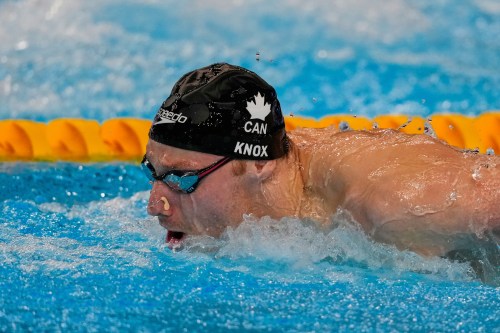
Ruck earns second silver, Knox third bronze for Canada at swimming World Cup

The Canadian Press 1 minute read Preview

Ruck earns second silver, Knox third bronze for Canada at swimming World Cup

The Canadian Press 1 minute read Friday, Oct. 9, 2026

TASHKENT - Canadian swimmers Taylor Ruck and Finlay Knox added to their medal hauls Friday at the second stop of the three-meet World Aquatics Swimming World Cup series.

Ruck, a four-time Olympic medallist from Kelowna, B.C., captured silver in the women's 100-metre backstroke in 56.38 seconds, behind Dutch winner Marrit Steenbergen, who finished in 55.32.

Ruck also had a runner-up finish Thursday in the 50 freestyle.

Knox, of Okotoks, Alta., took bronze in the men's 200 individual medley in one minute 52.33 seconds, behind Americans Shaine Casas and Carson Foster.

Read
Friday, Oct. 9, 2026

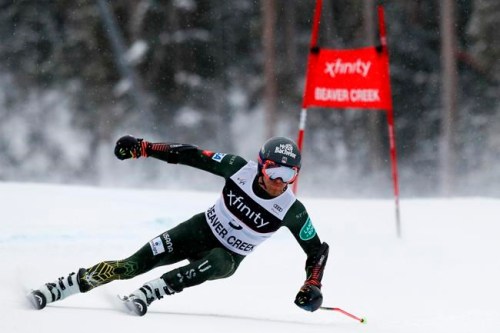
Ford cruises in giant slalom for 1st career World Cup win

Pat Graham, The Associated Press 3 minute read Preview

Ford cruises in giant slalom for 1st career World Cup win

Pat Graham, The Associated Press 3 minute read Sunday, Dec. 8, 2019

BEAVER CREEK, Colo. - Tommy Ford cruised across the finish line, glanced up at the scoreboard and immediately pumped his right glove.

It was simply the start of the celebration as Ford earned his first career World Cup win.

The American racer glided through the fog and the falling snow to finish the Birds of Prey giant slalom in a combined time of 2 minutes, 31.25 seconds Sunday. Henrik Kristoffersen of Norway was second, 0.80 seconds back, while fellow Norwegian Leif Kristian Nestvold-Haugen took third.

Ford found himself in new territory — leading after the first run. He didn't show any hint of nerves before pushing out of the start gate for his final pass. He gazed down at the awaiting course for a moment, before attacking. He flowed through the gates with the home crowd urging him to the finish line.

Read
Sunday, Dec. 8, 2019

Pointing a truer lens on nature

Conrad Sweatman 4 minute read Preview

Pointing a truer lens on nature

Conrad Sweatman 4 minute read Friday, Jan. 2, 2026

At first glance, Winnipeg-born producer Jesse Bochner’s seven-part series Animal Nation brings to mind docu-series such as Wild America, Planet Earth and Nature.

Much of its trailer is a slow-mo montage of caribou and bison galloping majestically through Prairie and Arctic landscapes. Interspersed are shots of northern predators such as wolves and bears, suggesting a Canada-centric take on the genre and its exciting, poignant nature dramas.

Then there are the figures glaringly absent from many other northern wildlife series: the rural and Indigenous people who live closest to these creatures, as they have traditionally for millennia.

“I’ve always loved nature documentaries, so getting to make a nature documentary about animals and all the beauty and wonderful stuff that you come to expect from a blue-chip type of documentary is in there,” says Bochner, who is Ojibwa.

Read
Friday, Jan. 2, 2026

Resumé fib creates unnecessary distraction

Editorial 4 minute read Preview

Resumé fib creates unnecessary distraction

Editorial 4 minute read Wednesday, Oct. 2, 2019

Here’s the thing about closets: if they’re of the literal variety — in other words, those tiny rooms in your home in which clothing, linens and assorted household items are stored — they can usually be securely locked so the contents therein are protected.

But if they’re the figurative sort of “closet” in which the embarrassing secrets from your past are concealed, there is very little chance in the current era of cyber-snoop scrutiny that those skeletons will remain behind closed doors.

The discomfiting truth of this 21st-century reality was brought into focus — again — when it was revealed that Conservative party Leader Andrew Scheer was less than truthful in his career resumé’s description of private-sector work experience he accumulated before entering politics.

The profile posted on his party’s official website stated that “Before entering public life, Andrew worked in the private sector as an insurance broker.” The trouble is, he did not. When confronted with fact-checked inconsistencies between the resumé and reality, Mr. Scheer was forced to admit he was never actually a credentialed broker in Saskatchewan, but instead worked in a support role in an insurance office while “the licensed brokers finalized all the transactions.”

Read
Wednesday, Oct. 2, 2019

Fact Check

1 minute read Thursday, Nov. 30, 2023

Fact Check

Having problems with the form?Contact Us Directly |

First Nations should not have to defend truth of residential schools

Kyra Wilson 5 minute read Preview

First Nations should not have to defend truth of residential schools

Kyra Wilson 5 minute read 2:00 AM CDT

The truth about residential schools should never have been this difficult for Canada to acknowledge. And it should never be this difficult to defend.

For generations, survivors have carried the memories of children taken from their families, the abuse they endured, the languages and cultures they were forbidden to practise, and the children who never came home. They have told their stories, often at tremendous personal cost, so Canada could no longer claim it did not know.

How many times must survivors tell their stories before the responsibility shifts from those who suffered to those who have a duty to listen and act?

On Oct. 9, Manitoba Premier Wab Kinew said residential school denialism should not be criminalized, arguing that continued education and efforts to combat misinformation are the answer.

Read
2:00 AM CDT