Canada has contracts for up to four COVID-19 vaccines but they won’t be mandatory

Advertisement

Advertise with us

OTTAWA - Canada is near the front of the line to get millions of doses of four of the most promising COVID-19 vaccines in development, but the federal government does not plan to make getting a vaccine mandatory, federal cabinet ministers said Monday.

Read this article for free:


By clicking the button above, an account will be created and you will begin to receive some of our recommended newsletters. You may opt out of any newsletter by visiting your Email and Communication Preferences page or by clicking "unsubscribe" at the bottom of any email.

or

Already have an account? Log in here »

To continue reading, please subscribe:

Digital Subscription

One year of digital access for only $1.44 a week*

  • Enjoy unlimited reading on winnipegfreepress.com
  • Read the E-Edition, our digital replica newspaper
  • Access News Break, our award-winning app
  • Play interactive puzzles

*Billed as $5.77 plus GST every four weeks. After 52 weeks, price increases to the regular rate of $19.95 plus GST every four weeks. Offer available to new and qualified returning subscribers only. Cancel any time.

To continue reading, please subscribe:

Add Free Press access to your Brandon Sun subscription for only an additional

$1 for the first 4 weeks*

  • Enjoy unlimited reading on winnipegfreepress.com
  • Read the E-Edition, our digital replica newspaper
  • Access News Break, our award-winning app
  • Play interactive puzzles
Start now

*Your next Brandon Sun subscription payment will increase by $1.00 and you will be charged $17.95 plus GST for four weeks. After four weeks, your payment will increase to $24.95 plus GST every four weeks.

Hey there, time traveller!
This article was published 31/08/2020 (2253 days ago), so information in it may no longer be current.

OTTAWA – Canada is near the front of the line to get millions of doses of four of the most promising COVID-19 vaccines in development, but the federal government does not plan to make getting a vaccine mandatory, federal cabinet ministers said Monday.

Procurement Minister Anita Anand announced new deals with Maryland-based biotech company Novavax for Canada to buy as many as 76 million doses of its experimental vaccine candidate, and up to 38 million doses of the vaccine in development by Johnson & Johnson’s pharmaceutical company Janssen Inc.

Earlier this month similar deals were signed with U.S. companies Pfizer and Moderna but Anand only revealed Monday that those deals would see Canada access up to 20 million doses of Pfizer’s candidate and up to 56 million doses of Moderna’s version.
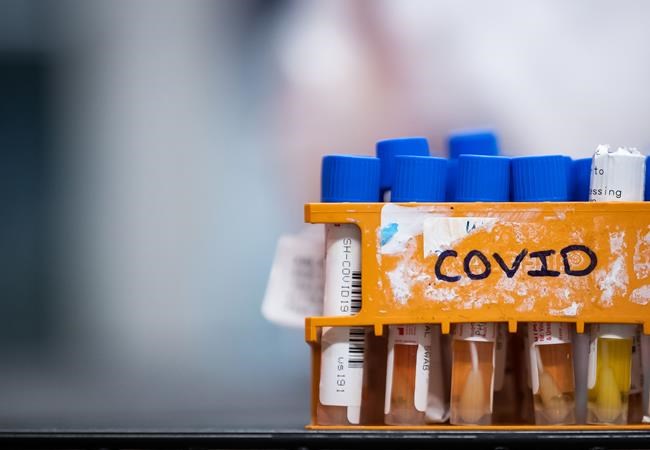
Specimens to be tested for COVID-19 are seen at LifeLabs after being logged upon receipt at the company's lab, in Surrey, B.C., on Thursday, March 26, 2020. The federal government has a deal with a third vaccine developer to get access to their experimental COVID-19 vaccine as early as next spring. THE CANADIAN PRESS/Darryl Dyck

A fifth deal with AstraZeneca is almost complete, Anand said, and deals with other companies could also follow. All are racing to research, test and produce vaccines against SARS-CoV-2, the virus that causes COVID-19.

“In short, when a vaccine is ready, Canada will be ready,” said Anand.

All four of the vaccines Canada has contracts for, as well as the AstraZeneca candidate, are also part of the United States Operation Warp Speed program, which aims to have a vaccine ready for use by the end of the year.

Health Canada’s approval process for any vaccine must still be followed, which will require proof a vaccine is both safe for use and effective at either preventing COVID-19 or reducing the severity of disease.

But Anand said the arrangements put in place with these companies mean if and when one of these vaccines is approved, Canadians will be among the first in line to get it.

“We are prepared to protect Canadians who choose to be vaccinated.”

The key word there is “choose,” with Health Minister Patty Hajdu ending speculation Monday Canada might force Canadians to get a COVID-19 vaccine.

“We believe that people have a choice in Canada about whether or not to be vaccinated,” Hajdu said. “But we also believe we have an important responsibility as Canadians to take vaccinations to protect our communities.”

Ontario, New Brunswick and Manitoba all have some mandatory vaccines kids must have to attend school, but beyond that public health officials rely on educating people about the safety and value of immunization programs. Hajdu acknowledged that the more people who get vaccinated the better, though she did not say what percentage of Canadians she believes would need to get vaccinated to create so-called herd immunity.

That is where enough people are immune to a disease that it cannot spread easily, so even people without immunity have low odds of catching it.

Hajdu added that Canada does not have the same level of skepticism towards vaccinations as is seen in some other places. Still, Canada’s vaccination rates fall below the stated national goals. The aim is for 80 per cent of seniors and high-risk adults to get the influenza vaccine each year. In 2018-19, 70 per cent of seniors and 43 per cent of high-risk adults between 18 and 64 were immunized against the flu.

In 2009, during the H1N1 flu pandemic, about two in five Canadians got vaccinated.

There are more than 160 COVID-19 vaccines in development around the world but only about two dozen are being tested on humans so far, including the four Canada is now in line to buy. Various vaccines use different technologies to try to train human immune systems to detect and fight off the novel coronavirus that causes COVID-19.

Anand said signing contracts for a number of different types of potential vaccines is critical because nobody knows which vaccine or vaccines will end up being approved. Pfizer and Moderna have started Phase 3 trials — most of the time there are only three phases of clinical testing, with the third phase being the biggest. Johnson & Johnson and Novavax are both in Phase 2 trials, which are conducted on smaller numbers of volunteers.

Monday’s announcement came just days after a collaboration between the National Research Council and Chinese vaccine-maker CanSino finally collapsed, taking that possible vaccine out of likely contention for use here.

Prime Minister Justin Trudeau was at the National Research Council’s Human Health Therapeutics Research Centre in Montreal Monday morning, which earlier this year was given $44 million to upgrade its facilities in part so it could produce the CanSino vaccine for Canadians if clinical trials proved it safe and effective.

The NRC had given CanSino a license to use a Canadian biological product as part of the COVID-19 vaccine and CanSino was going to provide samples of the vaccine for clinical trials at the Canadian Centre for Vaccinology at Dalhousie University. Trudeau announced that partnership in May, but China never approved shipments of the vaccine to be exported to Canada and the NRC killed the deal last week.

Trudeau said the NRC partnership with CanSino had been well established and did good work on a vaccine for Ebola and said he is “disappointed” it did not work out this time.

“Unfortunately China didn’t grant export permits for the vaccine to Canada so we are continuing to focus on many other paths that are very promising in terms of developing a vaccine,” he said.

The updated NRC lab in Montreal is to be able to produce up to 250,000 doses of vaccines a month as of November.

Trudeau announced additional funding to build a new facility at the Montreal lab over the next two years, to produce even more vaccines within Canada.

This report by The Canadian Press was first published Aug. 31, 2020.

Note to readers: This is a corrected story. A previous version misspelled the name of pharmaceutical company Novavax.

Report Error Submit a Tip

More Stories

Imperialist crusades: 21st-century style

John R. Wiens 5 minute read Preview

Imperialist crusades: 21st-century style

John R. Wiens 5 minute read Wednesday, Jul. 8, 2026

In the 11th century and lasting into the 13th, the papacy launched a series of at least eight military campaigns we now refer to as the Crusades, or Holy Wars. They were an imperialistic call to arms for Christians to retake Jerusalem, which was at the time under Muslim rule.

Spiritual rewards for participation were implied, and other incentives offered, to dull the extra taxation demanded to fund the campaigns. Over time, the “crusades” morphed to become massacres of not only Muslims but also Jews and Christian dissidents — in other words, any enemies of the papacy. If today’s news sounds like déjà vu all over again, it probably should.

The stories keep repeating themselves in many forms. We now know that two 20th century world wars, global in scope, were caused by imperialistic ambitions, changes in the balance of international powers and corresponding arms races. The first was attributed to the assassination of the heir to the Austro-Hungarian throne by a Bosnian Serb, a kind of “regime change” initiative. The second resulted from rising tensions between Allied and Axis powers, triggered by the rise of European fascism and Japanese militarism. The human toll of both was unimaginable.

In the First World War, 15 to 22 million people, including soldiers and civilians, were killed and another 23 million were wounded. These numbers do not account for those otherwise affected — victims of chemical warfare whose compromised health shortened their lives; of the subsequent Spanish flu epidemic amplified by the displacement of peoples; others who died from other diseases caused by war conditions; and those who were malnourished or starved. Nor do they account for the ongoing trauma and resentments passed on intergenerationally to this day.

Read
Wednesday, Jul. 8, 2026

‘We’re just all thankful to have some baseball’

Mike McIntyre 6 minute read Preview

‘We’re just all thankful to have some baseball’

Mike McIntyre 6 minute read Wednesday, Jun. 24, 2020

Driving more than 2,000 kilometres in less than a day might seem like the equivalent of getting a root canal to many. But it's a journey Winnipeg Goldeyes manager Rick Forney was happy to make this week, one that started from his residence in Maryland and ended in his most unusual temporary baseball home of Fargo, N.D.

Unable to play games at Shaw Park this summer owing to COVID-19 restrictions banning large gatherings for sporting events until at least September, the Fish will instead fly in enemy territory. An abbreviated spring training gets underway Thursday followed by an abbreviated 60-game American Association baseball season starting July 3.

Forney's 24th season with the Goldeyes, including the past 15 as skipper, is going to be unlike any other.

"It's not ideal, but it's not a reason to not work. If the Goldeyes are going to operate in any fashion, then I want to be a part of it," Forney said by telephone as he passed the midway point of his solo trek just outside Chicago.

Read
Wednesday, Jun. 24, 2020

Court ruling concludes Canadian Wheat Board saga

Laura Rance-Unger 4 minute read Preview

Court ruling concludes Canadian Wheat Board saga

Laura Rance-Unger 4 minute read Yesterday at 2:01 AM CDT

It remains to be seen whether the recent court ruling in a lawsuit filed after Canadian Wheat Board’s dissolution in 2012 puts the whole debate to rest, as some no doubt hope.

But either way, the dust has settled on the post-CWB world. The sun still rises and a new generation of farmers on the land only knows by name an institution that for generations influenced every aspect of Prairie grain farming.

The first Rural Revival column I wrote for this newspaper more than 30 years ago was about a thousand farmers from Western Canada demonstrating in support of the Wheat Board. It was in the aftermath of the Western Grain Marketing Panel report, one of several efforts that eventually included a plebiscite to help the federal government decide what to do about a vocal minority of farmers who wanted marketing “freedom.”

The polls at the time suggested about two-thirds of farmers were comfortable enough with the single-desk system for food wheat and barley to keep it around. It served as a counterbalance to canola, which they sold on the open market. They essentially had a dual market.

Read
Yesterday at 2:01 AM CDT

B.C. declares state of emergency over wildfires

Amy Smart, The Canadian Press 5 minute read Preview

B.C. declares state of emergency over wildfires

Amy Smart, The Canadian Press 5 minute read Wednesday, Jul. 21, 2021

VANCOUVER - British Columbia's public safety minister has declared a provincial state of emergency over the growing wildfire threat to prepare for potential mass evacuations and help secure accommodation that might be needed by evacuees.

Mike Farnworth said he made the decision based on information from officials that weather conditions will lead to more severe fire behaviour and the potential for more evacuations.

"In a briefing last night, I received word that we'll be facing a few days of very difficult weather in the Interior," Farnworth said in a statement.

The state of emergency goes into effect on Wednesday and gives government agencies, the fire commissioner and the RCMP the authority to take whatever action they deem is necessary to fight the wildfires and protect people and communities.

Read
Wednesday, Jul. 21, 2021

SNC planned U.S. move if no deal: documents

Jordan Press and Christopher Reynolds, The Canadian Press 5 minute read Preview

SNC planned U.S. move if no deal: documents

Jordan Press and Christopher Reynolds, The Canadian Press 5 minute read Thursday, Mar. 28, 2019

OTTAWA - SNC-Lavalin warned federal prosecutors last fall about a possible plan to split the company in two, move its offices to the United States and eliminate its Canadian workforce if it didn't get a deal to avoid criminal prosecution, newly obtained documents show.

The documents, part of a PowerPoint presentation obtained by The Canadian Press, describe something called "Plan B" — what Montreal-based SNC might have to do if it can't convince the government to grant a so-called remediation agreement to avoid criminal proceedings in a fraud and corruption case related to projects in Libya.

Under that plan, SNC would move its Montreal headquarters and corporate offices in Ontario and Quebec to the U.S. within a year, cutting its workforce to just 3,500 from 8,717, before eventually winding up its Canadian operations.

“The government of Canada needs to weigh the public interest impact of the prosecution of SNC-Lavalin," the presentation reads.

Read
Thursday, Mar. 28, 2019

Province changes Thompson ‘Vaxport’ plan

Carol Sanders 5 minute read Preview

Province changes Thompson ‘Vaxport’ plan

Carol Sanders 5 minute read Thursday, Jan. 14, 2021

The Manitoba government has changed its plans for a vaccination "super site" for the North — just days after it was announced — after local officials argued the original proposal was unworkable.

Some northern residents will still get their COVID-19 shots at Thompson's airport, but "Vaxport" will be less super than originally planned, providing injections only to residents of fly-in communities.

Most northern residents will get their shots at the Thompson Community Recreation Centre, which is centrally located in the city of about 13,000.

"This makes much more sense logistically, and for the citizens of Thompson," Mayor Colleen Smook said Thursday after touring the airport site, which is located 10 kilometres from the city and isn't serviced by public transportation.

Read
Thursday, Jan. 14, 2021