Misinformation online plays role in COVID-19 vaccine hesitancy: Tam

Advertisement

Advertise with us

OTTAWA - Canada's chief public health officer is warning against the spread of online untruths about vaccines, as a new survey suggests some Canadians are worried about getting inoculated against COVID-19.

Read this article for free:


By clicking the button above, an account will be created and you will begin to receive some of our recommended newsletters. You may opt out of any newsletter by visiting your Email and Communication Preferences page or by clicking "unsubscribe" at the bottom of any email.

or

Already have an account? Log in here »

To continue reading, please subscribe:

Digital Subscription

One year of digital access for only $1.44 a week*

  • Enjoy unlimited reading on winnipegfreepress.com
  • Read the E-Edition, our digital replica newspaper
  • Access News Break, our award-winning app
  • Play interactive puzzles

*Billed as $5.77 plus GST every four weeks. After 52 weeks, price increases to the regular rate of $19.95 plus GST every four weeks. Offer available to new and qualified returning subscribers only. Cancel any time.

To continue reading, please subscribe:

Add Free Press access to your Brandon Sun subscription for only an additional

$1 for the first 4 weeks*

  • Enjoy unlimited reading on winnipegfreepress.com
  • Read the E-Edition, our digital replica newspaper
  • Access News Break, our award-winning app
  • Play interactive puzzles
Start now

*Your next Brandon Sun subscription payment will increase by $1.00 and you will be charged $17.95 plus GST for four weeks. After four weeks, your payment will increase to $24.95 plus GST every four weeks.

Hey there, time traveller!
This article was published 25/08/2020 (2259 days ago), so information in it may no longer be current.

OTTAWA – Canada’s chief public health officer is warning against the spread of online untruths about vaccines, as a new survey suggests some Canadians are worried about getting inoculated against COVID-19.

Dr. Theresa Tam made the comments during a news conference Tuesday while responding to the Statistics Canada survey, which found nearly one-quarter of respondents unlikely or unsure whether they would get a COVID-19 vaccine.

Many experts and political leaders have touted the successful development and widespread rollout of a vaccine as essential for an eventual return to normalcy, including the full reopening of economies and ending physical distancing.

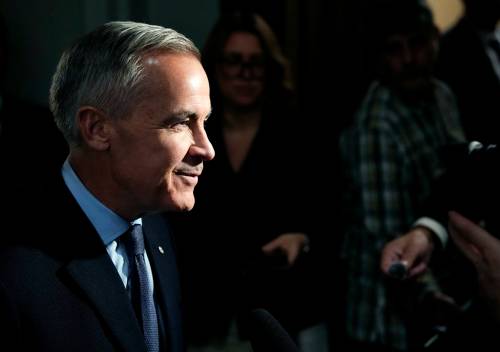
Chief Public Health Officer Theresa Tam responds to a question during a news conference Tuesday August 25, 2020 in Ottawa. THE CANADIAN PRESS/Adrian Wyld

More than 76 per cent of respondents in the Statistics Canada survey indicated they would likely get inoculated if and when a vaccine is ready. Yet 14 per cent said they were somewhat or very unlikely to do so. Nine per cent remained unsure.

Those who indicated they were unlikely to get a vaccine were asked to identify the reasons for their reluctance. More than half cited a lack of confidence in its safety while a similar number said they were worried about potential risks and side effects.

About one-quarter of respondents, who were allowed to give more than one answer, said they did not consider it necessary to get the vaccine while about 10 per cent indicated they did not believe in vaccines at all.

More than one-third said they would likely just wait until the vaccine seemed safe.

The survey also indicated younger Canadians and those who don’t have a university degree are more likely to be hesitant or nervous about a vaccine than those who are older and more educated.

The crowd-sourced survey of around 4,000 Canadians was conducted between June 15-21. It cannot be given a margin of error because the participants do not represent a random sample.

Asked about the survey, Tam underscored the importance of “vaccine confidence,” describing it as integral to the successful rollout of vaccine.

She went on to promise that regulators won’t take any shortcuts with safety despite the government agreeing to several changes to the clinical-trial process to get a potential COVID-19 vaccine developed faster.

“Just because it’s an accelerated process to get vaccines for Canadians does not mean we’re going to shortchange anything on safety and effectiveness,” Tam said. “I do have confidence in our regulatory system.”

Tam also took aim at the spread of falsehoods about vaccines online.

“I do think social media and internet companies do have responsibilities in terms of their role in the space,” she said.

“So I would look towards different partners, different government departments also coming together to look at how we better address some of the misinformation that’s in that space.”

She is not the first to speak out on this issue, as some have blamed the growing number and influence of anti-vaccination groups online for a resurgence in childhood diseases such as measles.

Facebook announced last year that it would be cracking down on so-called “anti-vaxxer” groups, which included labelling posts deemed as containing false information about vaccines. The social media giant now being sued by one such group in California.

Josh Greenberg, a communications professor at Carleton University who has been studying Canadians’ attitudes towards a COVID-19 vaccine, said safety concerns aren’t unexpected, given the pressure governments and industry are facing to get something working fast.

Yet he said it is essential that Ottawa push back against misinformation campaigns, which have been growing in numbers and influence even as governments around the world have been slow to react.

“When you look at issues like COVID-19 and the campaign to ready or prepare the public for the eventual release of a vaccine, you’re talking about a battle for both hearts and minds,” Greenberg said.

“It’s not just an information battle of trying to make sure that people have accurate information, but that you are persuading them in such a way that they trust the veracity of the information you’re providing and they also trust the source of that information.”

While the world is rushing to find a vaccine for COVID-19, new reports of several people having been reinfected with the novel coronavirus after testing positive once before raise concerns that it might be a moving target.

Deputy chief public health officer Dr. Howard Njoo said the cases in Hong Kong, Belgium and the Netherlands highlight ongoing questions about immunity to COVID-19 and the need for an effective vaccine.

This report by The Canadian Press was first published Aug. 25, 2020.

Report Error Submit a Tip

More Stories

The new normal in Canadian politics

David McLaughlin 5 minute read Preview

The new normal in Canadian politics

David McLaughlin 5 minute read Yesterday at 2:01 AM CDT

“Nothing happening, all at once.”

Welcome to the new normal of Canadian politics, where normality is the new normal. Routine and stable are in; disruptive and excessive are out. Exhibits A and B are the Alberta referendum and the British Columbia election. Voters opted for stability over volatility.

The opposite of being normal is being different from the norm. In politics that means different from where we’ve been and what we’ve come to expect. Two competing trends have dominated our politics for the past decade and a half — progressivism and populism. Think Justin Trudeau and liberal, progressive identity politics in Canada, and Donald Trump and conservative, populist MAGA politics in America. We are now experiencing a swing away from both those trends.

Representing this “new normal” are Prime Minister Mark Carney, for one, and newly elected British Columbia premier, Lorne Doerksen, for another. Both are considered normal because they talk and act like adults in a childish political world. Their political flair is to not have any political flair. They stand out for not standing out.

Read
Yesterday at 2:01 AM CDT

Canada tops Dominican Republic in pre-qualifier

Jason Hills, The Canadian Press 4 minute read Preview

Canada tops Dominican Republic in pre-qualifier

Jason Hills, The Canadian Press 4 minute read Sunday, Nov. 17, 2019

EDMONTON - Canada's women's basketball team put its depth on display Sunday in a dominant 110-60 victory over the Dominican Republic in the final game of the FIBA Olympic pre-qualifying tournament.

All 12 players hit the scoresheet, including six in double digits, to help the Canadians finish 3-0 at the tournament and advance to the next Olympic qualifier in February.

Sami Hill led the way with 16 points, three rebounds, two assists and three steals, while 20-year-old Shaina Pellington recorded 14 points. Bridget Carleton and Jamie Scott had 13 points each and Ruth Hamblin had 11 points and five rebounds.

"We got to roll our whole lineups through, and it was fun when we got going," said Canada's coach Lisa Thomaidis. "It was nice to see different lineup contributing and building chemistry.

Read
Sunday, Nov. 17, 2019

Teemu Selanne living the good life in southern California

Mike McIntyre 19 minute read Preview

Teemu Selanne living the good life in southern California

Mike McIntyre 19 minute read Friday, Oct. 15, 2021

LAGUNA BEACH — He likes his coffee black. His steak “medium rare plus.” And he’s an extremely generous pour, especially when it comes to a Moscow mule.

His left knee is giving him all sorts of trouble these days, he’s admittedly almost always running behind schedule and his biggest pride and joy are his four children, who keep him and his wife Sirpa hopping with their numerous athletic pursuits.

He is Teemu Selanne, the beloved Winnipeg Jets legend who, you’ll be happy to know, is still living the good life just a stone’s throw from the Pacific Ocean in this little piece of southern California paradise.

Despite being nearly eight years removed from the end of a Hall of Fame hockey career, the Finnish Flash remains a big deal around here. That was clear as we sat down earlier this week for an exclusive chat inside “Selanne’s Steak Tavern” — a high-end eatery he owns that sits along the stunning Pacific Coast Highway.

Read
Friday, Oct. 15, 2021

Winnipeg novelist's latest offering a riveting fictional account of missionaries' plight

Reviewed by Julienne Isaacs 5 minute read Preview

Winnipeg novelist's latest offering a riveting fictional account of missionaries' plight

Reviewed by Julienne Isaacs 5 minute read Saturday, Sep. 7, 2019

In 1955, five American missionary couples set out to evangelize the Waorani, an Indigenous people group of the Ecuadorian rainforest that had never had contact with the outside world. They dubbed their mission “Operation Auca.”

After a few months of airdropping gifts, the five men — Jim Elliot, Peter Fleming, Nate Saint, Ed McCully and Roger Youderian — opted to set up camp on a beach near a Waorani settlement. Just a few days later, they were all speared to death. Thanks to the swift arrival of a Life magazine photographer, the brutal conclusion to Operation Auca became global news.

In her new novel, Five Wives, Winnipeg writer Joan Thomas tells this story again.

“In the missionaries’ memoirs, ‘God’s leading’ explains almost every impulse,” Thomas writes in a postscript. “I set out to peer behind that, to explore in human terms actions that astonished me.”

Read
Saturday, Sep. 7, 2019

Tam warns against COVID-19 vaccine untruths

Lee Berthiaume, The Canadian Press 5 minute read Preview

Tam warns against COVID-19 vaccine untruths

Lee Berthiaume, The Canadian Press 5 minute read Tuesday, Aug. 25, 2020

OTTAWA - Canada's chief public health officer is warning against the spread of online untruths about vaccines, as a new survey suggests some Canadians are worried about getting inoculated against COVID-19.

Dr. Theresa Tam made the comments during a news conference Tuesday while responding to the Statistics Canada survey, which found nearly one-quarter of respondents unlikely or unsure whether they would get a COVID-19 vaccine.

Many experts and political leaders have touted the successful development and widespread rollout of a vaccine as essential for an eventual return to normalcy, including the full reopening of economies and ending physical distancing.

More than 76 per cent of respondents in the Statistics Canada survey indicated they would likely get inoculated if and when a vaccine is ready. Yet 14 per cent said they were somewhat or very unlikely to do so. Nine per cent remained unsure.

Read
Tuesday, Aug. 25, 2020

RRC Polytech program cuts take bite out of hospitality, tourism sector

Maggie Macintosh 4 minute read Preview

RRC Polytech program cuts take bite out of hospitality, tourism sector

Maggie Macintosh 4 minute read Saturday, May. 2, 2026

Manitoba’s tourism industry is bracing for the disappearance of hospitality training programs — once-popular courses among international students.

Citing budgetary challenges related to a shift in federal immigration policy, Red River College Polytechnic is scrapping 11 programs and scaling back three others in 2026-27. Its hospitality business management diploma is one of seven permanent casualties.

The announcement, while unsurprising, is but the latest blow to a sector trying to “build back the workforce” in the wake of the COVID-19 pandemic, said Michael Juce, president of the Manitoba Hotel Association.

“Are people going to go outside of Manitoba for training? And if they leave, are they going to come back?” Juce said, adding that rural hotels in particular are already grappling with staffing shortages.

Read
Saturday, May. 2, 2026