WEATHER ALERT

Quebec, Ontario chart own paths to post-COVID normalcy as death toll climbs

Advertisement

Advertise with us

TORONTO - The country's two largest provinces, with about 80 per cent of Canada's known cases of COVID-19, were taking different approaches to returning to normalcy amid federal projections on Tuesday that thousands more people would likely contract COVID-19 and hundreds more could die in the coming week.

Read this article for free:


By clicking the button above, an account will be created and you will begin to receive some of our recommended newsletters. You may opt out of any newsletter by visiting your Email and Communication Preferences page or by clicking "unsubscribe" at the bottom of any email.

or

Already have an account? Log in here »

To continue reading, please subscribe:

Digital Subscription

One year of digital access for only $1.44 a week*

  • Enjoy unlimited reading on winnipegfreepress.com
  • Read the E-Edition, our digital replica newspaper
  • Access News Break, our award-winning app
  • Play interactive puzzles

*Billed as $5.77 plus GST every four weeks. After 52 weeks, price increases to the regular rate of $19.95 plus GST every four weeks. Offer available to new and qualified returning subscribers only. Cancel any time.

To continue reading, please subscribe:

Add Free Press access to your Brandon Sun subscription for only an additional

$1 for the first 4 weeks*

  • Enjoy unlimited reading on winnipegfreepress.com
  • Read the E-Edition, our digital replica newspaper
  • Access News Break, our award-winning app
  • Play interactive puzzles
Start now

*Your next Brandon Sun subscription payment will increase by $1.00 and you will be charged $17.95 plus GST for four weeks. After four weeks, your payment will increase to $24.95 plus GST every four weeks.

Hey there, time traveller!
This article was published 28/04/2020 (2379 days ago), so information in it may no longer be current.

TORONTO – The country’s two largest provinces, with about 80 per cent of Canada’s known cases of COVID-19, were taking different approaches to returning to normalcy amid federal projections on Tuesday that thousands more people would likely contract COVID-19 and hundreds more could die in the coming week.

Quebec, which has been hardest hit, reported 83 new fatal cases for a total of 1,682. However, Premier Francois Legault said although deaths were rising in long-term care homes, they were largely stable elsewhere.

As a result, Legault said stores outside the Montreal region could start reopening on Monday and in the city a week later. Primary schools and daycares are also to reopen starting May 11.

Conservative leader Andrew Scheer listens to a question during a news conference in Ottawa, Monday, April 27, 2020. THE CANADIAN PRESS/Adrian Wyld

Ontario, on the other hand, has given no dates or schedule for lifting COVID restrictions, other than that schools will stay closed until at least the end of May. Premier Doug Ford has been adamant reopening depends on getting the virus spread under firm control.

“Let me be crystal clear: As long as this virus remains a threat to Ontario, we will continue to take every precaution necessary,” Ford said this week.

In its latest report, Ontario snapped a three-day string of declining new cases as another 59 more people died. The province was approaching 1,000 deaths.

Ontario’s Health Minister Christine Elliott did say about three dozen people were reported to have died because they were unable to have heart surgery due to the pandemic.

The world has now seen more than three million cases of COVID caused by the new coronavirus, with around 215,000 related deaths. Canada passed the 50,000 mark for known cases on Tuesday, more than 2,800 of them have been fatal.

Latest data indicate Canada’s case rate is doubling every 16 days rather than three to five days seen about three weeks ago. Dr. Theresa Tam, the country’s top public health officer, said outbreaks in long-term care and senior homes have driven the epidemic and were responsible for the vast majority of deaths.

While adults over the age of 60 accounted for 95 per cent of the more than 2,700 deaths, Tam warned no one was immune.

Prime Minister Justin Trudeau said caution remained the watchword when lifting restrictions that have devastated the economy.

“The measures we’ve taken so far are working,” Trudeau said at his daily briefing. “(But) if we lift measures too quickly, we might lose the progress we’ve made.”

As provinces announced plans for getting on the road to normalcy, the government released its framework for easing up on the restrictions. However, a co-ordinated and consistent approach was imperative, Trudeau added.

Getting the country moving, he said, won’t be an overnight process. Among other things, it will depend on capacity for testing and tracing infections, and ensuring that workers are safe on the job.

“Controlling transmission is key,” Trudeau said. “Restarting our economy will be gradual and careful, and will be guided by science.”

Prime Minister Justin Trudeau addresses Canadians on the COVID-19 pandemic from Rideau Cottage in Ottawa on Monday, April 27, 2020. THE CANADIAN PRESS/Sean Kilpatrick

In addition, the health-care system will have to be able to manage both COVID and non-COVID needs, which will be up to the provinces, which will need measures to protect seniors, inmates and other vulnerable groups, the guidelines state.

Prince Edward Island reported its first new case in two weeks on Tuesday, while Newfoundland reported no new cases, as did Manitoba and New Brunswick, which has gone 10 straight days without a new infection.

P.E.I. said non-urgent health care services, including some elective surgeries, would restart May 1, while some outdoor gatherings and recreational activities will also be allowed with appropriate physical distancing. Manitoba said it planned to test anyone with symptoms of coronavirus disease — even those with just a runny nose or cough.

While scientists work to develop a COVID-19 vaccine, a new Leger poll for the Association for Canadian Studies suggests 60 per cent of Canadians want inoculation to be mandatory, while the rest think it should be voluntary.

Trudeau said it was far too early to discuss whether everyone should have to get a shot.

“We are still unfortunately a long way from having a vaccine,” Trudeau said. “As far as the protocols are concerned, we still have a fair bit of time to reflect on that.”

As COVID-19 spreads in prisons, more than three dozen organizations demanded an immediate inquest into the April 15 death of a B.C. inmate due to the disease. The man died at Mission Institution, where more than 100 inmates have tested positive. At least 249 federal inmates were known to be infected.

-With files from Canadian Press reporters across the country.

This report by The Canadian Press was first published April 28, 2020

Report Error Submit a Tip

More Stories

Expect a reasonable approach to keep Manitoba’s minimum wage out of cellar

Tom Brodbeck 5 minute read Preview

Expect a reasonable approach to keep Manitoba’s minimum wage out of cellar

Tom Brodbeck 5 minute read Tuesday, May. 31, 2022

The devil will be in the details when it comes to how much the Stefanson government will increase the minimum wage in 2022 under proposed legislation that’s expected to become law this week.

My prediction: government will boost the base wage by at least $1.10 an hour this year.

As expected, the Stefanson government plans to alter its inflation-based formula for setting the minimum wage, which now stands at $11.95 an hour. Normally, the base wage is indexed to the previous year’s rate of inflation. That’s sound policy during normal times. However, with inflation growing at rates not seen in more than 30 years, an immediate adjustment is required to ensure minimum-wage earners don’t lose purchasing power.

Conservative governments in Saskatchewan, Ontario and New Brunswick have all announced significant increases to their base wages in 2022, putting pressure on the Stefanson government to follow suit. Failure to do so would see Manitoba’s minimum wage (previously scheduled to rise 40 cents an hour to $12.35 on Oct. 1) rank lowest in the country.

Read
Tuesday, May. 31, 2022

The ‘Gang of Nine’ and business as usual at city hall

Editorial 4 minute read Preview

The ‘Gang of Nine’ and business as usual at city hall

Editorial 4 minute read 2:00 AM EST

In the early 1990s, after the province reduced the number of municipal wards in Winnipeg to 15, critics spoke at length of how a theoretical “Gang of Eight” could control all decision making at city hall. In subsequent years, there were various incarnations of a Gang of Eight, although it was never conclusively shown that eight members of city council could consistently stay on the same page long enough to dominate civic affairs.

That is an apt tale to consider now, as Winnipeg city hall welcomes nine rookie councillors, the largest number of non-incumbents elected in more than 30 years.

Theoretically, this new group of councillors could band together and push through various reforms. It’s a highly intriguing scenario for anyone who has watched the city, on occasion, shun riskier strategies in favor of status quo politics.

However, as was the case in the early 1990s, the chances of that happening begin to fall apart once you consider the work of building and sustaining a coalition of rookie councillors who come from a broad array of backgrounds.

Read
2:00 AM EST

Comfort, kindness, acceptance and grandpa’s store

Deborah Schnitzer 5 minute read 2:00 AM EST

My grandfather, Ben W. Kert, had a women’s dress shop along Queen Street in Sault Ste. Marie where a number of Jewish men, many of them “Greenies” from the old country, owned and operated women’s haberdasheries with variable success.

Ben had come from Quebec via Northern Manitoba and Fort Frances, a singular man whose French was as good as his English and whose great heart filled my childhood with glory.

Unlike the other Jewish store owners, Ben W. was born in Trois-Rivières, the only male child who survived with five or six sisters born ahead of him.

Legend has it that my grandfather’s arrival and survival were celebrated with the nickname Sonny. When he left home at 15 (rumour claims his stepmother threw him out) and arrived in Montreal, his first employer would not accept the nickname, so my grandfather invented Ben W. on the spot. The W. never stood for anything. When he died, my mother discovered that his first name was actually Harry.

Bob Saget, beloved TV dad of 'Full House,' dead at 65

Lynn Elber, The Associated Press 6 minute read Preview

Bob Saget, beloved TV dad of 'Full House,' dead at 65

Lynn Elber, The Associated Press 6 minute read Monday, Jan. 10, 2022

LOS ANGELES (AP) — Bob Saget, the actor-comedian known for his role as beloved single dad Danny Tanner on the sitcom “Full House” and as the wisecracking host of “America’s Funniest Home Videos,” died while on a stand-up tour. He was 65.

Deputies in Orange County, Florida, were called Sunday about an “unresponsive man” in a hotel room at the Ritz-Carlton in Orlando and found Saget dead, according to a sheriff’s statement on Twitter. Detectives found “no signs of foul play or drug use in this case.”

Saget was in Florida as part of his “I Don't Do Negative Comedy Tour.” After warm audience receptions to his gigs Friday in Orlando and Saturday in the Ponte Vedra Beach resort area, he celebrated online.

“I’m back in comedy like I was when I was 26. I guess I’m finding my new voice and loving every moment of it,” he posted Saturday on Instagram.

Read
Monday, Jan. 10, 2022

Manitoba’s First Nations and the Indian Act

Hersh Seth 6 minute read 2:00 AM EST

On Monday in Ottawa, Manitoba Premier Wab Kinew called for the Indian Act to be abolished. Prime Minister Mark Carney said he was open to working with First Nations to reform or repeal this law, calling it racist.

The act was created in 1876 and still controls Indian status, reserve lands and band governance. It’s understandable why many people want a better relationship.

But repealing a law and building a new relationship are not the same. What would replace the act’s protections? Who decides? How do governments ensure removing federal authority gives First Nations power while the Crown keeps its promises?

Manitoba has faced these questions before. In 1971, First Nations created a document called Wahbung: Our Tomorrows, in response to then-prime minister Pierre Trudeau’s white paper on assimilation. More than 45 years later, elders and knowledge keepers met at Turtle Lodge, north of Winnipeg, to continue the conversation. Manitobans Dave Courchene Sr. and his son, Dave Courchene Jr., are generational links to the broader movement, and their story should be part of this discussion.

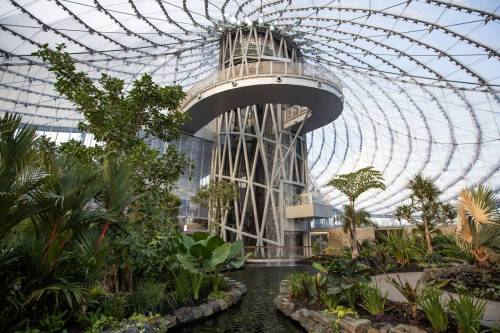
The Leaf at Assiniboine Park welcomes first visitors

Ryan Thorpe 5 minute read Preview

The Leaf at Assiniboine Park welcomes first visitors

Ryan Thorpe 5 minute read Saturday, Dec. 3, 2022

The parking lot was full and Winnipeggers came out in droves Saturday morning for the public opening of The Leaf, the new indoor horticultural attraction at Assiniboine Park.

Read
Saturday, Dec. 3, 2022