Delayed cardiac surgeries due to pandemic may have caused 35 deaths: minister
Advertisement
Read this article for free:
or
Already have an account? Log in here »
To continue reading, please subscribe:
Digital Subscription
One year of digital access for only $1.44 a week*
- Enjoy unlimited reading on winnipegfreepress.com
- Read the E-Edition, our digital replica newspaper
- Access News Break, our award-winning app
- Play interactive puzzles
*Billed as $5.77 plus GST every four weeks. After 52 weeks, price increases to the regular rate of $19.95 plus GST every four weeks. Offer available to new and qualified returning subscribers only. Cancel any time.
To continue reading, please subscribe:
Add Free Press access to your Brandon Sun subscription for only an additional
$1 for the first 4 weeks*
- Enjoy unlimited reading on winnipegfreepress.com
- Read the E-Edition, our digital replica newspaper
- Access News Break, our award-winning app
- Play interactive puzzles
*Your next Brandon Sun subscription payment will increase by $1.00 and you will be charged $17.95 plus GST for four weeks. After four weeks, your payment will increase to $24.95 plus GST every four weeks.
Read unlimited articles for free today:
or
Already have an account? Log in here »
Hey there, time traveller!
This article was published 28/04/2020 (2376 days ago), so information in it may no longer be current.
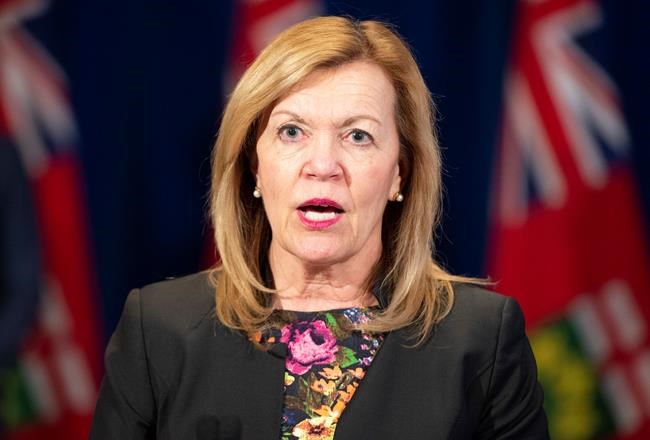
TORONTO – An Ontario hospital network has estimated that 35 people may have died during the COVID-19 pandemic because their cardiac surgeries weren’t performed, Health Minister Christine Elliott said Tuesday.
The modelling released by Toronto’s University Health Network looked at historical data to provide an estimate of how people scheduled for cardiac procedures may have been impacted by pandemic planning.
“Compared to the number of potential deaths of COVID-19 patients due to resource depletion under the worst case pandemic epidemiology scenarios, there was only a modest consequence in terms of wait-list morbidity and mortality, at least in the short term for pausing cardiac procedures,” the report found.
Future research should look determine the point at which foregoing procedures for cardiac patients in favour of COVID-19 patients results in more cardiac deaths than COVID-19 deaths.
Thousands of surgeries were postponed or cancelled in order to ensure enough acute and critical capacity in Ontario hospitals for a possible surge of COVID-19 patients.
“I don’t want to call it collateral damage because they are deaths and that is very concerning and sad to all of us, but we were required to make decisions,” Elliott said.
“Because of the space that was created in our hospitals and the decisions that were made to make sure that we had enough acute care and critical care beds and ventilators available for people with COVID-19 … thousands of lives were saved.”
The province’s Financial Accountability Office estimated Tuesday that between March 15 and April 22, up to 52,700 procedures were cancelled or avoided.
That freed up 6,849 acute care beds and 585 critical care beds, the FAO said.
Up to 12,200 more procedures are delayed every week of the pandemic.
“While lower demand for hospital services creates immediate availability of hospital resources for COVID-19 patients, it also will lead to significant demand pressure for hospitals in the longer-term,” the FAO report states.
“Since most of the delayed procedures are medically required, the longer procedures are postponed, the worse health outcomes Ontarians could have and the harder it will be for hospitals to eventually clear the backlog of delayed procedures.”
Ontario’s reopening framework released this week sets out resuming some surgeries in the first stage, and Elliott said cancer and cardiac procedures are priorities.
“Any death that’s happened as a result of COVID-19, whether directly or indirectly, is a tragedy,” she said.
Ontario’s chief medical officer of health said patients are continuing to have urgent surgeries, and if the condition of a patient previously scheduled for an elective surgery deteriorated, the doctor would ramp it up to an urgent issue.
Ontario reported 525 more COVID-19 cases Tuesday, ending several days in a row of declines in new cases and possibly pushing back any reopening of the province’s economy, though health officials said it may just be a blip.
Under the province’s reopening framework, the chief medical officer would be looking for a consistent, two-to-four-week decrease in the number of new cases before advising moving to the first stage.
As of Tuesday, the province had reported 15,381 cases of COVID-19, including 951 deaths and 8,964 resolved cases. The number of hospitalizations also rose Tuesday, though the number of people in intensive care and on ventilators declined slightly.
“We had three good days then all of a sudden today it spiked up again,” Premier Doug Ford said Tuesday. “We need consistency right across the board, to see a downward slope over the next couple of weeks.”
Ontario’s reopening framework contained few specifics, but Ford said later this week he will be releasing sector-specific guidelines for how businesses can safely operate, whenever they are allowed to reopen.
The province announced Tuesday it is launching a new website to solicit ideas for regulatory changes that can help businesses retool to produce health products or operate in new ways during the pandemic.
While health officials have said community spread is in a peak period, cases in long-term care homes are rising. There are outbreaks in 154 long-term care homes, up from 150 on Monday, and 34 new deaths in residents of those facilities were reported Tuesday.
Some homes have been hit particularly hard, with 11 of them reporting 20 or more deaths.

Ontario has called in operational support from the Canadian Armed Forces for five homes, including Orchard Villa in Pickering, which has seen 48 residents die, Eatonville Care Centre in Toronto, where 39 residents have died, Altamont Care Community in Toronto, where 32 residents and one personal support worker have died, and Hawthorne Place in Toronto and Holland Christian Homes’ Grace Manor in Brampton.
Two homes reported major increases in deaths from the previous day. The total at Isabel and Arthur Meighen Manor, a 52-bed facility in Toronto, rose from 22 on Monday to 32 on Tuesday. The total at Forest Heights in Kitchener rose from 24 to 31.
There are also 56 outbreaks in retirement homes, with 588 cases and 114 deaths in those facilities, the province said.
The NDP is calling for public health units to take over direct management of long-term care homes “where seniors aren’t well-protected,” and for the province to mandate requirements for infection control, staffing and communication with residents and their families.
This report by The Canadian Press was first published April 28, 2020.
Related Articles
Quebec, Ontario chart own ways to COVID normalcy
Advertisement Advertise With Us
Advertisement Advertise With Us