Quebec to reopen retail, construction and manufacturing businesses

Advertisement

Advertise with us

MONTREAL - Quebec's economic recovery plan unveiled Tuesday aims to reopen the province's retail, construction and manufacturing sectors by mid-May, allowing roughly 500,000 people who had been temporarily laid off during the pandemic to return to work.

Read this article for free:


By clicking the button above, an account will be created and you will begin to receive some of our recommended newsletters. You may opt out of any newsletter by visiting your Email and Communication Preferences page or by clicking "unsubscribe" at the bottom of any email.

or

Already have an account? Log in here »

To continue reading, please subscribe:

Digital Subscription

One year of digital access for only $1.44 a week*

  • Enjoy unlimited reading on winnipegfreepress.com
  • Read the E-Edition, our digital replica newspaper
  • Access News Break, our award-winning app
  • Play interactive puzzles

*Billed as $5.77 plus GST every four weeks. After 52 weeks, price increases to the regular rate of $19.95 plus GST every four weeks. Offer available to new and qualified returning subscribers only. Cancel any time.

To continue reading, please subscribe:

Add Free Press access to your Brandon Sun subscription for only an additional

$1 for the first 4 weeks*

  • Enjoy unlimited reading on winnipegfreepress.com
  • Read the E-Edition, our digital replica newspaper
  • Access News Break, our award-winning app
  • Play interactive puzzles
Start now

*Your next Brandon Sun subscription payment will increase by $1.00 and you will be charged $17.95 plus GST for four weeks. After four weeks, your payment will increase to $24.95 plus GST every four weeks.

Hey there, time traveller!
This article was published 28/04/2020 (2376 days ago), so information in it may no longer be current.

MONTREAL – Quebec’s economic recovery plan unveiled Tuesday aims to reopen the province’s retail, construction and manufacturing sectors by mid-May, allowing roughly 500,000 people who had been temporarily laid off during the pandemic to return to work.

Despite the fact Quebec has more than half of Canada’s total number of deaths related to COVID-19 and continues to record hundreds of new cases per day, Premier Francois Legault said the pandemic — outside long-term care homes — “is under control.”

“Our challenge is to gradually restart the economy without restarting the pandemic,” Legault told reporters in Quebec City.

Quebec Premier Francois Legault announces his intention to re-open primary schools in tow weeks, during a news conference on the COVID-19 pandemic, Monday, April 27, 2020 at the legislature in Quebec City. THE CANADIAN PRESS/Jacques Boissinot

Under his government’s plan, stores outside Montreal can reopen next Monday while those in the greater Montreal region will reopen May 11. Stores in shopping malls will remain closed, unless they can be accessed from outside.

The construction industry will completely reopen starting May 11, while manufacturing companies can resume operations the same day, with initial limits on the total number of employees who can work per shift.

All businesses that reopen will be required to follow guidelines put in place by the province’s workplace safety board, which will monitor and enforce the directives.

Quebec’s top doctor, Horacio Arruda, remained sanguine even as he gave reporters a dose of reality about the risks associated with gradually reopening the economy.

“It’s clear … there will be an increase in transmission in the community as soon we open a little,” said the province’s director of public health. “There could even be deaths.”

But health authorities will monitor the rate of infection, he said, adding that if they feel they are beginning to lose control of the contagion they will order businesses to shut their doors once again.

The question, Arruda explained, is how the province balances the risk of infection with the risks associated with confining millions of people and shuttering businesses for many more months.

“There are other determinants of public health in a society other than infectious disease,” Arruda said, citing divorce, child abuse and even suicide.

Authorities, Arruda continued, don’t want to keep everything closed until September and then reopen when the regular flu season comes.

“We are taking people who maybe will catch (COVID-19), but whose lives will be less affected by it,” he said. “Some people will be asymptomatic, others might need to be hospitalized. I hope not too many people will die.”

“But the virus is here,” he added. “It will be here for a while…. We know it’s a risky bet.”

Economy Minister Pierre Fitzgibbon said 1.2 million Quebecers have had to temporarily stop work since the province was put “on pause” last month to slow the spread of the novel coronavirus. The three sectors scheduled to reopen will permit roughly 500,000 people to return to work, he said.

The situation is stabilizing in most regions, Fitzgibbon added, and the measures announced Tuesday were drafted in consultation with organizations responsible for public health and worker safety. Fitzgibbon warned that if COVID-19 trends worsen, he won’t hesitate to restore the restrictions.

Quebec’s workplace safety board has created a series of guides for how businesses in retail, manufacturing and construction can safely reopen. Legault said the agency will be responsible for ensuring that businesses comply with the health and safety directives, but the premier did not give details on fines or other penalties that could be incurred.

The province’s business community rejoiced at Tuesday’s news. Labour unions were supportive yet cautious, saying they wanted employers to be held accountable for ensuring safe workplaces.

“We cannot fail, because no one wants to be responsible for a second wave of contagion,” said Pierre Brassard, president of CSN-Construction, a major union in Quebec.

Charles Millard, president of a prominent business lobby group, Federation des chambres de commerce du Quebec, called on the government to prepare a financial aid package to help companies comply with safety regulations.

“In some cases, such as in the food, manufacturing and construction sectors, companies will have to completely reorganize and renovate their workplaces as well as their production lines,” he said.

Quebec’s recovery strategy for businesses came a day after Legault announced elementary schools and daycares across the province would be reopened by May 19.

The province has reported 25,757 cases of COVID-19 to date and 1,682 deaths. Sixty-five per cent of those deaths came from people who were living in long-term care homes, which continue to struggle with controlling the contagion.

A new poll conducted by Leger in partnership with the Association for Canadian Studies indicated francophone Quebecers are less fearful of getting COVID-19 than are other Canadians. The web poll, which surveyed 2,015 Canadians between April 24 and 26, revealed 52 per cent of francophone Quebec respondents said they were not afraid of catching the virus, compared with 42 per cent of all respondents.

This report by The Canadian Press was first published April 28, 2020.

Report Error Submit a Tip

More Stories

Notable quotes from 2020 Tokyo Olympics

The Canadian Press 4 minute read Sunday, Jul. 25, 2021

Correctional Services Canada is reopening prison farms. But in B.C., where it has no such programs, a wife and her late husband, who killed a man in a botched holdup, started Emma’s Acres, a unique prison farm she hopes to see expanded.

Transit driver killed in knife attack on U of M campus

8 minute read Preview

Transit driver killed in knife attack on U of M campus

8 minute read Tuesday, Feb. 14, 2017

A Winnipeg Transit driver was killed early this morning after he was stabbed by the only passenger on his bus at the University of Manitoba campus.

Irvine Jubal Fraser, 58, was rushed to hospital in critical condition but later died, police said.

The attack occurred at about 2 a.m. in the area of Dafoe Road West and Gillson Street.

Witnesses pointed officers led by the canine unit in the direction of the Red River, where a 22-year-old suspect trying to cross to the St. Vital side was arrested and taken into custody.

Read
Tuesday, Feb. 14, 2017

Shocking development

Kelly Taylor 6 minute read Preview

Shocking development

Kelly Taylor 6 minute read 2:00 AM CDT

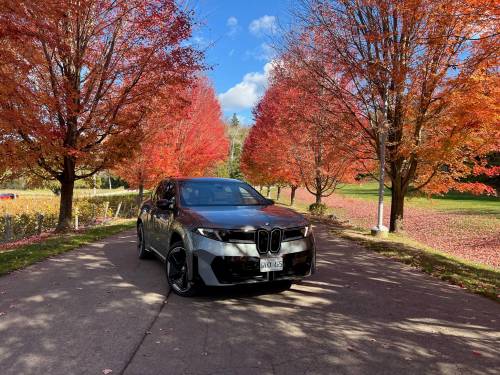
HOCKLEY VALLEY, Ont. — It’s not too often you get into a new vehicle, look at the interior, and say to yourself, “Wow, this is different… in a good way.”

Automakers tend to stick pretty close to defined norms, and when they differ, it’s not always successful. I’m looking at you, Toyota Yaris and Nissan X-Trail.

So, stepping into the 2027 BMW iX3 was refreshing. A bright parallelogram of a main touchscreen is closer to the driver than most, aided in no small part by pushing the instrument cluster to a narrow band just under the windscreen.

The effect is to clean up the look of the dash but without moving to a centre-mount instrument panel like the Yaris and X-Trail. The most valuable information (speed, battery charge, range) is right in front of the driver, visible above the top rim of the steering wheel.

Read
2:00 AM CDT

The volatile U.S. midterms

Allan Levine 5 minute read Preview

The volatile U.S. midterms

Allan Levine 5 minute read 2:00 AM CDT

The last time the Democratic Party had 218 or more seats — the number required to control the U.S. House of Representatives — was from 2021 to 2023, following the election of Democrat Joe Biden as president. During that same period, the Democrats also had the edge in the Senate. Despite a 50-50 split with the Republicans, Democrats were able to control the Senate with the help of Vice-President Kamala Harris, who cast the key vote in a tie. From 2023 to 2025, the Democrats had a slim 51 to 49 Senate majority.

If history repeats itself and the latest polls are fairly accurate, on Tuesday, Nov. 3, the Democratic Party will take back the House and (probably) the Senate from the Republicans, who have controlled both legislative bodies since the 2024 election. In the House, the Democrats have to gain at least three more seats. In the Senate, they have to win four more, which is entirely doable, though they almost certainly have to win a seat in Texas, Ohio, Kansas or Alaska, each of which currently has two Republican senators.

The prospect of a Democratic victory has President Donald Trump in a tizzy. For the past two years, he has abused his executive power to impose illegal tariffs on Canada and other countries; started a war with Iran; cozied up to Russian president Vladimir Putin and turned his back on Ukrainian president Volodymyr Zelenskyy; and increased the national debt through questionable tax cuts — to list only a few of his more egregious actions. He has been able to get away with this mainly because Republicans in the Senate and the House refuse to even question his decisions.

With the Democrats in charge, Trump’s brazen actions won’t be completely halted, but he will face significant legislative challenges and obstacles not easily dismissed. His controversial appointees, such as Attorney General Todd Blanche, who perceives himself as Trump’s private lawyer rather than the legal representative of the people, won’t get a free pass in committee hearings.

Read
2:00 AM CDT

Brian Bowman wins mayoral battle

Aldo Santin and Mary Agnes Welch 6 minute read Preview

Brian Bowman wins mayoral battle

Aldo Santin and Mary Agnes Welch 6 minute read Thursday, Oct. 23, 2014

In the end, it wasn’t even close.

A mayoral race that was supposed to be a head-to-head battle between privacy lawyer Brian Bowman and former NDP MP and MLA Judy Wasylycia-Leis turned into a rout on election night. Wasylycia-Leis, the experienced politician, had held what looked like an unassailable lead for months, but Bowman, the outsider who promised Winnipeggers a better, prosperous future, chipped doggedly away at it.

“I’m excited to tell you that positive change is coming to city hall,” Bowman told roaring supporters at the Inn At The Forks after making his way into the small ballroom accompanied by his wife and two young sons.

He said he hadn’t expecting such a landslide victory, but had believed that the campaign was building momentum.

Read
Thursday, Oct. 23, 2014

Science-art collaboration injects dose of emotion into cold, hard truths

Sarah Lawrynuik 5 minute read Preview

Science-art collaboration injects dose of emotion into cold, hard truths

Sarah Lawrynuik 5 minute read Wednesday, Apr. 28, 2021

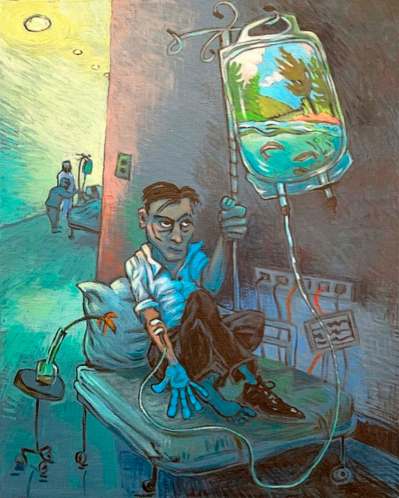
Looking at spreadsheets and map plots of trees is far beyond Rhian Brynjolson’s typical day as a visual artist, but she became entranced and inspired by data collected by Canadian scientists for a new art project.

Her hope is to try and bring the numbers, map dots and statistics to life in a new way to help the public better connect to climate science.

Falcon Lake’s Brynjolson is one of 12 Canadian artists who participated in an art-science collaboration exhibit, co-ordinated by the Global Water Futures program out of the University of Saskatchewan. The project saw the artists paired with researchers and scientists across the country who then engaged in conversations to try to inspire a new angle to their art.

“The whole idea behind it is: water is life,” says Louise Arnal, the project lead, and a post-doctoral fellow at the Centre for Hydrology and Coldwater Laboratory.

Read
Wednesday, Apr. 28, 2021