Canada’s top doctor says country ready with co-ordinated response to COVID-19

Advertisement

Advertise with us

OTTAWA - A Canadian patient newly diagnosed with COVID-19 recently travelled to Las Vegas and used public transit in Toronto for several days before he was tested for the virus, says the Toronto public health authority.

Read this article for free:


By clicking the button above, an account will be created and you will begin to receive some of our recommended newsletters. You may opt out of any newsletter by visiting your Email and Communication Preferences page or by clicking "unsubscribe" at the bottom of any email.

or

Already have an account? Log in here »

To continue reading, please subscribe:

Digital Subscription

One year of digital access for only $1.44 a week*

  • Enjoy unlimited reading on winnipegfreepress.com
  • Read the E-Edition, our digital replica newspaper
  • Access News Break, our award-winning app
  • Play interactive puzzles

*Billed as $5.77 plus GST every four weeks. After 52 weeks, price increases to the regular rate of $19.95 plus GST every four weeks. Offer available to new and qualified returning subscribers only. Cancel any time.

To continue reading, please subscribe:

Add Free Press access to your Brandon Sun subscription for only an additional

$1 for the first 4 weeks*

  • Enjoy unlimited reading on winnipegfreepress.com
  • Read the E-Edition, our digital replica newspaper
  • Access News Break, our award-winning app
  • Play interactive puzzles
Start now

*Your next Brandon Sun subscription payment will increase by $1.00 and you will be charged $17.95 plus GST for four weeks. After four weeks, your payment will increase to $24.95 plus GST every four weeks.

Hey there, time traveller!
This article was published 06/03/2020 (2433 days ago), so information in it may no longer be current.

OTTAWA – A Canadian patient newly diagnosed with COVID-19 recently travelled to Las Vegas and used public transit in Toronto for several days before he was tested for the virus, says the Toronto public health authority.

The man, who is in his 40s, was one of the two most recently confirmed cases of the novel coronavirus in Toronto.

“This information is being provided out of an abundance of caution. We’re talking about low-risk situations,” Dr. Eileen de Villa, Toronto’s top public health doctor, told a briefing Friday.

This undated electron microscope image made available by the U.S. National Institutes of Health in February 2020 shows the Novel Coronavirus SARS-CoV-2. Also known as 2019-nCoV, the virus causes COVID-19. Ontario now has 20 cases of the novel coronavirus, with two new people added to the tally today.THE CANADIAN PRESS/AP, NIAID-RML

Transit riders without COVID-19 symptoms do not need to seek medical help, de Villa said, unless they get a call from her unit.

The other Toronto case, a man in his 50s, recently returned to Canada from Iran. Both men are isolating themselves in their homes.

In Peel Region just west of Toronto, a couple who had been on the Grand Princess cruise ship in San Francisco was diagnosed after returning home to Mississauga, Ont.

Peel Public Health is asking passengers in rows 18 to 22 on WestJet Flight 1199 on Feb. 28 to self-isolate, but says the risk of contracting COVID-19 remains low.

Another 237 Canadians have been forbidden from leaving the ship after a subsequent cruise while some of the thousands of passengers aboard now are tested, says a spokesperson for Princess Cruises.

The Public Health Agency of Canada was trying to find more than 260 Canadians who were on the last voyage of the Grand Princess cruise ship after fellow Canadian passengers were diagnosed with COVID-19 following their cruise.

Three of Canada’s 54 confirmed or presumptive cases of the virus are among passengers who were on the vessel from Feb. 11 to 21. The cruise began and ended in San Francisco.

The ship is off the coast of California with 237 Canadians on board and forbidden from leaving, the cruise line says, and some of the thousands of passengers on board are being tested for the virus.

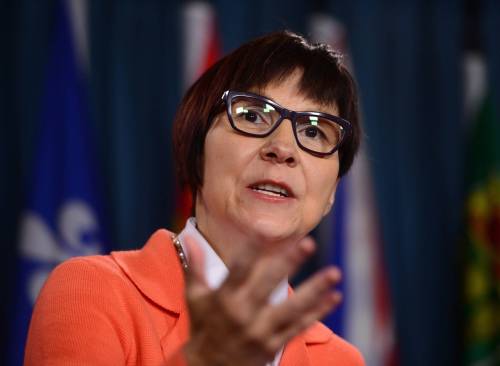
Chief public health officer Dr. Theresa Tam said most of the cases in Canada so far have been mild, and the patients are self isolating at home. About seven people are in hospital, but that does not necessarily mean those patients are severely ill, she said.

“We’ve been having these plans, we’ve rehearsed them, we’ve been through a previous pandemic, we’ve been through co-ordination for Ebola response, for example. So each individual player in the federal and provincial system knows how those co-ordination mechanisms work,” Tam told a news conference Friday.

So far in Ontario, all of the 28 patients known to be sick had recently travelled outside the country or were in close contact with another patient who had.

However, Canada’s first apparent case of community transmission was reported in British Columbia on Thursday night, when officials announced eight new cases of the illness.

They say a woman in the Vancouver area was diagnosed with COVID-19, even though she had not travelled recently and had no known contact with anyone else diagnosed with the virus.

Quebec has two confirmed cases and one presumptive diagnosis that still has to be confirmed by the National Microbiology Lab in Winnipeg. Alberta has reported two presumptive cases of the illness.

Health officials in Ontario, British Columbia and across Canada have said the risk posed by COVID-19 in this country remains low.

But they’ve been preparing for weeks for a possible outbreak similar to the ones seen in Iran, South Korea, Italy and China — where the virus originated.

Canada is increasing its funding for COVID-19 research by $20 million, Health Minister Patty Hajdu announced Friday, after concluding that the $7 million it had planned to spend isn’t enough.

The applications for the initial amount were “overwhelming,” Hajdu said.

Forty-seven research teams will now get backing from the federal government for work to “inform clinical and public health responses, develop and evaluate diagnostic tools and vaccines, as well as create strategies to tackle misinformation, stigma, and fear.”

“It also allows Canada to be at the ground level of this research so that when a vaccine is developed we are partners with other countries, that we can access that vaccine or that treatment quickly,” Hajdu said.

Meanwhile, the 129 Canadians who were quarantined after returning to Canada from a coronavirus-stricken cruise ship in Japan have finally been allowed to return home.

The Canadians were mostly confined to their rooms for two weeks aboard the Diamond Princess docked at Yokohama, Japan. The ship contained the largest outbreak outside of China at the time.

The Canadian government repatriated those without signs of the virus and put them under a further 14-day quarantine at the Nav Centre in Cornwall, Ont.

“These individuals remained asymptomatic for COVID-19 throughout the 14-day quarantine period and, as a result, they pose no risk to others and can safely return to their communities and to their usual activities,” Tam said in a written statement.

British Columbia Premier John Horgan announced the province is activating its provincial pandemic plan to deal with COVID-19, with a committee of deputy ministers overseeing the province’s response to the virus.

About about 2,000 people have already been tested and the province now has four labs to do the testing, Horgan said.

Health Minister Adrian Dix said the province is ready to use emergency powers to protect the population, health workers, and the health system’s capacity to help patients with other problems.

The B.C. government is also preparing for how it will function if large numbers of public employees get sick, Dix said, adding the plan is to be ready to operate under an outbreak that lasts up to four months.

This report by The Canadian Press was first published March 6, 2020.

—With files from Nicole Thompson and Michelle McQuigge in Toronto, and Laura Kane in Vancouver.

Report Error Submit a Tip

More Stories

City plans renos, repairs on underused, money-losing office tower next to police HQ

Joyanne Pursaga 4 minute read Preview

City plans renos, repairs on underused, money-losing office tower next to police HQ

Joyanne Pursaga 4 minute read 2:01 AM EST

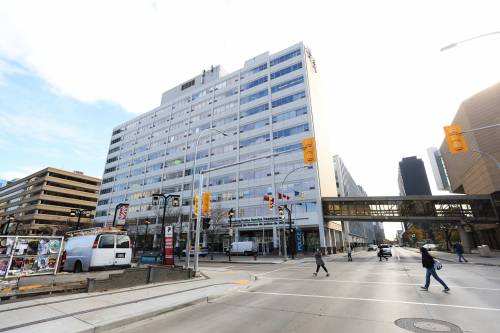
The city is preparing to repair two floors of the mostly vacant office tower linked to the Winnipeg Police Service headquarters that has cost taxpayers hundreds of thousands of dollars more each year than it earns.

The plan is to renovate the second and third floors of the 11-storey former Canada Post tower at 266 Graham Ave, including some repairs needed to meet current building codes, notes a tendering document seeking a contractor to do the work.

In 2009, the city spent $29 million to buy the Canada Post warehouse and the tower, as part of the scandal-plagued police HQ project. Police now work out of the former warehouse and utilize some space in the tower.

The repair work will include interior demolition, asbestos abatement, several fire safety and smoke detection upgrades and some replacement of partitions, doors, hardware and ceilings. The winning bidder will also complete electrical, mechanical and lighting upgrades.

Read
2:01 AM EST

Sarault wins silver medal in 1,000-metre

The Canadian Press 2 minute read Saturday, Feb. 8, 2020

DRESDEN, Germany - Canadian Courtney Sarault won a silver medal in the women's 1,000-metre event at the ISU short track World Cup on Saturday.

Sarault, from Moncton, N.B., took second place with a time of 1:55.143 — finishing behind South Korea's Kim Ji Yoo (1:54.955) and ahead of World Cup overall standings leader Suzanne Schulting of the Netherlands. (1:55.167).

"Going into the final, I didn't feel amazing, but I was trying to stay positive, and hoping to come out of it with a podium," said Sarault.

Meanwhile, Canada's Kim Boutin had her string of podium results come to an end at eight events.

Canada ready to respond to COVID-19: doctor

Laura Osman, The Canadian Press 6 minute read Preview

Canada ready to respond to COVID-19: doctor

Laura Osman, The Canadian Press 6 minute read Friday, Mar. 6, 2020

OTTAWA - A Canadian patient newly diagnosed with COVID-19 recently travelled to Las Vegas and used public transit in Toronto for several days before he was tested for the virus, says the Toronto public health authority.

The man, who is in his 40s, was one of the two most recently confirmed cases of the novel coronavirus in Toronto.

"This information is being provided out of an abundance of caution. We're talking about low-risk situations," Dr. Eileen de Villa, Toronto's top public health doctor, told a briefing Friday.

Transit riders without COVID-19 symptoms do not need to seek medical help, de Villa said, unless they get a call from her unit.

Read
Friday, Mar. 6, 2020

With the start of 2022 comes a new framework for Manitoba’s real estate industry

Ben Waldman 6 minute read Preview

With the start of 2022 comes a new framework for Manitoba’s real estate industry

Ben Waldman 6 minute read Monday, Jan. 10, 2022

New year, new rules for Manitoba real estate.

On Jan. 1, the Real Estate Services Act came into effect in the province, bringing with it an updated regulatory framework for the local industry to follow, along with some key changes for parties on either side of a real estate transaction.

One of the most notable changes to consumers is likely the introduction of a service agreement requirement: any buyers, sellers, or renters of residential or commercial properties are now required to sign such an agreement with a realtor prior to any services being rendered. But there are other moves that will impact real estate business moving forward.

The regulatory Manitoba Securities Commission’s real estate division consulted with industry groups such as the Manitoba Real Estate Association in drafting the legislation, which replaces the Real Estate Brokers Act, and which the commission’s website says “reflects the changing face” of the provincial real estate landscape.

Read
Monday, Jan. 10, 2022

First Nations child welfare deal victim of politics

Niigaan Sinclair 5 minute read Preview

First Nations child welfare deal victim of politics

Niigaan Sinclair 5 minute read Friday, Oct. 18, 2024

It was inevitable the proposed $47.8-billion deal — struck by the federal government, the Chiefs of Ontario, Nishnawbe Aski Nation and the Assembly of First Nations — to rectify the underfunding of on-reserve child welfare services, would be rejected.

If passed, it would have been the largest financial compensation and program allocation for First Nations in Canadian history, to address the needless suffering and apprehension of tens of thousands of children.

On Thursday, however, in a vote of 267-147, the majority of chiefs in Canada rejected the deal in a special meeting of the assembly in Calgary.

The Agreement on Long-Term Reform of the First Nations Child and Family Services Program was a deal forced by multiple decisions over two decades by the Canadian Human Rights Tribunal. After it ruled the experience of on-reserve First Nations children was discriminatory, it ordered the federal government to fix the system and compensate families and children forced into foster care.

Read
Friday, Oct. 18, 2024

NDP should heed own advice, bring back 50-50 funding

Mark Hudson 5 minute read 2:01 AM EST

Transit riders have a love-hate relationship with our “people’s limousine.” For many, it’s their only means of mobility. Others ride because they believe urban life is better when people use public transit rather than choking the roads with single-occupancy cars.

At the same time, one of life’s mid-sized stressors is peering into the distance on a cold, snowy Winnipeg morning to see whether your late bus is yet on the horizon and, when it appears, whether it’s full to capacity and going to roll past. It’s the kind of thing that pushes you back into the car, if you have access to one.

We could make a big dent in this daily anxiety, help pay transit workers fairly and do our part to stave off climate disaster by restoring a tried-and-true funding scheme: the 50-50 model. This shared-cost model, in which the provincial government pays half of transit operating costs over and above service revenues, was brought in when I was a kid waiting to board the bus with my parents in the 1970s.

The Progressive Conservative government of Gary Filmon initially ditched it in 1993. New Democrats reinstalled it in 2007, with then-Lt.-Gov. John Harvard announcing in the 2006 throne speech: “Manitoba is committed to increased provincial funding for transit operating costs in Thompson, Flin Flon, Brandon and Winnipeg, restoring the 50-50 funding partnership that was in place prior to the cutbacks of the 1990s.”