COVID-19 threatens Canadian aerospace companies as global air travel plummets

Advertisement

Advertise with us

MONTREAL - The novel coronavirus is wreaking havoc on the global airline sector, rippling outward to aerospace companies in Canada.

Read this article for free:


By clicking the button above, an account will be created and you will begin to receive some of our recommended newsletters. You may opt out of any newsletter by visiting your Email and Communication Preferences page or by clicking "unsubscribe" at the bottom of any email.

or

Already have an account? Log in here »

To continue reading, please subscribe:

Digital Subscription

One year of digital access for only $1.44 a week*

  • Enjoy unlimited reading on winnipegfreepress.com
  • Read the E-Edition, our digital replica newspaper
  • Access News Break, our award-winning app
  • Play interactive puzzles

*Billed as $5.77 plus GST every four weeks. After 52 weeks, price increases to the regular rate of $19.95 plus GST every four weeks. Offer available to new and qualified returning subscribers only. Cancel any time.

To continue reading, please subscribe:

Add Free Press access to your Brandon Sun subscription for only an additional

$1 for the first 4 weeks*

  • Enjoy unlimited reading on winnipegfreepress.com
  • Read the E-Edition, our digital replica newspaper
  • Access News Break, our award-winning app
  • Play interactive puzzles
Start now

*Your next Brandon Sun subscription payment will increase by $1.00 and you will be charged $17.95 plus GST for four weeks. After four weeks, your payment will increase to $24.95 plus GST every four weeks.

Hey there, time traveller!
This article was published 06/03/2020 (2431 days ago), so information in it may no longer be current.

MONTREAL – The novel coronavirus is wreaking havoc on the global airline sector, rippling outward to aerospace companies in Canada.

“The spread of the COVID-19 virus has already had a severe impact on demand for global air travel and the global airline industry and represents a clear threat to the sustainability of the current aerospace cycle,” National Bank analyst Cameron Doerksen said in a research note.

The International Air Transport Association (IATA) trade group forecasts that global passenger revenue could decline by US$113 billion or 13.5 per cent this year due to COVID-19, which has caused at least 3,200 deaths and spread to more than 100,000 people across some 90 countries as governments ramp up containment measures.

Cathay Pacific and Hong Kong Express aircrafts line up on the tarmac at the Hong Kong International Airport, Friday, March 6, 2020. The global airline's flying schedules have declined since the outbreak of new coronavirus COVID-19. (AP Photo/Kin Cheung)

That revenue figure, released Thursday, is four times the number sent out just two weeks ago by IATA, which is imploring governments for assistance.

It would also surpass the revenue dip of 6.7 per cent that followed the Sept. 11 attacks, approaching the 16.5 per cent fall after the 2008 financial crisis.

The outbreak is taking a toll on Air Canada, whose shares have fallen 27 per cent since Feb. 18.

That day, Air Canada forecasted a “small increase” in adjusted earnings for 2020 based on the assumption that its cancelled routes to mainland China and Hong Kong will be fully recovered by the third quarter, along with a gradual return to service of its 36 grounded Boeing 737 Max jets starting late in the same quarter.

Since then, however, the virus has propagated at a prodigious rate with recorded cases on every continent save Antarctica, sending markets tumbling.

“The impact on airline profitability appears to be worsening by the day, and the spread of the virus and the impact on air travel has rapidly exceeded expectations of just a few days and weeks ago,” wrote Ken Herbert, an industry analyst with Canaccord Genuity.

Declining airline reservations have trickled down to commercial aerospace companies.

Bombardier Inc., reduced to a single revenue stream after selling its rail division to French train giant Alstom SA last month, will likely face falling demand for new business jets in the event of a broader economic slowdown triggered by the outbreak, said Doerksen.

He said that while Chorus Aviation Inc.’s regional flight service for Air Canada will remain insulated from the headwinds, its global plane-leasing business is at risk.

Chorus spokeswoman Manon Stuart declined to comment on the potential effects of the virus.

“The impact of the COVID-19 virus is being felt worldwide. We are watching the developments carefully, but won’t speculate on hypothetical outcome,” she said.

Disruption could also reach flight simulator maker CAE Inc. if carriers impose a pilot hiring freeze, park planes and hold off on new deliveries.

New aircraft production rates are poised to come down as a result of the outbreak, Doerksen said.

“Most airlines have already cut capacity in the short term and we see lower capacity over the medium term and possible airline failures leading to fewer new aircraft orders,” he said.

Aircraft landing gear manufacturer Heroux-Devtek Inc. could feel the pinch if Boeing Co. lowers production for the 777X wide-body jetliner, but the company says it’s not anticipating any impact yet.

“We have multi-year long-term agreements with our clients. We don’t foresee any impact on our revenues related to COVID-19,” Heroux-Devtek said in an email.

This report by The Canadian Press was first published March 6, 2020.

Companies in this story: (TSX:AC, TSX:BBD.B, TSX:CHR, TSX:CAE, TSX:HRX)

With files from The Associated Press

Report Error Submit a Tip

More Stories

Brandon manufacturer says Canadian steel in demand, but high costs, long delivery times hit hard

Gabrielle Piché 6 minute read Preview

Brandon manufacturer says Canadian steel in demand, but high costs, long delivery times hit hard

Gabrielle Piché 6 minute read 2:01 AM CDT

Something’s different in a Brandon plant.

Building envelope panels — or shells for homes and commercial buildings — keep being produced at Greenstone Building Products.

But the galvanized steel used by workers has been arriving later and the price is constantly increasing, according to company leadership.

“It’s just a little bit nerve-wracking for us to hear the opposite narrative,” said Tilda Fortier, Greenstone Building Products’ business manager.

Read
2:01 AM CDT

Two U.S. presidents, and America’s decline

Editorial 4 minute read Preview

Two U.S. presidents, and America’s decline

Editorial 4 minute read Friday, Sep. 25, 2026

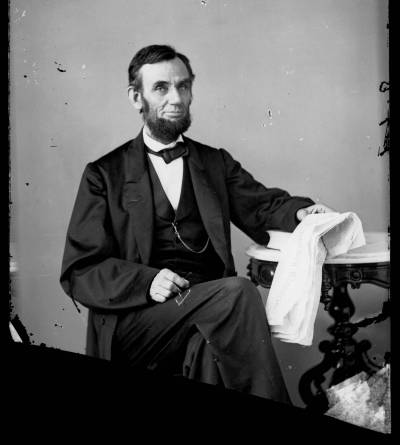
“Let us have faith that right makes might, and in that faith, let us, to the end, dare to do our duty as we understand it.” — Abraham Lincoln in his Cooper Union address, given in New York City in 1860.

“When you add the United States and Venezuela together, we have more than 60 per of the oil in the world. So it’s perhaps the biggest deal. It was a war, but it’s perhaps the biggest deal ever made. To the victor belong the spoils.” — U.S. President Donald Trump, speaking to the United Nations on Tuesday. (And a point of clarification — combining U.S. and Venezuelan oil would amount to 22 per cent of global oil reserves.)

It is quite the juxtaposition: Lincoln speaking in one of his strongest speeches, making the case that slavery should not be extended to the Northern Territories of the U.S. It was a sentence — the closing line in his speech, in fact — which argued that moral truth and justice will prevail against brute force, and that moral behaviour will, in itself, become power.

Donald Trump essentially argued that the obverse is true: that brute force justifies all behaviour — saying that might is right. The end of seizing control justifies the means, the means in this case being an invasion of Venezuela and the end being gaining de facto control of an independent nation’s resources.

Read
Friday, Sep. 25, 2026

Teemu Selanne living the good life in southern California

Mike McIntyre 19 minute read Preview

Teemu Selanne living the good life in southern California

Mike McIntyre 19 minute read Friday, Oct. 15, 2021

LAGUNA BEACH — He likes his coffee black. His steak “medium rare plus.” And he’s an extremely generous pour, especially when it comes to a Moscow mule.

His left knee is giving him all sorts of trouble these days, he’s admittedly almost always running behind schedule and his biggest pride and joy are his four children, who keep him and his wife Sirpa hopping with their numerous athletic pursuits.

He is Teemu Selanne, the beloved Winnipeg Jets legend who, you’ll be happy to know, is still living the good life just a stone’s throw from the Pacific Ocean in this little piece of southern California paradise.

Despite being nearly eight years removed from the end of a Hall of Fame hockey career, the Finnish Flash remains a big deal around here. That was clear as we sat down earlier this week for an exclusive chat inside “Selanne’s Steak Tavern” — a high-end eatery he owns that sits along the stunning Pacific Coast Highway.

Read
Friday, Oct. 15, 2021

Has the political wind changed?

Gwynne Dyer 5 minute read 2:01 AM CDT

It has been quite a week. First we had “Lula” – Luiz Inácio da Silva (as nobody but his mother ever called him) – defying everybody’s expectations. After winding up two million votes behind his challenger, Flávio Bolsonaro, in the first round of the Brazilian presidential election, he made a “miraculous” comeback in the second.

It was like a man going into a revolving door behind you and coming out in front. At the end of the first round, Lula was two million votes behind; at the end of the second round on Oct. 25 he was four million votes ahead. So how did he win a fourth term without cheating?

That’s what Bolsonaro claims he did, having fled to the United States; Trump, Flávio’s mentor, hints at the same. But Lula’s victory was not miraculous. He only learned to read when he was 10, and at 80 he still refused to have a mobile phone. His team finally made him get one and use it.

He wouldn’t do social media videos, so they created a WhatsApp channel called Lula’s Army, and made him appear on it at least daily. The channel went from zero to 10.8 million viewers in two weeks, and Lula won.

A little toponder, a lot to celebrate

Erna Buffie 5 minute read 2:01 AM CDT

Well, another civic election season has come and gone, and I have to say it was a doozy. The most surprising event was the steady climb in support for young mayoral candidate Noah Redden, who started out with just four per cent public support in September but had reached a solid 14 per cent support in October.

On election day, Redden nearly came in second, less than one percentage point behind Kevin Klein, an experienced politician.

Indeed, the 27-year-old’s accomplishment was nothing short of astonishing. Particularly given that his shoestring campaign was given very little coverage — largely, according to one pundit, because he didn’t send out any press releases.

This when Redden’s unwritten press releases were there for everyone to see on Instagram, as he popped up in locations across the city, posting videos about what he hoped to achieve as mayor.

One-on-one Journalism Training

0 minute read Wednesday, Jun. 18, 2025