“It’s like a cape”: experts share ways to get kids to practise mask hygiene

Advertisement

Advertise with us

An expert in pediatrics and infectious disease has advice for parents whose young children may be hesitant to wear face masks in school this fall.

Read this article for free:


or

Already have an account? Log in here »

To continue reading, please subscribe:

Subscribe and receive a limited-edition Free Press branded hat or tote.

Digital Subscription

One year of digital access for only $205*

  • Enjoy unlimited reading on winnipegfreepress.com
  • Read the E-Edition, our digital replica newspaper
  • Access News Break, our award-winning app
  • Play interactive puzzles

*First annual payment billed as $205.00 + GST for one year. This annual subscription will automatically renew at $233.00 + GST every 52 weeks (10% off the regular annual price of $259.35). Offer available to new and qualified returning subscribers only. Cancel any time.

To continue reading, please subscribe:

Add Free Press access to your Brandon Sun subscription for only an additional

$1 for the first 4 weeks*

  • Enjoy unlimited reading on winnipegfreepress.com
  • Read the E-Edition, our digital replica newspaper
  • Access News Break, our award-winning app
  • Play interactive puzzles
Start now

*Your next Brandon Sun subscription payment will increase by $1.00 and you will be charged $17.95 plus GST for four weeks. After four weeks, your payment will increase to $24.95 plus GST every four weeks.

Hey there, time traveller!
This article was published 02/09/2020 (2203 days ago), so information in it may no longer be current.

An expert in pediatrics and infectious disease has advice for parents whose young children may be hesitant to wear face masks in school this fall.

Treat those face coverings like a cape or a shield — something a superhero might wear.

“Kids are more likely to take care of something if they have ownership of it, so if there’s a way to personalize their mask — putting a logo on it, having it in their favourite colour — then do that,” said Dr. Anna Banerji, an associate professor at the University of Toronto.
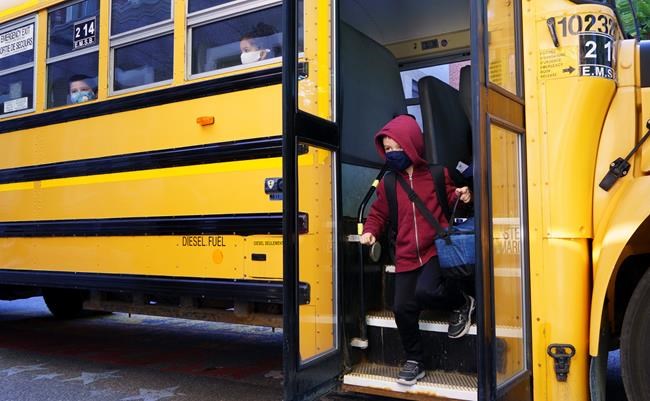
A student walks off the bus at the Bancroft Elementary School in Montreal, on Monday, August 31, 2020. THE CANADIAN PRESS/Paul Chiasson

“It’s like a cape, right? You say: ‘this is something to protect you and you have to take care of it.'”

Provinces have different guidelines when it comes to students wearing face masks.

Ontario made face coverings mandatory for Grades 4 to 12 in indoor common areas, including classrooms, while Quebec’s students in Grade 5 and up will wear them in all common areas except the classroom.

Alberta mandates masks for Grades 4 to 12 in areas such as hallways and on buses, and makes them optional for kids in kindergarten through Grade 3. B.C. students, meanwhile, are not required to wear masks, though the province says it will respect someone’s personal choice to wear one.

Dr. Allison Carroll, a pediatric respirologist with the University of Alberta, says mask-wearing will be just one aspect of COVID prevention in a school setting, and hand hygiene becomes increasingly important for kids who will be constantly putting on or removing masks from their faces.

Teaching kids to wash their hands or use sanitizers before removing the mask is Step 1, she says. Hands also need to be washed or sanitized before putting a mask back on.

Having a clean, dry place to store a mask when not in use is also key.

Carroll recommends an envelope or paper bag that can be kept on the corner of the child’s desk.

Tupperware containers or other non-breathable boxes are not advisable, she added. The same goes for attaching a face mask to a lanyard that can be worn around the neck.

“It’s like a cape, right? You say: ‘this is something to protect you and you have to take care of it.'”–Dr. Anna Banerji

“There is condensation that will accumulate on the mask while you’re wearing it, so an enclosed space may potentially keep the mask damp,” Carroll said. “And lanyards are not overly recommended because masks can become contaminated if they’re hanging there and touching other surfaces.”

Banerji says a lanyard, acting like a string that attaches a pair of mittens together, might be a solution if a kid is prone to losing things, however.

“It’s better to have a mask than no mask,” she said.

Misplaced masks can be solved by packing more than one. That will also help if one gets soiled during the day, Carroll said.

The experts suggest parents start teaching their children proper mask hygiene now so they’re ready to wear them for long stretches of the school day.

Getting them used to the feeling of wearing a mask can be done gradually, Carroll says, starting by covering mouths only, before moving them up over their noses.

“Once they’re comfortable with that you can get them to do activities like walking outside, doing some schoolwork at home, things they’ll be doing in a school environment,” she said.

Explaining why the new rules are in effect can help alleviate anxiety a child may have about wearing a mask, Banerji added.

“We have to reassure kids: ‘masks are there to protect you. The new procedures are in place to protect you and your friends,'” she said. “If the parents are very anxious, that feeds into the kid’s anxiety. So it’s really important for parents to stay calm.”

“Lanyards are not overly recommended because masks can become contaminated if they’re hanging there and touching other surfaces.”–Dr. Allison Carroll

When it comes to the mask itself, experts say comfort, fit and breathability are important, noting that regular off-the-shelf masks at a store may be too big for a child’s small face. Heavy fabrics should be avoided.

Masks with ear loops are recommended over ties for younger children who may not have the ability to handle knots on their own. Long strings can also be dangerous by posing risk of strangulation, Carroll says.

Parents can normalize mask-wearing as much as possible around their kids now, Carroll says, and that reinforcement should continue once school begins.

“Kids are amazingly adaptable and they model behaviour of friends and role models,” she said. “So having positive attitudes from families and teachers is important, and hopefully they’ll get positive attitudes from their peers too.”

This report by The Canadian Press was first published Sept. 2, 2020.

Report Error Submit a Tip

More Stories

Dark money drags democracy toward the abyss

Russell Wangersky 6 minute read Saturday, Sep. 12, 2026

There’s an object lesson playing out to the south of us, and not exactly the one you may be thinking about.

It’s not the obvious one of “don’t elect a federal leader who has a clear history of caring about his own grievances before he thinks about the needs of his citizens,” or more simply, “don’t elect someone who is less an agent of change than he is an agent of chaos.”

No, the lesson playing out to the south of us — one likely to have an impact on U.S. midterm elections later this fall as well as the last U.S. presidential election — is that there is a clear danger in allowing dark money to fuel political campaigns.

There are estimates that political action campaigns — or PACs — will once again dump billions of U.S. dollars into the mix, funding advertising campaigns and other political campaign efforts, and steamrolling less-funded efforts.

Drug recovery centre opens office in ‘heart of the city’

Morgan Modjeski 4 minute read Preview

Drug recovery centre opens office in ‘heart of the city’

Morgan Modjeski 4 minute read Saturday, Sep. 12, 2026

Richard Halverson found his freedom from addiction through Adult & Teen Challenge and, six years later, he hopes a new Winnipeg location will bring hope to the city.

Dozens gathered Saturday morning to mark the grand opening of the recovery centre’s community services office on Main Street.

Located inside the former Wojcik funeral home, the bright-white building — which was also formerly a liquor store — will serve as an access point for people fighting drug addiction. That includes connecting them to addictions support, housing and training.

“For me, I always start with: ‘What’s your story?’” said Halverson, who now works for the faith-based organization.

Read
Saturday, Sep. 12, 2026

Port of Churchill expansion could chase belugas away, U of M researcher says

Nicole Buffie 4 minute read Preview

Port of Churchill expansion could chase belugas away, U of M researcher says

Nicole Buffie 4 minute read Yesterday at 9:07 AM CDT

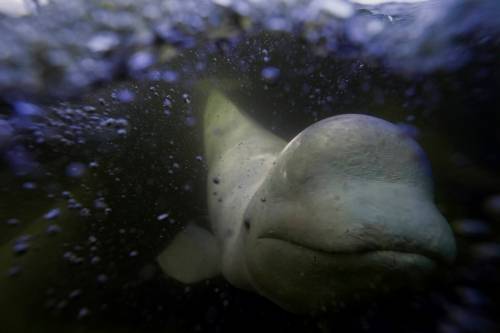
As plans to expand the Port of Churchill into a four-season trade corridor gathers momentum, a University of Manitoba researcher has published a report on what ship traffic could mean for the beluga whales that gather in the Churchill River estuary each summer.

Veronica Coppolaro said more vessels in the waterways bring a risk that belugas will stop using the estuary for migration, which would impact the ecological landscape, tourism and communities that rely on the animals for food and cultural purposes.

“There are studies showing that (noises) change the way they swim, they change the way (the whales) are vocalizing, they change their main activity, and so this (expansion) can have consequences at different levels,” she said.

The Churchill river estuary is a marine habitat where the Churchill River empties into Hudson Bay. During the summer months belugas gather in the area to feed and give birth.

Read
Yesterday at 9:07 AM CDT

250 years ago Thomas Jefferson and the American Declaration of Independence

Allan Levine 5 minute read Preview

250 years ago Thomas Jefferson and the American Declaration of Independence

Allan Levine 5 minute read Saturday, Jul. 4, 2026

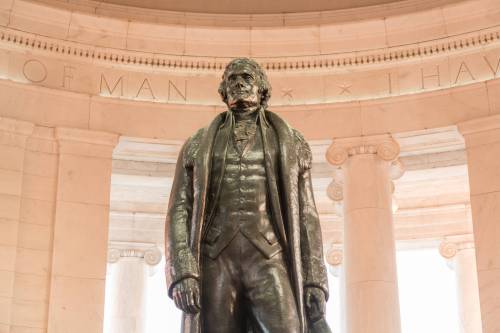
In the 16th and 17th centuries, countries and territories such as the Netherlands and Portugal boldly declared their independence from Spain. But 250 years ago, on July 4, 1776, the American Declaration of Independence — marked in the U.S. by the semiquincentennial celebrations — was the first time an overseas colony (the 13 colonies, in this case) had set out in an official document its reasons for breaking away from its mother country.

Because the Declaration ultimately gave birth to the United States, it is considered one of the greatest of historical treatises. Thomas Jefferson, its primary author, later explained that his main aim was “not to find out new principles, or new arguments, never before thought of … but to place before mankind the common sense of the subject; in terms so plain and firm as to command their assent.”

He did so brilliantly, creating, in theory at least, an enlightened argument for American independence based on the political, economic, social and philosophical thinking of the era.

Influenced by such philosophers as John Locke and Montesquieu, Jefferson, then 33 years old, a lawyer, landowner, Virginia politician and a delegate to the Second Continental Congress which met in Philadelphia, passionately believed in natural law — that all human beings were born free and equal and that no king or ruler could abolish these rights. It was a key point he made in the Declaration’s well-known preamble.

Read
Saturday, Jul. 4, 2026

Mayoral candidate denounced for online comments

Morgan Modjeski 3 minute read Preview

Mayoral candidate denounced for online comments

Morgan Modjeski 3 minute read Updated: Yesterday at 2:34 PM CDT

A Winnipeg mayoral candidate is facing criticism after he posted derogatory comments about immigrants and used the word “gay” as an insult online.

Sydney Adams said the response she got from Zac Uminski, who is seeking the city’s top office alongside 12 other individuals, left her baffled. She recently criticized Uminski over his use of artificial intelligence to produce campaign material, to which he replied he can’t afford to hire people to make art or “do whatever gay s—- you think is better than AI.”

“What was going through my head was that this is just unacceptable,” she said.

Adams said Uminski also posted other disparaging remarks about newcomers.

Read
Updated: Yesterday at 2:34 PM CDT

50 years ago, we thought we could change the world

Robert Milan and Miriam Cooley 8 minute read Preview

50 years ago, we thought we could change the world

Robert Milan and Miriam Cooley 8 minute read 2:00 AM CDT

Winnipeg, 50 years ago.

We began as a small loose unorganized group of teaching friends and educators who shared the same political and social convictions.

We defined ourselves as socialists, feminists and political activists. We were a cross section of educational minds — language arts and social studies teachers, an art teacher, an early childhood educator, a Winnipeg school trustee, a school principal — making our group quite representative of school culture at the time.

Our questions and discussions about politics, education and society arose from a diversity of backgrounds, yet reflected a progressive cohesiveness. The political climate in Manitoba helped bring us together. Sterling Lyon was premier and his Conservative government was pursuing policies that we strongly opposed. To us, his government represented a determined assault on many of the social and political values we believed in, particularly related to education. Eventually we decided that perhaps we should do more than talk. And so the Socialist Teachers Education Movement — STEM — was born.

Read
2:00 AM CDT