Experts scramble, but new virus vaccine may not come in time

Advertisement

Advertise with us

WASHINGTON - The flu-like virus that exploded from China has researchers worldwide once again scrambling to find a vaccine against a surprise health threat, with no guarantee one will arrive in time.

Read this article for free:


or

Already have an account? Log in here »

To continue reading, please subscribe:

Subscribe and receive a limited-edition Free Press branded hat or tote.

Digital Subscription

One year of digital access for only $205*

  • Enjoy unlimited reading on winnipegfreepress.com
  • Read the E-Edition, our digital replica newspaper
  • Access News Break, our award-winning app
  • Play interactive puzzles

*First annual payment billed as $205.00 + GST for one year. This annual subscription will automatically renew at $233.00 + GST every 52 weeks (10% off the regular annual price of $259.35). Offer available to new and qualified returning subscribers only. Cancel any time.

To continue reading, please subscribe:

Add Free Press access to your Brandon Sun subscription for only an additional

$1 for the first 4 weeks*

  • Enjoy unlimited reading on winnipegfreepress.com
  • Read the E-Edition, our digital replica newspaper
  • Access News Break, our award-winning app
  • Play interactive puzzles
Start now

*Your next Brandon Sun subscription payment will increase by $1.00 and you will be charged $17.95 plus GST for four weeks. After four weeks, your payment will increase to $24.95 plus GST every four weeks.

Hey there, time traveller!
This article was published 06/02/2020 (2402 days ago), so information in it may no longer be current.

WASHINGTON – The flu-like virus that exploded from China has researchers worldwide once again scrambling to find a vaccine against a surprise health threat, with no guarantee one will arrive in time.

Just days after Chinese scientists shared the genetic map of the culprit coronavirus, researchers at the U.S. National Institutes of Health had engineered a possible key ingredient for a vaccine they hope to begin testing by April.

Scientists from Australia to France, along with a list of biotech and vaccine companies, jumped in the race, pursuing different types of inoculations.
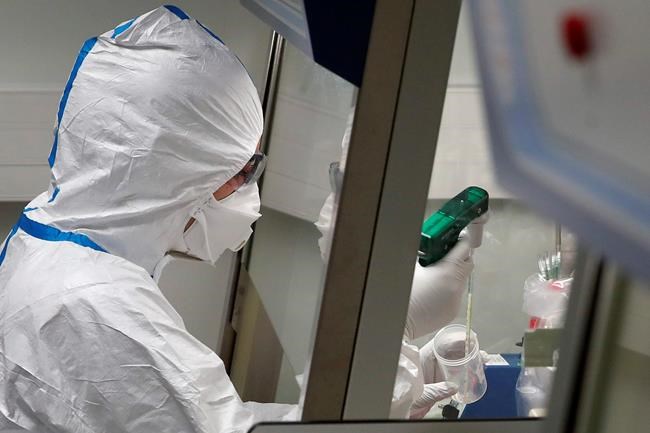
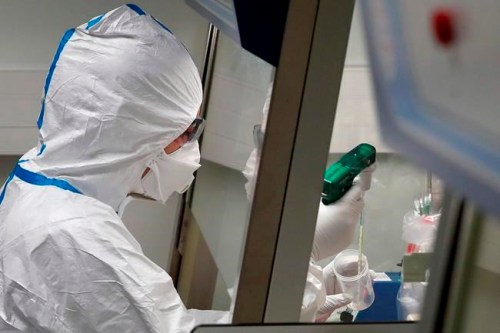
French lab scientist in hazmat gear inserting liquid in test tube manipulates potentially infected patient samples at Pasteur Institute in Paris, Thursday, Feb. 6, 2020. Scientists at the Pasteur Institute developed and shared a quick test for the new virus that is spreading worldwide, and are using genetic information about the coronavirus to develop a potential vaccine and treatments. (AP Photo/Francois Mori)

And Texas researchers froze an experimental vaccine developed too late to fight an earlier coronavirus — SARS, or severe acute respiratory syndrome — but are pushing U.S. and Chinese authorities to give it a try this time around. Because the new virus is a close cousin of SARS, it just might protect, said Dr. Peter Hotez of Baylor College of Medicine and Texas Children’s Hospital.

All that work is coming at lightning speed compared to past outbreaks. Yet many experts agree it still may take a year — if every step along the way goes well — for any vaccine to be ready for widespread use. That’s if it’s even needed by then.

Globally, more than 31,400 people are infected and the death toll climbed past 630. The overwhelming majority are in China, but more than 310 people with the illness have been reported in over two dozen other countries.

For now, health officials are isolating the sick to fight spread of the virus, which causes fever, cough and in severe cases pneumonia. With no specific treatment, some doctors also are experimenting with antiviral medicines developed for other conditions.

“Ours is already manufactured and could take off pretty quickly,” said Hotez, who created the earlier SARS vaccine with Texas Children’s colleague Maria Elena Bottazzi. But “there’s still no road map for what you do to make a vaccine in the midst of a devastating public health outbreak.”

NIH specialists say rather than chasing outbreaks, it’s time to pursue prototype vaccine designs that could work for entire virus families, ready to be pulled off the shelf at the first sign of a new disease.

“We have the technology now. It’s feasible from an engineering and biological standpoint,” said Dr. Barney Graham, deputy director of the National Institute of Allergy and Infectious Diseases’ Vaccine Research Center. Without that step, “we’re going to be at risk for new pandemics.”

A FASTER VACCINE RECIPE

Traditionally, making vaccines required first growing lots of virus in a lab. The NIH team is pursuing a newer and far faster method: Simply use a piece of the virus’ genetic code, called messenger RNA or mRNA, that instructs cells to make a particular protein.

“We think of RNA as the software of life,” said Dr. Tal Zaks, chief medical officer of Moderna Inc., which is developing mRNA vaccines for other diseases and working with NIH on the new coronavirus.

Inject the right piece and “you’ve taught the body to make its own medicine,” he explained. As cells produce just that protein, the immune system learns to recognize it, primed to attack if the entire virus ever comes along.
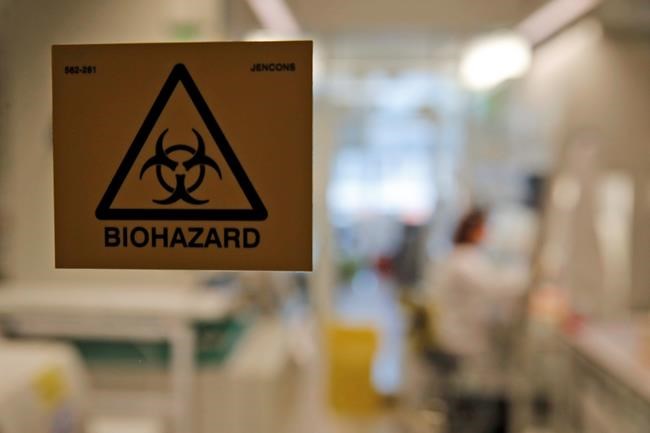
French lab scientists are silhouetted working in a lab at Pasteur Institute in Paris, Thursday, Feb. 6, 2020. Scientists at the Pasteur Institute developed and shared a quick test for the new virus that is spreading worldwide, and are using genetic information about the coronavirus to develop a potential vaccine and treatments. (AP Photo/Francois Mori)

The target: A protein aptly named “spike” that lets the virus bind to cells. It studs the surface of coronaviruses — the new one as well as its cousins SARS, which erupted in China in 2002 and spread to 26 countries, and MERS, or Middle East respiratory syndrome, which emerged in 2012.

Graham’s team zeroed in on the RNA responsible for the new virus’ production of spike and then — because prior research showed the protein can change shape — engineered a more stable version of it.

Moderna is manufacturing samples of the synthetic mRNA vaccine for NIH to use in animal studies and, hopefully within three months, first-stage safety tests in people. If further testing proves it really works, the hope is scientists could simply swap in a new spike code if another coronavirus comes along.

That’s important because after three such outbreaks in less than 20 years, “this is not the last,” predicted Dr. Mark Denison, a virologist at Vanderbilt University Medical Center. It’s key to find vaccine “strategies that go after these unique things common to every coronavirus.”

WHAT ELSE IS IN THE PIPELINE

Inovio Pharmaceuticals is pursuing a similar approach with synthetic DNA, and recently reported promising results from first-stage testing of a MERS vaccine. It’s collaborating with a Chinese company, Beijing Advaccine, in hopes of being able to test a new vaccine candidate in China later this year.

In France, researchers at the Pasteur Institute are piggybacking on the tried-and-true vaccine against measles. They’ve had some early success mixing genetic material from other viruses into that vaccine, and now hope to put the immune system on alert against this new coronavirus in the same way.

“The work we’re doing now involves making a vaccine against measles but re-engineered in the sense that it has antigens from the new coronavirus,” said virologist Frederic Tangy, head of Pasteur’s vaccine innovation department.

What about Hotez’s old SARS vaccine? In that case a piece of the spike protein was genetically engineered and grown in a lab, a classic vaccine technology compared to the newer and less proven Moderna and Inovio approaches. The Texas researchers showed the vaccine protected animals but in 2016 ran out of money for further testing and froze what was left. Every six months, Hotez thaws a small sample to make sure it’s still usable.

CHASING OUTBREAKS

Past outbreaks are full of such missed opportunities: There’s no commercial vaccine for MERS even though illnesses still occur. The birth defect-causing Zika outbreak was ending by the time experimental shots were ready to test.
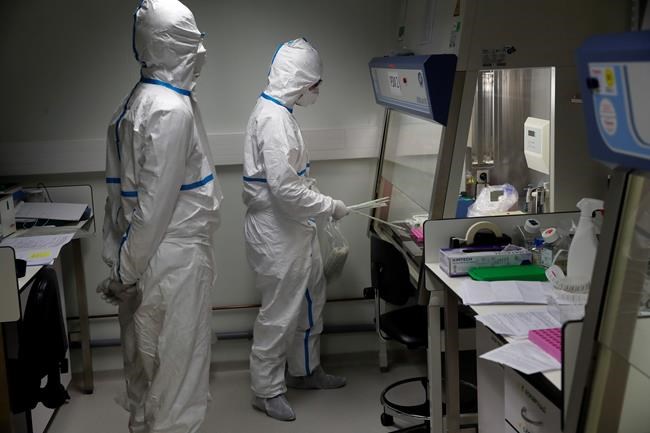
French lab scientists in hazmat gear inserting liquid in test tube manipulate potentially infected patient samples at Pasteur Institute in Paris, Thursday, Feb. 6, 2020. Scientists at the Pasteur Institute developed and shared a quick test for the new virus that is spreading worldwide, and are using genetic information about the coronavirus to develop a potential vaccine and treatments. (AP Photo/Francois Mori)

The bright spot: Ebola vaccines. Some candidates began early testing during the massive Ebola epidemic in West Africa in 2014-2016, although the outbreak waned before scientists had proof they worked. But authorities and vaccine companies kept up the research, and by 2018 shots were ready to help tamp down an outbreak still smouldering in Congo.

The World Health Organization will meet next week to identify promising drug and vaccine candidates for the new coronavirus and fast-track their development, much like happened with Ebola.

“To put it bluntly, we’re shadow boxing,” said WHO Director-General Tedros Adhanom Ghebreyesus. “We need to bring this shadow out into the light so that we can attack it properly.”

___

Associated Press writers Rodrique Ngowi in Boston, Alex Turnbull in Paris and Maria Cheng in London contributed to this report.

___

The Associated Press Health and Science Department receives support from the Howard Hughes Medical Institute’s Department of Science Education. The AP is solely responsible for all content.

Report Error Submit a Tip

More Stories

Conflict confusion of interest to Manitobans

Dan Lett 5 minute read Preview

Conflict confusion of interest to Manitobans

Dan Lett 5 minute read Monday, Mar. 1, 2021

Was Paul Beauregard guilty of a conflict of interest?

That is the question left hanging in the air following a remarkable week of disclosures, allegations and counter-allegations.

The Manitoba NDP claims Beauregard, former secretary to the Treasury Board, had improperly interceded in the awarding of a contract to his former employer, Bell MTS.

The party and MLA Adrien Sala devoted a considerable amount of time in 2020 pursuing such allegations against Beauregard who, in turn, filed a complaint against the official Opposition under the legislature's Respectful Workplace Policy.

Read
Monday, Mar. 1, 2021

Four sports to make their Olympic debut in Tokyo

Gregory Strong, The Canadian Press 4 minute read Preview

Four sports to make their Olympic debut in Tokyo

Gregory Strong, The Canadian Press 4 minute read Monday, Jul. 12, 2021

Up for some kickflips and ollies? Ready for a dyno on the climbing wall? How about a goofy-footer carving waves? Will you watch the karatekas in kumite or kata?

Four sports will make their Olympic debut this year and they'll bring some new lingo and a freshness injection along with them. Karate, sport climbing, skateboarding and surfing are all on the program for the July 23-Aug. 8 Games in Tokyo.

One thing is clear after the additions: these are no longer your parents' Summer Olympics.

"I think that as the world evolves, as the Olympics evolve, as generations come and go, I think that if the Olympics didn't add and sometimes remove sports, I think that they would become old with themselves," said Canadian climber Sean McColl.

Read
Monday, Jul. 12, 2021

Explaining Canada’s superior employment rate

Wayne Simpson 5 minute read Preview

Explaining Canada’s superior employment rate

Wayne Simpson 5 minute read 2:00 AM CDT

Donald Trump regularly makes outrageous claims. Fentanyl was pouring across the northern border from Canada and had to be stopped. Canada is nasty to deal with and has the highest tariffs in the world. Canada needs the U.S. but the U.S. doesn’t need Canada. Canadians want to become the 51st state. And so on.

In the latest trade dispute, after Mark Carney walked away from negotiations, Trump made a new claim that Canada’s unemployment rate was 10 per cent and climbing rapidly. Insofar as the unemployment rate is closely monitored, reported monthly, and given similar attention to the rates of inflation and economic growth, the comment was likely intended to signal Canada’s weakness. It fits Trump’s narrative that Canada needs the U.S. for its livelihood and protection and would be better off more directly under U.S. influence as a 51st state, or perhaps a protectorate like the Philippines or Panama in the past.

Fact checkers quickly reported that Canada’s unemployment rate is really 6.4 per cent for July, not 10 per cent, has fallen from 6.9 per cent in April, and is at its lowest rate since May 2024. Some astute observers pointed out that Canada’s method for the calculation of the unemployment rate leads to a higher rate than the U.S. by about one per cent. Under the American methodology, then, our unemployment rate would be 5.4 per cent, not that far off the U.S. July rate of 4.1 per cent.

Detection of unemployment is less straightforward that might appear, as it is sandwiched between the labour force statuses of employment and inactivity at a particular point in time. The internationally established standard for determination of unemployment is the notion of searching for work — you are unemployed if you do not have paid employment and you are looking for work without success. Surveys have been developed to categorize respondents as employed, unemployed or inactive, including the labour force survey (LFS) in Canada and the current population survey (CPS) in the U.S.

Read
2:00 AM CDT

‘We’re just all thankful to have some baseball’

Mike McIntyre 6 minute read Preview

‘We’re just all thankful to have some baseball’

Mike McIntyre 6 minute read Wednesday, Jun. 24, 2020

Driving more than 2,000 kilometres in less than a day might seem like the equivalent of getting a root canal to many. But it's a journey Winnipeg Goldeyes manager Rick Forney was happy to make this week, one that started from his residence in Maryland and ended in his most unusual temporary baseball home of Fargo, N.D.

Unable to play games at Shaw Park this summer owing to COVID-19 restrictions banning large gatherings for sporting events until at least September, the Fish will instead fly in enemy territory. An abbreviated spring training gets underway Thursday followed by an abbreviated 60-game American Association baseball season starting July 3.

Forney's 24th season with the Goldeyes, including the past 15 as skipper, is going to be unlike any other.

"It's not ideal, but it's not a reason to not work. If the Goldeyes are going to operate in any fashion, then I want to be a part of it," Forney said by telephone as he passed the midway point of his solo trek just outside Chicago.

Read
Wednesday, Jun. 24, 2020

Comic creator unleashes talent with book bound for festival

Sheldon Birnie 6 minute read Preview

Comic creator unleashes talent with book bound for festival

Sheldon Birnie 6 minute read 2:01 AM CDT

For Glenn Hares, comic books — specifically, superhero comics — have always been a refuge, a way to both understand and escape the world.

Now, he’s prepared to release his own into the world.

“When I was in high school, I started creating characters, like this guy here,” says Hares, 40, showing a reporter a copy of the self-published Tytanium No. 0.

“Originally, he was just named Jerry Wolfe. Recently, my aunt suggested I make him neurodivergent because I based him on myself. A lot of superheroes have extraordinary, fantastic, out-of-the-ordinary powers, but they’re also just people. They live imperfect lives.”

Read
2:01 AM CDT

Man who pleaded guilty to killing three cats dies before sentencing

Morgan Modjeski 3 minute read Preview

Man who pleaded guilty to killing three cats dies before sentencing

Morgan Modjeski 3 minute read 2:00 AM CDT

A Winnipeg man awaiting sentencing after admitting he strangled three cats to death and dumped two of their carcasses under a city bridge, has died, the Free Press has learned.

Randy Jensen, 25, pleaded guilty on May 13 to one count of wilfully causing injury or suffering to animals in connection to the 2024 killings.

He was scheduled to be sentenced in January.

“That’s not something that anybody wanted,” said Kristy Zamonsky, founder of Project Artemis Animal Advocates. “We were all hoping for justice through the courts.”

Read
2:00 AM CDT