House of Commons passes Emergencies Act motion after fractious debate

Advertisement

Advertise with us

OTTAWA - The House of Commons has passed a motion to approve extraordinary, time-limited measures in the Emergencies Act, which Prime Minister Justin Trudeau invoked last week in a bid to end blockades in Ottawa and at several border crossings.

Read this article for free:


By clicking the button above, an account will be created and you will begin to receive some of our recommended newsletters. You may opt out of any newsletter by visiting your Email and Communication Preferences page or by clicking "unsubscribe" at the bottom of any email.

or

Already have an account? Log in here »

To continue reading, please subscribe:

Digital Subscription

One year of digital access for only $1.44 a week*

  • Enjoy unlimited reading on winnipegfreepress.com
  • Read the E-Edition, our digital replica newspaper
  • Access News Break, our award-winning app
  • Play interactive puzzles

*Billed as $5.77 plus GST every four weeks. After 52 weeks, price increases to the regular rate of $19.95 plus GST every four weeks. Offer available to new and qualified returning subscribers only. Cancel any time.

To continue reading, please subscribe:

Add Free Press access to your Brandon Sun subscription for only an additional

$1 for the first 4 weeks*

  • Enjoy unlimited reading on winnipegfreepress.com
  • Read the E-Edition, our digital replica newspaper
  • Access News Break, our award-winning app
  • Play interactive puzzles
Start now

*Your next Brandon Sun subscription payment will increase by $1.00 and you will be charged $17.95 plus GST for four weeks. After four weeks, your payment will increase to $24.95 plus GST every four weeks.

Hey there, time traveller!
This article was published 21/02/2022 (1713 days ago), so information in it may no longer be current.

OTTAWA – The House of Commons has passed a motion to approve extraordinary, time-limited measures in the Emergencies Act, which Prime Minister Justin Trudeau invoked last week in a bid to end blockades in Ottawa and at several border crossings.

The motion to confirm the declaration of emergency powers passed 185-151 on Monday evening with the New Democrats voting in favour alongside the minority Liberal government.

New Democrat Leader Jagmeet Singh said earlier Monday his party would support the motion, but would withdraw that support as soon as it decides the measures are no longer necessary, including if remaining convoy members stopped lingering in Ottawa and near border crossings.

Debris lays on the ground in front of Parliament Hill’s gates after police took action to clear the street of trucks and protesters to end a protest, which started in opposition to mandatory COVID-19 vaccine mandates and grew into a broader anti-government demonstration and occupation, on its 23rd day, in Ottawa, Saturday, Feb. 19, 2022. Being able to designate no-go zones, ensure tow trucks were available to remove vehicles and stop the flow of money and goods keeping the demonstrators fed and fuelled are all clear reasons the Emergencies Act was needed to end the Ottawa blockades, Public Safety Minister Marco Mendicino said. THE CANADIAN PRESS/Justin Tang

The Conservatives and the Bloc Québécois opposed it, while the two Green MPs in the House were split.

The vote to approve the measures will keep them in place until mid-March at the latest. The Senate must also vote on the government’s request. At any point, the Senate, House of Commons or government could pull support and the extraordinary powers stemming from the emergencies law would be revoked.

Leading up to the vote, there were signs the government had decided to make it a confidence vote, meaning that if it failed, the minority Liberal government could have fallen, which would have triggered an election.

Trudeau had not officially designated the vote as such, but he opened the door to that interpretation by likening the decision to a vote on a throne speech, which lays out the government’s agenda.

“I can’t imagine that anyone who votes ‘no’ tonight is doing anything other than indicating that they don’t trust the government to make incredibly momentous and important decisions at a very difficult time,” he said at a news conference earlier in the day.

Just before the voting began around 8 p.m. EST Monday, government House leader Mark Holland was asked by the Conservatives to clarify whether this was a confidence vote.

“It’s time to vote,” he replied.

Singh said his party had always seen the vote as a confidence matter.

Toronto Liberal MP Nathaniel Erskine-Smith, who voted in favour, said in the debate he might have voted against continuing to use the act now that the blockades had ended. He said he would vote yes because he had no interest in helping trigger an election.

Joël Lightbound, a Liberal MP who has criticized the government over its handling of the crisis, said invoking the act was “a slippery slope.” He said he would be inclined to vote against the measures if it were not a vote of confidence, and asked for clarification from ministers. He also voted in favour of the motion Monday night.

Without any clear indication from Trudeau’s office or caucus whips, the Official Opposition criticized the prime minister for what B.C. MP Todd Doherty styled a “veiled threat” of an election because his leadership was “threatened” and “fragile.”

Bloc Québécois Leader Yves-François Blanchet said Trudeau seemed to have made the matter a vote of confidence because he was afraid of his own caucus. Bloc MP Martin Champoux questioned the validity of the vote and accused Trudeau of “twisting the arm” of people who might otherwise disagree.

After a weekend of fractious debate while police cleared protesters by Parliament Hill, the final hours Monday were peppered with barbs at Trudeau and Singh for giving the prime minister the backing he needed.

“When did the NDP lose their way?” B.C. Conservative Dan Albas asked, arguing that the use of the Emergencies Act “would further divide Canadians.” Warren Steinley, a Saskatchewan Conservative, asked Trudeau how he convinced “the federal NDP to sell out the core beliefs of Jack Layton and Tommy Douglas,” referencing two key, former leaders of the New Democrats.

Immediately after the vote, interim Conservative leader Candice Bergen said the Tories would continue to fight the prime minister’s “power grab” and the party tabled a motion to revoke the powers.

Ontario Conservative MP Dave Epp accused the prime minister of using “the politics of division rather than co-operation and understanding,” using words Trudeau has said in the past.

“The capacity for kindness that Canadians are known for has been strained by our nation’s leader,” he said. “There is a sadness that comes when Canadians are pitted against Canadians.”

Canadian Prime Minister Justin Trudeau responds to a question during a news conference, Monday, February 21, 2022 in Ottawa. THE CANADIAN PRESS/Adrian Wyld

Emergency Preparedness Minister Bill Blair said the Conservatives, by opposing the measures, had “abandoned all pretext of supporting law and order,” and Public Safety Minister Marco Mendicino said the measures were “very proportional, measured and respectful of the charter” and not here to stay.

“We will absolutely retreat from the Emergencies Act as soon as we can,” Mendicino said.

Edmonton MP Ziad Aboultaif said using the act was overkill to stop what amounted to some illegally parked vehicles.

Liberal Peter Schiefke criticized “frequent, unabated displays of hatred” during the protests including swastikas. He said U.S. financial backing for the protests had some links to supporters of the Jan. 6, 2021 storming of the Capitol in Washington, D.C.

Trudeau said a week ago he was invoking the act for the first time since it passed in 1988 because police needed extra help to end blockades that had been ongoing in downtown Ottawa for weeks.

Regulations under the act grant powers to make tow trucks into essential services, require banks to freeze accounts of people participating directly or indirectly in the protest, and designate no-go zones for public gatherings, including Parliament Hill.

Singh said Monday the act was needed because all three levels of government had failed to take the threat posed by the convoy seriously until it was too late.

“Our support from the beginning has always been reluctant,” he said. “We were reluctant because it should have never got to this point.”

Singh’s decision to support the Emergencies Act has drawn criticism from former NDP MP Svend Robinson who said it set “a very dangerous precedent.”

“The NDP Caucus in 1970 under Tommy Douglas took a courageous and principled stand against the War Measures Act. Today’s NDP under Jagmeet Singh betrays the legacy and supports Liberals on the Emergencies Act,” the former Burnaby MP tweeted.

When asked if he was breaking from Douglas, Singh said the Emergencies Act is not the same as the War Measures Act, as the Emergencies Act has parliamentary oversight and limitations on its powers.

Former NDP Leader Ed Broadbent has also said the Emergencies Act is not the War Measures Act, which he voted against in 1970. He said the Emergencies Act has reduced powers, will expire after 30 days and the Charter of Rights and Freedoms is not suspended.

This report by The Canadian Press was first published Feb. 21, 2022.

Report Error Submit a Tip

More Stories

Actor-director Cooper takes new approach to familiar tale

Randall King 4 minute read Preview

Actor-director Cooper takes new approach to familiar tale

Randall King 4 minute read Thursday, Oct. 4, 2018

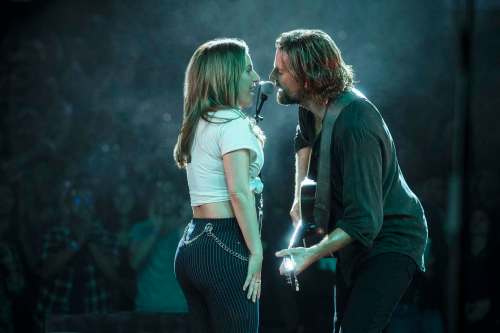
TORONTO — In his self-directed version of A Star Is Born, Bradley Cooper plays a rock star named Jackson Maine.

Note the name: it marks the character as a member of a cinematic lineage that descends all the way to 1937.

That year, the first A Star Is Born was made, with Frederick March in the role of alcoholic actor Norman Maine. The name stayed in 1954, when James Mason took over the role of an actor who first nurtures the career of Judy Garland’s up-and-coming star Vicki Lester before his drunken shenanigans threaten to derail it. By 1976, Kris Kristofferson played the role of musician John Norman Howard, a rock singer with a musical stake in the ascent of Barbra Streisand’s Esther Hoffman.

Cooper, 43, remembered the Maine name, but also brought his own vision as a first-time feature filmmaker to the new version, which opens Thursday, Oct. 4, opposite Lady Gaga after the originally designated director, Clint Eastwood, dropped out. While actors might not want to see different interpretations of a role, Cooper embraced the opportunity to see all the past iterations.

Read
Thursday, Oct. 4, 2018

Court ruling concludes Canadian Wheat Board saga

Laura Rance-Unger 4 minute read Preview

Court ruling concludes Canadian Wheat Board saga

Laura Rance-Unger 4 minute read 2:01 AM CDT

It remains to be seen whether the recent court ruling in a lawsuit filed after Canadian Wheat Board’s dissolution in 2012 puts the whole debate to rest, as some no doubt hope.

But either way, the dust has settled on the post-CWB world. The sun still rises and a new generation of farmers on the land only knows by name an institution that for generations influenced every aspect of Prairie grain farming.

The first Rural Revival column I wrote for this newspaper more than 30 years ago was about a thousand farmers from Western Canada demonstrating in support of the Wheat Board. It was in the aftermath of the Western Grain Marketing Panel report, one of several efforts that eventually included a plebiscite to help the federal government decide what to do about a vocal minority of farmers who wanted marketing “freedom.”

The polls at the time suggested about two-thirds of farmers were comfortable enough with the single-desk system for food wheat and barley to keep it around. It served as a counterbalance to canola, which they sold on the open market. They essentially had a dual market.

Read
2:01 AM CDT

Brandon manufacturer says Canadian steel in demand, but high costs, long delivery times hit hard

Gabrielle Piché 6 minute read Preview

Brandon manufacturer says Canadian steel in demand, but high costs, long delivery times hit hard

Gabrielle Piché 6 minute read 2:01 AM CDT

Something’s different in a Brandon plant.

Building envelope panels — or shells for homes and commercial buildings — keep being produced at Greenstone Building Products.

But the galvanized steel used by workers has been arriving later and the price is constantly increasing, according to company leadership.

“It’s just a little bit nerve-wracking for us to hear the opposite narrative,” said Tilda Fortier, Greenstone Building Products’ business manager.

Read
2:01 AM CDT

The long and winding road

Editorial 4 minute read Preview

The long and winding road

Editorial 4 minute read 2:01 AM CDT

As theatre goes, it sent a strong message.

Manitoba Premier Wab Kinew, standing in front of microphones and television cameras, holding up his Indigenous status card and saying that he didn’t feel Canada should have “a race-based form of identification in this country, but that is a reality,” adding that it was time to abolish the Indian Act.

“I think it’s time to abolish the Indian Act, get rid of the Indian Act, move past the Indian Act, and it needs to be done with First Nations people and First Nations governments, of course. I think it’s long overdue that we have a relationship with Indigenous Peoples in Canada that reflects who we are as Canadians today,” he said.

The Indian Act — the name alone suggests how out-dated and out of place the law has become. Originally dating from 1876, the law was put in place to “amend and consolidate the laws respecting Indians” and gave the Minister of the Interior the responsibility to “control and management of the reserves, lands, moneys and property of Indians in Canada.”

Read
2:01 AM CDT

Behind the scenes at circus spectacle Odysseo, it's the horses who hold the reins

Erin Lebar / Photos by Ruth Bonneville 15 minute read Preview

Behind the scenes at circus spectacle Odysseo, it's the horses who hold the reins

Erin Lebar / Photos by Ruth Bonneville 15 minute read Wednesday, Jun. 13, 2018

It’s almost 4 p.m. on a particularly steamy May afternoon and Cavalia Odysseo rider Chelsea Jordan is putting on her makeup in the back corner of the very humid artistic tent.

She’s already spent some time layering on foundation, and is now into the decorative portion of the 30-minute process, placing a pair of small gems on her forehead and enhancing her naturally sharp cheekbones with some extra contouring.

“This is the messy part of the business,” she jokes as she sticks on fake lashes over an eyelid covered in earth-toned shadow.

It’s odd that makeup is considered the messy part of the day when Jordan spends the majority of her time surrounded by horses, but as with most people involved in Odysseo, the glitzy and glamorous aspects of being a member of the largest touring production in the world aren’t nearly as fun as the time she gets to spend with her four-legged cast-mates.

Read
Wednesday, Jun. 13, 2018

SNC planned U.S. move if no deal: documents

Jordan Press and Christopher Reynolds, The Canadian Press 5 minute read Preview

SNC planned U.S. move if no deal: documents

Jordan Press and Christopher Reynolds, The Canadian Press 5 minute read Thursday, Mar. 28, 2019

OTTAWA - SNC-Lavalin warned federal prosecutors last fall about a possible plan to split the company in two, move its offices to the United States and eliminate its Canadian workforce if it didn't get a deal to avoid criminal prosecution, newly obtained documents show.

The documents, part of a PowerPoint presentation obtained by The Canadian Press, describe something called "Plan B" — what Montreal-based SNC might have to do if it can't convince the government to grant a so-called remediation agreement to avoid criminal proceedings in a fraud and corruption case related to projects in Libya.

Under that plan, SNC would move its Montreal headquarters and corporate offices in Ontario and Quebec to the U.S. within a year, cutting its workforce to just 3,500 from 8,717, before eventually winding up its Canadian operations.

“The government of Canada needs to weigh the public interest impact of the prosecution of SNC-Lavalin," the presentation reads.

Read
Thursday, Mar. 28, 2019