Socializing after the vaccine: Experts say shot won’t offer “free pass” right away
Advertisement
Read this article for free:
or
Already have an account? Log in here »
To continue reading, please subscribe:

Digital Subscription
One year of digital access for only $205*
- Enjoy unlimited reading on winnipegfreepress.com
- Read the E-Edition, our digital replica newspaper
- Access News Break, our award-winning app
- Play interactive puzzles
*First annual payment billed as $205.00 + GST for one year. This annual subscription will automatically renew at $233.00 + GST every 52 weeks (10% off the regular annual price of $259.35). Offer available to new and qualified returning subscribers only. Cancel any time.
To continue reading, please subscribe:
Add Free Press access to your Brandon Sun subscription for only an additional
$1 for the first 4 weeks*
- Enjoy unlimited reading on winnipegfreepress.com
- Read the E-Edition, our digital replica newspaper
- Access News Break, our award-winning app
- Play interactive puzzles
*Your next Brandon Sun subscription payment will increase by $1.00 and you will be charged $17.95 plus GST for four weeks. After four weeks, your payment will increase to $24.95 plus GST every four weeks.
Read unlimited articles for free today:
or
Already have an account? Log in here »
Hey there, time traveller!
This article was published 08/01/2021 (2083 days ago), so information in it may no longer be current.
The arrival of COVID vaccines have stirred excitement and optimism for a swift end to the global pandemic, with some seeing the shot as a “free pass” to soon gather and socialize as they did pre-2020.
Not so fast, experts say.
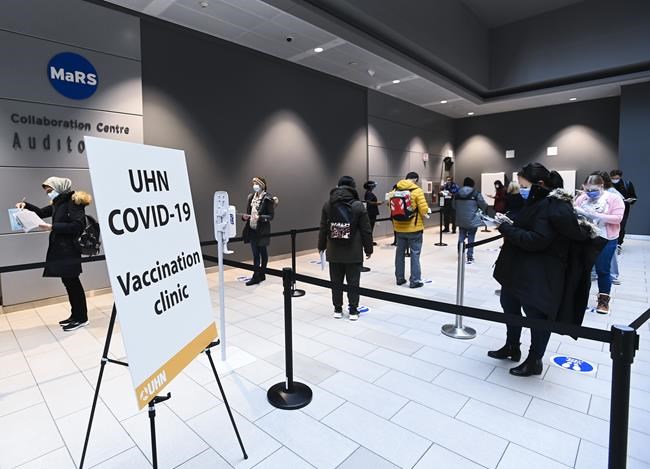
Canada’s first phase of vaccine rollout — targeting front-line health-care workers, long-term care residents and staff, and some Indigenous populations — began last month and is expected to stretch into March before the inoculation process is opened to a broader population this spring.
While experts agree the end of the pandemic is in sight, they say it will take time to determine what level of protection the new vaccines actually provide — and whether they prevent us from spreading the virus.
Experts expect mask mandates, limits on gatherings, and physical distancing measures to continue even as more of us get vaccinated, at least through part of 2021.
“Until we get to a level of herd immunity where we have around 70 per cent of our population vaccinated worldwide, there’s going to be that question of transmission,” said Jason Kindrachuk, a virologist with the University of Manitoba. “And that’s certainly a concern for us.”
Both Pfizer-BioNTech and Moderna, the two vaccines currently approved for use in Canada, were shown in clinical trials to have a 95 per cent efficacy in preventing severe infection from the virus that causes COVID-19. And while Moderna has some evidence suggesting it also decreases transmission, more data is needed.
Some vaccines, like the one for HPV, offer complete protection from infection and transmission, while others like the flu shot primarily work against acquiring the virus and lessening the severity of symptoms. Kindrachuk says part of the reason for that is the way our immune systems respond to different vaccines.
The COVID vaccine seems to effectively produce neutralizing antibodies, he says, “but not necessarily enough to stop the virus from potentially getting into some of our cells.”
Dr. Sumon Chakrabarti, an infectious disease physician in Mississauga, Ont., says answers to the transmission question will only come as “large swathes of the population” start getting vaccinated worldwide.
We may see that the inoculations do decrease transmission, he says, and restrictions could be lifted earlier than experts expect.
“But as it stands in January 2021, when you get vaccinated you’ll want to still act like you were doing before: physical distancing, keeping contacts low, masking indoors,” Chakrabarti said. “As the pandemic starts to ease up, things will change.”
Being able to still transmit the virus becomes less of a problem as more and more people are vaccinated, experts say.
But Horacio Bach, an adjunct professor of infectious diseases at UBC, doesn’t expect SARS-CoV-2 to ever be eradicated.
If 30 per cent of the population isn’t immunized, the virus will continue to circulate through them, he says. So effective treatment for COVID-19 will be needed to deal with lingering cases.
“Viruses don’t have brains but they’re not stupid,” he said. “They will continue to find hosts.”
Dr. Isaac Bogoch, an infectious disease expert with the University of Toronto, says COVID-19’s potential staying power will have less of an impact once pressure is relieved on the health-care system. And that will be achieved by vaccinating high-risk populations early in the rollout.
The first indication that vaccines are working will be a reduction in deaths as long-term care and other high-risk groups are immunized, he says, while case counts will be the last to decrease. That means infection prevention controls will need to be followed while community transmission is still happening.
“Eventually you’ll start to see a reduction in cases as these vaccine programs roll up, and then we’ll start to see public health measures slowly lifted as the year progresses, post-April,” he said. “We’ll probably see a gradual shift allowing larger outdoor gatherings, then indoor gatherings, and eventually lifting of mask mandates.”
An exact timeline for reaching that level is hard to predict, however.

While a highly effective vaccine will allow us to reach herd immunity quicker, Bogoch says a 95 per cent efficacy in a clinical trial might not actually translate that successfully in the real world.
Since efficacy was based on a two-dose regime, Bogoch expects that number to drop if people don’t return for a second shot. It’s also still unknown how effective the vaccine is for segments of the population excluded from clinical trials.
So visiting a grandparent or other high-risk individual in the next couple months will be risky, Bogoch says, even if they’ve been vaccinated.
“The effectiveness is probably going to be lower (than the trials showed),” he said. “And we’ll need to see how this plays out in real time to help drive our behaviours.”
This report by The Canadian Press was first published Jan. 8, 2020.
Related Articles
How Canada's vaccine rollout compares to others
Advertisement Advertise With Us
Advertisement Advertise With Us