

Post-secondary leaders to discuss cross-campus collaborations

Advertisement
Read this article for free:
or
Already have an account? Log in here »
To continue reading, please subscribe:

Digital Subscription
One year of digital access for only $205*
- Enjoy unlimited reading on winnipegfreepress.com
- Read the E-Edition, our digital replica newspaper
- Access News Break, our award-winning app
- Play interactive puzzles
*First annual payment billed as $205.00 + GST for one year. This annual subscription will automatically renew at $233.00 + GST every 52 weeks (10% off the regular annual price of $259.35). Offer available to new and qualified returning subscribers only. Cancel any time.
To continue reading, please subscribe:
Add Free Press access to your Brandon Sun subscription for only an additional
$1 for the first 4 weeks*
- Enjoy unlimited reading on winnipegfreepress.com
- Read the E-Edition, our digital replica newspaper
- Access News Break, our award-winning app
- Play interactive puzzles
*Your next Brandon Sun subscription payment will increase by $1.00 and you will be charged $17.95 plus GST for four weeks. After four weeks, your payment will increase to $24.95 plus GST every four weeks.
Read unlimited articles for free today:
or
Already have an account? Log in here »
The artificial intelligence boom is inducing panic about the makeup of Manitoba’s future workforce and influencing new post-secondary application trends.
What remains a constant, says the economist who oversees the University of Manitoba, is the often-overlooked value of a liberal arts degree.
“I’ve always believed in it being a foundation for lifelong learning,” said Michael Benarroch, president and vice-chancellor of the largest post-secondary institute in the province.
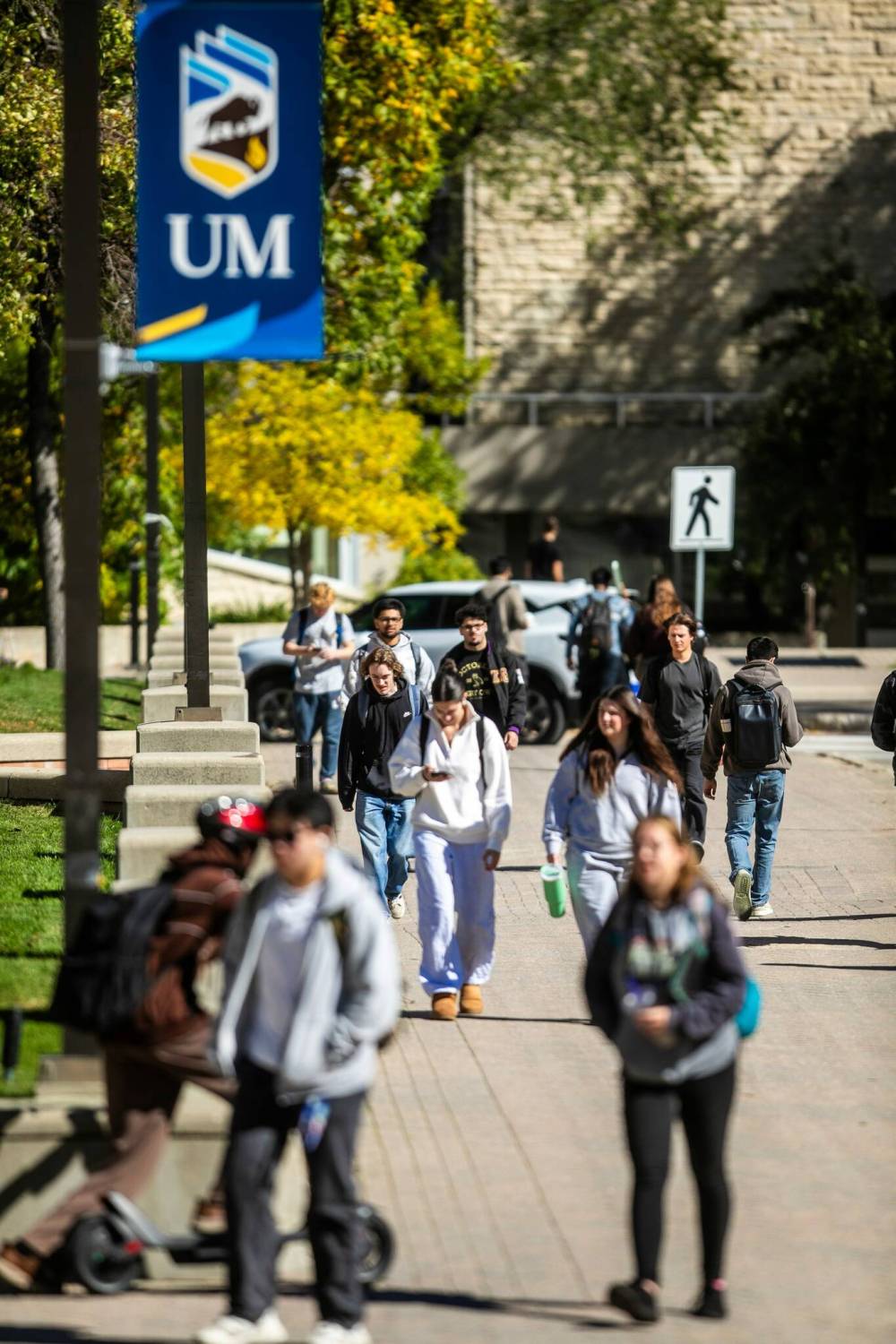
“Even more so, in a world of AI, where AI is going to do certain tasks, I think humanities education and social sciences education is going to become even more important.”
While noting engineering and medicine lead to obvious jobs, Benarroch said philosophy programs are equally important to teach key leadership, critical thinking and moral decision-making skills.
There isn’t always “a linear path to employment,” and that’s why post-secondary leaders are prioritizing partnerships to support skills upgrading and student mobility within Manitoba, he added.
The future of cross-campus collaboration is among the topics the former dean of U of M’s Asper School of Business plans to raise with local entrepreneurs and managers.
The Manitoba Chambers of Commerce is expecting nearly 300 people to gather over breakfast Tuesday to discuss the state of post-secondary education.
The chamber network has booked Benarroch and Fred Meier, president of Red River College Polytechnic, to sit on a back-to-school panel as part of its MBiz Speaker Series.
Acting president Elisabeth Saftiuk said attendees will leave with a clearer understanding about how post-secondary institutions — including workforce development, applied research opportunities and breakthroughs — influence economic competitiveness.
Manitoba is projecting 70 per cent of job openings over the next five years to require some form of post-secondary education or training, Saftiuk noted.
“We need people with highly specialized technical skills, and we also need people who can think critically, communicate, solve problems and continue learning as their jobs change,” she said.
RRC Polytech’s president said “leakage” — people leaving the province to pursue studies elsewhere — is a key reason school leaders are brainstorming ways to offer unique training opportunities locally that can also attract talent.
“We have a table of post-secondary presidents that is extremely collaborative and solutions-focused. It isn’t about one institution versus the other,” said Meier.
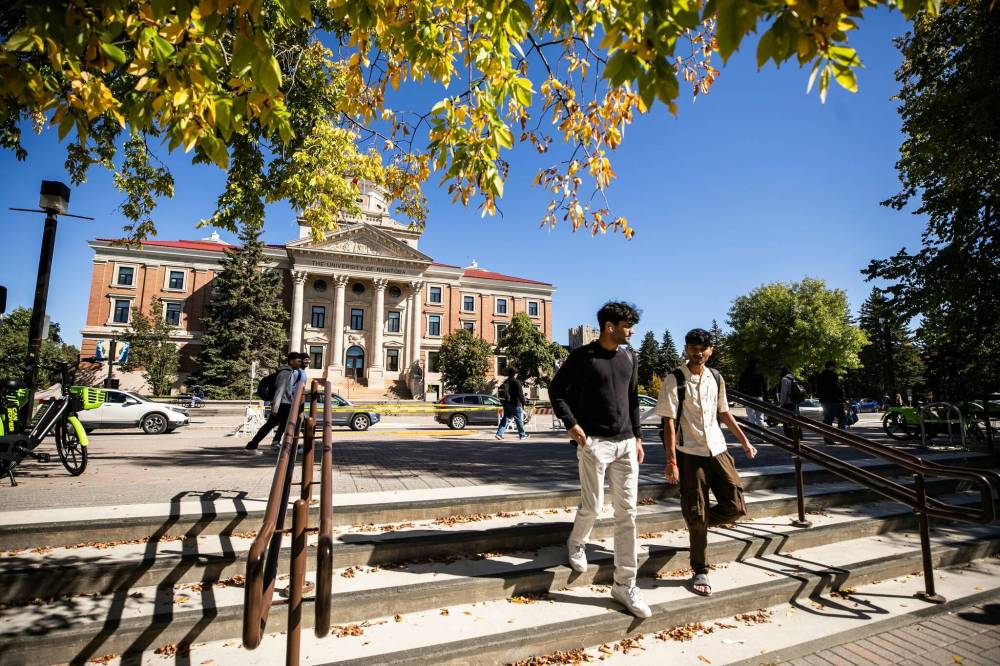
He touted a new articulation agreement that allows its engineering technology graduates to transfer credits and gain direct entry into the U of M engineering faculty.
U of M has expanded engineering seats, as well as its nursing, medicine, business and post-degree education programs in recent years. Demand is high for all of the above and there’s been a rebound in enrolment in social work and music, both of which are full this year.
RRC Polytech has also recorded heightened interest in health-care options, as well as skilled trades. One of the applied learning institution’s fastest-growing diplomas is a two-year cybersecurity course.

Meier said students are gravitating towards careers with strong employment prospects.
“The durability of those careers through AI and potential disruption, I think, is the other thing that’s on peoples’ minds,” he said.
U of M’s computer science program appears to have “softened a bit” for similar reasons, although the university recorded a new enrolment record this year, Benarroch said.
“There certainly is some anxiety about the impact of AI,” he said. “A lot of it comes from what we’re reading about projections of what AI may do, rather than what AI is doing at this point.”
maggie.macintosh@freepress.mb.ca
Maggie Macintosh reports on education for the Winnipeg Free Press. Funding for the Free Press education reporter comes from the Government of Canada through the Local Journalism Initiative.
Our newsroom depends on a growing audience of readers to power our journalism. If you are not a paid reader, please consider becoming a subscriber.
Our newsroom depends on its audience of readers to power our journalism. Thank you for your support.
Maggie Macintosh reports on education for the Winnipeg Free Press. Funding for the Free Press education reporter comes from the Government of Canada through the Local Journalism Initiative.
Our newsroom depends on a growing audience of readers to power our journalism. If you are not a paid reader, please consider becoming a subscriber.
Our newsroom depends on its audience of readers to power our journalism. Thank you for your support.
Advertisement Advertise With Us
Advertisement Advertise With Us