

Federal, B.C. ministers seek meeting with First Nations in hope of blockade solution
Advertisement
Read this article for free:
or
Already have an account? Log in here »
To continue reading, please subscribe:

Digital Subscription
One year of digital access for only $205*
- Enjoy unlimited reading on winnipegfreepress.com
- Read the E-Edition, our digital replica newspaper
- Access News Break, our award-winning app
- Play interactive puzzles
*First annual payment billed as $205.00 + GST for one year. This annual subscription will automatically renew at $233.00 + GST every 52 weeks (10% off the regular annual price of $259.35). Offer available to new and qualified returning subscribers only. Cancel any time.
To continue reading, please subscribe:
Add Free Press access to your Brandon Sun subscription for only an additional
$1 for the first 4 weeks*
- Enjoy unlimited reading on winnipegfreepress.com
- Read the E-Edition, our digital replica newspaper
- Access News Break, our award-winning app
- Play interactive puzzles
*Your next Brandon Sun subscription payment will increase by $1.00 and you will be charged $17.95 plus GST for four weeks. After four weeks, your payment will increase to $24.95 plus GST every four weeks.
Read unlimited articles for free today:
or
Already have an account? Log in here »
Hey there, time traveller!
This article was published 17/02/2020 (2393 days ago), so information in it may no longer be current.
OTTAWA – An upcoming meeting in British Columbia is emerging as the focal point for hopes of a speedy and peaceful end to the blockades that have disrupted rail and road traffic across large swaths of the country for more than a week.
The meeting, which would involve the federal and B.C. ministers responsible for Indigenous relations sitting down with First Nations opposed to the Coastal GasLink pipeline project, has yet to be scheduled.
That has raised questions about how long Ottawa, in particular, is willing to wait as pressure mounts on the federal Liberal government to end the protests due to the economic damage they are causing. The pipeline has support from the Wet’suwet’en First Nation’s elected band council but is opposed by the nation’s hereditary chiefs, who claim authority on traditional territory off the First Nation’s formal reserve.
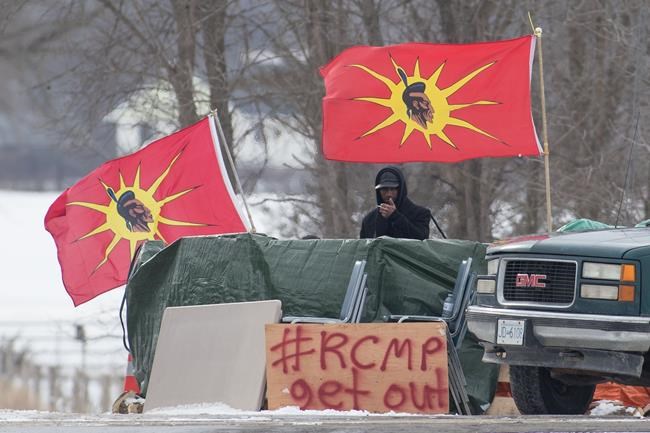
Carolyn Bennett, the federal minister of Crown-Indigenous relations, reiterated her desire to meet with those opposed to the $6.6-billion natural-gas pipeline as she sat down Monday with B.C. Indigenous Relations Minister Scott Fraser.
“We have reached out through a joint letter to the Wet’suwet’en hereditary chiefs about meeting with us at the earliest opportunity and are hopeful we can all work together to establish a process for ongoing and constructive dialogue and action to address the issues at hand,” the ministers said in a joint statement late Monday.
“Our primary focus is everyone’s safety and ultimately, a peaceful resolution to the situation.”
The two were invited last week to meet by Gitxsan chief Norm Stephens after members of the First Nation erected a blockade near New Hazelton in support of neighbouring Wet’suwet’en chiefs.
Bennett’s sitdown with Fraser in Victoria came as Prime Minister Justin Trudeau held an emergency, closed-door meeting with cabinet ministers in Ottawa to discuss the blockades.
Trudeau emerged from the meeting emphasizing his desire to find an end to the crisis, adding he had reached out to a number of premiers and Indigenous leaders to discuss the standoff. But the prime minister was tightlipped about his plan to reach that conclusion.
“I understand how worrisome this is for so many Canadians and difficult for many people and families across the country,” Trudeau said. “We’re going to continue to focus on resolving the situation quickly and peacefully, and that’s what we’re going to do.”
The prime minister, who cancelled a two-day trip to Barbados this week to deal with the crisis at home, did not take any questions before being driven away by his RCMP security detail.
Public Safety Minister Bill Blair, Justice Minister David Lametti and others who attended the meeting with Trudeau were similarly mum on how they planned to address the crisis.
The ministerial meetings in Ottawa and Victoria came as protesters continued to block rail lines as well as highways and bridges in different parts of the country. Those included shutting down for the first time the Thousand Islands Bridge border crossing near Kingston, Ont.
The Ontario Provincial Police indicated they didn’t plan on breaking up that protest, saying “the OPP has no role to play in the underlying issues of the event and is not in a position to resolve them.” Protesters lifted their blockade of the bridge in the afternoon.
Mounties in Manitoba also reported about eight to ten demonstrators at a CN Rail crossing on Highway 75 in southern Manitoba. The highway and rail line both run south to the U.S. border crossing at Emerson, Man.
RCMP spokesman Robert Cyrenne said police were stopping traffic for safety, but that vehicles were still able to pass in both directions. CN said train movement in the area had been stopped and that the company was “evaluating our legal options very closely.”
The RCMP said it had deployed a liaison team to the site to “establish a dialogue and maintain open and ongoing communication.”
Police have largely refrained from direct action against the blockades since the RCMP enforced an injunction outside Houston, B.C. earlier this month, where opponents of the Coastal GasLink project were preventing access to a work site for the pipeline.
While more than 20 people were arrested and the company is preparing to resume work, the RCMP raid sparked more protests and blockades across the country.
Coastal GasLink signed agreements with all 20 elected band councils along the pipeline route, including the Wet’suwet’en First Nation’s council. But Wet’suwet’en’s hereditary chiefs are opposed to the project and say the council does not have authority over the relevant land.
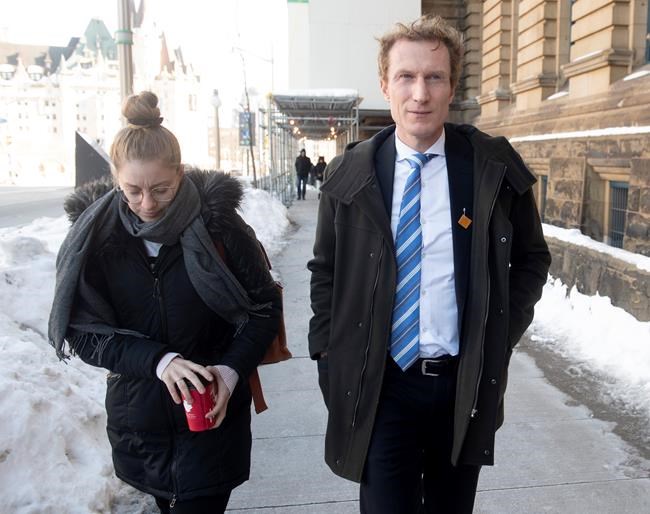
Indigenous Services Minister Marc Miller, who met Saturday with representatives of the Mohawk First Nation near Belleville, Ont., where a rail blockade has shut down train service across much of Eastern Canada, has invoked the Oka and Ipperwash crises in pressing for a peaceful solution.

A Quebec police officer died during a raid in 1990 after Mohawks south of Montreal blocked the Mercier Bridge, which became the Oka crisis.
Five years later, an Ontario Provincial Police officer shot and killed protester Dudley George during a standoff over a land claim by Chippewa protesters outside a Ipperwash Provincial Park.
This report by The Canadian Press was first published Feb. 17, 2020.
— with reporting by Nicole Thompson in Toronto, Rob Drinkwater in Edmonton and Amy Smart in Vancouver.
Note to readers: This is a corrected story. An earlier version incorrectly stated that Ministers Bennett and Fraser had also sent their letter to Gitxsan chief Norm Stephens.
Related Articles
Winnipeg march in 'spirit of solidarity' with Wet’suwet’en




Advertisement Advertise With Us
Advertisement Advertise With Us

![WINNIPEG FREE PRESS ARCHIVES
On Wednesday, June 4, 1919 In front of the government Building Norris, with policeman, to the left of the [illegible] Loyal Returned Soldiers](https://staging.winnipegfreepress.com/wp-content/uploads/sites/2/2022/05/NEP8820082.jpg?w=500)