Paper trail

Art piece connects viewers to broader national landscape

Advertisement

Advertise with us

WHAT IT IS: Copy Paperis a 2014 textile-based piece by Ontario-born, Winnipeg-based artist Kristin Nelson, currently on view at WAG-Qaumajuq as part of the exhibition Terra Cognita/Incognita.

Read this article for free:


or

Already have an account? Log in here »

To continue reading, please subscribe:

Subscribe and receive a limited-edition Free Press branded hat or tote.

Digital Subscription

One year of digital access for only $205*

  • Enjoy unlimited reading on winnipegfreepress.com
  • Read the E-Edition, our digital replica newspaper
  • Access News Break, our award-winning app
  • Play interactive puzzles

*First annual payment billed as $205.00 + GST for one year. This annual subscription will automatically renew at $233.00 + GST every 52 weeks (10% off the regular annual price of $259.35). Offer available to new and qualified returning subscribers only. Cancel any time.

To continue reading, please subscribe:

Add Free Press access to your Brandon Sun subscription for only an additional

$1 for the first 4 weeks*

  • Enjoy unlimited reading on winnipegfreepress.com
  • Read the E-Edition, our digital replica newspaper
  • Access News Break, our award-winning app
  • Play interactive puzzles
Start now

*Your next Brandon Sun subscription payment will increase by $1.00 and you will be charged $17.95 plus GST for four weeks. After four weeks, your payment will increase to $24.95 plus GST every four weeks.

WHAT IT IS: Copy Paperis a 2014 textile-based piece by Ontario-born, Winnipeg-based artist Kristin Nelson, currently on view at WAG-Qaumajuq as part of the exhibition Terra Cognita/Incognita.

Of the 125 works in the show — which uses historical and contemporary pieces from WAG-Qaumajuq’s permanent collection to explore how artists have represented the landscape over time and across cultures —probably the most attention-getting are the beautiful paintings of Canada’s lakes, plains, forests and mountains.

So, how does this seemingly modest, somewhat enigmatic work connect to Terra Cognita/Incognita’s larger themes?

Kristin Nelson. Copy Paper, 2014. handwoven cotton, digitally printed polyester. 21.5 x 27.9 x 17.7 cm. Collection of the Winnipeg Art Gallery, 
Acquired with funds from the Winnipeg Rh Foundation Inc., 2017-532.1 to 77.

Kristin Nelson. Copy Paper, 2014. handwoven cotton, digitally printed polyester. 21.5 x 27.9 x 17.7 cm. Collection of the Winnipeg Art Gallery, Acquired with funds from the Winnipeg Rh Foundation Inc., 2017-532.1 to 77.

WHAT IT’S ABOUT: In the middle of the exhibition, an antique desk holds several objects of beauty and utility, and this is where Copy Paper sneaks in, as something both “cognita and incognita,” known and unknown.

While Nelson’s work feels ordinary and familiar — resembling two packages of inexpensive all-purpose copy paper, the kind of thing you might pick up as part of your back-to-school shopping list — it is not that.

Nelson has made a realistic and detailed replica of a product that is uniform and mass-produced, that is readily available at big-box office supply stores. But she has done so using a traditional craft method, painstakingly weaving each piece of “paper” from cotton on a floor loom. The green packaging sleeve is made from digitally-printed polyester.

The results are just a little idiosyncratic in texture, just a little adorably off, which makes us look more closely.

By embracing the laborious, repetitive and time-intensive process of weaving, Nelson wants to make us more aware of the paper products we casually buy, use and toss. She has also made replicas of graph paper, yellow legal paper, three-hole foolscap, those disposable paper cups you get at the dentist and the thick brown paper towels you find in public washrooms. By recontextualizing these recreated objects within an art institution, Nelson concentrates our attention on everyday objects, asking us to consider the labour and resources that have gone into them.

And it’s by thinking about the resources used in paper products that Copy Paper connects to other works in the exhibition, by reminding us that paper comes from wood and wood comes from forests, bringing us full circle back to those breathtaking canvases of Emily Carr or the Group of Seven.

WHY IT MATTERS: In Terra Cognita/Incognita, curator Riva Symko brings together works that explore the natural world and the many ways we experience and represent it. There is an enormous amount of pleasure and beauty in this show, but also pieces that look at darker themes of climate change and environmental devastation.

There are works that show how landscape is bound up with national identity and cultural memory. There are pieces in which nature is seen as a place of retreat and recreation and others in which it is framed as a site of production, sometimes exploitation. This is a dense, rich exhibition that presents complex and contradictory images and ideas and then lets the viewer sort through them.

For me, a lot of these layered meanings come together in Copy Paper. My father was born in Fort Frances, Ont., a place of incredible natural beauty, surrounded by the lakes, rocks and trees seen in landscape paintings of Canadian Shield country.

Fort Frances was also, historically, a pulp and paper town. The mill closed in 2014, but I remember visiting as a small child, when you could still see log drives along Rainy River and Rainy Lake and smoke and steam from the mill, making visible the whole process of turning trees into paper.

For most of us, those processes are now invisible. We buy our copy paper without thinking too much about where it came from or how it was made. Nelson nudges us, gently, to remember.

alison.gillmor@winnipegfreepress.com
Report Error Submit a Tip

More Stories

Endorsements build up mayoral candidates’ profiles

Chris Kitching 6 minute read Preview

Endorsements build up mayoral candidates’ profiles

Chris Kitching 6 minute read Monday, Oct. 17, 2022

With just over a week until election day, high-profile endorsements are rolling in for Winnipeg’s top mayoral candidates in what political observers say is another way to sway undecided voters.

Read
Monday, Oct. 17, 2022

Billboard evangelism may look outdated but group says it’s effective

John Longhurst 5 minute read Preview

Billboard evangelism may look outdated but group says it’s effective

John Longhurst 5 minute read 2:02 AM CDT

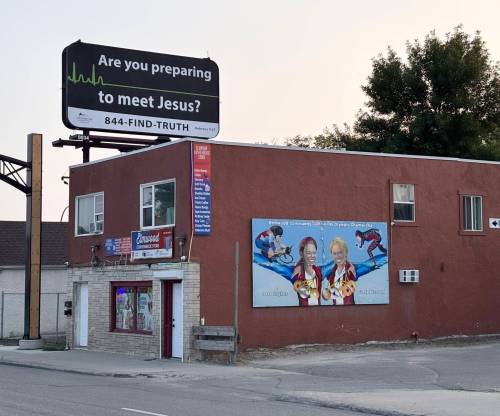
Maybe you’ve seen them in Winnipeg — billboards that say things like: “Jesus is alive!” “Are you prepared to meet Jesus?” “After you die, you will meet God.” They include a phone number to call: 844-FIND-TRUTH.

There are two billboards in Winnipeg. One is on Henderson Highway in Elmwood. The other is on Balmoral Street, by Cumberland.

Have you ever wondered who is behind them, and why they do it?

You might be surprised to learn they are created and sponsored by an Amish/Mennonite organization called Christian Aid Ministries (CAM). Based in rural Ontario, the group is funded by Amish and some conservative Mennonite denominations and individuals.

Read
2:02 AM CDT

Running a clothing company keeps mom of five girls in stitches

David Sanderson  8 minute read Preview

Running a clothing company keeps mom of five girls in stitches

David Sanderson  8 minute read Friday, Nov. 20, 2020

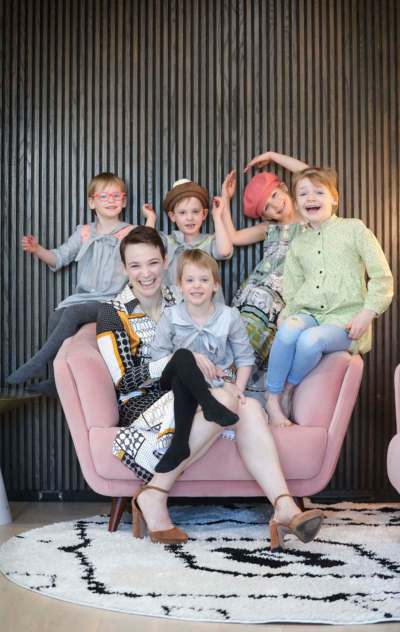
Andrée-Anne Généreux, mother of identical, four-year-old triplets, has grown used to being peppered with questions whenever passersby spot her and the girls ambling through their River Heights neighbourhood.

Do triplets run in the family, they openly wonder? How long was her pregnancy? Was she big?

Not that she’s aware, though both of her in-laws do have twin siblings; 34 weeks and three days, “but hey, who’s counting?”; and, “Are you freaking kidding me? I was huge,” she responds with a laugh, each and every time.

More and more, however, comments directed her way are along the lines of, “Where did the girls get those gorgeous dresses?” or “That jumper! You have to tell me who makes it.”

Read
Friday, Nov. 20, 2020

FAQ: Winnipeg’s boil-water advisory

4 minute read Preview

FAQ: Winnipeg’s boil-water advisory

4 minute read Wednesday, Jan. 28, 2015

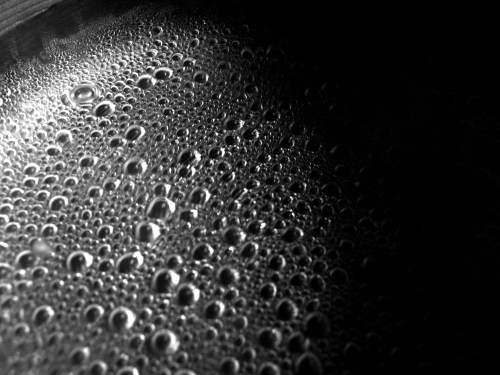
To boil water: Fill a pot with water from the cold-water tap. Heat it until bubbles come from the bottom of the pot to the top. Once the water reaches a rolling boil, let it boil for one minute (kettles with an automatic shutoff feature may not boil for a full minute).

Read
Wednesday, Jan. 28, 2015

Boler sales and rentals happening as soon as they pop up

Ben Waldman  8 minute read Preview

Boler sales and rentals happening as soon as they pop up

Ben Waldman  8 minute read Friday, Aug. 6, 2021

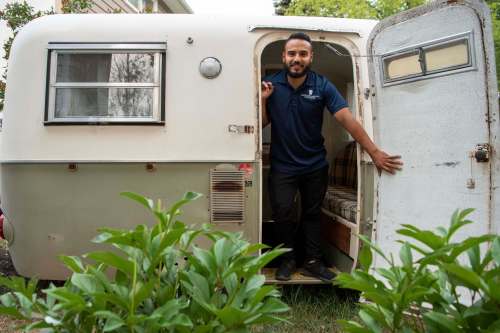
In January, Jorge Torres bought a Boler trailer — a little fiberglass egg on wheels — and brought it to his fiancée’s house to surprise her.

“The opposite of a good surprise is what she had,” laughs Torres, a 30-year-old contractor. “She says, ‘What is this garbage?’”

That garbage, Torres calmly explained, was a cult classic, a lightweight, ovoid escape pod first designed in Winnipeg in 1968, of which only 10,000 were manufactured, making it a valuable commodity and a retro, futuristic objet d’art with room for four sleepers. It was in pretty rough shape: scuffed up, beat up, used. It looked as though it needed a fresh coat of everything.

So to ease his fiancée’s worry, Torres, who had a rough year business-wise owing to the pandemic, found some images of refurbished models. “I’m telling you, I can fix it up and make it look really cool, even nicer than this,” he said, saying they could rent it out. There was a market, and a growing one at that, for camping and seeing the great outdoors after a year-plus spent indoors. She started to come around.

Read
Friday, Aug. 6, 2021

Explaining Canada’s superior employment rate

Wayne Simpson 5 minute read Preview

Explaining Canada’s superior employment rate

Wayne Simpson 5 minute read Yesterday at 2:00 AM CDT

Donald Trump regularly makes outrageous claims. Fentanyl was pouring across the northern border from Canada and had to be stopped. Canada is nasty to deal with and has the highest tariffs in the world. Canada needs the U.S. but the U.S. doesn’t need Canada. Canadians want to become the 51st state. And so on.

In the latest trade dispute, after Mark Carney walked away from negotiations, Trump made a new claim that Canada’s unemployment rate was 10 per cent and climbing rapidly. Insofar as the unemployment rate is closely monitored, reported monthly, and given similar attention to the rates of inflation and economic growth, the comment was likely intended to signal Canada’s weakness. It fits Trump’s narrative that Canada needs the U.S. for its livelihood and protection and would be better off more directly under U.S. influence as a 51st state, or perhaps a protectorate like the Philippines or Panama in the past.

Fact checkers quickly reported that Canada’s unemployment rate is really 6.4 per cent for July, not 10 per cent, has fallen from 6.9 per cent in April, and is at its lowest rate since May 2024. Some astute observers pointed out that Canada’s method for the calculation of the unemployment rate leads to a higher rate than the U.S. by about one per cent. Under the American methodology, then, our unemployment rate would be 5.4 per cent, not that far off the U.S. July rate of 4.1 per cent.

Detection of unemployment is less straightforward that might appear, as it is sandwiched between the labour force statuses of employment and inactivity at a particular point in time. The internationally established standard for determination of unemployment is the notion of searching for work — you are unemployed if you do not have paid employment and you are looking for work without success. Surveys have been developed to categorize respondents as employed, unemployed or inactive, including the labour force survey (LFS) in Canada and the current population survey (CPS) in the U.S.

Read
Yesterday at 2:00 AM CDT