


New council, new opportunies for Winnipeg

Advertisement
Read this article for free:
or
Already have an account? Log in here »
To continue reading, please subscribe:
Digital Subscription
One year of digital access for only $1.44 a week*
- Enjoy unlimited reading on winnipegfreepress.com
- Read the E-Edition, our digital replica newspaper
- Access News Break, our award-winning app
- Play interactive puzzles
*Billed as $5.77 plus GST every four weeks. After 52 weeks, price increases to the regular rate of $19.95 plus GST every four weeks. Offer available to new and qualified returning subscribers only. Cancel any time.
To continue reading, please subscribe:
Add Free Press access to your Brandon Sun subscription for only an additional
$1 for the first 4 weeks*
- Enjoy unlimited reading on winnipegfreepress.com
- Read the E-Edition, our digital replica newspaper
- Access News Break, our award-winning app
- Play interactive puzzles
*Your next Brandon Sun subscription payment will increase by $1.00 and you will be charged $17.95 plus GST for four weeks. After four weeks, your payment will increase to $24.95 plus GST every four weeks.
Read unlimited articles for free today:
or
Already have an account? Log in here »
Last week, Winnipeg voters returned Mayor Scott Gillingham to city hall for a second term, but the more surprising election storyline is that nine of the 15 councillors surrounding him will be new faces.
One encouraging aspect of the results is the community-building experience several of these new councillors bring to the job. Their backgrounds in urban planning, neighbourhood advocacy and community development offer valuable perspectives as Winnipeg confronts difficult questions about how it grows.
These perspectives will be particularly important because some of the most consequential decisions councillors can make happen when they evaluate residential development proposals at committee meetings. Over the next four years, the 16 people we’ve just elected will bear the enormous responsibility of deciding where and how Winnipeggers live. These choices will have profound implications for quality of life, social opportunity and the economic viability of our city. They will shape not only the Winnipeg we know today, but the city we leave to our children and grandchildren.
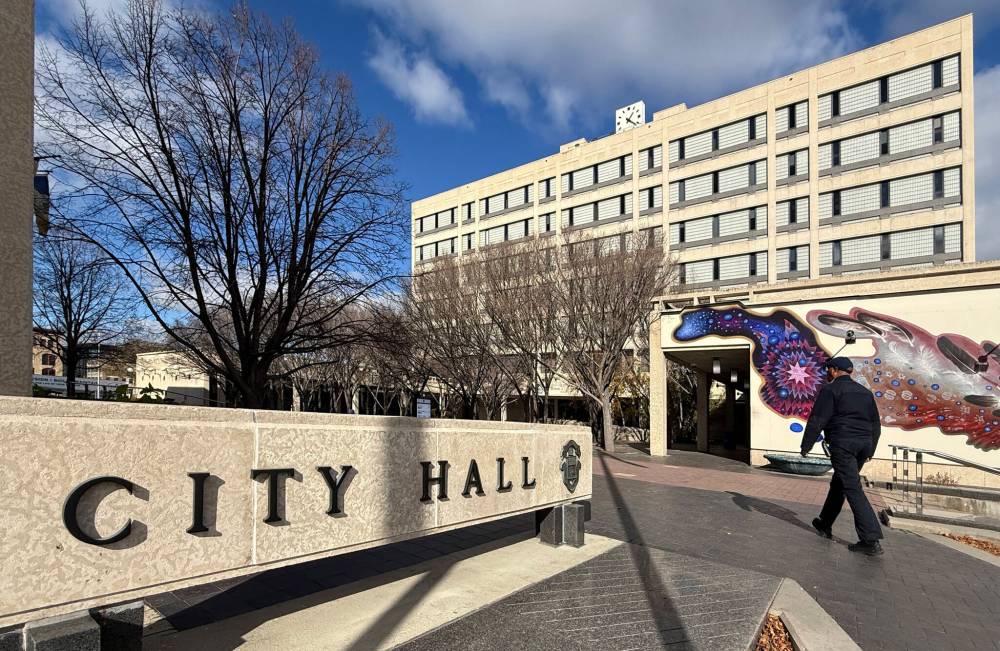
Brent Bellamy photo
Some of the most consequential decisions city councillors make will have to do with housing development applications to city hall committees.
At committee meetings, councillors will hear endless arguments about parking, traffic, and protecting “neighbourhood character.”
These concerns can dominate hours of debate, making it easy to lose sight of the bigger picture. Building more housing helps address the affordability crisis, while allowing it in neighbourhoods where people want to live improves quality of life. Rejecting a higher-density housing proposal because neighbours are worried about losing street parking is effectively saying that preserving a parking space on public property, which no individual homeowner owns, is more important than providing homes for other families.
Similarly, when protecting the perceived character of a neighbourhood becomes more important than allowing new housing, we are deciding that the preferences of those fortunate enough to already live in a community matter more than the opportunities of those who might want to live there, including young families, seniors and students. These are not simply decisions about buildings, but about people and who gets to belong in our neighbourhoods.
It’s important for councillors to remember that housing diversity is one of the most powerful tools they have to create a more socially inclusive Winnipeg. For generations, zoning regulations favouring detached houses have effectively reserved many of our most desirable neighbourhoods only for people who can afford the most expensive form of housing.
Housing diversity gives more people access to good schools, parks, transit, employment and the opportunities and social networks that come with living in established neighbourhoods. It also allows communities to evolve generationally, so children can grow up and find a home near their parents, and grandparents can age in the neighbourhood they’ve always lived in.
Where we live has an immense influence on the opportunities available to us throughout our lives. By creating more housing choices in every neighbourhood, we can begin breaking down the economic and social barriers that divide Winnipeg, building a city where opportunity is determined less by what people can afford and more by what they aspire to achieve.
Councillors must also consider how their housing decisions affect the city’s ability to balance budgets and pay for civic services. An infill housing proposal that’s rejected or reduced in density doesn’t eliminate demand for those homes. It pushes that demand toward new development at the edges of the city, where tax dollars must pay for new roads, sewers, water pipes and public services to accommodate growth.
Meanwhile, existing neighbourhoods lose the opportunity to add more taxpayers to share the cost of maintaining and replacing infrastructure that’s already been built. The economics are simple. More people paying for fewer things.
Opposition to higher-density housing in the past has meant that, as household sizes have naturally decreased, most of Winnipeg’s mature neighbourhoods have 20 to 30 per cent fewer people living in them today than 50 years ago. Existing civic amenities such as libraries, community centres and police stations, built to accommodate those historic population levels, have become underused, while at the same time we spend tax dollars building new ones to support a population shift to the outer suburbs. Fewer people paying for more things.
Councillors should also recognize that decisions about where people live directly affect their quality of life. People pushed to the city’s periphery often have little choice but to drive everywhere, spending more time commuting and less time with family and friends.

At the same time, mature neighbourhoods miss out on economic investment and population growth that help sustain the shops, restaurants and services that make communities more vibrant and walkable. More daily activities happening closer to home allow walking, biking or public transit to become viable, everyday lifestyle options.
One of the previous council’s most significant achievements was making housing a civic priority. Mayor Gillingham famously declared that every department at city hall should see itself as a housing department. Zoning bylaws were boldly modernized, surplus city-owned land was identified and sold for development and Winnipeg became a national leader in embracing the federal Housing Accelerator Fund.
The results have been remarkable. Housing starts increased more than 40 per cent in the first half of 2026, reaching the highest level on record. In 2025, the city approved more than 1,000 new downtown homes, nearly three times its annual target, while affordable housing accounted for a record 15 per cent of new housing approvals.
The new faces at city hall now inherit the responsibility to build on this momentum, supporting the individual development decisions that turn policy into reality. Their legacy will be shaped by whether they continue this work, creating a more affordable, vibrant, financially sustainable and socially inclusive Winnipeg for generations to come.
Brent Bellamy is creative director at Number Ten Architectural Group.
Brent Bellamy is senior design architect for Number Ten Architectural Group.
Our newsroom depends on a growing audience of readers to power our journalism. If you are not a paid reader, please consider becoming a subscriber.
Our newsroom depends on its audience of readers to power our journalism. Thank you for your support.
Advertisement Advertise With Us
Advertisement Advertise With Us