WEATHER ALERT

Manitoba’s greatest architect dies at 92

Étienne Gaboury, a titan of his craft largely considered Manitoba’s greatest architect, has died at 92.

Read this article for free:

or

Already have an account? Log in here »

To continue reading, please subscribe:

Subscribe and receive a limited-edition Free Press branded hat or tote.

Digital Subscription

One year of digital access for only $205*

  • Enjoy unlimited reading on winnipegfreepress.com
  • Read the E-Edition, our digital replica newspaper
  • Access News Break, our award-winning app
  • Play interactive puzzles

*First annual payment billed as $205.00 + GST for one year. This annual subscription will automatically renew at $233.00 + GST every 52 weeks (10% off the regular annual price of $259.35). Offer available to new and qualified returning subscribers only. Cancel any time.

To continue reading, please subscribe:

Add Free Press access to your Brandon Sun subscription for only an additional

$1 for the first 4 weeks*

  • Enjoy unlimited reading on winnipegfreepress.com
  • Read the E-Edition, our digital replica newspaper
  • Access News Break, our award-winning app
  • Play interactive puzzles
Start now

*Your next Brandon Sun subscription payment will increase by $1.00 and you will be charged $17.95 plus GST for four weeks. After four weeks, your payment will increase to $24.95 plus GST every four weeks.

Hey there, time traveller!
This article was published 15/10/2022 (1366 days ago), so information in it may no longer be current.

Étienne Gaboury, a titan of his craft largely considered Manitoba’s greatest architect, has died at 92.

Gaboury, who was born in a large family on a farm near Bruxelles, Manitoba in 1930, spent over 60 years sculpting the province’s identity through his building designs and artwork.

Among his works are the Church of the Holy Martyrs, l’Église de Précieux Sang, the Esplanade Riel, the Canadian Embassy in Mexico City, the Centre culturel Franco-Manitobain, and the Royal Canadian Mint. He won a Canadian Heritage Award for his post-1968 fire revitalization of the St. Boniface Cathedral. He received the Order of Canada in 2010, and the Order of Manitoba in 2012.
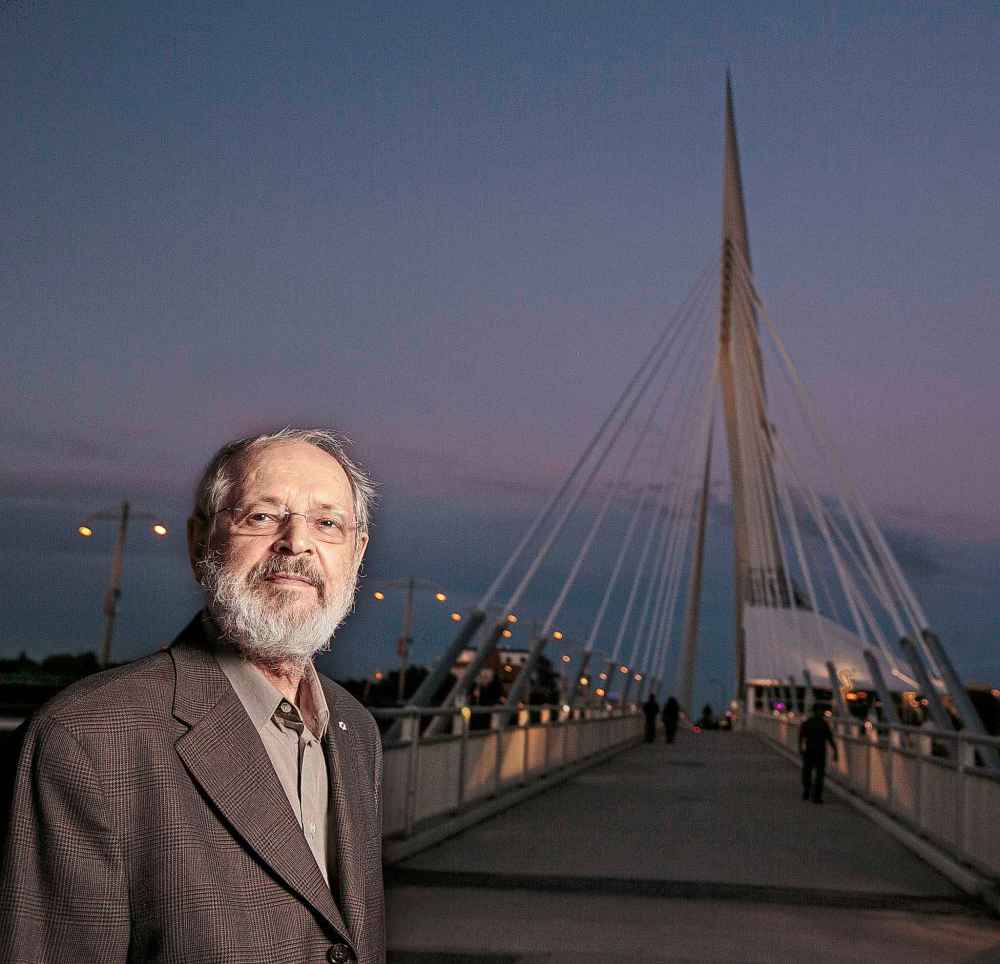
Étienne Gaboury and the Esplanade Riel. (Melissa Tait / Winnipeg Free Press files)

His work was largely influenced by, and created for, Manitoba’s Francophone community.

The Winnipeg Architecture Foundation announced his passing as a huge loss for Canadian architecture.

“Not only was he one of the most important architects in Manitoba history and probably the most famous Manitoba architect, but I would put him, in the 20th century, in the top five most famous Canadian architects,” Jeffrey Thorsteinson, a researcher with the WAF, said Saturday.

After receiving a Bachelor of Arts degree from Université de Saint-Boniface and an architecture degree from the University of Manitoba, Gaboury travelled to Paris to study at the École des Beaux-Arts in 1958. He found himself influenced by what the WAF calls the “spiritual impact” of early modernist architect Le Corbusier.

Gaboury brought that inspiration home with him, and transformed the curved form and unique interiors he saw in Paris into a style that was distinctly Manitoban while keeping the province’s flat landscape and regional identity in mind.
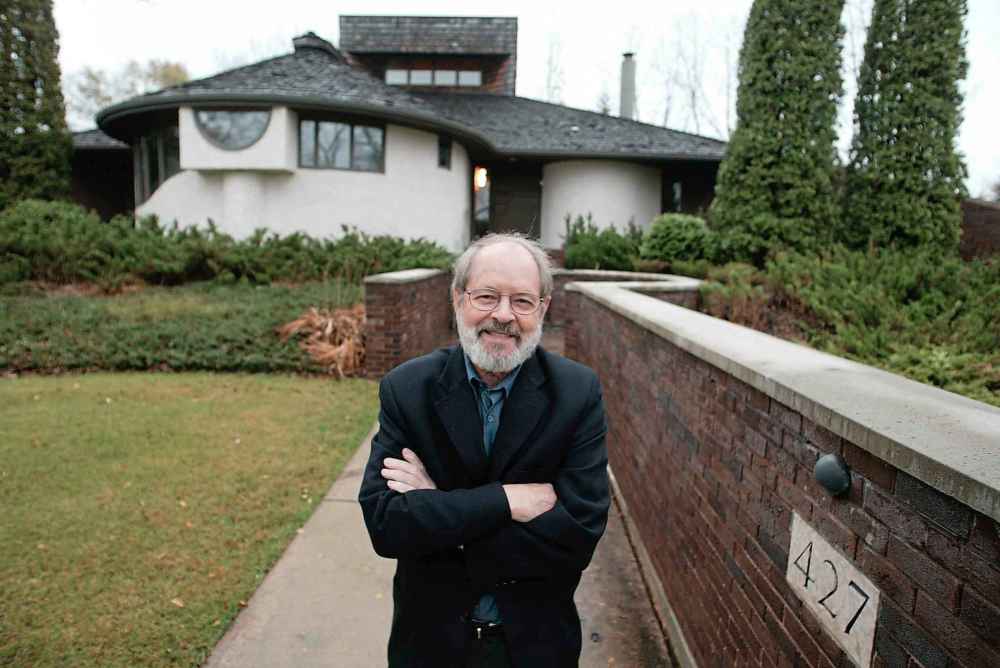
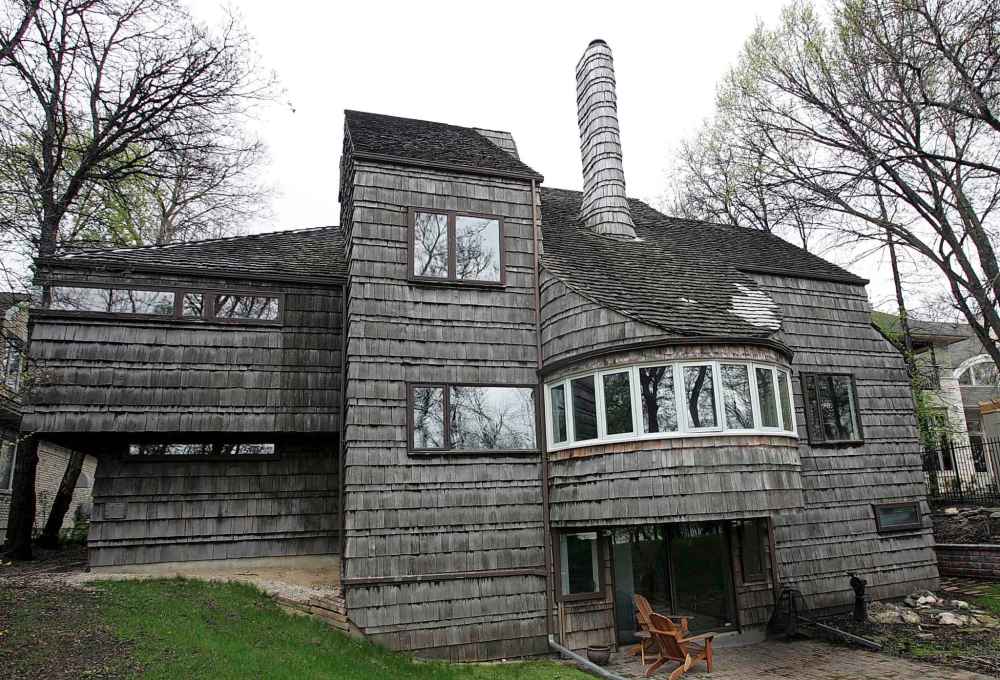
Étienne Gaboury designed this unique home at 427 Park Blvd. (Ruth Bonneville / Winnipeg Free Press files)

“He does things like, his windows are often inset, so it’s very prairie-oriented,” Thorsteinson said. “In the wintertime, you’ll get the sunlight coming in because the sun’s lower on the horizon, but because of those inset windows … in the summer, it’s shadier inside.”

Gaboury found early success, earning accolades from spectators of his work and his peers in the field.

“Talking with other architects who were much older than me, but younger than him, that he was the guy that they all followed. And when they wanted to do a prairie thing, they were really thinking of him,” Thorsteinson said.

In 1970, Gaboury received a medal from the Manitoba Historical Society in recognition of his work. He was 40 at the time, young for an architect to be so accomplished, said historical society head researcher Gordon Goldsborough.

Some of his work is so iconic it’s found on postcards and tourist trinkets — the Esplanade Riel bridge, for example — but some of his most beautiful work is hidden away in rural Manitoba, Goldsborough said.
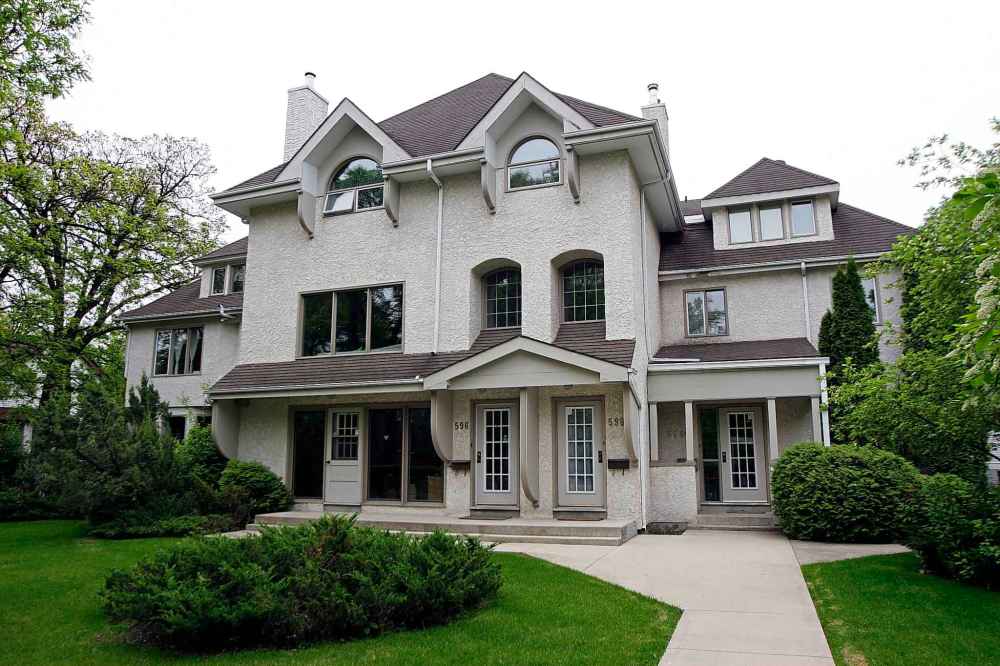
Étienne Gaboury's home, which he designed. (Sarah Kearney / Winnipeg Free Press files)

“He’s well-deserving of accolades for his work around Winnipeg, but I would submit that there’s lots of work beyond the boundaries of Winnipeg that warrant people’s attention,” he said.

He remembered a time where he was visiting an abandoned school in the small community of Mariapolis and was struck by its beauty before he even realized Gaboury had designed it early in his career.

“His work runs the gamut, from things that are in active use, to things that are up for sale, and one that’s even abandoned, sitting, vandalized and forlorn,” he said.

With Gaboury’s passing comes the fear that if his work is not properly archived, his legacy could be lost to time.

At the U of M school of architecture, the impact of Gaboury’s simultaneously unassuming and brave design should warrant more of a push to archive and maintain his work, U of M architecture department head and professor Brian Rex said.
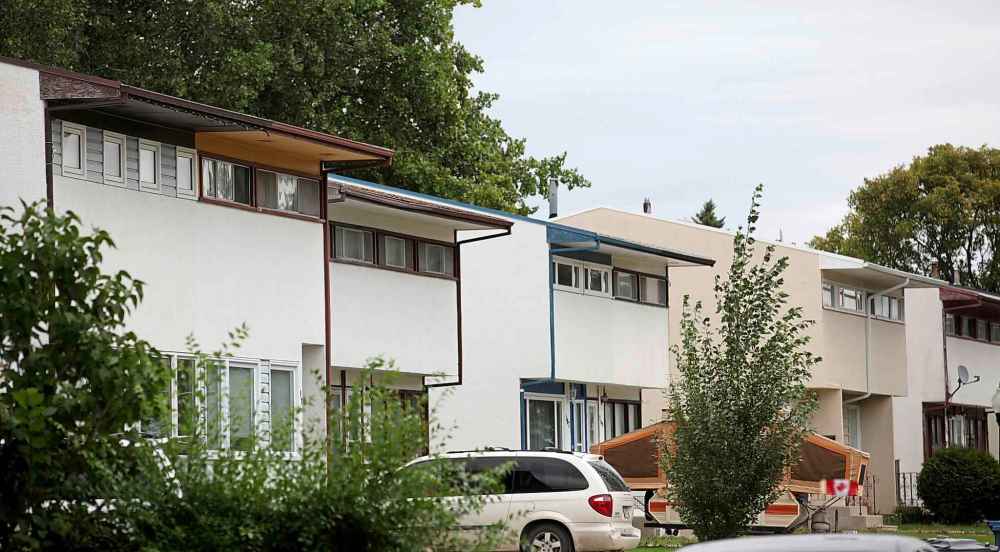
Windsor Park area, town homes designed by Étienne Gaboury. (Ruth Bonneville / Winnipeg Free Press files)

“The faculty here is mature, let’s say, so we don’t have those young scholars right now who would be here ready to catch somebody like Gaboury’s work and turn it into a book, which there should be,” he said.

Gaboury and other architects from his time took risks that are still revered today by architecture students and educators, he said.

“There’s a long history here of very material-focused and process-focused architects, and he’s probably the most extravagant example of that, in the way that all the things he did were always pushing materials to the limits and trying new form with material,” he said.

When architect Wins Bridgman arrived in Winnipeg over 20 years ago, one of the first things he did was go see the Marcien Lemay sculpture of Louis Riel, which sat on the Manitoba Legislative Building before being moved to the Université de Saint-Boniface, and the walls Gaboury designed that surround it.

It was an emotional moment for Bridgman, and a profound introduction to Gaboury’s vast body of work.
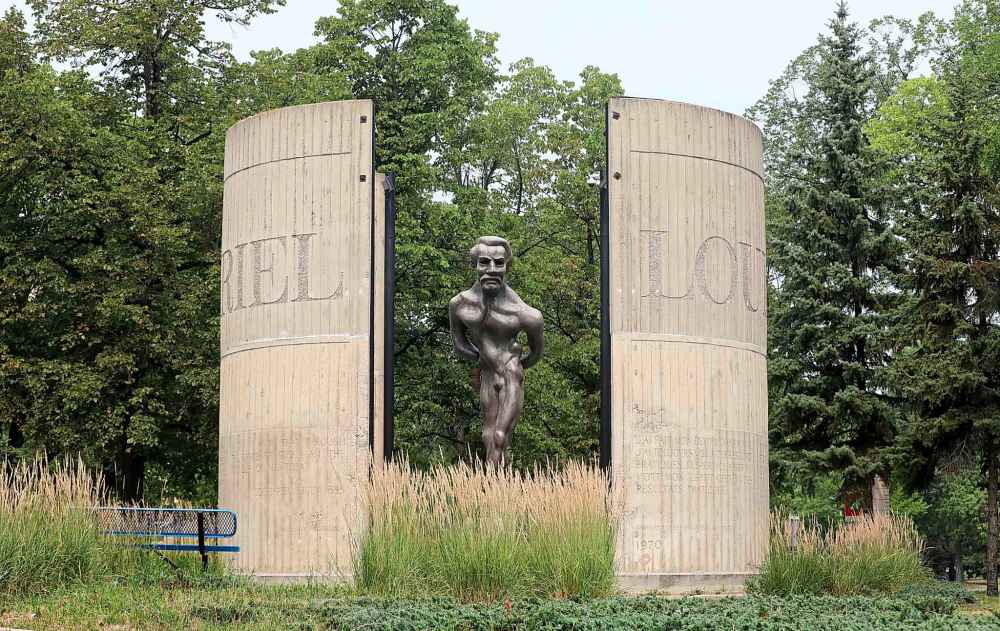
A 12-foot-high sculpture of Louis Riel created by artist Marcien Lemay. The shells were made by architect Étienne Gaboury, a distant relative of Louis Riel’s. (Ruth Bonneville / Winnipeg Free Press files)

“In that, I saw a landscape, and a human being, a social injustice, a deep understanding of how the Métis had been robbed of land where Winnipeg is, and how carefully Étienne had both revealed that and also contained it within the beautiful closure,” he said.

They had connected many times, and Bridgman remembers him as character who he admired for not being “necessarily easy to be in a meeting with.” He fondly recounted a time where, at an event where Gaboury received an award after his retirement, he was asked if he missed the work.

“He said, ‘I was kind of surprised by how easy a transition it would be into just living a happy life,’” Bridgman laughed.

“And all the architects of the room just laughed and laughed, because we all knew that behind those words was a whole history of exploration, of thinking and working in an environment that was complex.”

That environment was one Gaboury had to navigate as a tireless fighter and supporter of his own unique style, even after finding early success, Bridgman said.
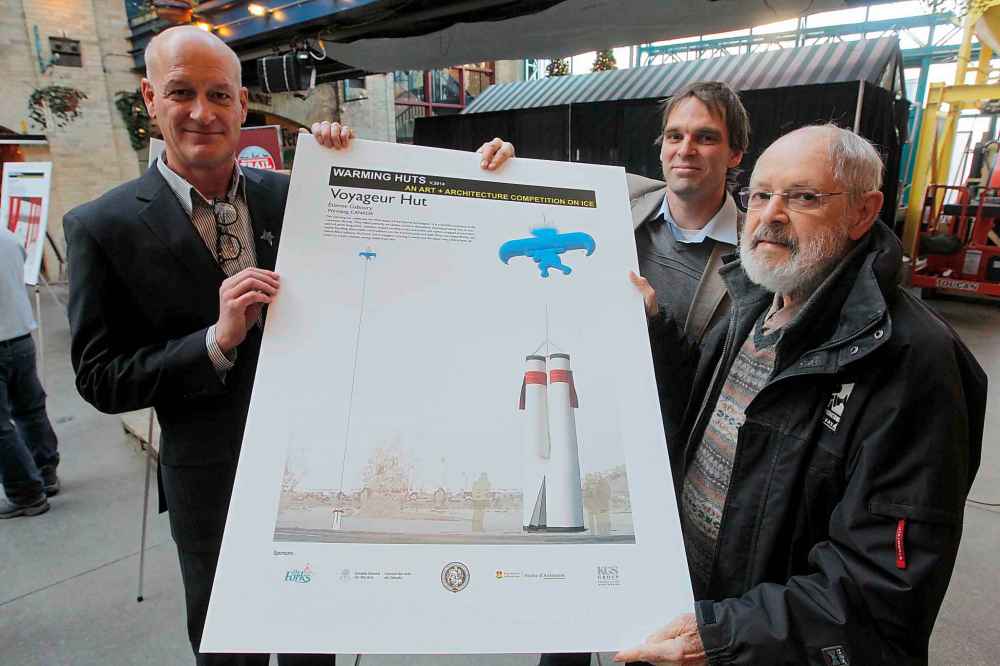
In 2013, Gaboury (right) holds his winning design for a warming hut at The Forks. Gaboury designed the Voyageur Hut, a large pair of voyageur pants (complete with leg sashes) held upside-down by a large blue helium balloon shaped like a voyageur carrying a canoe on his head. (Boris Minkevich / Winnipeg Free Press files)

“Can you imagine how he produced this work when every other architect in the city was not embracing these ideas? And these ideas were, in the ‘70s, ‘80s, and ‘90s, suppressed?” he said.

“He was recognized across Canada as a lion, as a huge, huge architectural force, but it didn’t mean that he received commissions throughout Winnipeg. It was very much that he had to fight for what he did.”

Regardless, Gaboury’s work remained distinctly Manitoban to the end, Bridgman said.

“It is both shocking and delighting, (the) exploring that Étienne did,” he said.

“In each situation, there is a certain amount of pain and growing and hopefulness that is about our prairie experience.”
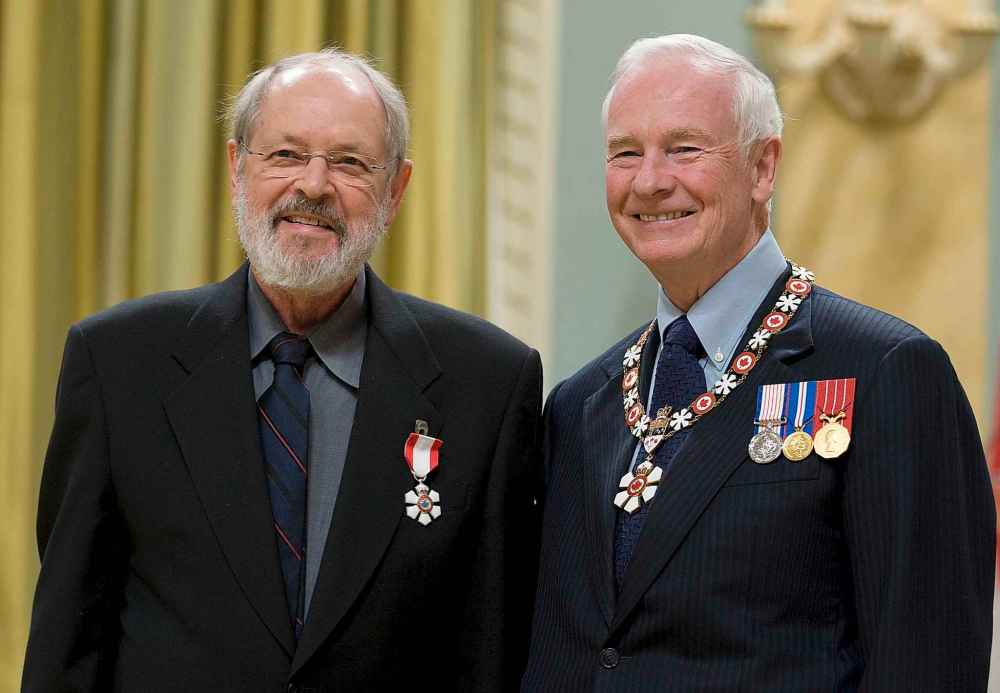
In 2010 Governor General David Johnston invested Étienne Gaboury, into the Order of Canada during a ceremony at Rideau Hall in Ottawa. (Adrian Wyld / The Canadian Press files)

The Free Press spoke with Gaboury in 2014 on what he hopes people take away from the buildings and structures he designs.

Here is a collection of some of Gaboury’s work and achievements.
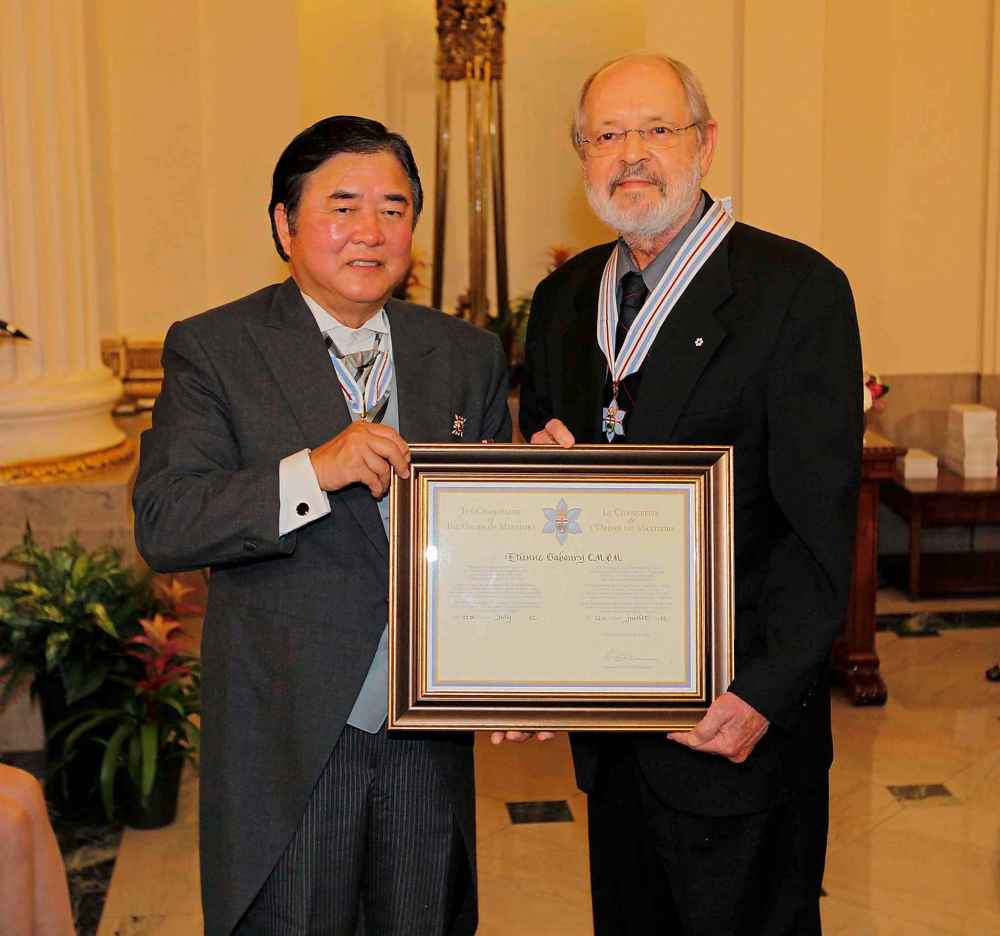


The Honourable Philip S. Lee, C.M., O.M., Manitoba's 24th Lieutenant Governor, awards Étienne Gaboury with the Order of Manitoba in 2012. (Boris Minkevich / Winnipeg Free Press files)
A home at 90 River Road, designed by Étienne Gaboury. (Wayne Glowacki / Winnipeg Free Press files)
The Royal Canadian Mint, designed by Étienne Gaboury. (Trevor Hagan / Winnipeg Free Press files)
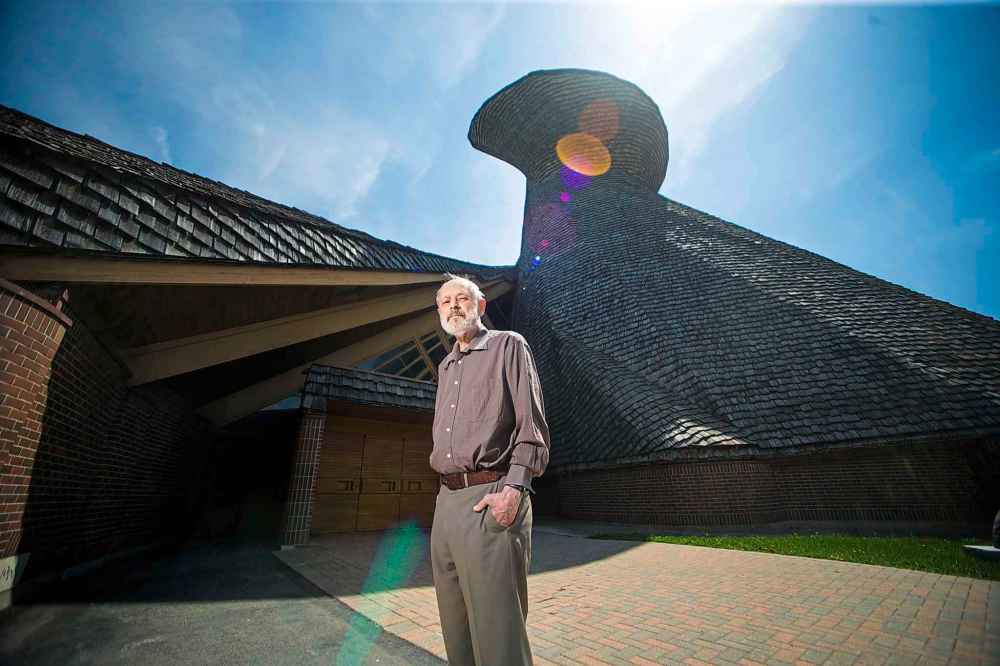
Architect Étienne Gaboury poses in front of Precious Blood Roman Catholic Church. (Mikaela MacKenzie / Winnipeg Free Press files)
History

Updated on Saturday, October 15, 2022 2:55 PM CDT: Corrects address to River Road from River Ave.

Updated on Saturday, October 15, 2022 5:57 PM CDT: Updates story with quotes and information

Updated on Saturday, October 15, 2022 6:33 PM CDT: Corrects spelling of Centre culturel Franco-Manitobain

Report Error Submit a Tip

More Stories

Canada's Conners and Hughes once again teammates

John Chidley-Hill, The Canadian Press 4 minute read Preview

Canada's Conners and Hughes once again teammates

John Chidley-Hill, The Canadian Press 4 minute read Wednesday, Jul. 28, 2021

When Mackenzie Hughes and Corey Conners were selected to represent Canada in men's golf at the Tokyo Olympics, they didn't really become teammates — the close friends have been working together for years.

In fact, the pair have been teammates at every level of golf, even functioning as pseudo-teammates on the PGA Tour, practising together with a revolving roster of Canadians every week. Conners said that the familiarity between him and Hughes will be a benefit in the 60-player, no-cut field at the Tokyo Olympics.

"We know each other's game really well, we're really comfortable around one another," said Conners. "I think that's going to be really helpful. You know as much as golf an individual sport, you know we're cheering for one another."

The pair first met as adolescents, playing in a tournament at Conners's home course in Listowel, Ont. They were then teammates on Golf Canada's men's young pro squad in 2015 and 2016, before playing together again at Kent State University.

Read
Wednesday, Jul. 28, 2021

Time’s up on smartwatches in class: education minister

Maggie Macintosh Local journalism initiative reporter 3 minute read Preview

Time’s up on smartwatches in class: education minister

Maggie Macintosh Local journalism initiative reporter 3 minute read Wednesday, Sep. 11, 2024

Manitoba’s education minister wants to make clear the new ban on cellphones in classrooms across the province is all-encompassing and applies to more than just handsets.

“You can’t be having a smartwatch that’s cell-enabled in a classroom. It’s no different than a phone,” Education Minister Nello Altomare told the Free Press.

“That’s a personal device that can cause a distraction and it doesn’t belong in a classroom, unless of course it monitors your glucose level.”

Over the summer break, the NDP government announced a sweeping phone ban in elementary schools and stricter rules that only give Grade 9-12 students access to devices during breaks. Exemptions are being made to accommodate medical and inclusion-related needs.

Read
Wednesday, Sep. 11, 2024

Teen who beat, recorded attack on McKay, sentenced to 40 months in custody

Katie May 5 minute read Preview

Teen who beat, recorded attack on McKay, sentenced to 40 months in custody

Katie May 5 minute read Monday, Jun. 4, 2018

A framed portrait of 19-year-old Serena McKay faced one of her killers from across the courtroom, as provincial court Judge Rocky Pollack imposed a maximum seven-year youth sentence Monday.

One of two teen girls who beat McKay, recorded the attack on video, and left her outside to freeze to death, will spend the next three years and four months in jail. She can't be identified because she was only 17 when she killed McKay after a house party at Sagkeeng First Nation in April 2017.

Pollack sentenced the teen to slightly less time behind bars than the law allows. She was sentenced to 40 months of closed custody, rather than the maximum 48 months, to be followed by 23 1/2 months of conditional supervision. She was given credit for some of the time she's spent in custody since her arrest last year.

Clutching her daughter's portrait outside the courthouse, Delores Daniels said McKay's family is "relatively pleased" with the judge's decision. They had initially hoped the teen would be sentenced as an adult, which could have resulted in her being sentenced to life in prison -- but Daniels said they have to accept the plea bargain made between Crown and defence lawyers.

Read
Monday, Jun. 4, 2018

A balancing act

Jennifer McFee 7 minute read Preview

A balancing act

Jennifer McFee 7 minute read Wednesday, Jun. 15, 2022


Life sometimes seems like a balancing act in an effort to juggle kids, careers, aging parents and endless other responsibilities. Throw in a global pandemic and we teeter even closer to tipping the scales.or Karen Duncan, associate professor in the University of Manitoba’s community health sciences department, paid work is important — but so, too, is leisure time.“People are experiencing a lack of balance among these activities in their lives and it can lead to a number of negative outcomes such as lower satisfaction with family, relationships and life in general,” she said.“It’s also been shown to have negative health effects such as stress, poor sleep, depression and poor coping mechanisms such as addictive behaviour. If I’m not paying attention to this, I could be on the road to some serious health difficulties.”For those in the 40-plus demographic, it’s often a life stage filled with many demands.“There may be children who need attention or older family members who need increasing levels of care. There may be financial stresses. Work itself can be demanding because it’s a time when people are looking to advance their careers,” Duncan said.“I think work-life balance has been much more difficult in the pandemic for people in this demographic. It’s phenomenally difficult trying to continue your paid work while you are taking care of your children, particularly for single parents.”Katherine Breward, associate professor in the University of Winnipeg’s business department, said persistently high stress will lead to burnout typified by diminished personal achievement, emotional exhaustion and depersonalization — and all of these things can negatively impact the work environment.Beyond that, Breward said a lack of work-life balance disrupts life in other undesirable ways that can lead to family conflicts, anxiety, guilt and a lack of availability to family members.“I think it is important that these personal emotional and social impacts on the broader family are recognized in addition to business impacts,” she said, adding that changes to expectations for parenting styles might also contribute to the problem.“There is a lot of research that suggests females are more negatively impacted by work-life issues than men (although both are affected), due primarily to ongoing gender-related imbalances in childcare and domestic work responsibilities.”For those sandwiched in the middle of competing demands, self-care is a good place to start — although Breward acknowledges it might not always be possible due to time constraints.“Really, though, the help needs to come more from employers. We need to have more realistic workplace expectations, paid sick and mental health days and paid days off for family care,” she said.“Offering flextime can really help since it gives people more flexibility to attend to family appointments and other needs. Work-from-home options can also help if people have a suitable space in which to work.”Although there’s a tendency to put responsibility on individuals, Duncan agrees employers have a role to play.“Research shows employers incur costs when their employees are experiencing work-life conflict. There’s a real bottom-line incentive for employers to have policies in place that are going to be helpful to their employees’ work-life balance,” she said.“It’s so tempting to think of this as an individual thing but, really, it’s societal. Work-life balance is not a luxury for those who can afford it — it is essential for everyone.”Karen Duncan, associate professor in the University of Manitoba’s health sciences department 

Life sometimes seems like a balancing act in an effort to juggle kids, careers, aging parents and endless other responsibilities. Throw in a global pandemic and we teeter even closer to tipping the scales.

or Karen Duncan, associate professor in the University of Manitoba’s community health sciences department, paid work is important — but so, too, is leisure time.

Read
Wednesday, Jun. 15, 2022

COVID cases spike even as US hits 200M vaccine milestone

Sophia Tareen And Jennifer Mcdermott, The Associated Press 7 minute read Preview

COVID cases spike even as US hits 200M vaccine milestone

Sophia Tareen And Jennifer Mcdermott, The Associated Press 7 minute read Wednesday, Dec. 8, 2021

A collection of breaking news briefs filed on December 13, 2021

• Province seeks help from Ottawa to staff intensive care units

• Bombers hosting Grey Cup celebration at IG Field Wednesday

• Snowmobiler killed in crash with pedestrian in Pimicikamak Cree Nation

• Missing man last seen in Elmwood neighbourhood

• Small passenger plane crashes after engine failure

• Latest round of Teachers' Idea Fund projects announced

• Eight dead as COVID-19 climbs in Southern Health

• Extent of Wheeler's injury still unknown, Moose dealing with COVID-19 situation

• Teenage boy arrested after Charleswood stabbing

• Teen girl arrested in bus shelter stabbing

• Man with ties to Winnipeg wanted by Saskatoon police in sex assault investigation

• Woman slain on College Avenue

• Jets shuffle lines at practice without injured Wheeler

• Pionk returns to practice with Jets

• Province extends paid sick leave

Read
Wednesday, Dec. 8, 2021

Research facility to focus on digital manufacturing, sustainable packaging

Martin Cash 7 minute read Preview

Research facility to focus on digital manufacturing, sustainable packaging

Martin Cash 7 minute read Friday, Nov. 5, 2021

It’s been a while in coming, but the National Research Council’s $62-million advanced manufacturing facility in Winnipeg is just about ready to open and the timing couldn’t be better.

The facility near the corner of Inkster Boulevard and Route 90 will focus on research in digital manufacturing and sustainable packaging both hot-button issues the pandemic and climate change have made difficult for industry to ignore. And while the facility will have a national mandate to be integrated with four other NRC manufacturing research centres in Ontario and Quebec, it has marching orders to be attuned to the needs of the Manitoba sector as well.

Originally announced in 2015, it took a little while to get rolling and COVID didn’t help, although Eric Baril, the NRC’s acting vice-president of transportation and manufacturing and the senior official in charge of the project, said the construction process was not hampered by the pandemic.

It has however, meant that the commissioning process including staffing up the facility has been more low key than otherwise would have been the case with uncertainty about travel for potential new hires.

Read
Friday, Nov. 5, 2021