China eases controls, gives no sign when ‘zero COVID’ ends

Advertisement

Advertise with us

BEIJING (AP) — China is easing some of the world’s most stringent anti-virus controls and authorities say new variants are weaker. But they have yet to say when they might end a “zero-COVID” strategy that confines millions of people to their homes and set off protests and demands for President Xi Jinping to resign.

Read this article for free:


By clicking the button above, an account will be created and you will begin to receive some of our recommended newsletters. You may opt out of any newsletter by visiting your Email and Communication Preferences page or by clicking "unsubscribe" at the bottom of any email.

or

Already have an account? Log in here »

To continue reading, please subscribe:

Digital Subscription

One year of digital access for only $1.44 a week*

  • Enjoy unlimited reading on winnipegfreepress.com
  • Read the E-Edition, our digital replica newspaper
  • Access News Break, our award-winning app
  • Play interactive puzzles

*Billed as $5.77 plus GST every four weeks. After 52 weeks, price increases to the regular rate of $19.95 plus GST every four weeks. Offer available to new and qualified returning subscribers only. Cancel any time.

To continue reading, please subscribe:

Add Free Press access to your Brandon Sun subscription for only an additional

$1 for the first 4 weeks*

  • Enjoy unlimited reading on winnipegfreepress.com
  • Read the E-Edition, our digital replica newspaper
  • Access News Break, our award-winning app
  • Play interactive puzzles
Start now

*Your next Brandon Sun subscription payment will increase by $1.00 and you will be charged $17.95 plus GST for four weeks. After four weeks, your payment will increase to $24.95 plus GST every four weeks.

Hey there, time traveller!
This article was published 05/12/2022 (1424 days ago), so information in it may no longer be current.

BEIJING (AP) — China is easing some of the world’s most stringent anti-virus controls and authorities say new variants are weaker. But they have yet to say when they might end a “zero-COVID” strategy that confines millions of people to their homes and set off protests and demands for President Xi Jinping to resign.

On Monday, commuters in Beijing and at least 16 other cities were allowed to board buses and subways without a virus test in the previous 48 hours for the first time in months. Industrial centers including Guangzhou near Hong Kong have reopened markets and businesses and lifted most curbs on movement while keeping restrictions on neighborhoods with infections.

The government announced plans last week to vaccinate millions of people in their 70s and 80s, a condition for ending “zero-COVID” restrictions that keep most visitors out of China and have disrupted manufacturing and global trade.
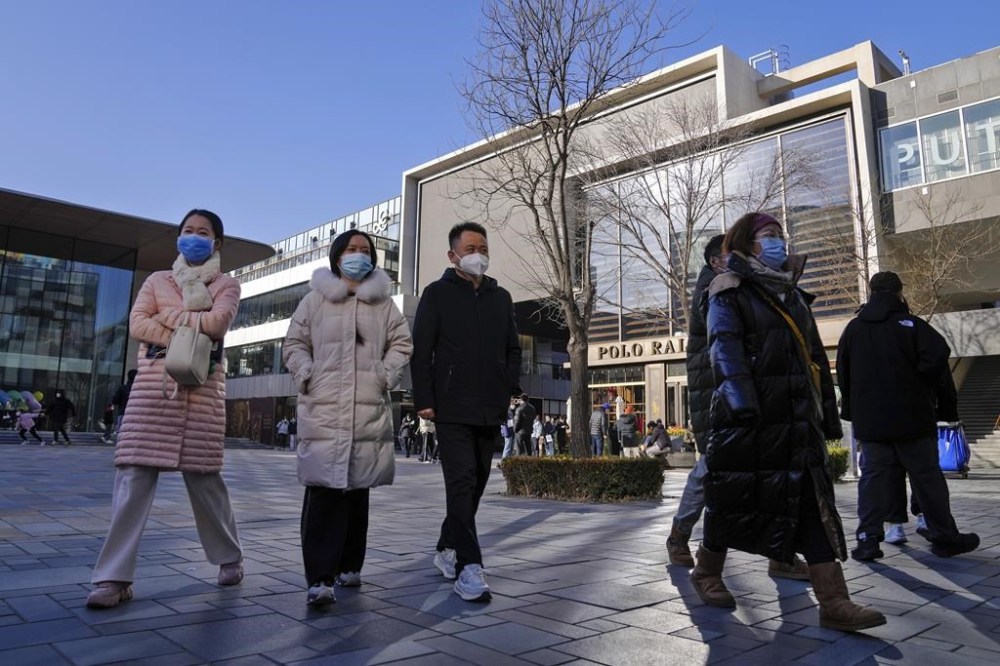
People wearing face masks walk through a reopened open air shopping mall in Beijing, Sunday, Dec. 4, 2022. China on Sunday reported two additional deaths from COVID-19 as some cities move cautiously to ease anti-pandemic restrictions amid increasingly vocal public frustration over the measures. (AP Photo/Andy Wong)

That spurred hopes for a quick end to “zero COVID.” But health experts and economists warn it will be mid-2023 and possibly 2024 before vaccination rates are high enough and hospitals are prepared to handle a possible rash of infections.

“China is not ready for a fast reopening yet,” Morgan Stanley economists said in a report Monday. “We expect lingering containment measures. … Restrictions could still tighten dynamically in lower-tier cities should hospitalizations surge.”

The changes follow protests demanding an end to “zero COVID” but are in line with Communist Party promises earlier to reduce disruption by easing quarantine and other restrictions. The changes have been highly publicized in a possible effort to mollify public anger, but there is no indication whether any might have been made in response to protests in Shanghai and other cities.

China is the only major country still trying to stamp out transmission while the United States and others relax restrictions and try to live with the virus that has killed at least 6.6 million people and infected almost 650 million.

The protests began Nov. 25 after at least 10 people died in a fire in an apartment building in Urumqi in the northwest. Authorities denied suggestions firefighters or victims were blocked by locked doors or other anti-virus controls. But the disaster became a focus for public frustration.

Ahead of the protests, the Communist Party promised to make “zero COVID” less costly and disruptive but said it was sticking to the overall containment strategy.

The party earlier announced updates to the strategy to make it more focused. Authorities began suspending access to buildings or neighborhoods with an infection instead of whole cities. But a spike in cases starting in October prompted areas across China to close schools and confine families to cramped apartments for weeks at a time.

Authorities say they are “further optimizing” controls and warn the country needs to stay alert.
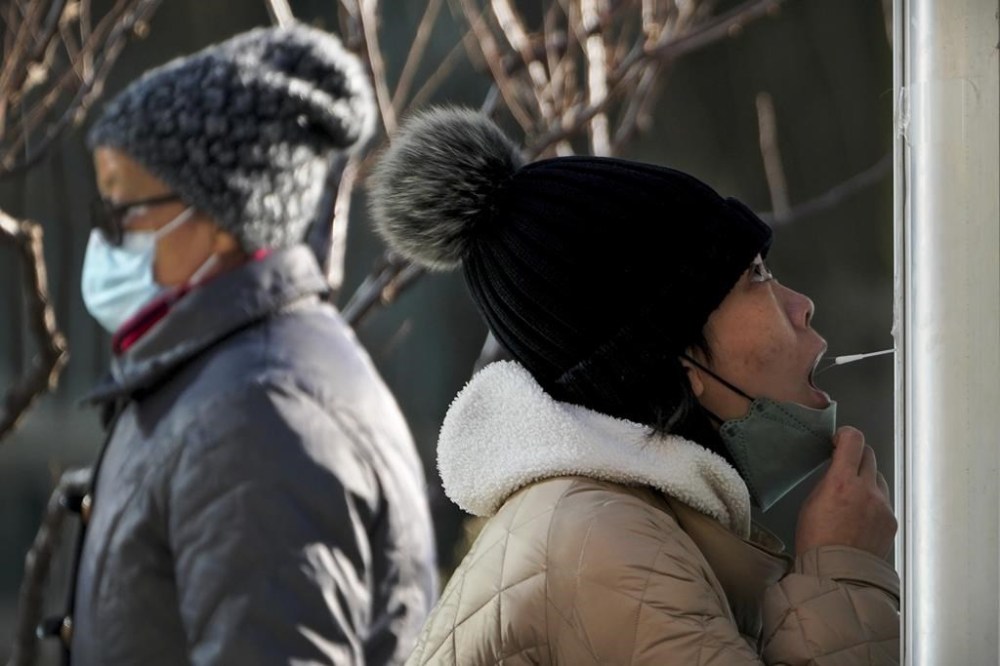
A woman has her routine COVID-19 throat swab at a coronavirus testing site in Beijing, Monday, Dec. 5, 2022. China is easing some of the world's most stringent anti-virus controls and authorities say new variants are weaker. But they have yet to say when they might end a
A woman has her routine COVID-19 throat swab at a coronavirus testing site in Beijing, Monday, Dec. 5, 2022. China is easing some of the world's most stringent anti-virus controls and authorities say new variants are weaker. But they have yet to say when they might end a "zero-COVID" strategy that confines millions of people to their homes and set off protests and demands for President Xi Jinping to resign. (AP Photo/Andy Wong)

China faces “new situations and tasks” due to the “weakening of the pathogenicity” of the latest omicron variant, a deputy premier in charge of the anti-virus campaign, Sun Chunlan, said last week. She said China has “effective diagnosis and treatment” and has vaccinated more than 90% of its people.

The government of Shanghai, the country’s financial capital, announced visitors to most sites will require only a negative virus test in the past week, instead of the previous two days. Schools, hospitals and bars still will require a test within the past 48 hours.

Despite the changes, Beijing and other cities are telling some residents to stay home or enforcing other restrictions on neighborhoods with infections.

Travelers at the Chinese capital’s train stations and three airports are required to show a negative virus test within the previous 48 hours. Elsewhere, Guangzhou and other cities said areas deemed at high-risk for infection still face additional curbs.

A negative virus test within the past 72 hours still is required to enter public buildings in vast metropolis of Chongqing in the southwest, a hotspot in the latest infection spike. Dining in restaurants in some parts of Beijing still is prohibited.

A newspaper reported last week that some Beijing residents who have mild or asymptomatic COVID-19 cases would be allowed for the first time to isolate themselves at home instead of going to one of China’s sprawling quarantine centers. The government has yet to confirm that.

Forecasters say the struggling economy, already under pressure from weak demand for Chinese exports and a government crackdown on debt in the real estate industry, might be contracting this quarter.

Regulators have responded by freeing up more money for lending and are trying to encourage private investment in infrastructure projects. They have eased some financial controls on real estate developers to reverse a slump in one of China’s biggest industries.
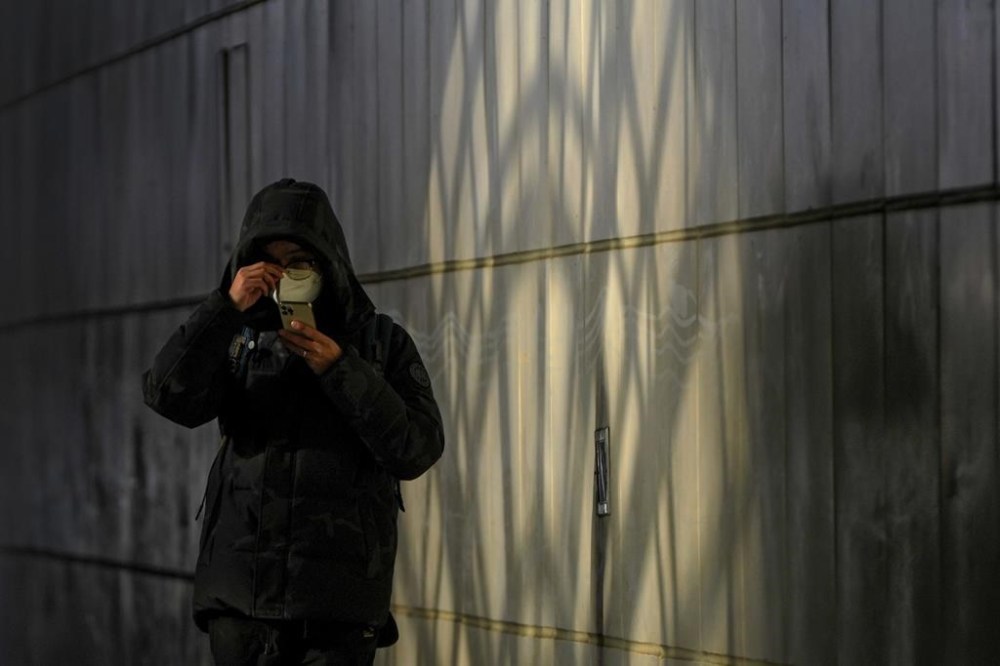
A resident adjusts her face mask as she walks by a tunnel in Beijing, Monday, Dec. 5, 2022. China is easing some of the world's most stringent anti-virus controls and authorities say new variants are weaker. But they have yet to say when they might end a
A resident adjusts her face mask as she walks by a tunnel in Beijing, Monday, Dec. 5, 2022. China is easing some of the world's most stringent anti-virus controls and authorities say new variants are weaker. But they have yet to say when they might end a "zero-COVID" strategy that confines millions of people to their homes and set off protests and demands for President Xi Jinping to resign. (AP Photo/Andy Wong)

“Policymakers are focusing their efforts on spurring growth,” Eurasia Group analysts said in a report. “However, even if China’s transition away from a strict zero-COVID policy is more decisive and accelerated, meeting public health milestones like increasing elderly vaccination will take months.”

On Monday, the government reported 30,014 new cases, including 25,696 without symptoms. That was down from last week’s daily peak above 40,000 but still close to record daily highs for China.

Xi’s government has held up “zero COVID” as proof of the superiority of China’s system compared with the United States and Western countries. China’s official death toll stands at 5,235 since the start of the pandemic versus a U.S. count of 1.1 million.

China also has suffered a possible rise in fatalities among people with cancer, heart disease and other conditions who struggled to get care while hospitals focused on treating virus cases. Data on those deaths haven’t been reported.

Report Error Submit a Tip

More Stories

NDP introduces last-minute rent-hike bill, Tories say it will cause administrative nightmare

Carol Sanders 4 minute read Preview

NDP introduces last-minute rent-hike bill, Tories say it will cause administrative nightmare

Carol Sanders 4 minute read 7:29 PM CDT

A day before the legislative session ends, the NDP government introduced a bill to ensure landlords can’t charge tenants backpay for approved above-guideline rent increases.

Bill 59, the Residential Tenancies Amendment Act (2), would prohibit a landlord who has applied for a rent increase above the maximum permitted by regulation from charging tenants the new rate until it is approved.

Premier Wab Kinew announced earlier this month that renters would not have to pay the increases until the provincial Residential Tenancies Branch hears landlords’ arguments and issues its decisions.

“We recently passed legislation in the house to make sure life will be more affordable,” Kinew said at a news conference on Oct. 20, referring to a new rent bill introduced in March and expected to become law before the session ends on Oct. 29. He was flanked by Winnipeg tenants facing rent increases of more than 50 per cent.

Read
7:29 PM CDT

Express the merry widow you truly are

Maureen Scurfield 5 minute read Yesterday at 2:00 AM CDT

DEAR MISS LONELYHEARTS: My husband died a while back, and I don’t miss him! He had grown old in a strange and cranky way, and I’m a cheerful person by nature. It was hard to hear him shoot down every idea I had to go out and do things together.

He wasn’t physically ill — just finished with having any fun. He had gotten depressed and wouldn’t take anti-depressants, although he was fine with getting drunk and critical towards me.

He was particularly negative about seeing friends and relatives, and living the active way we used to — always the first to get tickets to concerts and encouraging other friends to go with us for dinners at new restaurants. We also went to a lot of sports games, and visited friends and relatives. We arrive with lots of good food and drink.

So now when people ask me in that pitying voice used for widows, “Poor darling, how are you doing?” I respond, “He was miserable towards the end, and it was a relief when he died.” They look shocked, but it’s the truth, and they know it.

Transit budget cap means cuts

Aldo Santin  5 minute read Preview

Transit budget cap means cuts

Aldo Santin  5 minute read Wednesday, Nov. 13, 2019

Winnipeg is literally facing dark times, officials involved in budget presentations revealed Wednesday at city hall.

The public works director said a proposed freeze on the street lighting budget means the City of Winnipeg will have to turn off an increasing number of lights over the next four years.

Winnipeg Transit said an imposed two per cent cap on its budget will mean the elimination of dozens of positions and the low-income bus pass might never see the light of day, along with a host of service cuts.

The budget prospects left Coun. Matt Allard, chairman of the public works committee and a public transit advocate, looking rattled and at a loss to explain how city hall can dig its way out of the financial situation.

Read
Wednesday, Nov. 13, 2019

Cab driver dies in suspected hit and run

Morgan Modjeski 2 minute read Preview

Cab driver dies in suspected hit and run

Morgan Modjeski 2 minute read 7:35 PM CDT

An official with a Winnipeg cab company said one of its drivers died in a collision on Salter Street Wednesday morning.

“It looks like it was a T-bone accident,” said Ram Valluru, general manager of Duffy’s Taxi, about the 6:30 a.m. collision between the cabbie and another vehicle. Traffic was redirected between Aberdeen and Redwood streets for several hours as police investigated.

He said his driver, a man in his late 40s, has a wife and two teenage children. His death has saddened his co-workers.

“I visited their house today to pass along my condolences,” Valluru said. “I know him very well, this driver.”

Read
7:35 PM CDT

China eases controls, gives no sign when ‘zero COVID’ ends

Joe Mcdonald, The Associated Press 6 minute read Preview

China eases controls, gives no sign when ‘zero COVID’ ends

Joe Mcdonald, The Associated Press 6 minute read Monday, Dec. 5, 2022

BEIJING (AP) — China is easing some of the world’s most stringent anti-virus controls and authorities say new variants are weaker. But they have yet to say when they might end a “zero-COVID” strategy that confines millions of people to their homes and set off protests and demands for President Xi Jinping to resign.

On Monday, commuters in Beijing and at least 16 other cities were allowed to board buses and subways without a virus test in the previous 48 hours for the first time in months. Industrial centers including Guangzhou near Hong Kong have reopened markets and businesses and lifted most curbs on movement while keeping restrictions on neighborhoods with infections.

The government announced plans last week to vaccinate millions of people in their 70s and 80s, a condition for ending “zero-COVID” restrictions that keep most visitors out of China and have disrupted manufacturing and global trade.

That spurred hopes for a quick end to “zero COVID." But health experts and economists warn it will be mid-2023 and possibly 2024 before vaccination rates are high enough and hospitals are prepared to handle a possible rash of infections.

Read
Monday, Dec. 5, 2022

Multi-year budget to force councillors, bureaucrats to focus on the big picture

Aldo Santin 12 minute read Preview

Multi-year budget to force councillors, bureaucrats to focus on the big picture

Aldo Santin 12 minute read Tuesday, Feb. 26, 2019

City hall is putting the final touches on the 2019 preliminary budget -- but the real tough job will start after that.

The city is committed to developing a four-year budget beginning with 2020, and having it in place by the end of this year.

It's a process that is filled with uncertainties, trying to balance four successive annual budgets at the same time, using assumptions on revenues and expenses that can change without notice: a provincial government that has frozen funding to city hall at 2016 levels and is reluctant to disclose annual funding commitments or share in unexpected revenues; erratic fuel prices; a possible change in government in Ottawa, which could bring new spending priorities. And in the middle of that four-year span, another civic election where new members of council may have other priorities than those laid out by the current crop of office holders.

Municipal governments across Manitoba are required to approve their annual operating and capital budgets by the end of March each year. But the criticism of decision-making at city hall has been that all the decisions are made on a year-to-year basis, keeping voters happy with an eye on the next election.

Read
Tuesday, Feb. 26, 2019