Legal battles likely as divided states grapple with abortion
Advertisement
Read this article for free:
or
Already have an account? Log in here »
To continue reading, please subscribe:

Digital Subscription
One year of digital access for only $205*
- Enjoy unlimited reading on winnipegfreepress.com
- Read the E-Edition, our digital replica newspaper
- Access News Break, our award-winning app
- Play interactive puzzles
*First annual payment billed as $205.00 + GST for one year. This annual subscription will automatically renew at $233.00 + GST every 52 weeks (10% off the regular annual price of $259.35). Offer available to new and qualified returning subscribers only. Cancel any time.
To continue reading, please subscribe:
Add Free Press access to your Brandon Sun subscription for only an additional
$1 for the first 4 weeks*
- Enjoy unlimited reading on winnipegfreepress.com
- Read the E-Edition, our digital replica newspaper
- Access News Break, our award-winning app
- Play interactive puzzles
*Your next Brandon Sun subscription payment will increase by $1.00 and you will be charged $17.95 plus GST for four weeks. After four weeks, your payment will increase to $24.95 plus GST every four weeks.
Read unlimited articles for free today:
or
Already have an account? Log in here »
Hey there, time traveller!
This article was published 24/06/2022 (1566 days ago), so information in it may no longer be current.
The Supreme Court’s decision Friday to overturn the constitutional right to abortion has only further fractured an already deep division between the states, where contentious legal battles are almost certain to erupt as legislatures and attorneys general grapple with the new landscape of abortion access.
Even before the opinion, lawmakers, activists and legal scholars were arguing over whether Republican-led states can enforce abortion bans beyond their borders and target providers, people who provide assistance and the women seeking abortions. That speculation could soon become reality as abortion opponents become more emboldened to try novel approaches to prevent women terminating a pregnancy.
In their dissent, the court’s liberal justices referenced the potential for the ruling to set off an era of legal chaos and peril for individuals.

They said the court’s majority was trying to “hide the geographically expansive effects” of a ruling that “invites a host of questions about interstate conflicts.” Justices Stephen Breyer, Sonia Sotomayor and Elena Kagan said the decision will put the court at the center of what some scholars have called the coming “interjurisdictional abortion wars.”
“Can a State bar women from traveling to another State to obtain an abortion?” they wrote. “Can a State prohibit advertising out-of-state abortions or helping women get to out-of-state providers? Can a State interfere with the mailing of drugs used for medication abortions?”
Professor Michael Steenson of the Mitchell Hamline School of Law in St. Paul, Minnesota, predicted the legal landscape after the Supreme Court decision will be in “absolute chaos” and it will take years to sort out. But some Democratic states aren’t waiting to shield women who travel to get an abortion and ensure patients do not face penalties back home.
Washington is barring the state from acting against doctors who perform such abortions, while California and Illinois are considering similar measures. On Friday, the Democratic governors of California, Oregon and Washington announced a joint commitment to defend abortion access.
“We will continue to protect patients from any state who comes to our state for abortion care,” Oregon Gov. Kate Brown said. “We will resist intrusions by out of state prosecutors, law enforcement or vigilantes trying to investigate patients receiving services in our states.”
In Massachusetts, Gov. Charlie Baker, a Republican who has said he supports a woman’s right to choose, signed an executive order prohibiting state agencies from assisting another state’s investigation into people or businesses that receive or deliver reproductive health services that are legal in Massachusetts. The order also protects Massachusetts providers who deliver reproductive health care services from being disciplined based on potential out-of-state charges.
Connecticut enacted a law earlier this year to stymie lawsuits or criminal cases from other states over legal abortions for out-of-state residents.
“This decision carves our nation in two — states that trust the personal and professional decisions of women and doctors, and states where craven politicians control and criminalize those choices,” said state Attorney General William Tong, a Democrat. “Connecticut is a safe state, but we will need to be vigilant, aggressive and proactive to defend our rights.”
In Minnesota, Attorney General Keith Ellison has already vowed to protect abortion rights as outlined in the state constitution. But he said “things will be much tougher” in states bordering Minnesota, some of which will have total bans on abortion. Some states such as Texas allow private citizens to sue people who assist in abortions. Ellison said he fears it might lead to lawsuits against those who help women traveling to the state for abortions, but he promised he would fight any possible extraditions.
Half the states are expected to outlaw most abortions with Roe falling, according to the abortion-rights think tank Guttmacher Institute. Twenty-two states, largely in the South and Midwest, already had total or near-total bans on the books. Aside from Texas, all those had been blocked in the courts before Friday’s decision.
Once that was issued, several Republican state attorneys general, including those in Ohio and Tennessee, asked the courts to lift stays that has blocked previously passed abortion restrictions in their states.
Separately, 13 other states had enacted so-called trigger laws that immediately ban abortion with Roe overturned. Oklahoma began the process of invoking its trigger law Friday, and other states, including Kentucky, Ohio and West Virginia, said they were beginning work on trigger bans. Just moments after the court’s decision was announced, Virginia Gov. Glenn Youngkin, a Republcan, said he will seek legislation to ban most abortions after 15 weeks of pregnancy, but it’s unclear how such a bill would fare in a very closely divided legislature.
Some legal experts — and even some anti-abortion lawmakers — argue that states simply can’t control what goes on beyond their borders. Buying and smoking marijuana is one example: Kansas waits until residents return from “pot vacations” in Colorado to pull them over.
Some abortion opponents argue that it’s better to focus on providing help to pregnant women and make adoption less expensive so they don’t choose abortion. Texas recently allocated $100 million for such services.
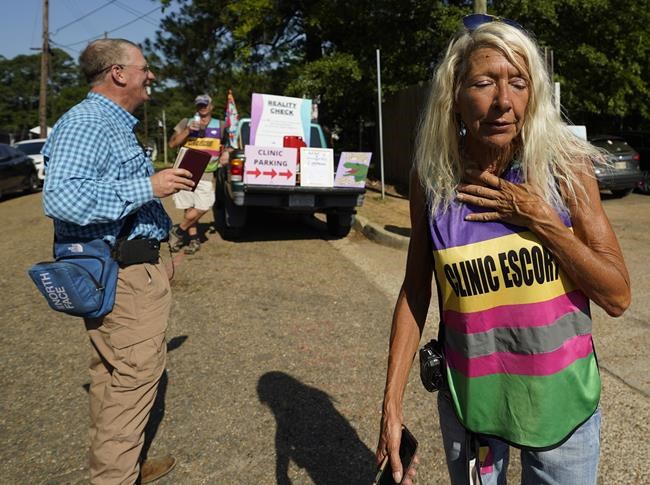
“I want the Legislature to continue to focus on providing and promoting these alternatives to abortion,” said Joe Pojman, executive director of the Texas Alliance for Life.
The Family Council, a conservative group in Arkansas that has advocated for numerous abortion bans, hailed the court’s decision but said lawmakers still have work to do. The group is not pushing to prevent women from getting abortions in other states, said Jerry Cox, the group’s president. Instead, he said Friday they will focus on helping women with unplanned pregnancies.
“We need to create a culture of life that spreads all across the state of Arkansas so that those women never feel that abortion is their only choice,” Cox said.
Others warn that the Supreme Court’s decision will encourage states to push extreme policies in their attempt to criminalize abortion. Louisiana lawmakers already have floated a proposal calling abortion homicide, which would have opened up women to murder charges if they got an abortion. The proposal was eventually spiked, and there is no immediate indication that Republicans in other states are interested in taking up similar legislation.
In New Hampshire, the Republican-controlled Legislature rejected a bill this year that would have given potential fathers the right to veto a woman’s abortion. Though legislative leaders there say they don’t expect the state to further restrict abortion, lawmakers who have filed bills in the past are expected to try again.

“They push the envelope,” said Jessica Arons, the American Civil Liberties Union’s senior lawyer for reproductive freedom. “They’re always trying to propose things that in the moment seem outrageous or fringe, but the more they push it over time, it becomes normalized.”
___
Hanna reported from Topeka, Kansas; Kruesi from Nashville, Tennessee; and Ramer from Concord, New Hampshire. Associated Press writers Adam Beam in Sacramento, California; Andrew DeMilo in Little Rock, Arkansas; Susan Haigh in Hartford, Connecticut; Samantha Hendrickson and Julie Carr Smyth in Columbus, Ohio; Steve Karnowski in St. Paul, Minnesota; Steve LeBlanc in Boston; and Rebecca Santana in New Orleans contributed to this report.
___
For AP’s full coverage of the Supreme Court ruling on abortion, go to https://apnews.com/hub/abortion


Advertisement Advertise With Us
Advertisement Advertise With Us