Federal government invokes Emergencies Act for ‘illegal’ blockades

Advertisement

Advertise with us

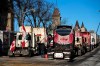
The federal government has invoked the Emergencies Act to bring an end to antigovernment blockades in Ottawa and across the country.

Read this article for free:


or

Already have an account? Log in here »

To continue reading, please subscribe:

Subscribe and receive a limited-edition Free Press branded hat or tote.

Digital Subscription

One year of digital access for only $205*

  • Enjoy unlimited reading on winnipegfreepress.com
  • Read the E-Edition, our digital replica newspaper
  • Access News Break, our award-winning app
  • Play interactive puzzles

*First annual payment billed as $205.00 + GST for one year. This annual subscription will automatically renew at $233.00 + GST every 52 weeks (10% off the regular annual price of $259.35). Offer available to new and qualified returning subscribers only. Cancel any time.

To continue reading, please subscribe:

Add Free Press access to your Brandon Sun subscription for only an additional

$1 for the first 4 weeks*

  • Enjoy unlimited reading on winnipegfreepress.com
  • Read the E-Edition, our digital replica newspaper
  • Access News Break, our award-winning app
  • Play interactive puzzles
Start now

*Your next Brandon Sun subscription payment will increase by $1.00 and you will be charged $17.95 plus GST for four weeks. After four weeks, your payment will increase to $24.95 plus GST every four weeks.

Hey there, time traveller!
This article was published 15/02/2022 (1693 days ago), so information in it may no longer be current.

The federal government has invoked the Emergencies Act to bring an end to antigovernment blockades in Ottawa and across the country.

This is the first time the Emergencies Act has been invoked since it came into force in 1988.

The federal government published new cabinet orders and regulations detailing temporary but extraordinary powers under the act, including:

— A prohibition on anyone participating in blockades, bringing children to those protests or bringing aid, such as food or fuel, to people involved.

— Defining the places blockades are not allowed, including: Parliament Hill and the parliamentary precinct, official residences, federal and government buildings, war monuments, airports, harbours, border crossings, piers, lighthouses, canals, interprovincial and international bridges, hospitals and COVID-19 vaccination clinics, trade corridors and infrastructure needed for the supply of utilities including power generation and transmission.

— Giving special powers to police, banks and insurance companies to freeze accounts and cancel vehicle insurance belonging to people participating in “illegal assemblies.”

— Directing specified persons to render essential services, such as towing vehicles, to relieve impacts of blockades on Canada’s economy.

— Measures with respect to authorizing the Royal Canadian Mounted Police to enforce municipal and provincial laws by means of incorporation by reference.

— Failing to comply with the regulations can mean a fine of up to $5,000 or five years in prison for an indictable offence and a fine of up to $500 or six months in prison for a summary conviction.

Passed in 1988, the Emergencies Act is intended for use when:

— an urgent and critical situation, temporary in nature, endangers the lives, health or safety of Canadians;

— the capacity or authority of provinces to handle the situation is considered lacking; and

— the crisis cannot be defused effectively using other Canadian laws.

It also permits the regulation or prohibition of any public assembly expected to lead to a breach of the peace.

Once invoked, the Emergencies Act requires holding a public inquiry within 60 days after the crisis has ended, and the resulting report being tabled in Parliament within one year.

This report by The Canadian Press was first published Feb. 15, 2022.

Report Error Submit a Tip

More Stories

Broadening prediction-market gambling a bad idea

Editorial 4 minute read Preview

Broadening prediction-market gambling a bad idea

Editorial 4 minute read Yesterday at 2:01 AM CDT

Let’s make a prediction: sooner or later, when Canadian governments find a way to take their own cut of the action, prediction-contract gambling on everything from sports to entertainment to political decisions is going to come to Canada.

And that’s a horrible, dangerous, pernicious idea.

Unless you have particular access to information — either inside information or strategic information based on skills or education — you’re not likely to make money at it. In fact, structurally, you’re likely to lose. In prediction markets, you basically pay an amount, plus fees from the company involved, to bet on whether something will or will not happen within a certain time frame. The amount you pay for your contract depends on how other people are also betting.

As Wealthsimple describes it, “You buy whichever side you think is right. Prices move with demand, so if the market leans towards one outcome, the more that side costs. If a lot of people are backing the TSX to finish above 38,000, yes gets more expensive and no gets cheaper.”

Read
Yesterday at 2:01 AM CDT

Board game company charts winning path

Aaron Epp 5 minute read Preview

Board game company charts winning path

Aaron Epp 5 minute read Friday, Oct. 2, 2026

Dennis Northcott has launched a game without frontiers.

The Winnipeg entrepreneur is the co-designer of Galactic Cruise, a board game published last year by Kinson Key Games LLC, the business he co-founded. Since its release, Galactic Cruise has been translated into 11 languages and sold around 50,000 copies worldwide.

It’s also one of three finalists for this year’s Deutsche Spiele Preis, a prestigious community-voted board game award. Northcott will travel to Essen, Germany, later this month, where the winner will be announced at Spiel Essen, an annual board game trade fair.

“It’s been amazing,” Northcott said of the response to Galactic Cruise during an interview in his Island Lakes neighbourhood home earlier this week. “The sales have been great, but it’s also been amazing in terms of people giving their reviews.”

Read
Friday, Oct. 2, 2026

Transit driver stabbed with syringe by passenger

Tyler Searle 3 minute read Preview

Transit driver stabbed with syringe by passenger

Tyler Searle 3 minute read Wednesday, Aug. 5, 2026

A Winnipeg Transit driver is recovering in hospital after a passenger stabbed him in the leg with a syringe while riding the bus early Wednesday, the Amalgamated Transit Union says.

The union said the incident occurred shortly before 1 a.m. while the operator was stopped in the northbound lanes of Isabel Street, near William Avenue. A female passenger reached around the driver’s safety shield and stabbed the driver twice before getting off the bus.

The driver was taken to the Seven Oaks Hospital in stable condition, where he is undergoing treatment and further testing, union president James Van Gerwin said in an interview.

“We spoke to the member. He is doing OK, but he is still in the hospital and he is scared — as anybody would be,” Van Gerwin said.

Read
Wednesday, Aug. 5, 2026

The election of our discontent

Matthew Frank 7 minute read Preview

The election of our discontent

Matthew Frank 7 minute read 2:37 PM CDT

There’s an undercurrent of unhappiness running through the Winnipeg electorate as the municipal election day approaches.

One-half of Winnipeggers believe the city is heading in the wrong direction, according to a new Abacus Data poll, with nearly one-third unsure if Winnipeg is regressing or progressing.

Only 21 per cent of residents believe the city is on the right track, the Free Press-commissioned poll found.

That discontentment extends to how the city spends its tax dollars, with four in 10 Winnipeggers believing they receive poor value for what they pay in property taxes.

Read
2:37 PM CDT

Wet weather heats up feed grain availability

Laura Rance-Unger 4 minute read Preview

Wet weather heats up feed grain availability

Laura Rance-Unger 4 minute read Yesterday at 2:01 AM CDT

Other than those in another rain cloud, it’s hard to find the silver linings attached to this year’s soggy harvest.

A showery September continued to cause delays and more deterioration in both quality and yield. Plus, the costs of mitigating post-harvest losses to spoilage are rising as the delays push further into fall. It takes more heat and time to artificially dry down grain as temperatures cool.

Crops harvested in August before the weather turned warm and damp came off with good quality and average yields. But farmers in some areas, such as southwest Manitoba, had only started when the rains came. Now they are plagued with standing water and sprouting swaths of grain that might not even make feed quality.

Suffice to say crop insurance adjusters are going to be busy this fall.

Read
Yesterday at 2:01 AM CDT

Khan should’ve taken high road: Goertzen

Carol Sanders 5 minute read Preview

Khan should’ve taken high road: Goertzen

Carol Sanders 5 minute read Friday, Oct. 2, 2026

The veteran Progressive Conservative who championed Obby Khan’s leadership bid says the former Blue Bomber dropped the ball by dissing his Tory teammates before he stepped down.

“I wouldn’t recommend it, and I didn’t recommend it,” Kelvin Goertzen (Steinbach) said in an interview Friday.

Khan resigned as PC leader and quit the caucus Monday saying some members were secretly plotting his ouster, even after he won a confidence vote on Sept. 25.

On Tuesday, Khan lashed out in a CJOB interview, naming the alleged plotters, saying constituents deserved to know which of their elected representatives “lacked moral integrity.” Khan told the Free Press he was “deeply emotionally hurt,” and felt stabbed in the back.

Read
Friday, Oct. 2, 2026