Most Canadians confident federal vaccine rollout is back on track: poll

Advertisement

Advertise with us

OTTAWA - A majority of Canadians believe Ottawa will follow through on its plan to provide enough COVID-19 vaccine doses for everyone who wants a shot by the fall, a new poll suggests.

Read this article for free:


or

Already have an account? Log in here »

To continue reading, please subscribe:

Subscribe and receive a limited-edition Free Press branded hat or tote.

Digital Subscription

One year of digital access for only $205*

  • Enjoy unlimited reading on winnipegfreepress.com
  • Read the E-Edition, our digital replica newspaper
  • Access News Break, our award-winning app
  • Play interactive puzzles

*First annual payment billed as $205.00 + GST for one year. This annual subscription will automatically renew at $233.00 + GST every 52 weeks (10% off the regular annual price of $259.35). Offer available to new and qualified returning subscribers only. Cancel any time.

To continue reading, please subscribe:

Add Free Press access to your Brandon Sun subscription for only an additional

$1 for the first 4 weeks*

  • Enjoy unlimited reading on winnipegfreepress.com
  • Read the E-Edition, our digital replica newspaper
  • Access News Break, our award-winning app
  • Play interactive puzzles
Start now

*Your next Brandon Sun subscription payment will increase by $1.00 and you will be charged $17.95 plus GST for four weeks. After four weeks, your payment will increase to $24.95 plus GST every four weeks.

Hey there, time traveller!
This article was published 02/03/2021 (2043 days ago), so information in it may no longer be current.

OTTAWA – A majority of Canadians believe Ottawa will follow through on its plan to provide enough COVID-19 vaccine doses for everyone who wants a shot by the fall, a new poll suggests.

Fifty-six per cent of respondents are confident the federal government can buy enough vaccine to ensure inoculation for those who seek it by September, according to an online survey by Léger and the Association for Canadian Studies.

Canadians on both coasts and in Quebec were optimistic about their provinces’ rollout plans as well as that of the feds. Respondents in Ontario and the Prairies were more skeptical, with just one in three Albertans expressing faith in their government’s delivery scheme.
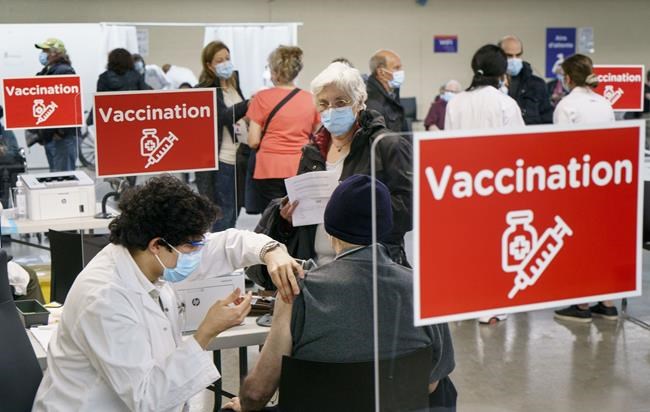
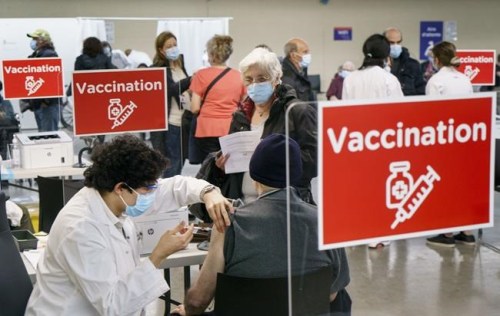
A man receives his COVID-19 vaccine at a clinic at Olympic Stadium marking the beginning of mass vaccination in the Province of Quebec based on age in Montreal, on Monday, March 1, 2021. THE CANADIAN PRESS/Paul Chiasson

The poll also found that most residents are in no rush to lift anti-pandemic lockdowns, with two-thirds saying restrictions should remain at least until half the population is immunized.

Léger executive vice-president Christian Bourque says the ramp-up in vaccine shipments last week likely brightened Canadians’ views of federal distribution efforts. Only two weeks ago, 69 per cent of respondents blamed Ottawa rather than provincial governments for delays in vaccine delivery, Léger found.

“There’s been a bit of a change over the past couple of weeks,” Bourque said in an interview.

“The news we got about the doses coming in from Pfizer and the new doses acquired from (Moderna) plus the fact that we approved AstraZeneca … all of these elements together have actually had some positive influence on Canadians’ confidence that we will get vaccinated before the deadline that the federal government set for itself.”

Prime Minister Justin Trudeau has repeatedly promised to secure enough doses to immunize all willing Canadians by the end of September.

The Public Health Agency of Canada is currently expecting delivery of about 445,000 doses of various vaccines this week, following last week’s record high of 640,000 doses in a seven-day period.

It’s unclear when the first doses of the AstraZeneca vaccine — approved by the public-health agency on Friday — will arrive in the country, but a senior government official told The Canadian Press on background the first doses could land as early as mid-week, boosting the total.

Now, attention turns to the provinces as shipments start to pour in and provincial administration is put to the test.

Despite the challenges of ongoing public health restrictions, the more prudent strain of Canada’s national character is visible behind the responses to the Léger survey, Bourque suggested.

“The majority of Canadians are extremely careful about what should happen and when, depending on the pace at which we vaccinate,” he said, referring to lockdown lifts.

“Basically, there’s no rush.”

This report by The Canadian Press was first published March 2, 2021.

Report Error Submit a Tip

More Stories

City, province, Ottawa strike task force to battle meth

Jessica Botelho-Urbanski 5 minute read Preview

City, province, Ottawa strike task force to battle meth

Jessica Botelho-Urbanski 5 minute read Tuesday, Dec. 18, 2018

The city, province and federal governments are teaming up to create a tri-level task force that will fight distribution of illicit drugs and address the root causes of the province's meth crisis.

"As far as we know, this is the first collaborative initiative like this in the country and it’s something that I’m very proud to be a part of," said Winnipeg Mayor Brian Bowman, who had been calling for such a task force (with unanimous council support) since September. 

In interviews last week, officials from the three levels of government told the Free Press they hadn't yet met in the same room to discuss the surge in meth-related problems.

By Tuesday, it seems they managed to clear their schedules.

Read
Tuesday, Dec. 18, 2018

Hydro Québec faces issue we should avoid

Editorial 4 minute read Preview

Hydro Québec faces issue we should avoid

Editorial 4 minute read 2:01 AM CDT

You might be tempted to call it a canary in an electric power generation coal mine.

But instead, it’s just another heads-up into the already-obvious problem with the proliferation of data centres.

This week, Hydro-Québec went before the Régie de l’énergie, Québec’s public utilities board, to change the rules for new and existing large data centres.

Now, it was not that long ago that Hydro Québec was actively wooing data centres — offering bulk power rates to be used to lure labour-intensive, power-hungry heavy industry (think aluminum smelters) with rates substantially lower than they offer Québec’s own residential customers. It was a way to use surplus power to create jobs and drive economic activity.

Read
2:01 AM CDT

Record participation, funds raised in 2026 breast cancer awareness race

Maggie Macintosh 5 minute read Preview

Record participation, funds raised in 2026 breast cancer awareness race

Maggie Macintosh 5 minute read Yesterday at 2:23 PM CDT

It’s become a tradition for the West End Legends to gather, get dressed up in hot pink and gab about their late girlfriend on the first Sunday of Breast Cancer Awareness Month.

“Mary was a beauty, a brain, an athlete and a friend,” said Linda Opalko, a 67-year-old member of the fundraising team founded in honour of Mary Stawychny.

Stawychny’s last breath was taken the same day the group — made up of friends the career teacher maintained since she grew up on Ingersoll Street more than 50 years ago — got together for the 2022 CIBC Run for the Cure.

“We were walking as she was leaving us four years ago,” Opalko said as she and fellow fundraisers strolled down Wellington Crescent on Sunday morning.

Read
Yesterday at 2:23 PM CDT

Canadians confident in federal vaccine buys: poll

Christopher Reynolds, The Canadian Press 3 minute read Preview

Canadians confident in federal vaccine buys: poll

Christopher Reynolds, The Canadian Press 3 minute read Tuesday, Mar. 2, 2021

OTTAWA - A majority of Canadians believe Ottawa will follow through on its plan to provide enough COVID-19 vaccine doses for everyone who wants a shot by the fall, a new poll suggests.

Fifty-six per cent of respondents are confident the federal government can buy enough vaccine to ensure inoculation for those who seek it by September, according to an online survey by Léger and the Association for Canadian Studies.

Canadians on both coasts and in Quebec were optimistic about their provinces' rollout plans as well as that of the feds. Respondents in Ontario and the Prairies were more skeptical, with just one in three Albertans expressing faith in their government's delivery scheme.

The poll also found that most residents are in no rush to lift anti-pandemic lockdowns, with two-thirds saying restrictions should remain at least until half the population is immunized.

Read
Tuesday, Mar. 2, 2021

Norway's Ruud wins Olympic gold year after father's death

Jake Seiner, The Associated Press 5 minute read Preview

Norway's Ruud wins Olympic gold year after father's death

Jake Seiner, The Associated Press 5 minute read Wednesday, Feb. 9, 2022

The decorated alpine athlete was disqualified from her first two races in Beijing, but still has plenty of events to come.

Read
Wednesday, Feb. 9, 2022

All-Japan committee meets to promote Sapporo Olympic bid

Stephen Wade And Yuri Kageyama, The Associated Press 4 minute read Preview

All-Japan committee meets to promote Sapporo Olympic bid

Stephen Wade And Yuri Kageyama, The Associated Press 4 minute read Tuesday, May. 10, 2022

TOKYO (AP) — Yasuhiro Yamashita, the head of the Japanese Olympic Committee, acknowledged the biggest stumbling block to holding the Olympics is the billions in costs.

However, in another breath on Tuesday at a so-called “All Japan” meeting to promote Sapporo's bid for the 2030 Winter Olympics, he said that if the northern Japanese city lands the Games, little new construction will be needed — a major expense for every Olympics.

“From both inside and outside our country, there are many views about hosting the Olympic and Paralympic Games,” Yamashista said, among politicians and business leaders online — and in Sapporo — talking up the bid. “I realize there are also concerns about the huge costs involved.”

The official cost for last year's delayed Tokyo Olympics was $13.6 billion, although government audits suggest it may have been much more. At least 60% was public money.

Read
Tuesday, May. 10, 2022