Canada suspends sun flights, insists on COVID tests, quarantine for air travellers
Advertisement
Read this article for free:
or
Already have an account? Log in here »
To continue reading, please subscribe:
Digital Subscription
One year of digital access for only $1.44 a week*
- Enjoy unlimited reading on winnipegfreepress.com
- Read the E-Edition, our digital replica newspaper
- Access News Break, our award-winning app
- Play interactive puzzles
*Billed as $5.77 plus GST every four weeks. After 52 weeks, price increases to the regular rate of $19.95 plus GST every four weeks. Offer available to new and qualified returning subscribers only. Cancel any time.
To continue reading, please subscribe:
Add Free Press access to your Brandon Sun subscription for only an additional
$1 for the first 4 weeks*
- Enjoy unlimited reading on winnipegfreepress.com
- Read the E-Edition, our digital replica newspaper
- Access News Break, our award-winning app
- Play interactive puzzles
*Your next Brandon Sun subscription payment will increase by $1.00 and you will be charged $17.95 plus GST for four weeks. After four weeks, your payment will increase to $24.95 plus GST every four weeks.
Read unlimited articles for free today:
or
Already have an account? Log in here »
Hey there, time traveller!
This article was published 29/01/2021 (2103 days ago), so information in it may no longer be current.
OTTAWA – Winter-weary Canadians eyeing a vacation were told to spike travel plans Friday as Ottawa cancelled flights to popular sun destinations, and ordered all arrivals to test for COVID-19 and swallow hefty quarantine costs.
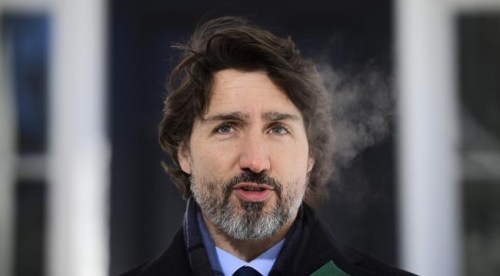
Prime Minister Justin Trudeau said the new restrictions are meant to discourage non-essential travel and reduce the spread of more infectious variants that could send domestic case counts soaring.
“With the challenges we currently face with COVID-19, both here at home and abroad, we all agree that now is just not the time to be flying,” Trudeau said Friday from outside Rideau Cottage.

“By putting in place these tough measures now, we can look forward to a better time when we can all plan those vacations.”
Trudeau said all arrivals to Canada will have to quarantine in an approved hotel for up to three days at their own expense while they await results of a COVID-19 test taken at the airport.
He said that requirement, set to take effect “in the coming weeks,” could cost each traveller more than $2,000 and is in addition to the already mandatory pre-departure COVID-19 test.
Those with positive tests will isolate in designated government facilities, while those with negative results can serve the rest of the two-week quarantine at home.
The government will be watching to make sure travellers comply.
Transport Canada said screening officers in 35 cities will confirm new arrivals are indeed in quarantine, starting in Montréal and Toronto. Violations are considered an offence under the Quarantine Act and could lead to penalties including six months in prison and/or $750,000 in fines.
Travellers must also submit COVID-19 related information electronically daily, and Chief Public Health Officer Theresa Tam said another swab takes place on Day 10.
Federal officials made it clear that spring break holidays are off the table, and directed strong words at anyone who embarks on a recreational jaunt.
“If they’re going to make that choice then they should bear the full cost and responsibility of all the measures that are necessary to keep Canadians safe,” said Public Safety Minister Bill Blair, adding it’s not simply the cost of a hotel room.
“There are health measures, security measures, testing measures and transport measures, all of which we don’t believe that Canadian taxpayers should be on the hook for.”
Trudeau said Air Canada, WestJet, Sunwing, and Air Transat will suspend service to all Caribbean destinations and Mexico starting Sunday until April 30. Starting next week, all international passenger flights must land at only four airports – in Vancouver, Toronto, Calgary, and Montreal.
Airlines will help arrange the return of customers currently on a trip, Trudeau said.
Non-essential travellers will also soon have to show a negative test before entry at the land border with the United States. While the border is closed to non-essential travel, there are exceptions.
Trudeau said containing the pandemic will depend on an array of measures, including continued public health measures and vaccines for all, as soon as possible.
However, he admitted Canada will be getting fewer doses than expected from its next shipment of the Moderna vaccine.
Canada anticipates 180,000 doses next week, which is 78 per cent of what was expected. But he said the country is on track to receive two million doses of the Moderna vaccine before the end of March.
He called it “a temporary delay” that won’t derail Canada’s longer-term goal to offer vaccines to all who want one by the end of September.
“In the short term, those numbers can fluctuate but as global production continues to pick up there will be more stability in the system,” he said.
The blow comes as Canada’s allotment of the COVID-19 vaccine made by Pfizer-BioNTech is also delayed, however, Trudeau said he spoke with Pfizer CEO Albert Bourla, who insisted Canada will still receive its promised four million doses by the end of March.
Conservative Leader Erin O’Toole faulted the Liberals for failing to bring vaccines, rapid testing, and therapeutics into widespread use.
In a statement, O’Toole bemoaned the uncertainty facing airline jobs and the personal toll of repeated lockdowns: “By now, Canadians should know when things are going to get better.”
While Trudeau clamped down on international travel, in Alberta Premier Jason Kenney announced plans for a staged loosening of public health restrictions, with each step tied to hospitalization benchmarks.
With the number of COVID-19 patients in hospital at 594 as of Friday, Kenney said that restaurant dining rooms can reopen, gyms can resume one-on-one training and school-related sports for children can restart as of Feb. 8.
“It is important that we show Albertans that there is a path forward,” Kenney said. “That if we continue to do, collectively, the right things, bending that curve down further and further reducing pressure on our hospitals, that we can gradually relax public health restrictions.”
The move to loosen restrictions in Alberta came despite concern in recent days about the possible spread of new, more contagious variants of COVID-19 in the province.
In B.C., Premier John Horgan welcomed the federal government’s international travel measures.
“Our government had been calling for mandatory quarantine measures to restrict international travel further,” he said in a statement.
“We trust the federal government’s efforts to monitor and follow up with these travellers will be vigilant.”
As of Friday, the provinces reported more than 85 cases of the B.1.1.7. variant first detected in the United Kingdom, and nine cases of B. 1.351 variant first detected in South Africa.
Tam said a recent decline in cases brings the average daily count to almost 4,900 over the last seven days, but the number of severe cases remained high, with 855 people in critical care. Deaths averaged 149 each day.
Quebec reported 1,295 new COVID-19 cases and 50 more deaths, including nine in the previous 24 hours while Ontario reported 1,837 new cases and 58 deaths, with 51 confirmed cases of the B.1.1.7. variant.
Manitoba reported 152 cases and three deaths while Saskatchewan reported 328 new cases and seven additional deaths.
Out east, New Brunswick reported 16 new cases and one more death, Newfoundland and Labrador reported four new cases and Nova Scotia reported one new case.
Trudeau also said Friday that provinces and territories will get $1 billion to help further shield schools from infections, including sanitizer and better classroom ventilation, as well as support for remote learning. This is the second instalment of federal funding through the Safe Return to Class Fund, after last fall’s $2 billion payout.
The new travel rules introduce measures that are already in place in some countries.
Earlier this week, the U.K. announced that residents returning from 30 “red list” countries will go through a mandatory 10-day quarantine at their own expense.
Travellers returning to Australia are charged $3,000 for a two-week hotel quarantine.
Trudeau acknowledged the many sacrifices Canadians have already made to contain infections but said difficult measures must still be adopted.
He insisted the government was committed to the safe restart of the tourism sector, when conditions improve.
“We’re doing this to keep as many Canadians alive and healthy as we can,” he said.

Ontario Premier Doug Ford said his province will begin implementing its own mandatory testing program Monday at land borders and Toronto’s Pearson International Airport.
Ford said COVID-19 tests will be imposed on all incoming international travellers while public health labs will ramp up capacity to screen all positive tests for known variants within two to three days of initial processing, starting Wednesday.
Elsewhere, the travel clampdown was welcomed by provinces including British Columbia and Quebec, where deputy premier Geneviève Guilbault said her province “is very satisfied” after repeatedly calling for such measures.
-By Cassandra Szklarski in Toronto, with files from Shawn Jeffords in Toronto and Chris Reynolds in Ottawa
This report by The Canadian Press was first published Jan. 29, 2021.
Related Articles
U.S. flights still link Canadians to sunny spots


Advertisement Advertise With Us
Advertisement Advertise With Us