UK starts virus campaign with a shot watched round the world

Advertisement

Advertise with us

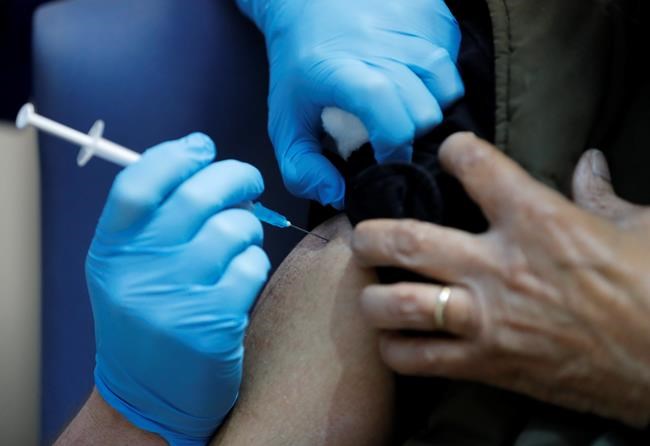
LONDON - A nurse rolled up 90-year-old Margaret Keenan’s sleeve and administered a shot watched round the world -– the first jab in the U.K.’s COVID-19 vaccination program kicking off an unprecedented global effort to try to end a pandemic that has killed 1.5 million people.

Read this article for free:


By clicking the button above, an account will be created and you will begin to receive some of our recommended newsletters. You may opt out of any newsletter by visiting your Email and Communication Preferences page or by clicking "unsubscribe" at the bottom of any email.

or

Already have an account? Log in here »

To continue reading, please subscribe:

Digital Subscription

One year of digital access for only $1.44 a week*

  • Enjoy unlimited reading on winnipegfreepress.com
  • Read the E-Edition, our digital replica newspaper
  • Access News Break, our award-winning app
  • Play interactive puzzles

*Billed as $5.77 plus GST every four weeks. After 52 weeks, price increases to the regular rate of $19.95 plus GST every four weeks. Offer available to new and qualified returning subscribers only. Cancel any time.

To continue reading, please subscribe:

Add Free Press access to your Brandon Sun subscription for only an additional

$1 for the first 4 weeks*

  • Enjoy unlimited reading on winnipegfreepress.com
  • Read the E-Edition, our digital replica newspaper
  • Access News Break, our award-winning app
  • Play interactive puzzles
Start now

*Your next Brandon Sun subscription payment will increase by $1.00 and you will be charged $17.95 plus GST for four weeks. After four weeks, your payment will increase to $24.95 plus GST every four weeks.

Hey there, time traveller!
This article was published 07/12/2020 (2154 days ago), so information in it may no longer be current.

LONDON – A nurse rolled up 90-year-old Margaret Keenan’s sleeve and administered a shot watched round the world -– the first jab in the U.K.’s COVID-19 vaccination program kicking off an unprecedented global effort to try to end a pandemic that has killed 1.5 million people.

Keenan, a retired shop clerk from Northern Ireland who celebrates her birthday next week, was at the front of the line at University Hospital Coventry to receive the vaccine that was approved by British regulators last week.

The U.K. is the first Western country to deliver a broadly tested and independently reviewed vaccine to the general public. The COVID-19 shot was developed by U.S. drugmaker Pfizer and Germany’s BioNTech. U.S. and European Union regulators may approve it in the coming days or weeks.

Sir Simon Stevens, the Chief Executive of the National Health Service in England, looks at the freezer facility at the Royal Free Hospital in London, Monday Dec. 7, 2020, during a visit to see preparations and meet staff who will be starting the coronavirus vaccination programme from Tuesday. (Dominic Lipinski/Pool via AP)

“All done?” Keenan asked nurse May Parsons. “All done,” came the reply, as hospital staff broke into applause and also clapped for her as she was wheeled down a corridor.

“I feel so privileged to be the first person vaccinated against COVID-19,” said Keenan, who wore a surgical mask and a blue “Merry Christmas” T-shirt with a cartoon penguin in a Santa hat. “It’s the best early birthday present I could wish for because it means I can finally look forward to spending time with my family and friends in the New Year after being on my own for most of the year.”

The second injection, in a fitting bit of drama, went to an 81-year-old man named William Shakespeare from Warwickshire, the county where the bard was born.

The fanfare was good cheer to the nation, if but for a moment. Authorities warned that the vaccination campaign would take many months, meaning painful restrictions that have disrupted daily life and punished the economy are likely to continue until spring. The U.K. has seen over 61,000 deaths in the pandemic — more than any other country in Europe — and has recorded more than 1.7 million confirmed cases.

“This really feels like the beginning of the end,? said Stephen Powis, medical director for the National Health Service in England. “It’s been a really dreadful year, 2020 — all those things that we are so used to, meeting friends and family, going to the cinema, have been disrupted. We can get those back. Not tomorrow. Not next week. Not next month. But in the months to come.?

A welcome sign is displayed outside St Thomas' Hospital, with the Houses of Parliament in the background at right, in London, which starting this week is going to be one of the hubs for vaccinating people in Britain against coronavirus, Monday, Dec. 7, 2020. Shipments of the coronavirus vaccine developed by American drugmaker Pfizer and Germany's BioNTech were delivered Sunday in the U.K. in super-cold containers, two days before it goes public in an immunization program that is being closely watched around the world. (AP Photo/Matt Dunham)

But it is important beyond these shores. Britain’s program is likely to provide lessons for other countries as they prepare for the unprecedented task of vaccinating billions.

On Saturday, Russia began vaccinations with its Sputnik V vaccine, and China has also begun giving its own domestically made shots to its citizens and selling them abroad. But those are being viewed differently because neither countries’ vaccines have finished the late-stage trials scientists consider essential for proving a serum is safe and effective.

Other vaccines are also being reviewed by regulators around the world, including a collaboration between Oxford University and drugmaker AstraZeneca and one developed by U.S. biotechnology company Moderna.

Documents released by U.S. regulators Tuesday confirmed that Pfizer’s vaccine was strongly protective against COVID-19 and appeared safe. New results on a possible vaccine from Oxford University and drugmaker AstraZeneca suggest it is safe and about 70% effective, according to early test results from Britain and Brazil. But that report, in the medical journal Lancet, showed that questions remain about how well it helps protect those over 55.

British regulators approved the Pfizer shot Dec. 2, and the country has received 800,000 doses, enough to vaccinate 400,000 people. The first shots are going to people over 80 who are either hospitalized or already have outpatient appointments scheduled, along with nursing home workers and vaccination staff.

90 year old Margaret Keenan, the first patient in the UK to receive the Pfizer-BioNTech COVID-19 vaccine, administered by nurse May Parsons at University Hospital, Coventry, England, Tuesday Dec. 8, 2020. The United Kingdom, one of the countries hardest hit by the coronavirus, is beginning its vaccination campaign, a key step toward eventually ending the pandemic. (Jacob King/Pool via AP)

Others must wait, and health officials have said that those who are most at risk from the virus will be vaccinated in the early stages. For most people, it will be next year before there is enough vaccine to expand the program.

U.K. health officials have worked for months to adapt a system geared toward vaccinating groups like school children and pregnant women into one that can rapidly reach much of the population.

Questions arose about when the country’s most prominent senior couple — Queen Elizabeth II, 94, and her husband, Prince Philip, 99 — would get the vaccine and whether it would happen on camera.

Foreign Secretary Dominic Raab appeared nonplussed when he was asked about it by NBC.

“I’m not sure whether they’d do it on camera,’’ Raab said. “But I’m sure arrangements will be made according to the phased approach that I set out, and like any family, they would have felt the pressures and all the worries that surround this pandemic as well.’’

Nurse May Parsons prepares 90 year old Margaret Keenan, the first patient in the UK to receive the Pfizer-BioNTech COVID-19 vaccine, at University Hospital, Coventry, England, Tuesday Dec. 8, 2020. The United Kingdom, one of the countries hardest hit by the coronavirus, is beginning its vaccination campaign, a key step toward eventually ending the pandemic. (Jacob King/Pool via AP)

The 800,000 doses are only a fraction of what is needed in the U.K. The government is targeting more than 25 million people, or about 40% of the population, in the first phase of its vaccination program, which gives first priority to those at highest risk from the virus.

The program will be expanded when supply increases, with the vaccine offered roughly on the basis of age groups, starting with the oldest. Britain plans to offer vaccines to everyone over the age of 50, as well as younger adults with health conditions that put them at greater risk.

In England, the vaccine is being delivered to 50 hospital hubs in the first wave of the program, with more hospitals expected to offer it as the rollout ramps up. Northern Ireland, Scotland and Wales are making their own plans under the U.K.’s system of devolved administration.

Logistical issues are slowing the distribution of the Pfizer vaccine because it has to be stored at minus-70 degrees Celsius (minus-94 degrees Fahrenheit). Authorities are focusing on large-scale distribution points because each package of vaccine contains 975 doses and they don’t want any to be wasted.

The U.K. has agreed to buy more than 350 million doses from seven different producers. Governments around the world are making agreements with multiple developers to ensure they lock in delivery of the products that are ultimately approved for widespread use.

Margaret Keenan, 90, walks with nurse May Parsons after becoming the first person in the UK to receive the Pfizer-BioNTech COVID-19 vaccine, at University Hospital, Coventry, England, Tuesday Dec. 8, 2020. The United Kingdom, one of the countries hardest hit by the coronavirus, is beginning its vaccination campaign, a key step toward eventually ending the pandemic. (Jacob King/Pool via AP)

All these logistical challenges culminated Tuesday in Keenan’s vaccination by Parsons, a nurse originally from the Philippines who has worked for the NHS for 24 years.

“I’m just glad to be able to play a part on this historic day,” she said. “The last few months have been tough for all of us working in the NHS, but now it feels like there is a light at the end of the tunnel.”

—-

Follow AP’s coverage at https://apnews.com/hub/coronavirus-pandemic and https://apnews.com/UnderstandingtheOutbreak

Ranju Shukla, accompanied by her husband Dr Hari Shukla, receives the Pfizer-BioNTech COVID-19 vaccine at the Royal Victoria Infirmary in Newcastle, England, Tuesday Dec. 8, 2020. The United Kingdom, one of the countries hardest hit by the coronavirus, is beginning its vaccination campaign, a key step toward eventually ending the pandemic. (Owen Humphreys/Pool via AP)
A nurse administers the Pfizer-BioNTech COVID-19 vaccine at Guy's Hospital in London, Tuesday, Dec. 8, 2020. U.K. health authorities rolled out the first doses of a widely tested and independently reviewed COVID-19 vaccine Tuesday, starting a global immunization program that is expected to gain momentum as more serums win approval. (AP Photo/Frank Augstein, Pool)
A woman walks past graffiti with the words Victory to the NHS (National Health Service) on a wall at the Royal Victoria Hospital, one of several hospitals around Britain that are handling the initial phase of a COVID-19 immunization program, in West Belfast, Northern Ireland, Tuesday, Dec. 8, 2020. British health authorities rolled out the first doses of a widely tested and independently reviewed COVID-19 vaccine Tuesday, starting a global immunization program that is expected to gain momentum as more serums win approval. (AP Photo/Peter Morrison)
A nurse administers the Pfizer-BioNTech COVID-19 vaccine at Guy's Hospital in London, Tuesday, Dec. 8, 2020. U.K. health authorities rolled out the first doses of a widely tested and independently reviewed COVID-19 vaccine Tuesday, starting a global immunization program that is expected to gain momentum as more serums win approval. (AP Photo/Frank Augstein, Pool)
A woman has the first of two Pfizer/BioNTech COVID-19 vaccine jabs administered at Guy's Hospital in London, Tuesday, Dec. 8, 2020. U.K. health authorities rolled out the first doses of a widely tested and independently reviewed COVID-19 vaccine Tuesday, starting a global immunization program that is expected to gain momentum as more serums win approval. (Victoria Jones/Pool via AP)
Report Error Submit a Tip

More Stories

Actor-director Cooper takes new approach to familiar tale

Randall King 4 minute read Preview

Actor-director Cooper takes new approach to familiar tale

Randall King 4 minute read Thursday, Oct. 4, 2018

TORONTO — In his self-directed version of A Star Is Born, Bradley Cooper plays a rock star named Jackson Maine.

Note the name: it marks the character as a member of a cinematic lineage that descends all the way to 1937.

That year, the first A Star Is Born was made, with Frederick March in the role of alcoholic actor Norman Maine. The name stayed in 1954, when James Mason took over the role of an actor who first nurtures the career of Judy Garland’s up-and-coming star Vicki Lester before his drunken shenanigans threaten to derail it. By 1976, Kris Kristofferson played the role of musician John Norman Howard, a rock singer with a musical stake in the ascent of Barbra Streisand’s Esther Hoffman.

Cooper, 43, remembered the Maine name, but also brought his own vision as a first-time feature filmmaker to the new version, which opens Thursday, Oct. 4, opposite Lady Gaga after the originally designated director, Clint Eastwood, dropped out. While actors might not want to see different interpretations of a role, Cooper embraced the opportunity to see all the past iterations.

Read
Thursday, Oct. 4, 2018

SNC planned U.S. move if no deal: documents

Jordan Press and Christopher Reynolds, The Canadian Press 5 minute read Preview

SNC planned U.S. move if no deal: documents

Jordan Press and Christopher Reynolds, The Canadian Press 5 minute read Thursday, Mar. 28, 2019

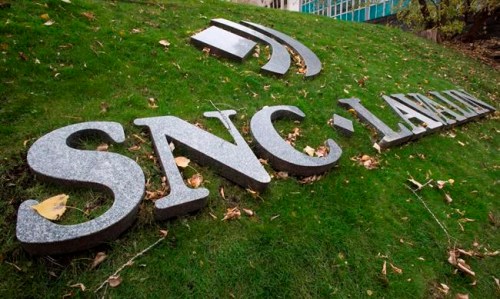
OTTAWA - SNC-Lavalin warned federal prosecutors last fall about a possible plan to split the company in two, move its offices to the United States and eliminate its Canadian workforce if it didn't get a deal to avoid criminal prosecution, newly obtained documents show.

The documents, part of a PowerPoint presentation obtained by The Canadian Press, describe something called "Plan B" — what Montreal-based SNC might have to do if it can't convince the government to grant a so-called remediation agreement to avoid criminal proceedings in a fraud and corruption case related to projects in Libya.

Under that plan, SNC would move its Montreal headquarters and corporate offices in Ontario and Quebec to the U.S. within a year, cutting its workforce to just 3,500 from 8,717, before eventually winding up its Canadian operations.

“The government of Canada needs to weigh the public interest impact of the prosecution of SNC-Lavalin," the presentation reads.

Read
Thursday, Mar. 28, 2019

Nine more deaths, 107 new COVID-19 cases in Manitoba

Katie May 6 minute read Preview

Nine more deaths, 107 new COVID-19 cases in Manitoba

Katie May 6 minute read Monday, Dec. 28, 2020

Manitoba is restarting its COVID-19 vaccination efforts, following a five-day break — and amidst questions about the delay.

The planned pause over Christmas was in the name of efficiency, a provincial government spokesman says, offering no other explanation on the reasoning behind the decision not to vaccinate anyone Dec. 24-28.

On Monday, the province announced nine more pandemic deaths and 107 new cases of the novel coronavirus.

As part of Manitoba's vaccination plan, the most recent immunization clinic happened Dec. 23; the next was set to start Dec. 29.

Read
Monday, Dec. 28, 2020

Court ruling concludes Canadian Wheat Board saga

Laura Rance-Unger 4 minute read Preview

Court ruling concludes Canadian Wheat Board saga

Laura Rance-Unger 4 minute read 2:01 AM CDT

It remains to be seen whether the recent court ruling in a lawsuit filed after Canadian Wheat Board’s dissolution in 2012 puts the whole debate to rest, as some no doubt hope.

But either way, the dust has settled on the post-CWB world. The sun still rises and a new generation of farmers on the land only knows by name an institution that for generations influenced every aspect of Prairie grain farming.

The first Rural Revival column I wrote for this newspaper more than 30 years ago was about a thousand farmers from Western Canada demonstrating in support of the Wheat Board. It was in the aftermath of the Western Grain Marketing Panel report, one of several efforts that eventually included a plebiscite to help the federal government decide what to do about a vocal minority of farmers who wanted marketing “freedom.”

The polls at the time suggested about two-thirds of farmers were comfortable enough with the single-desk system for food wheat and barley to keep it around. It served as a counterbalance to canola, which they sold on the open market. They essentially had a dual market.

Read
2:01 AM CDT

The new normal in Canadian politics

David McLaughlin 5 minute read Preview

The new normal in Canadian politics

David McLaughlin 5 minute read 2:01 AM CDT

“Nothing happening, all at once.”

Welcome to the new normal of Canadian politics, where normality is the new normal. Routine and stable are in; disruptive and excessive are out. Exhibits A and B are the Alberta referendum and the British Columbia election. Voters opted for stability over volatility.

The opposite of being normal is being different from the norm. In politics that means different from where we’ve been and what we’ve come to expect. Two competing trends have dominated our politics for the past decade and a half — progressivism and populism. Think Justin Trudeau and liberal, progressive identity politics in Canada, and Donald Trump and conservative, populist MAGA politics in America. We are now experiencing a swing away from both those trends.

Representing this “new normal” are Prime Minister Mark Carney, for one, and newly elected British Columbia premier, Lorne Doerksen, for another. Both are considered normal because they talk and act like adults in a childish political world. Their political flair is to not have any political flair. They stand out for not standing out.

Read
2:01 AM CDT

Has the political wind changed?

Gwynne Dyer 5 minute read 2:01 AM CDT

It has been quite a week. First we had “Lula” – Luiz Inácio da Silva (as nobody but his mother ever called him) – defying everybody’s expectations. After winding up two million votes behind his challenger, Flávio Bolsonaro, in the first round of the Brazilian presidential election, he made a “miraculous” comeback in the second.

It was like a man going into a revolving door behind you and coming out in front. At the end of the first round, Lula was two million votes behind; at the end of the second round on Oct. 25 he was four million votes ahead. So how did he win a fourth term without cheating?

That’s what Bolsonaro claims he did, having fled to the United States; Trump, Flávio’s mentor, hints at the same. But Lula’s victory was not miraculous. He only learned to read when he was 10, and at 80 he still refused to have a mobile phone. His team finally made him get one and use it.

He wouldn’t do social media videos, so they created a WhatsApp channel called Lula’s Army, and made him appear on it at least daily. The channel went from zero to 10.8 million viewers in two weeks, and Lula won.