

We don’t vote like our lives depend on it
Advertisement
Read this article for free:
or
Already have an account? Log in here »
To continue reading, please subscribe:
Digital Subscription
One year of digital access for only $1.44 a week*
- Enjoy unlimited reading on winnipegfreepress.com
- Read the E-Edition, our digital replica newspaper
- Access News Break, our award-winning app
- Play interactive puzzles
*Billed as $5.77 plus GST every four weeks. After 52 weeks, price increases to the regular rate of $19.95 plus GST every four weeks. Offer available to new and qualified returning subscribers only. Cancel any time.
To continue reading, please subscribe:
Add Free Press access to your Brandon Sun subscription for only an additional
$1 for the first 4 weeks*
- Enjoy unlimited reading on winnipegfreepress.com
- Read the E-Edition, our digital replica newspaper
- Access News Break, our award-winning app
- Play interactive puzzles
*Your next Brandon Sun subscription payment will increase by $1.00 and you will be charged $17.95 plus GST for four weeks. After four weeks, your payment will increase to $24.95 plus GST every four weeks.
Read unlimited articles for free today:
or
Already have an account? Log in here »
There’s an old saw — we get the government we deserve. It assumes active participation in our elections, full and fair media coverage from which voters can learn and a set of viable, capable candidates from which we can choose.
Arguably, those conditions did not apply this time around in Winnipeg. Our voter turnout was just 38 per cent and Mayor Scott Gillingham’s victory came from just 15 per cent of Winnipeg’s eligible voters. Two supposedly serious competitors embroiled themselves — by choice — in juvenile mudslinging and offered scattered, chaotic policy platforms.
A fourth contender surged from behind in the closing weeks of the campaign — and Noah Redden had spent most of the campaign being thought of as one of the pack of gadflies that emerge to run every time there’s a mayoralty campaign here. Yet he virtually tied Kevin Klein for second place. Had Redden been treated during the campaign as a viable candidate (he was the only one to publish online a detailed, thought-through policy platform), who knows what would have happened?
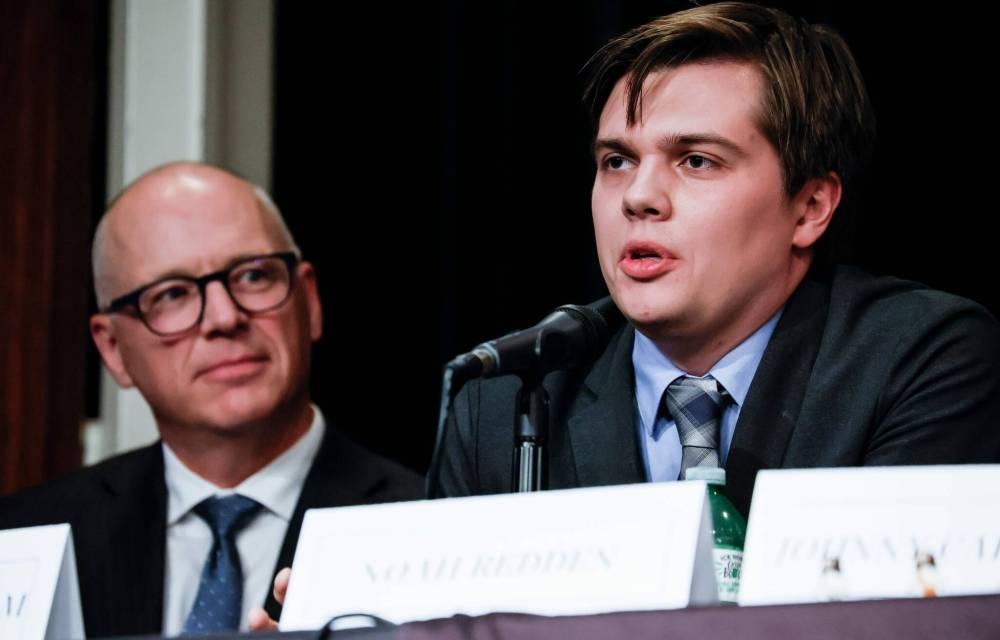
JOHN WOODS / FREE PRESS FILES
Winnipeg mayoral candidates Scott Gillingham (left) and Noah Redden during the Mayoral Candidate Forum on Oct. 20. Only 38 per cent of eligible voters went to the polls on Oct. 28.
Absorb those facts.
Fifteen per cent of Winnipeggers made the choice, on behalf of the nearly two-thirds of voters who didn’t bother, based on inept candidate competition and piecemeal media coverage.
And, it should be added, because of appalling voter apathy. In Winnipeg, there has been a historical pattern of decreasing voter interest in what millions of citizens around the world view as a remarkably precious thing and what many have died for over the centuries — the right to vote and thus to freely choose who will govern them.
This has been a year of elections around the world. There are lessons we should learn.
In Serbia some days ago, a student-led massive groundswell of protest saw almost 70 per cent of voters turn up in a country ruled by a vicious right-wing dictator. The voters threw out Aleksander Vucic and stormed the pro-Vucic TV station. His current whereabouts are unclear. The victorious student movement now has to choose a new leader for the country.
About 70 per cent of Serbians chose to vote, risking retribution from a fanatic dictator.
Back in April, in Hungary, right-wing strongman Viktor Orban was thrown out by the newcomer Tisza party, led by Péter Magyar. The voter turnout? Almost 80 per cent. Voters gambled their safety to throw out their dictator, who took an extended holiday in the United States, returned to Hungary in September and immediately began issuing threats to the new government.
More recently, Brazil’s voter turnout of more than 80 per cent resulted in Flávio Bolsonaro — the son of former wannabe-dictator Jair Bolsonaro — scooting across the Brazilian border to Argentina, then fleeing by private plane to Florida after a fourth-term win by President Luiz Inacio Lula da Silva.
Again, 80 per cent of Brazilians voted. (It should be noted that voting in Brazil is compulsory for registered voters aged 18 to 69 — those aged 16 and 17 and those over 70 have the right to vote but aren’t compelled to do so.)
Oddly, the closer we get to home, the less our right to vote seems to matter to us, although some 70 per cent of Albertans did vote on the idea of a separation referendum. (Three-quarters of them threw the proposal out with the trash.)
In British Columbia, turnout in the recent provincial election was 48 per cent — tied for the lowest-ever. In Toronto, fewer than 46 per cent voted in the civic election, in which Mayor Olivia Chow was re-elected.
Winnipeg is beset with vociferous complaints about a botched new transit system; infill housing in mature neighbourhoods; the shutdown of everything from dilapidated bridges to poorly maintained community pools and arenas; and a city riddled with road repairs that take considerably longer than they should.
Yet just over a third of us bothered to vote. A tiny sliver more than last time around.
So, a few messages:
To the candidates: shame on most of you for campaigns that were, in the main, insults to our intelligence, and shame on those who seem to view running for the mayoralty as a fun way to get their mugs in front of TV cameras.

To the two-thirds who didn’t bother to vote: you will get the government you deserve. So, sadly, will we.
People around the world have died or still risk death or imprisonment for the right to vote.
Maybe, closer to home, should today’s American midterm elections result in convulsive death throes for the democracy right next door to us, you will get the message.
Maybe.
Judy Waytiuk is a retired Winnipeg journalist.