Trudeau cabinet meets to discuss rebuilding amid rising number of COVID-19 cases

Advertisement

Advertise with us

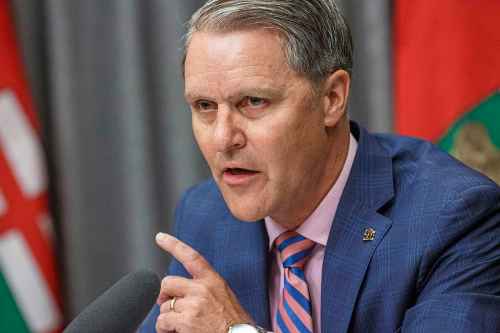
OTTAWA - Prime Minister Justin Trudeau warned Canadians against relaxing their guard against COVID-19 as he and his cabinet kicked off two days of closed-door meetings to discuss the pandemic and how to lead the country through a second wave.

Read this article for free:


By clicking the button above, an account will be created and you will begin to receive some of our recommended newsletters. You may opt out of any newsletter by visiting your Email and Communication Preferences page or by clicking "unsubscribe" at the bottom of any email.

or

Already have an account? Log in here »

To continue reading, please subscribe:

Digital Subscription

One year of digital access for only $1.44 a week*

  • Enjoy unlimited reading on winnipegfreepress.com
  • Read the E-Edition, our digital replica newspaper
  • Access News Break, our award-winning app
  • Play interactive puzzles

*Billed as $5.77 plus GST every four weeks. After 52 weeks, price increases to the regular rate of $19.95 plus GST every four weeks. Offer available to new and qualified returning subscribers only. Cancel any time.

To continue reading, please subscribe:

Add Free Press access to your Brandon Sun subscription for only an additional

$1 for the first 4 weeks*

  • Enjoy unlimited reading on winnipegfreepress.com
  • Read the E-Edition, our digital replica newspaper
  • Access News Break, our award-winning app
  • Play interactive puzzles
Start now

*Your next Brandon Sun subscription payment will increase by $1.00 and you will be charged $17.95 plus GST for four weeks. After four weeks, your payment will increase to $24.95 plus GST every four weeks.

Hey there, time traveller!
This article was published 14/09/2020 (2241 days ago), so information in it may no longer be current.

OTTAWA – Prime Minister Justin Trudeau warned Canadians against relaxing their guard against COVID-19 as he and his cabinet kicked off two days of closed-door meetings to discuss the pandemic and how to lead the country through a second wave.

The past several weeks have seen a resurgence in COVID-19 across Canada after a summer lull, which Trudeau said is a reminder that Canada is “not out of the woods yet.”

“We need to continue to remain vigilant,” he said Monday before launching the cabinet retreat in a Global Affairs Canada office building in Ottawa. “The last thing anyone wants is to go into this fall in a lockdown similar to this spring, and the way we can prevent that is by remaining vigilant.”

Canadian Prime Minister Justin Trudeau speaks while taking part in a ground breaking event at the Iamgold Cote Gold mining site in Gogama, Ont., on Friday, September 11, 2020. THE CANADIAN PRESS/Nathan Denette

The retreat is to focus in part on the Sept. 23 throne speech, which Trudeau had initially promised would lay out a bold plan for a post-pandemic economic recovery. But the speech is now expected to focus more on the immediate challenge of getting through the continuing pandemic without wreaking worse economic havoc .

“We need to get through this in order to be able to talk about next steps,” Trudeau said Monday.

“So a lot of what we’re going to be doing during this retreat will be talking about how we continue to keep COVID under control, continue to make sure that Canadians are safe, that we’re not overloading our health-care system.”

At the conclusion of the retreat’s opening day, Health Minister Patty Hajdu said ministers discussed various scenarios for how the pandemic might play out this fall.

“One would be a slow burn where you see these little bumps and peaks and valleys and we work really hard to put out those outbreaks. But the other scenario could be a very severe fall surge and what we need to be is prepared for either of those potential outcomes,” she said.

“There is always the possibility that the numbers could grow exponentially … This is a sneaky virus. It can easily infiltrate communities, households and we have to take it seriously, we cannot let up.”

Ministers heard presentations from Canada’s top public health doctor, Theresa Tam, and the co-chairs of two federal task forces: one created to advise the government on measures to support developing a COVID-19 vaccine and the other on COVID-19 immunity.

While the immediate challenges of the pandemic must take precedence, Environment Minister Jonathan Wilkinson argued that doesn’t mean the government is abandoning its longer term goals, like combating climate change.

“Canadians are worried about the pandemic and the government’s first priority has been and will continue to be supporting people through this,” Wilkinson said during a short break in the ministers’ meetings.

“I do think, though, that Canadians are also looking to us to think about how we build back in a way that actually promotes resilience for the Canadian economy and for Canadians generally going forward. Part of that is considering the potential impacts of climate change in the future.”

Trudeau said the pandemic has “exposed weaknesses in our country where vulnerable people are continuing to slip through the cracks (but) our focus is very much on what we need to do to control COVID-19.”

To that end, details on the longer-term recovery measures aren’t expected until an economic statement later in the fall.

The government is operating on the assumption that the global fight against the deadly coronavirus that causes COVID-19 will continue for at least two more years, and that rebuilding the economy then will depend on protecting it now.

Insiders, who spoke on condition of anonymity because they were not authorized to publicly discuss the matter, have previously laid out three priorities that will be included in the throne speech.

Those are measures to protect Canadians’ health and avoid another national lockdown; the economic supports needed to keep Canadians financially afloat while the pandemic continues; and longer-term measures to eventually rebuild the economy.

In particular, the Liberals are expected to promise more funding for health care, including long-term care homes, along with affordable housing and child care to help parents, especially women, get back to and stay at work.

The government has already shovelled billions into emergency aid to help Canadians weather the pandemic. Treasury Board President Jean-Yves Duclos defended Monday the government’s plan to spend more, despite a projected deficit this year of almost $350 billion.

“We need to keep investing in Canadians to avoid moving from a recession to a depression,” he said, characterizing the strategy as akin to taking care of a cold so it doesn’t evolve into pneumonia.

This report by The Canadian Press was first published Sept. 14, 2020.

Report Error Submit a Tip

More Stories

New council, new opportunies for Winnipeg

Brent Bellamy 6 minute read Preview

New council, new opportunies for Winnipeg

Brent Bellamy 6 minute read 2:00 AM EST

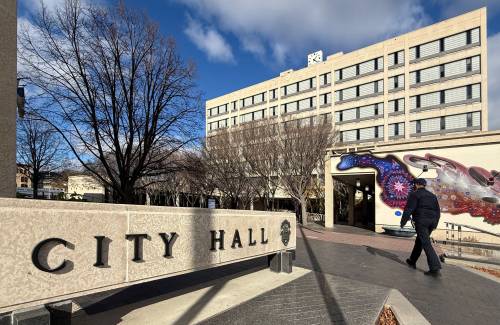
Last week, Winnipeg voters returned Mayor Scott Gillingham to city hall for a second term, but the more surprising election storyline is that nine of the 15 councillors surrounding him will be new faces.

One encouraging aspect of the results is the community-building experience several of these new councillors bring to the job. Their backgrounds in urban planning, neighbourhood advocacy and community development offer valuable perspectives as Winnipeg confronts difficult questions about how it grows.

These perspectives will be particularly important because some of the most consequential decisions councillors can make happen when they evaluate residential development proposals at committee meetings. Over the next four years, the 16 people we’ve just elected will bear the enormous responsibility of deciding where and how Winnipeggers live. These choices will have profound implications for quality of life, social opportunity and the economic viability of our city. They will shape not only the Winnipeg we know today, but the city we leave to our children and grandchildren.

At committee meetings, councillors will hear endless arguments about parking, traffic, and protecting “neighbourhood character.”

Read
2:00 AM EST

WRHA moves to cut growing echocardiogram wait list

Larry Kusch 6 minute read Preview

WRHA moves to cut growing echocardiogram wait list

Larry Kusch 6 minute read Tuesday, Aug. 21, 2018

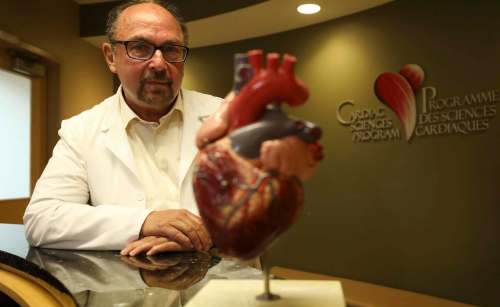
Manitobans are waiting a year or more to receive a key test that detects and tracks heart disease.

As of June 15, there were about 6,500 Manitobans on the wait list for an echocardiogram, and the list is growing at a rate of about 265 per month.

Patients facing heart emergencies are receiving tests immediately, while most of those whose conditions are considered urgent or semi-urgent are getting them within established Canadian benchmark times -- about a week, officials say.

However, thousands of patients who are considered candidates for "elective" tests are waiting anywhere from 10 to 15 months, with a median wait of 12 months, according to the Winnipeg Regional Health Authority.

Read
Tuesday, Aug. 21, 2018

Trudeau cabinet meets as COVID-19 cases rise

Lee Berthiaume and Joan Bryden, The Canadian Press 5 minute read Preview

Trudeau cabinet meets as COVID-19 cases rise

Lee Berthiaume and Joan Bryden, The Canadian Press 5 minute read Monday, Sep. 14, 2020

OTTAWA - Prime Minister Justin Trudeau warned Canadians against relaxing their guard against COVID-19 as he and his cabinet kicked off two days of closed-door meetings to discuss the pandemic and how to lead the country through a second wave.

The past several weeks have seen a resurgence in COVID-19 across Canada after a summer lull, which Trudeau said is a reminder that Canada is "not out of the woods yet."

"We need to continue to remain vigilant," he said Monday before launching the cabinet retreat in a Global Affairs Canada office building in Ottawa. "The last thing anyone wants is to go into this fall in a lockdown similar to this spring, and the way we can prevent that is by remaining vigilant."

The retreat is to focus in part on the Sept. 23 throne speech, which Trudeau had initially promised would lay out a bold plan for a post-pandemic economic recovery. But the speech is now expected to focus more on the immediate challenge of getting through the continuing pandemic without wreaking worse economic havoc .

Read
Monday, Sep. 14, 2020

US rolls to women's hoops gold medal in Bird's last Olympics

Doug Feinberg, The Associated Press 6 minute read Preview

US rolls to women's hoops gold medal in Bird's last Olympics

Doug Feinberg, The Associated Press 6 minute read Sunday, Aug. 8, 2021

SAITAMA, Japan (AP) — Sue Bird and Diana Taurasi walked off the basketball court together, arm-in-arm, one last time at the Tokyo Games.

They started their journey together five Olympics ago and ended it in the same fashion as always — with gold medals hanging around their necks.

“All of what we’ve done for USA Basketball, we’ve done together. It’s fitting,” Bird said after the 90-75 win over Japan on Sunday.

And now it's over — at least for the 40-year-old Bird.

Read
Sunday, Aug. 8, 2021

Province tables legislation to cover health-care system changes

Larry Kusch 4 minute read Preview

Province tables legislation to cover health-care system changes

Larry Kusch 4 minute read Wednesday, Mar. 6, 2019

The Pallister government has introduced broad legislation to support several of its key planned health-care reforms.

Health Minister Cameron Friesen said Wednesday that Bill 10 (The Regional Health Authorities Amendment Act) will provide the framework to simplify the administration of the health-care system and improve accountability.

All health services in Manitoba will be delivered through the five current regional health authorities, CancerCare Manitoba and a new provincial authority called Shared Health. The administrative changes are set to begin next month and will continue to be rolled out over the next two to three years.

The Health Department will cease to administer health services directly and focus its activities on planning, policy development, funding and oversight. It will set system-wide performance goals and track results.

Read
Wednesday, Mar. 6, 2019

iPhone started fire, Winnipegger says

Kevin Rollason 3 minute read Preview

iPhone started fire, Winnipegger says

Kevin Rollason 3 minute read Tuesday, Nov. 26, 2019

The iPhone has long been a hot item, but for one Winnipeg family, it got too hot.

Wally Hill says earlier this month, he, along with his wife and daughter, were watching television, with his daughter's iPhone 6 sitting unplugged on the cushion between them, when the smartphone set the couch on fire.

"It was frightening," Hill said. "It didn't explode... it fizzled and popped open at the back, and then smoke and flames came out the back. It then ignited the cushion."

Hill said he quickly picked up the entire couch cushion, with the burning phone still on it, to move the device to a tile floor in his residence.

Read
Tuesday, Nov. 26, 2019