Doctors say governments should released as many inmates as possible amid COVID

Advertisement

Advertise with us

VANCOUVER - Government medical professionals say Canada's jails and prisons don't meet with physical distancing guidelines for COVID-19 and they want as many inmates as possible to be released.

Read this article for free:


or

Already have an account? Log in here »

To continue reading, please subscribe:

Subscribe and receive a limited-edition Free Press branded hat or tote.

Digital Subscription

One year of digital access for only $205*

  • Enjoy unlimited reading on winnipegfreepress.com
  • Read the E-Edition, our digital replica newspaper
  • Access News Break, our award-winning app
  • Play interactive puzzles

*First annual payment billed as $205.00 + GST for one year. This annual subscription will automatically renew at $233.00 + GST every 52 weeks (10% off the regular annual price of $259.35). Offer available to new and qualified returning subscribers only. Cancel any time.

To continue reading, please subscribe:

Add Free Press access to your Brandon Sun subscription for only an additional

$1 for the first 4 weeks*

  • Enjoy unlimited reading on winnipegfreepress.com
  • Read the E-Edition, our digital replica newspaper
  • Access News Break, our award-winning app
  • Play interactive puzzles
Start now

*Your next Brandon Sun subscription payment will increase by $1.00 and you will be charged $17.95 plus GST for four weeks. After four weeks, your payment will increase to $24.95 plus GST every four weeks.

Hey there, time traveller!
This article was published 07/04/2020 (2366 days ago), so information in it may no longer be current.

VANCOUVER – Government medical professionals say Canada’s jails and prisons don’t meet with physical distancing guidelines for COVID-19 and they want as many inmates as possible to be released.

In an open letter to the federal, provincial and territorial governments, more than 100 doctors, nurses and other health professionals say inmates are already medically vulnerable and are likely to have infectious diseases, such as hepatitis C and HIV.

The letter calls on the governments “to stop admitting people to jails and prisons unless absolutely necessary.” The medical professionals who work for the governments also want assurances that inmates who are released get the housing, food and health care they need in the community.
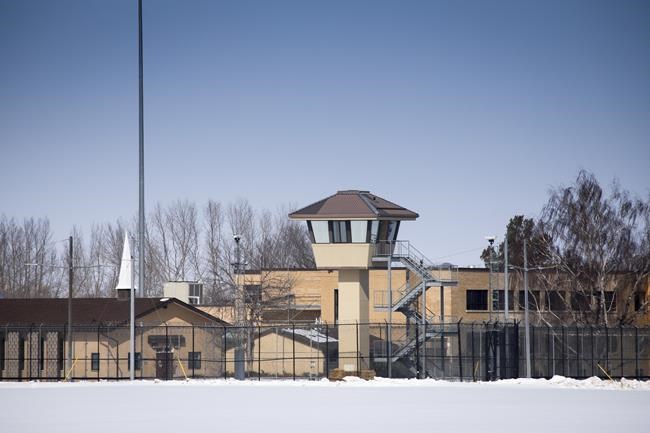
The Bowden Institution medium security facility near Bowden, Alta., Thursday, March 19, 2020. Government medical professionals say Canada's jails and prisons don't meet with physical distancing guidelines for COVID-19 and they want as many inmates as possible to be released. THE CANADIAN PRESS/Jeff McIntosh

Ontario, British Columbia and the Northwest Territories have freed some inmates because of the pandemic.

Kristy Denette, a spokeswoman the Ministry of the Solicitor General in Ontario, said the government has been working with the courts and police to reduce the number of people in custody while ensuring public safety isn’t compromised.

Since March 16, the population at all facilities across Ontario has dropped from 8,344 to 6,148, she said. Nine low-risk offenders close to the end of their sentences were also released under temporary absence passes, she added.

In B.C., 95 inmates have been granted early release under a temporary absence, which can be rescinded if necessary, said the Public Safety Ministry.

Justice Minister Caroline Wawzonek of the Northwest Territories said seven inmates have been granted temporary absences. Prisoners on intermittent sentences have also been given temporary absences.

Public Safety Minister Bill Blair has asked the commissioner of the correctional service and the chair of the Parole Board to determine if certain offenders could be released early, says a statement from his office released Tuesday.

“Our greatest responsibility is keeping Canadians safe. That includes all correctional staff, inmates and the Canadian public. We know the unique risks inherent to prisons,” it says.

The correctional service is taking steps to restrict the spread of COVID-19, the statement says.

Iulia Pescarus Popa of the Parole Board said it is steamlining its processes to respond to the pandemic.

The board is processing exceptional cases as quickly as possible for those offenders who are terminally ill or whose physical or mental health is likely to be affected while in prison, Popa said in a statement.

She said when making conditional release decisions, the board considers all relevant information related to an offender’s case, including the gravity of the offence and the individual’s health.

Figures from the correctional service show 21 inmates in federal penitentiaries have tested positive for the virus as of Monday: 12 in Quebec, seven in Ontario and two in B.C.

The letter from the medical professionals says if people in prison become infected, it would be essentially impossible to stop the spread of COVID-19 in a correctional facility.

Conditions are crowded, prisoners share cells, they must be frisked and handcuffed by officers, line up daily for medication, share common spaces and dining halls, and use the same telephones and washrooms, it says.

“They also lack access to some of the critical supplies people in the community are using to keep themselves safe, such as hand sanitizer, cleaning products and sometimes soap.”

The Union of Canadian Correctional Officers, which represents federal prison guards, said last week that it has put measures in place to protect its members and limit the spread of the virus.

“The release of a few inmates would not solve the potential spread of COVID-19 in our facilities; it would only increase the risk for Canadians,” the union says in a statement.

One inmate has also tested positive for the virus in a provincial jail in B.C.

Stephanie Smith, president of the B.C. Government and Service Employees’ Union, said her members have concerns about the safety of themselves and the inmates.

She said the union, which represents about 1,700 guards in provincial jails, is doing a risk assessment and has called for a ban on the double bunking of inmates.

— With files from Bob Weber in Edmonton.

This report by The Canadian Press was first published April 7, 2020.

Report Error Submit a Tip

More Stories

Today’s horoscope

Georgia Nicols 4 minute read Preview

Today’s horoscope

Georgia Nicols 4 minute read 2:00 AM CDT

MOON ALERT: Avoid shopping (except food and gas) and important decisions after 6 p.m. The moon is in Taurus.

ARIES (March 21-April 19)

You might find you identify with your possessions more than usual. In fact, this could be why you might be tempted to be a bit extravagant or go overboard buying something. This same sense of largesse might creep into your financial negotiations. Be aware of this.

TAURUS (April 20-May 20)

Read
2:00 AM CDT

First Manitoba-U.K. Defence Summit begins

Free Press staff 1 minute read 2:00 AM CDT

United Kingdom delegates from the aerospace and defence sector are visiting Winnipeg this week for the first Manitoba-U.K. Defence Summit.

Industry executives will discuss trade, investment and collaboration with their Manitoba counterparts, according to a Manitoba Aerospace & Defence news release.

The group started with a conference at the Manitoba Club on Monday. Today, United Kingdom leaders will visit Boeing Winnipeg, StandardAero and Magellan Aerospace, the news release says.

The summit is being led by the Canada-Manitoba Defence Alliance, which the provincial government launched earlier this month.

The Brazilian election

Gwynne Dyer 5 minute read Preview

The Brazilian election

Gwynne Dyer 5 minute read 2:00 AM CDT

“Flávio Bolsonaro is Trump’s candidate and what Trump wants is to colonize Brazil, take our riches, steal our future and leave us in the dust,” claims the latest video released by President Luiz Inácio ‘Lula’ da Silva’s re-election campaign. The weird thing is about half of Brazil’s voters would be okay with Trump running the country (through Bolsonaro).

Nobody in Brazil thinks that Flávio Bolsonaro is his own man. He is the son of Jair Bolsonaro, the hard right ex-soldier and former president who tried a coup after he lost the 2022 election. It was even clumsier and more half-hearted than Trump’s brief excursion in sedition after he lost the U.S. 2020 election — but Jair Bolsonaro went to jail for his attempt.

In a strange way Trump even recognizes the parallel, showing special sympathy for his imprisoned fellow traveler. He claimed that the senior Bolsonaro was the victim of a “witch-hunt” by the Brazilian Supreme Court and slapped 50 per cent tariffs on the country. And next Sunday (Oct. 4) the junior Bolsonaro faces Lula in another presidential election.

We already know that there will be a second round of voting on Oct. 25, when the other three candidates have dropped out and it’s a straight race between Lula and Junior. We have no idea what that outcome will be, because the two men have been only one or two points apart (i.e. ‘within the margin of error’) in every opinion poll for months.

Read
2:00 AM CDT

COVID-19 vaccine Q-and-A: What you need to know

Melissa Couto Zuber, The Canadian Press 5 minute read Preview

COVID-19 vaccine Q-and-A: What you need to know

Melissa Couto Zuber, The Canadian Press 5 minute read Wednesday, Jan. 13, 2021

Canada's COVID-19 vaccine rollout hits its one-month mark on Thursday, but questions remain about the inoculations themselves, how they're being distributed and what happens next.

The Canadian Press recently spoke with experts in infectious disease, immunology and public health to help get some clarity on popular queries.

WHO'S NEXT IN LINE TO GET THE VACCINE?

Canada's provinces seem to mostly be adhering to recommendations put forward by the National Advisory Committee on Immunization (NACI), which suggests first vaccinating those most vulnerable to severe COVID outcomes, as well as those who care for them.

Read
Wednesday, Jan. 13, 2021

AI, animals and us

Jordan Laidlaw 5 minute read 2:00 AM CDT

It is now perhaps axiomatic to declare that artificial intelligence will revolutionize the world, as researchers and industry insiders are projecting the novel technology to become the greatest technological breakthrough in human history.

There has been a flurry of discussion in both our local and international contexts — and with good cause. We must remain steadfast to ensure our youth, local workforces, and environment are not negatively impacted by this burgeoning technology.

I wish to accentuate, however, a somewhat neglected area of public discussion around AI developments. Specifically, we urgently need to re-evaluate the ethos of humanity, particularly cognizant of the emergence of this digitally superintelligent species.

If artificial superintelligence (ASI) is ultimately achieved, leading academics theorize that these digital agents will be sentient, conscious, and astronomically more intelligent and powerful than us. In fact, numerous scholars believe AI to already possess some level of consciousness in its current iteration. This position is held by eminent evolutionary biologist Richard Dawkins, for example.

Letters, Sept. 29

7 minute read 2:00 AM CDT

Public servants and elections

We currently are in the midst of elections, mostly on the municipal level. Voters are reviewing policies and promises in anticipation of new programs and commitments that hopefully will enhance their daily life.

While those seeking political office live in anxiety during this time as they await their electoral fate, so too do many civil servants as election results will also determine their futures.

It is these civil servants who we rarely think of at election time.