Trudeau says refusing to self-isolate after travelling is ‘dangerous’

Advertisement

Advertise with us

OTTAWA - Canadians who ignored the government's request to isolate at home after coming back from a trip abroad endangered the lives of others, Prime Minister Justin Trudeau said Thursday.

Read this article for free:


or

Already have an account? Log in here »

To continue reading, please subscribe:

Subscribe and receive a limited-edition Free Press branded hat or tote.

Digital Subscription

One year of digital access for only $205*

  • Enjoy unlimited reading on winnipegfreepress.com
  • Read the E-Edition, our digital replica newspaper
  • Access News Break, our award-winning app
  • Play interactive puzzles

*First annual payment billed as $205.00 + GST for one year. This annual subscription will automatically renew at $233.00 + GST every 52 weeks (10% off the regular annual price of $259.35). Offer available to new and qualified returning subscribers only. Cancel any time.

To continue reading, please subscribe:

Add Free Press access to your Brandon Sun subscription for only an additional

$1 for the first 4 weeks*

  • Enjoy unlimited reading on winnipegfreepress.com
  • Read the E-Edition, our digital replica newspaper
  • Access News Break, our award-winning app
  • Play interactive puzzles
Start now

*Your next Brandon Sun subscription payment will increase by $1.00 and you will be charged $17.95 plus GST for four weeks. After four weeks, your payment will increase to $24.95 plus GST every four weeks.

Hey there, time traveller!
This article was published 26/03/2020 (2363 days ago), so information in it may no longer be current.

OTTAWA – Canadians who ignored the government’s request to isolate at home after coming back from a trip abroad endangered the lives of others, Prime Minister Justin Trudeau said Thursday.

Trudeau, in his daily briefing to Canadians, said while many Canadians heeded the request, there were too many people who played fast and loose with the rules, and because of them, the government had no choice but to turn what had been a request into an order.

“If you’ve just returned from abroad, you have to go home and stay home for 14 days,” Trudeau said. “But some people have not been taking this seriously. They’re stopping by the grocery store on their way home from the airport. They’re getting together with friends after being away for March break. This kind of conduct is not just disappointing, it’s dangerous.”
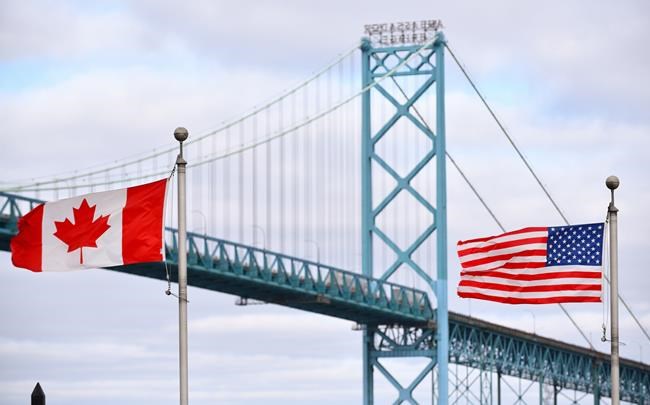
Canadian and American flags fly near the Ambassador Bridge at the Canada/USA border crossing in Windsor, Ont. on Saturday, March 21, 2020. THE CANADIAN PRESS/Rob Gurdebeke

Outbreaks of the novel coronavirus are much more widespread in other parts of the world, including the United States, Europe and parts of Asia. This raises the risk that people returning to Canada from a trip were exposed to the virus and more likely to spread the illness to others after arriving home.

Newfoundland and Labrador is proof of how one person can have a significant impact on the caseload. That province reported 44 people with COVID-19 were linked to a single individual who attended a visitation at a funeral home after returning from a foreign trip. That man returned before Newfoundland issued its own order to enforce quarantine for people arriving in the province but had been asked to self-isolate voluntarily.

Cabinet passed an order Tuesday to use the powers under the Quarantine Act to require people arriving in Canada by land, air or sea, to self-isolate for 14 days. Defying the order could result in fines of up to $1 million or three years in prison.

Enforcing the order is a work in progress and will be updated or changed if circumstances require it, said Dr. Theresa Tam, Canada’s chief public health officer. It will start with random checks for people allowed to quarantine at home, including phone calls from federal and local public health officials. Police can and will be called on to help if someone is found to be violating the quarantine order, said Tam.

“That hopefully will not happen very frequently,” she said.

“That is what we are looking for. But under the Quarantine Act we can engage, potentially, peace officers if needed but again, this is more, this is a deterrent, if you like, a serious reminder of how absolutely important it is to undergo self-isolation.”

Canada Border Services Agency agents will be the first line of enforcement, screening arrivals for symptoms of COVID-19 and issuing orders to all of them depending on their health status.

Travellers must report any signs of a cough or fever to the border guards, and people with symptoms will be treated slightly differently than people without, said Tam.

A traveller with COVID-19 symptoms who needs medical care will be immediately taken to hospital and quarantined there, while those with mild symptoms will be allowed to go home if they can get there directly in their own car with no further public contact. Those who can’t do that or who live with vulnerable people, such as seniors or people with compromised immune systems, will be taken to federal quarantine sites.

All travellers who have no symptoms will be ordered to go home immediately and stay there for 14 days. That includes air travellers who must take a connecting flight. They will be told to monitor for symptoms and given a face mask to use if symptoms appear.

Once at home, the rules are relatively simple. Stay there. Do not go get groceries, don’t fill up the car with gas, don’t run to the pharmacy or the drive-through. If you need food or medicine, ask a friend to deliver it to your doorstep. Dr. Howard Njoo, Canada’s deputy chief public health officer, said Thursday if you have a backyard you can go outside, but do not go outside where any member of the public is.

The quarantine order will be lifted 14 days after the date of arrival back in Canada.

Canada has been gradually raising its isolation requests since the COVID-19 outbreak began in China’s Hubei province in January, starting with arrivals from Hubei in early February, extending it to Iran and Italy in early March, and then to every arrival on March 15. Until now it was a request. Now it is an order.

This report by The Canadian Press was first published March 26, 2020.

Report Error Submit a Tip

More Stories

Evaluating the athletic complaint process

Mac Horsburgh 4 minute read Yesterday at 2:00 AM CDT

Be careful what you wish for.

The fervent desire of our Canadian sports communities to attain objectivity in processing complaints has led to the creation of a completely unregulated industry for complaint investigations.

As it stands, professional self-regulation has been criticized for operating in its own self-interest rather than the public interest.

But now we have a new Independent Third Party (ITP) industry which operates without licensing or oversight in carrying out its duties relating to reviewing and conducting investigations into athletic complaints.

Bundled Bourdain thrillers a delight

David Pitt 4 minute read Saturday, Sep. 5, 2026

Most people know the late Anthony Bourdain as a chef, culinary author/memoir writer and TV personality. But did you know he also wrote mystery fiction?

Between 1995 and 2002 Bourdain published three mystery novels: Bone in the Throat, Gone Bamboo and The Bobby Gold Stories. They’re collected here as Three Crime Novels by Anthony Bourdain (Bloomsbury, 608 pages, $32) and they are, well, delightful.

You know you’re in good hands when an author describes a character as “a cross between Sonny Bono and Hermann Göring” — this is a guy who knows how to turn a phrase.

And this is a guy who knows how to spin a yarn: these stories, starring an ex-con, a retired government assassin and (yes) a chef, are pure gold — not merely mostly forgotten curiosities written by a guy who’s famous for something else entirely, but exciting, entertaining mysteries that demand to be read simply because they’re so damned good.

Sinclair named Canada’s columnist of the year

5 minute read Preview

Sinclair named Canada’s columnist of the year

5 minute read Saturday, May. 4, 2019

Winnipeg Free Press Indigenous writer Niigaan Sinclair has been named Canada’s best columnist, winning a distinguished National Newspaper Award, which was presented at a gala in Toronto Friday evening.

Sinclair, who is Anishinaabe, joined the Free Press as a regular columnist in June 2018. Sinclair, who is on sabbatical from his job as an associate professor at the University of Manitoba, writes about Indigenous issues.

In accepting the award, Sinclair said it was his childhood dream to write for the Free Press. He said Winnipeg is the centre of reconciliation in Canada, calling it “the most imperfect city, but the most perfect.”

“I’m honoured to receive the National Newspaper Award for column writing, the same award Richard Wagamese received in 1990. It’s a testament to the incredible support and belief the Free Press has in me, and also how critically important the conversations and issues in Winnipeg are for the national stage.”

Read
Saturday, May. 4, 2019

The port of Churchill — but done right

Editorial 4 minute read Preview

The port of Churchill — but done right

Editorial 4 minute read Yesterday at 2:00 AM CDT

The seagoing grain carrier wasn’t christened with a champagne bottle. There was no confetti or streamers. Nevertheless, the Aug. 31 event marking the first shipment of grain to be loaded at the Port of Churchill since 2020 was celebrated like the launch of a brand new vessel.

The presence of the federal minister of northern and arctic affairs, provincial cabinet ministers and leaders and elders from several northern First Nations signalled that the fast-tracked process of refurbishing and buffing up Manitoba’s deep-water seaport gem is gaining momentum.

For OneNorth, the partnership of 29 First Nations and 12 northern communities which owns the Port of Churchill and the Hudson Bay Railway (both operated by the Arctic Gateway Group) the event heralded a new beginning. It’s been eight years since OneNorth purchased the port and railroad, and six years since grain was moved by rail through Manitoba and then by ship to European markets. Two more grain shipments, plus shipments of potash and critical minerals, will continue through the fall.

When Prime Minister Mark Carney solicited the premiers to suggest “nation-building” projects following his election in 2025, Premier Wab Kinew pitched a Manitoba trade corridor that would move wheat, critical minerals, potash and energy (oil or liquid natural gas) through the Port of Churchill.

Read
Yesterday at 2:00 AM CDT

Ottawa urged to boost local colleges

Alex Lambert 3 minute read Preview

Ottawa urged to boost local colleges

Alex Lambert 3 minute read Thursday, Feb. 19, 2026

BRANDON — Governments need to support local colleges to help Manitoba’s future workforce, Assiniboine College president Mark Frison told a Brandon Chamber of Commerce luncheon on Thursday.

Frison said it’s time for the federal government to step up, as the provincial government has added seats and programs for the college in multiple sectors.

“If all the dentists, architects and, unfortunately, physicians can be trained in Winnipeg, there is no reason why other occupations can’t be (trained) at other parts of the province,” Frison said.

“Just like we train all the apprenticeship welders and agricultural technologists here in Brandon.”

Read
Thursday, Feb. 19, 2026

What do we elect a school trustee to do?

Laura Reimer 5 minute read Yesterday at 2:00 AM CDT

On Oct. 28, Manitobans will once again elect the people who serve on our local school boards. School trustee races rarely attract the attention given to other elections. Yet school boards are among our most immediate forms of representative democracy.

Before asking who should be a school trustee, perhaps we should ask a more basic question:

What, exactly, are we electing a school trustee to do?

Trustees are elected to govern a school division. They are not elected to run it.