Ontario confirms new case of coronavirus, patient had travelled to Iran

Advertisement

Advertise with us

TORONTO - A woman in her 60s who recently travelled to Iran has become the fifth person to contract the novel coronavirus in Ontario, as the province's monitoring of the virus widens.

Read this article for free:


By clicking the button above, an account will be created and you will begin to receive some of our recommended newsletters. You may opt out of any newsletter by visiting your Email and Communication Preferences page or by clicking "unsubscribe" at the bottom of any email.

or

Already have an account? Log in here »

To continue reading, please subscribe:

Digital Subscription

One year of digital access for only $1.44 a week*

  • Enjoy unlimited reading on winnipegfreepress.com
  • Read the E-Edition, our digital replica newspaper
  • Access News Break, our award-winning app
  • Play interactive puzzles

*Billed as $5.77 plus GST every four weeks. After 52 weeks, price increases to the regular rate of $19.95 plus GST every four weeks. Offer available to new and qualified returning subscribers only. Cancel any time.

To continue reading, please subscribe:

Add Free Press access to your Brandon Sun subscription for only an additional

$1 for the first 4 weeks*

  • Enjoy unlimited reading on winnipegfreepress.com
  • Read the E-Edition, our digital replica newspaper
  • Access News Break, our award-winning app
  • Play interactive puzzles
Start now

*Your next Brandon Sun subscription payment will increase by $1.00 and you will be charged $17.95 plus GST for four weeks. After four weeks, your payment will increase to $24.95 plus GST every four weeks.

Hey there, time traveller!
This article was published 26/02/2020 (2440 days ago), so information in it may no longer be current.

TORONTO – A woman in her 60s who recently travelled to Iran has become the fifth person to contract the novel coronavirus in Ontario, as the province’s monitoring of the virus widens.

The woman became sick with a cough, sore throat, aches and occasional fever after arriving in Toronto, the city’s top health official said Wednesday. She went Monday night to the emergency department of the Sunnybrook Health Sciences Centre, where precautions were followed, Dr. Eileen de Villa said.

She is at home in self-isolation, as are two of her close family members, she said.

While most previous patients diagnosed with the virus known as COVID-19 had recently spent time in China — the epicentre of the global outbreak that’s infected an estimated 80,000 people so far — the Toronto woman’s recent travel history centred on Iran, where a rash of new cases has recently emerged.

“It’s not surprising to learn of this news as we have a very mobile population with a lot of international travel,” de Villa said about the new case. “So it’s quite likely that we will continue to see more people presenting with symptoms and a travel history to affected areas in the world.”

Ontario’s chief medical officer of health, Dr. David Williams, said several countries have now been added to a list of areas of concern. That list now includes China, Japan, Hong Kong, Italy, Iran, Singapore and South Korea.

Ontario has identified four previous cases of COVID-19 in the province. While three of them have since been cleared, a new case was diagnosed in Toronto over the weekend.

Officials said that patient, a woman in her 20s, had recently returned from China and is considered to have a mild case of the virus.

Seven cases have been identified in British Columbia, including some linked to recent travel to Iran.

This report by The Canadian Press was first published Feb. 26, 2020.

Report Error Submit a Tip

More Stories

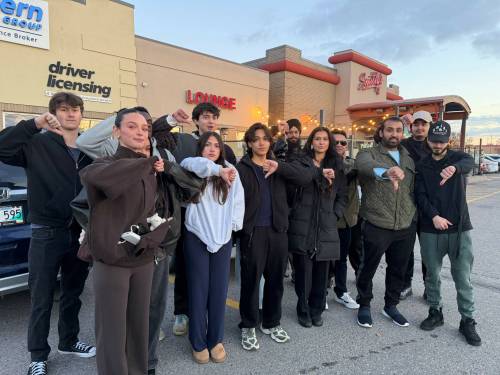
Walkout creates chaos at St. James Smitty’s

Morgan Modjeski 3 minute read Preview

Walkout creates chaos at St. James Smitty’s

Morgan Modjeski 3 minute read 2:01 AM CDT

Gordon Sharpe wanted to eat a meal at the St. James Smitty’s Wednesday, but he got a helping of bad news instead.

He saw several workers walk out of the restaurant, at 1017 St. James St.

“(The waiter) came back about 10 minutes later and stood over the table, looking a little distraught and said, ‘I’m quitting right now and so is everybody else,’” Sharpe said. “He said, ‘This is my last time serving you,’ and he was quite choked up.”

“I’ve never seen anything like it,” he said, adding that the managers scrambled to serve patrons.

Read
2:01 AM CDT

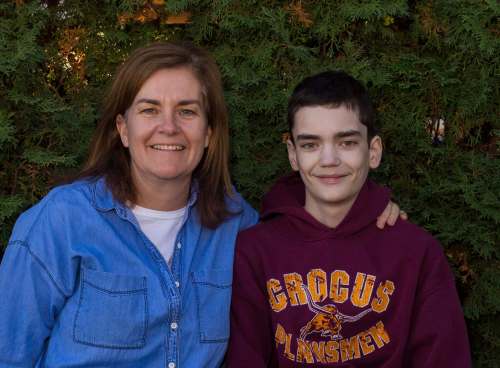
Doctor’s departure stressful for teen

Kevin Rollason 6 minute read Preview

Doctor’s departure stressful for teen

Kevin Rollason 6 minute read Sunday, Oct. 24, 2021

Morgan Walker is a typical teen — but only because a piece of his brain the size of a deck of cards was removed four years ago.

Walker, who had seizures multiple times a day before his surgery, fears other people might not be so lucky.

That’s because his surgeon, Dr. Demitre Serletis, is leaving the province and Health Sciences Centre. Serletis will start practising at the Cleveland Clinic in the new year.

“I was kind of shocked, but I understood why,” Walker said from his home in Brandon. “The government really hasn’t been respecting doctors.”

Read
Sunday, Oct. 24, 2021

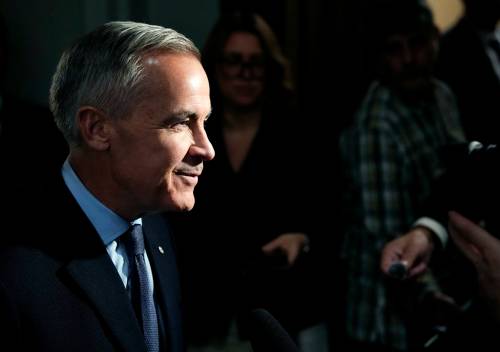
The new normal in Canadian politics

David McLaughlin 5 minute read Preview

The new normal in Canadian politics

David McLaughlin 5 minute read 2:01 AM CDT

“Nothing happening, all at once.”

Welcome to the new normal of Canadian politics, where normality is the new normal. Routine and stable are in; disruptive and excessive are out. Exhibits A and B are the Alberta referendum and the British Columbia election. Voters opted for stability over volatility.

The opposite of being normal is being different from the norm. In politics that means different from where we’ve been and what we’ve come to expect. Two competing trends have dominated our politics for the past decade and a half — progressivism and populism. Think Justin Trudeau and liberal, progressive identity politics in Canada, and Donald Trump and conservative, populist MAGA politics in America. We are now experiencing a swing away from both those trends.

Representing this “new normal” are Prime Minister Mark Carney, for one, and newly elected British Columbia premier, Lorne Doerksen, for another. Both are considered normal because they talk and act like adults in a childish political world. Their political flair is to not have any political flair. They stand out for not standing out.

Read
2:01 AM CDT

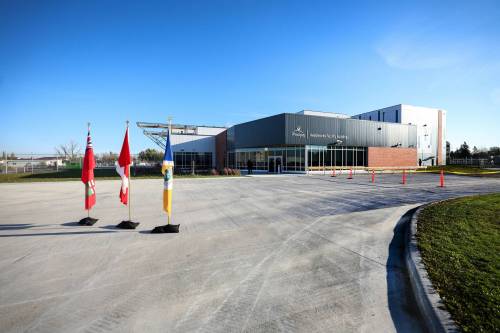
Ottawa announces $500 million for North End sewage plant upgrade

Joyanne Pursaga 4 minute read Preview

Ottawa announces $500 million for North End sewage plant upgrade

Joyanne Pursaga 4 minute read Yesterday at 5:03 PM CDT

The federal government will provide $500 million to help complete the major upgrade to Winnipeg’s North End sewage treatment plant.

Winnipeg South MP Terry Duguid confirmed the total funding at a news conference at the plant Friday, calling the work critical to Winnipeg’s future.

“The stakes could not be higher. Without expanded wastewater treatment, Winnipeg would run out of capacity to build new homes and accommodate new industries within six years,” said Duguid.

The commitment offers the final funding needed to cover the $1.57-billion third and final phase of the upgrade. The city and province will also pay $500 million each for the work.

Read
Yesterday at 5:03 PM CDT

Court ruling concludes Canadian Wheat Board saga

Laura Rance-Unger 4 minute read Preview

Court ruling concludes Canadian Wheat Board saga

Laura Rance-Unger 4 minute read 2:01 AM CDT

It remains to be seen whether the recent court ruling in a lawsuit filed after Canadian Wheat Board’s dissolution in 2012 puts the whole debate to rest, as some no doubt hope.

But either way, the dust has settled on the post-CWB world. The sun still rises and a new generation of farmers on the land only knows by name an institution that for generations influenced every aspect of Prairie grain farming.

The first Rural Revival column I wrote for this newspaper more than 30 years ago was about a thousand farmers from Western Canada demonstrating in support of the Wheat Board. It was in the aftermath of the Western Grain Marketing Panel report, one of several efforts that eventually included a plebiscite to help the federal government decide what to do about a vocal minority of farmers who wanted marketing “freedom.”

The polls at the time suggested about two-thirds of farmers were comfortable enough with the single-desk system for food wheat and barley to keep it around. It served as a counterbalance to canola, which they sold on the open market. They essentially had a dual market.

Read
2:01 AM CDT

One-on-one Journalism Training

0 minute read Wednesday, Jun. 18, 2025