WEATHER ALERT

Automakers say federal budget not doing enough to hit new electric vehicle targets

Advertisement

Advertise with us

OTTAWA - The Canadian auto industry says federal budget programs for electric vehicles and charging stations aren't enough to reach the government's ambitious new sales targets.

Read this article for free:


By clicking the button above, an account will be created and you will begin to receive some of our recommended newsletters. You may opt out of any newsletter by visiting your Email and Communication Preferences page or by clicking "unsubscribe" at the bottom of any email.

or

Already have an account? Log in here »

To continue reading, please subscribe:

Digital Subscription

One year of digital access for only $1.44 a week*

  • Enjoy unlimited reading on winnipegfreepress.com
  • Read the E-Edition, our digital replica newspaper
  • Access News Break, our award-winning app
  • Play interactive puzzles

*Billed as $5.77 plus GST every four weeks. After 52 weeks, price increases to the regular rate of $19.95 plus GST every four weeks. Offer available to new and qualified returning subscribers only. Cancel any time.

To continue reading, please subscribe:

Add Free Press access to your Brandon Sun subscription for only an additional

$1 for the first 4 weeks*

  • Enjoy unlimited reading on winnipegfreepress.com
  • Read the E-Edition, our digital replica newspaper
  • Access News Break, our award-winning app
  • Play interactive puzzles
Start now

*Your next Brandon Sun subscription payment will increase by $1.00 and you will be charged $17.95 plus GST for four weeks. After four weeks, your payment will increase to $24.95 plus GST every four weeks.

Hey there, time traveller!
This article was published 08/04/2022 (1669 days ago), so information in it may no longer be current.

OTTAWA – The Canadian auto industry says federal budget programs for electric vehicles and charging stations aren’t enough to reach the government’s ambitious new sales targets.

Those targets, unveiled last week with the new national emissions reduction plan, added a goal that one in five new cars sold will be zero emissions by 2026, and by 2030, the target is 60 per cent.

That is up from the 50 per cent goal the Liberals set less than a year ago.

An electric car is seen getting charged at parking lot in Tsawwassen, near Vancouver B.C., Friday, April, 6, 2018. The Canadian auto industry says federal budget programs for electric vehicles and charging stations aren't enough to reach the government's ambitious new sales targets.THE CANADIAN PRESS/Jonathan Hayward

Brian Kingston, president of the Canadian Vehicle Manufacturers’ Association, says the unexpected change means Canada is now out of line with the United States, which is still aiming for 50 per cent by 2030.

“This industry is totally integrated throughout North America and we’ve been urging the government to work with the Americans to have shared targets,” Kingston said.

About five per cent of vehicles sold in the first nine months of 2021 were battery-electric or plug-in hybrids, compared with about three per cent in both 2020 and 2019.

Canada needs to quadruple those sales in the next four years to hit the first target in 2026.

To nudge things along, the 2022 federal budget promises to spend another $1.7 billion on electric vehicle rebates for consumers by 2025. It’s more than triple the $589 million spent on federal rebates since 2019, and higher than the $1.5 billion promised by the Liberals during last fall’s federal election.

The Incentives for Zero Emission Vehicles program offers up to $5,000 off the purchase price of battery-electric, plug-in hybrid or hydrogen fuel cell passenger vehicles, and has proven to be immensely popular.

It started as a $300-million, three-year program in May 2019, but that money ran out in less than 21 months. The government topped it up with $287 million in 2020, and another $73 million in December 2021.

As of Feb. 28, almost 137,000 vehicles qualified for rebates totalling $589 million.

Electric car advocates and the auto sector agree the program is useful because the cost of electric vehicles is still higher than similar gas-powered models. Ontario’s decision in 2018 to cancel a provincial rebate tanked electric vehicle sales in that province, proving to many that rebates do make a difference.

The Liberals are promising to increase the maximum purchase price of qualifying vehicles, so new SUVs and pickup trucks qualify for the rebate, but they haven’t said by how much.

Right now the maximum purchase price is $45,000 for a base model and up to $55,000 for models with extra options.

The government also hasn’t said if it will increase the size of the rebate offered — $5,000 is on the low side of rebates around the world.

Kingston said the automakers his firm represents — Ford, General Motors and Stellantis — want the rebate tripled to $15,000.

Mark Zacharias, special adviser at Clean Energy Canada, said extending the rebate is a must, but he’s disappointed the government hasn’t mentioned if it will also apply to used vehicles.

“As one of Canada’s highest-polluting sectors, transportation must be decarbonized in short order,” said Zacharias in a statement.

Both Zacharias and Kingston are disappointed with the supports to expand charging stations in Canada.

The Liberals promised $700 million in their election platform to build 50,000 new chargers. The budget includes $400 million, divided evenly across five years, and it’s largely to expand an existing grant program for companies building charging infrastructure to focus more on suburban and remote communities.

“While the budget focuses on helping suburban and rural EV drivers, there is a lack of support for drivers living in apartments where charging often comes with higher hurdles,” Zacharias said. “In both these cases, we must ensure the shift to electric vehicles is not just affordable but also accessible.”

Kingston said 50,000 new charging stations is not even in the ballpark of what’s needed.

Natural Resources Canada recently received recommendations on how many charging stations are needed but hasn’t released that data yet. Previously it was targeting one charging station for every 20 electric vehicles by 2025.

Canada has about 6,800 public charging stations, but almost 90 per cent are in just three provinces: Quebec, British Columbia and Ontario.

The availability of electric vehicles has been a constant problem in Canada, with wait lists often six months to a year long. An annual survey by Dunsky Energy and Climate Advisors said in February 2021, more than half of dealerships in Canada didn’t have a single electric vehicle on the lot.

Kingston said automakers want to be on board and are making the changes needed, but he said they also need to be certain the demand will be there for the cars they are making.

If the government doesn’t make the rebates more attractive and massively expand charging stations, the manufacturers worry that demand isn’t going to materialize.

“There’s these very ambitious targets being set but we don’t see a comprehensive long-term plan here to help Canadians make this switch,” Kingston said.

This report by The Canadian Press was first published April 8, 2022.

Report Error Submit a Tip

More Stories

US rolls to women's hoops gold medal in Bird's last Olympics

Doug Feinberg, The Associated Press 6 minute read Preview

US rolls to women's hoops gold medal in Bird's last Olympics

Doug Feinberg, The Associated Press 6 minute read Sunday, Aug. 8, 2021

SAITAMA, Japan (AP) — Sue Bird and Diana Taurasi walked off the basketball court together, arm-in-arm, one last time at the Tokyo Games.

They started their journey together five Olympics ago and ended it in the same fashion as always — with gold medals hanging around their necks.

“All of what we’ve done for USA Basketball, we’ve done together. It’s fitting,” Bird said after the 90-75 win over Japan on Sunday.

And now it's over — at least for the 40-year-old Bird.

Read
Sunday, Aug. 8, 2021

Cottage communities constrained by COVID

Cassandra Szklarski, The Canadian Press 6 minute read Preview

Cottage communities constrained by COVID

Cassandra Szklarski, The Canadian Press 6 minute read Friday, May. 1, 2020

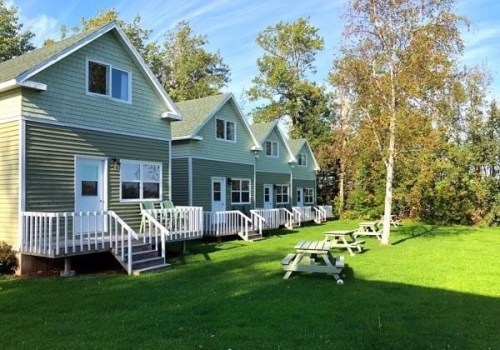
TORONTO - A springtime trickle of Manitobans entering Ontario to visit their lakeside cottages alarmed Kenora Mayor Daniel Reynard a month ago.

Now that Manitoba is poised to restart some non-essential services Monday, Reynard fears an even bigger influx — this time sun-seekers expecting amenities that are simply unavailable.

The message in Ontario is still one of restraint: Avoid non-essential travel, and do not visit your cottage. Provincial travel is not prohibited, but vacationers and day-trippers will find little to do.

Restaurants are closed, as are all beaches, golf courses, parks, trails and marinas.

Read
Friday, May. 1, 2020

Second plant-based protein plant planned in Manitoba to meet vegan meat demand

Martin Cash 5 minute read Preview

Second plant-based protein plant planned in Manitoba to meet vegan meat demand

Martin Cash 5 minute read Tuesday, Jul. 16, 2019

Manitoba is about to become a key production centre for plant-based protein with a second pea-protein production plant about to break ground.

Merit Functional Foods Corporation is building a $65-million, 65,000-square-foot facility that will produce both pea and canola protein.

The French company, Roquette, is building a $400-million pea protein plant in Portage la Prairie.

Merit is a 60-40 partnership between an investor group made up of Shaun Crew, Barry Tomiski and Ryan Bracken -- all veteran senior management and founders of Hemp Oil Canada Inc./Manitoba Harvest -- and Burcon NutraScience Corp., a publicly traded Vancouver company with strong links to Winnipeg where it has had a research lab for 20 years.

Read
Tuesday, Jul. 16, 2019

Expect a reasonable approach to keep Manitoba’s minimum wage out of cellar

Tom Brodbeck 5 minute read Preview

Expect a reasonable approach to keep Manitoba’s minimum wage out of cellar

Tom Brodbeck 5 minute read Tuesday, May. 31, 2022

The devil will be in the details when it comes to how much the Stefanson government will increase the minimum wage in 2022 under proposed legislation that’s expected to become law this week.

My prediction: government will boost the base wage by at least $1.10 an hour this year.

As expected, the Stefanson government plans to alter its inflation-based formula for setting the minimum wage, which now stands at $11.95 an hour. Normally, the base wage is indexed to the previous year’s rate of inflation. That’s sound policy during normal times. However, with inflation growing at rates not seen in more than 30 years, an immediate adjustment is required to ensure minimum-wage earners don’t lose purchasing power.

Conservative governments in Saskatchewan, Ontario and New Brunswick have all announced significant increases to their base wages in 2022, putting pressure on the Stefanson government to follow suit. Failure to do so would see Manitoba’s minimum wage (previously scheduled to rise 40 cents an hour to $12.35 on Oct. 1) rank lowest in the country.

Read
Tuesday, May. 31, 2022

Oleksiak makes history with seventh Olympic medal

The Canadian Press 8 minute read Preview

Oleksiak makes history with seventh Olympic medal

The Canadian Press 8 minute read Sunday, Aug. 1, 2021

TOKYO - The Canadian women finished their impressive medal haul in the pool – including a record-setting performance from Penny Oleksiak – and Andre De Grasse finally got Canada's men on the board with his second consecutive Olympic bronze in the men's 100 metres.

After finishing third in the medley relay, Maggie Mac Neil draped a bronze medal brimming with significance around Oleksiak's neck as their teammates Kylie Masse and Sydney Pickrem celebrated on the podium.

"Most decorated," they chanted in unison with their arms around each other during post-ceremony interviews with reporters.

On the final day of swimming competition at the Tokyo Olympics, Toronto's Oleksiak took her place at the top among Canada's greatest Olympians. In helping the medley relay team win bronze, she earned her seventh career Olympic medal, and at just 21 became the most decorated Canadian Olympian of all time.

Read
Sunday, Aug. 1, 2021

Court ruling concludes Canadian Wheat Board saga

Laura Rance-Unger 4 minute read Preview

Court ruling concludes Canadian Wheat Board saga

Laura Rance-Unger 4 minute read Saturday, Oct. 31, 2026

It remains to be seen whether the recent court ruling in a lawsuit filed after Canadian Wheat Board’s dissolution in 2012 puts the whole debate to rest, as some no doubt hope.

But either way, the dust has settled on the post-CWB world. The sun still rises and a new generation of farmers on the land only knows by name an institution that for generations influenced every aspect of Prairie grain farming.

The first Rural Revival column I wrote for this newspaper more than 30 years ago was about a thousand farmers from Western Canada demonstrating in support of the Wheat Board. It was in the aftermath of the Western Grain Marketing Panel report, one of several efforts that eventually included a plebiscite to help the federal government decide what to do about a vocal minority of farmers who wanted marketing “freedom.”

The polls at the time suggested about two-thirds of farmers were comfortable enough with the single-desk system for food wheat and barley to keep it around. It served as a counterbalance to canola, which they sold on the open market. They essentially had a dual market.

Read
Saturday, Oct. 31, 2026