Ottawa rapped for dropping ball on Lake Winnipeg

Advertisement

Advertise with us

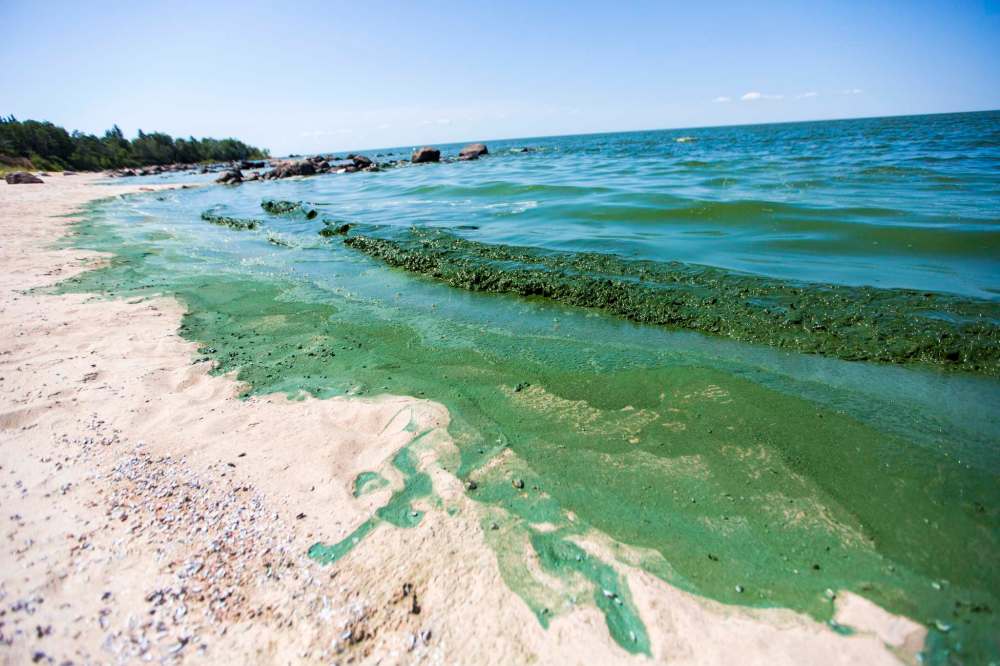
OTTAWA — Lake Winnipeg’s damaging algae blooms will only get worse if the federal government doesn't get its act together, an auditor reported Thursday.

Read this article for free:


or

Already have an account? Log in here »

To continue reading, please subscribe:

Subscribe and receive a limited-edition Free Press branded hat or tote.

Digital Subscription

One year of digital access for only $205*

  • Enjoy unlimited reading on winnipegfreepress.com
  • Read the E-Edition, our digital replica newspaper
  • Access News Break, our award-winning app
  • Play interactive puzzles

*First annual payment billed as $205.00 + GST for one year. This annual subscription will automatically renew at $233.00 + GST every 52 weeks (10% off the regular annual price of $259.35). Offer available to new and qualified returning subscribers only. Cancel any time.

To continue reading, please subscribe:

Add Free Press access to your Brandon Sun subscription for only an additional

$1 for the first 4 weeks*

  • Enjoy unlimited reading on winnipegfreepress.com
  • Read the E-Edition, our digital replica newspaper
  • Access News Break, our award-winning app
  • Play interactive puzzles
Start now

*Your next Brandon Sun subscription payment will increase by $1.00 and you will be charged $17.95 plus GST for four weeks. After four weeks, your payment will increase to $24.95 plus GST every four weeks.

Hey there, time traveller!
This article was published 25/11/2021 (1769 days ago), so information in it may no longer be current.

OTTAWA — Lake Winnipeg’s damaging algae blooms will only get worse if the federal government doesn’t get its act together, an auditor reported Thursday.

“There needs to be an increased level of co-operation, with a focus on the actual outcomes in the water,” environment commissioner Jerry DeMarco told the Free Press.

“Otherwise, we can continue going from decade to decade, and having meetings… but if the water quality isn’t getting any better, that is what really matters.”
MIKAELA MACKENZIE / WINNIPEG FREE PRESS FILES 
Lake Winnipeg’s damaging algae blooms will only get worse if the federal government doesn't get its act together, an auditor reported Thursday.
MIKAELA MACKENZIE / WINNIPEG FREE PRESS FILES Lake Winnipeg’s damaging algae blooms will only get worse if the federal government doesn't get its act together, an auditor reported Thursday.

DeMarco, who works in the auditor general’s office, analyzed work done by Environment Canada and the federal Agriculture Department to reduce nutrients in the Lake Winnipeg watershed, which encompasses the area from the Rockies to northwestern Ontario.

The auditor found that the departments must improve communication with each other to avoid duplicating work.

As a result, Environment Canada has selected monitoring sites without being sure to include locales where best management practices had been implemented, which auditors found to be a missed opportunity to measure the effects of interventions.

The departments formed joint science co-ordination committees in 2018 — but they only met once.

Both departments have done a shoddy job of sharing their research with non-scientists. The auditor found the departments hold conferences, but do little to translate their findings or ongoing work to groups with a stake in the watershed such as fishers, municipalities and Indigenous leaders.

The auditor made the same observations about two other watersheds in Canada, Lake Erie in Ontario and the St. John River basin in New Brunswick.

In response, the two departments said they would restart the joint committees and have a communications strategy by late 2022.

The Lake Winnipeg Foundation said phosphorus loading will worsen because trends suggest increasing amounts of water will enter the lake.

The weather fluctuates, as seen with this year’s drought, but wetland drainage and wetter springs increase flow into Lake Winnipeg, said foundation head Alexis Kanu.

“This problem is likely to get worse without specific efforts to reduce water flow and capture phosphorus on the landscape,” she wrote.

Winnipeg South MP Terry Duguid, who has overseen Lake Winnipeg projects for the Liberals, said his government is trying to tackle that through everything from upgrades to sewage treatment in Winnipeg to Indigenous conservation projects.

“It is a really ambition agenda to really transform our protection and management of freshwater,” he said.

“Lake Winnipeg won’t wait and we need to get on with restoring (its) health.”

The auditor said the Trudeau government needs to clarify its competing objectives, with goals to reduce algae blooms while ramping up agricultural production, which will increase nutrient runoff.

“Even if we left the nutrient levels the same year to year, over time the problem would likely get worse, simply because the water temperature is going up,” DeMarco said.

“It’s a difficult question; it requires co-operation, not only between the two departments” but also governments, he said.

Environment Minister Steven Guilbeault said that plays into the government’s pledge from two years ago to revive a federal water agency for the Prairies, that would co-ordinate provincial regulation of water flow and federal research.

“He said we could do better and I agree,” said Guilbeault.

Duguid said the water agency is coming soon.

“We commit to its formal establishment in 2022, that is in black and white, but it is well on its way.”

dylan.robertson@freepress.mb.ca


Report Error Submit a Tip

More Stories

Roughing it (less)

AV Kitching 6 minute read Preview

Roughing it (less)

AV Kitching 6 minute read Monday, Jul. 6, 2026

I hate camping.

I loathe the very idea of leaving the comfort and safety of home to sleep in a random field, where not only will I be exposed to the elements, but will also be at the mercy of all manner of creatures, from ursine to canine to insectan.

I do not want to hike up a hill just to share one outdoor tap with 12 others, standing alongside them as I brush my teeth.

I do not want to queue for 15 minutes, then part with a $2 coin to wedge myself into a shower stall just to stand under a piddly stream of lukewarm water while trying my best to swiftly soap up and sponge off lest I irk the rapidly growing line of campers outside.

Read
Monday, Jul. 6, 2026

Legislation needed on vacant buildings

Editorial 4 minute read Preview

Legislation needed on vacant buildings

Editorial 4 minute read 2:00 AM CDT

There is something deeply backwards about a system that lets a property owner keep a building boarded up indefinitely while neighbours are left to live with the consequences.

In Winnipeg, as long as the owner pays the taxes, follows the city’s vacant-building rules and pays the required fees, there is no hard deadline for the building to be dealt with.

The building can remain a neighbourhood eyesore. It can attract drug use and crime. It can become a fire hazard. And the people living nearby can be left wondering how long they are expected to put up with it.

Yet when Premier Wab Kinew was asked Friday whether his government would change provincial legislation to give Winnipeg the power to impose a time limit on such properties, he declined to answer.

Read
2:00 AM CDT

Dealing now with increasing judicial dangers

Ben Wickstrom 5 minute read 2:00 AM CDT

For years, the Manitoba Association of Crown Attorneys (“MACA”) has been engaged in a dispute with the Manitoba government over the workload of its lawyers. That dispute is expected to come to a head at the end of November, when two weeks of grievance hearings are scheduled.

We remain hopeful that we can reach an agreement with our employer. But if we cannot, our union’s lawyers are prepared to make our case. As those hearings approach, we want to explain how we got here, what is at stake, and why this dispute matters beyond the working conditions of our members.

These problems are longstanding and predate the election of Manitoba’s current government. Our concern with the current government is not that it created these problems, but that it is now responsible for addressing them.

Despite the evidence before it, the government has not meaningfully addressed the workload concerns we have raised throughout its time in office.

Use it twice: a data centre we could support

Hersh Seth 5 minute read Preview

Use it twice: a data centre we could support

Hersh Seth 5 minute read Thursday, Jul. 30, 2026

In June, Premier Wab Kinew rejected a massive AI data centre planned near Île-des-Chênes. The project would have used 500 megawatts of power, which is about the same as the Grand Rapids generating station, and would have run on six natural gas turbines. Kinew said the environmental cost was too high and the long-term benefit for Manitobans was too low.

He made the right call. But simply saying no to data centres is not enough.

Winnipeg is a cold city. Data centres are basically huge electric heaters with computers inside. Almost every watt they use turns into heat, and most facilities pay to release it into the air. In a city that spends half the year paying to stay warm, that’s not just waste; it’s an opportunity. The idea is simple: use the energy twice. First for computing, then for heating our buildings.

The stakes are real. Manitoba Hydro’s new resource plan says peak demand will exceed our capacity as early as 2029 or 2030, and that the province will need about 1,760 additional megawatts of dependable capacity by 2035.

Read
Thursday, Jul. 30, 2026

Ottawa rapped for dropping ball on Lake Winnipeg

Dylan Robertson 4 minute read Preview

Ottawa rapped for dropping ball on Lake Winnipeg

Dylan Robertson 4 minute read Thursday, Nov. 25, 2021

OTTAWA — Lake Winnipeg’s damaging algae blooms will only get worse if the federal government doesn't get its act together, an auditor reported Thursday.

“There needs to be an increased level of co-operation, with a focus on the actual outcomes in the water,” environment commissioner Jerry DeMarco told the Free Press.

“Otherwise, we can continue going from decade to decade, and having meetings… but if the water quality isn't getting any better, that is what really matters.”

DeMarco, who works in the auditor general's office, analyzed work done by Environment Canada and the federal Agriculture Department to reduce nutrients in the Lake Winnipeg watershed, which encompasses the area from the Rockies to northwestern Ontario.

Read
Thursday, Nov. 25, 2021

Pallister’s ego behind carbon tax flip-flop

Dan Lett 6 minute read Preview

Pallister’s ego behind carbon tax flip-flop

Dan Lett 6 minute read Thursday, Oct. 4, 2018

It doesn't make any sense.

Earlier this week, Manitoba Premier Brian Pallister stunned onlookers inside and outside the province with a decision to abandon his own $25-per-tonne carbon tax — the core lever in a complex, provincewide plan to curb carbon emissions.

The premier told reporters Wednesday he was throwing out nearly two years of work on a homegrown climate change plan because Ottawa did not "respect" Manitoba's desire to hold carbon taxes at about half the level demanded by the federal government.

It was not clear what Pallister meant by respect; the two levels of government disagree about the level at which carbon taxes should be set. Up until this week, the two levels of government disagreed over policy and methodology.

Read
Thursday, Oct. 4, 2018