US judge won’t reconsider tribes’ bid to block Nevada mine

Advertisement

Advertise with us

RENO, Nev. (AP) — A U.S. federal judge has ruled that additional historical accounts two Native American tribes submitted to prove their claim a lithium mine is on sacred lands where their ancestors were massacred in 1865 still falls short of evidence necessary to temporarily block any digging.

Read this article for free:


or

Already have an account? Log in here »

To continue reading, please subscribe:

Subscribe and receive a limited-edition Free Press branded hat or tote.

Digital Subscription

One year of digital access for only $205*

  • Enjoy unlimited reading on winnipegfreepress.com
  • Read the E-Edition, our digital replica newspaper
  • Access News Break, our award-winning app
  • Play interactive puzzles

*First annual payment billed as $205.00 + GST for one year. This annual subscription will automatically renew at $233.00 + GST every 52 weeks (10% off the regular annual price of $259.35). Offer available to new and qualified returning subscribers only. Cancel any time.

To continue reading, please subscribe:

Add Free Press access to your Brandon Sun subscription for only an additional

$1 for the first 4 weeks*

  • Enjoy unlimited reading on winnipegfreepress.com
  • Read the E-Edition, our digital replica newspaper
  • Access News Break, our award-winning app
  • Play interactive puzzles
Start now

*Your next Brandon Sun subscription payment will increase by $1.00 and you will be charged $17.95 plus GST for four weeks. After four weeks, your payment will increase to $24.95 plus GST every four weeks.

Hey there, time traveller!
This article was published 11/11/2021 (1786 days ago), so information in it may no longer be current.

RENO, Nev. (AP) — A U.S. federal judge has ruled that additional historical accounts two Native American tribes submitted to prove their claim a lithium mine is on sacred lands where their ancestors were massacred in 1865 still falls short of evidence necessary to temporarily block any digging.

U.S. District Judge Miranda Du refused the request by the Reno-Sparks Indian Colony and the Oregon-based Burns Paiute Tribe to reconsider her Sept. 6 ruling denying their bid to halt completion of an archaeological survey required before construction of the mine can begin near the Nevada-Oregon line.

“While the court agrees (the) additional evidence further highlights the shameful history of the treatment of Native Americans by federal and state governments, it does not persuade the court that it should reconsider,” Du wrote in her ruling issued on Monday.

She said the newly discovered evidence is “too speculative” to warrant a temporary injunction blocking collection of cultural artifacts.

Lithium Nevada Corp.’s construction is scheduled to begin earlier next year at Thacker Pass, about 230 miles (370 kilometers) northeast of Reno.

It would be the largest lithium mine in the nation. Lithium is a key component in electric vehicle batteries. Demand for the mineral is expected to triple over the next five years.

The company plans to have a contractor dig trenches to gather samples for the archaeological survey across about a quarter of an acre (a tenth of a hectare) and has pledged to halt all operations if any human remains are found.

The tribes have accused the U.S. Bureau of Land Management of violating historic preservation laws by failing to consult with them about an Historic Properties Treatment Plan guiding the initial archaeological dig required before mine construction can begin.

They argue the sacred lands could be “irreparably harmed,” which Judge Du said they had failed to prove when she ruled against them in September in federal court in Reno.

The new evidence the tribes submitted Oct. 1 included an 1865 newspaper report in The Owyhee Avalanche and two eyewitness accounts of how at least 31 Paiute men, women and children were “murdered by federal soldiers” at Thacker Pass.

The accounts were in an autobiography first published in 1929 by Bill Haywood, a well-known American labor organizer. One was from a cavalry volunteer who said he participated in the slaughter and the other by a tribal member who survived it.

Du wrote in her ruling that the new evidence “does not definitely establish that a massacre occurred within the project area.”

She said that previous digging in the area in recent years never uncovered any human remains “and there are plans in place to address the discovery of human remains in any event.”

Lithium Nevada said the government’s review of the plans has included “substantial consultation” with local tribes, including the Fort McDermitt Paiute Shoshone tribe, that had no objections to the archaeological dig.

“As the specialists complete the cultural mitigation work, we are committed to working closely with the Fort McDermitt Paiute Shoshone tribe who will monitor the work and ensure artifacts are protected and preserved in a way most suitable to tribal interests,” the company said Thursday in a statement emailed to The Associated Press.

___

This story has been corrected to show that the mining company’s name is Lithium Nevada Corp., not Nevada Lithium Corp.

Report Error Submit a Tip

More Stories

Suspension upheld for teen hockey player involved in hazing

Free Press staff 3 minute read Preview

Suspension upheld for teen hockey player involved in hazing

Free Press staff 3 minute read Sunday, Aug. 9, 2026

A high school hockey player who was found to have been involved in sexualized hazing of rookie teammates lost his suspension appeal.

The youth player was barred from Hockey Canada-sanctioned activities. He was handed the four-year and nine-month suspension from sanctioned hockey after an interim ban issued in March 2024.

He appealed his suspension late last year to the Sport Dispute Resolution Centre of Canada, an independent conflict tribunal, but the centre upheld the youth’s suspension, according to a written decision issued earlier this year.

An independent investigator who probed the hockey player’s actions described the youth as a veteran player who both participated in and co-ordinated the “assigning” of rookie team members to veteran players to perform tasks for them. He himself was “assigned” a rookie, the decision said.

Read
Sunday, Aug. 9, 2026

Neighbours concerned shed used as home on city land

Malak Abas 6 minute read Preview

Neighbours concerned shed used as home on city land

Malak Abas 6 minute read Wednesday, Sep. 14, 2022

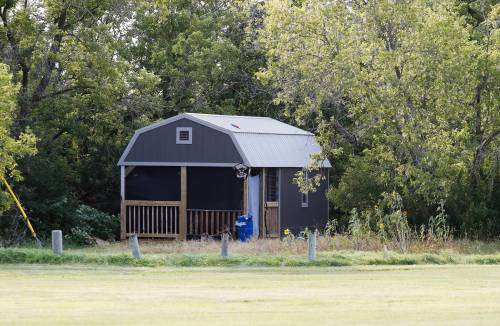
An unassuming tiny home suddenly appeared one day in August, tucked between a park and community garden in St. James.

Read
Wednesday, Sep. 14, 2022

Who has been invited to the table?

Stephen Borys 6 minute read Preview

Who has been invited to the table?

Stephen Borys 6 minute read Yesterday at 2:01 AM CDT

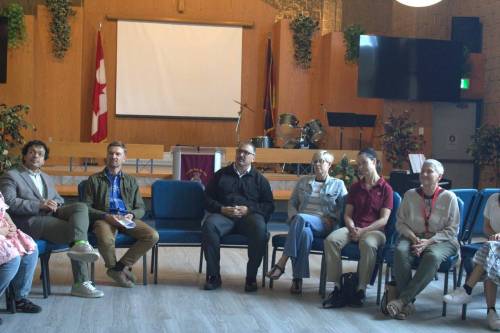
Last Friday, I spoke at Booth University College’s inaugural Honour and Hope Harvest Dinner in support of Shelter U. I had been asked to speak about the power of art in the community, a subject I have spent much of my professional life thinking about — as a museum director, writer and teacher, and now through my consulting work with Civic Muse.

What continues to interest me is not simply what museums, universities and other public institutions do, but whether their work actually matters — whether they make a difference in the lives of the people and communities around them.

Preparing for the evening brought me back to an even more fundamental question: Who has been invited in?

One of my museum mentors used to remind me that institutions often begin the conversation about public engagement too late. Before engagement comes the welcome, and before the welcome comes the invitation. We can create extraordinary buildings, exhibitions and programs and say that everyone is welcome. But unless people believe that these places are also meant for them, many will never cross the threshold.

Read
Yesterday at 2:01 AM CDT

Stable incomes, not more weapons, provide security

David Olive - Star Business Columnist, Toronto Star 5 minute read Preview

Stable incomes, not more weapons, provide security

David Olive - Star Business Columnist, Toronto Star 5 minute read Thursday, Apr. 7, 2022

Even amid a global arms race, a hike in Canadian defence spending should be a tough sell, David Olive writes.

Read
Thursday, Apr. 7, 2022

Winnipeg’s challenge: preparing for weather extremes

Adam Johnston 5 minute read Preview

Winnipeg’s challenge: preparing for weather extremes

Adam Johnston 5 minute read Yesterday at 2:00 AM CDT

A new United Nations report warns the world will exceed the 1.5 C Paris limit by 2030.

Winnipeg’s string of extreme weather events in recent years — this summer’s intense rainstorms that caused flash flooding, basement damage, power outages, prolonged heat waves, last summer’s wildfires, and the freakish October 2019 wet snowstorm — underscores the urgent need for stronger emergency plans and climate resilience in the face of the UN’s new report.

As the city enters an unknown era from increwasing extreme weather events, it must also confront this haunting truth or face future unprepared consequences.

Winnipeg faces persistent challenges, including limited library hours during the summer (they could act as cooling places for the most vulnerable), and gaps in public and active transportation which make it harder for many residents to reach essential services.

Read
Yesterday at 2:00 AM CDT

Transit, roads and city council’s priorities

Erna Buffie 5 minute read Preview

Transit, roads and city council’s priorities

Erna Buffie 5 minute read 2:00 AM CDT

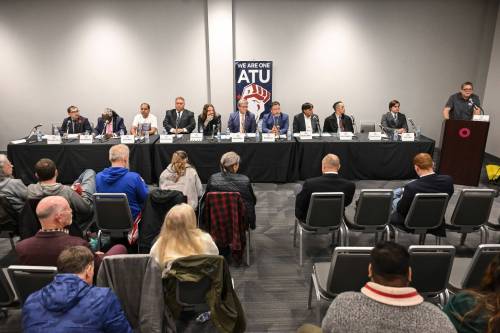
Did any of you happen to notice that the week of Sept. 14 marked an interesting confluence of events in Winnipeg? First up was the mayoral debate on public transit. Second was an announcement that the city would be undertaking a survey to determine whether their citizens’ “transportation needs” are being met.

The debate on our public bus system, from which our current Mayor Scott Gillingham was tellingly absent, focused primarily on safety rather than the efficiency of the system.

Which, on one level, is no great surprise.

After all unlawful incidents on buses and at transit stops have increased by 280 per cent compared to levels recorded around 2016. Moreover, the candidates were primarily speaking to the bus drivers’ union that organized the event, and bus drivers are often the victims of violent episodes.

Read
2:00 AM CDT