

Winnipeg’s challenge: preparing for weather extremes
Advertisement
Read this article for free:
or
Already have an account? Log in here »
To continue reading, please subscribe:

Digital Subscription
One year of digital access for only $205*
- Enjoy unlimited reading on winnipegfreepress.com
- Read the E-Edition, our digital replica newspaper
- Access News Break, our award-winning app
- Play interactive puzzles
*First annual payment billed as $205.00 + GST for one year. This annual subscription will automatically renew at $233.00 + GST every 52 weeks (10% off the regular annual price of $259.35). Offer available to new and qualified returning subscribers only. Cancel any time.
To continue reading, please subscribe:
Add Free Press access to your Brandon Sun subscription for only an additional
$1 for the first 4 weeks*
- Enjoy unlimited reading on winnipegfreepress.com
- Read the E-Edition, our digital replica newspaper
- Access News Break, our award-winning app
- Play interactive puzzles
*Your next Brandon Sun subscription payment will increase by $1.00 and you will be charged $17.95 plus GST for four weeks. After four weeks, your payment will increase to $24.95 plus GST every four weeks.
Read unlimited articles for free today:
or
Already have an account? Log in here »
A new United Nations report warns the world will exceed the 1.5 C Paris limit by 2030.
Winnipeg’s string of extreme weather events in recent years — this summer’s intense rainstorms that caused flash flooding, basement damage, power outages, prolonged heat waves, last summer’s wildfires, and the freakish October 2019 wet snowstorm — underscores the urgent need for stronger emergency plans and climate resilience in the face of the UN’s new report.
As the city enters an unknown era from increwasing extreme weather events, it must also confront this haunting truth or face future unprepared consequences.
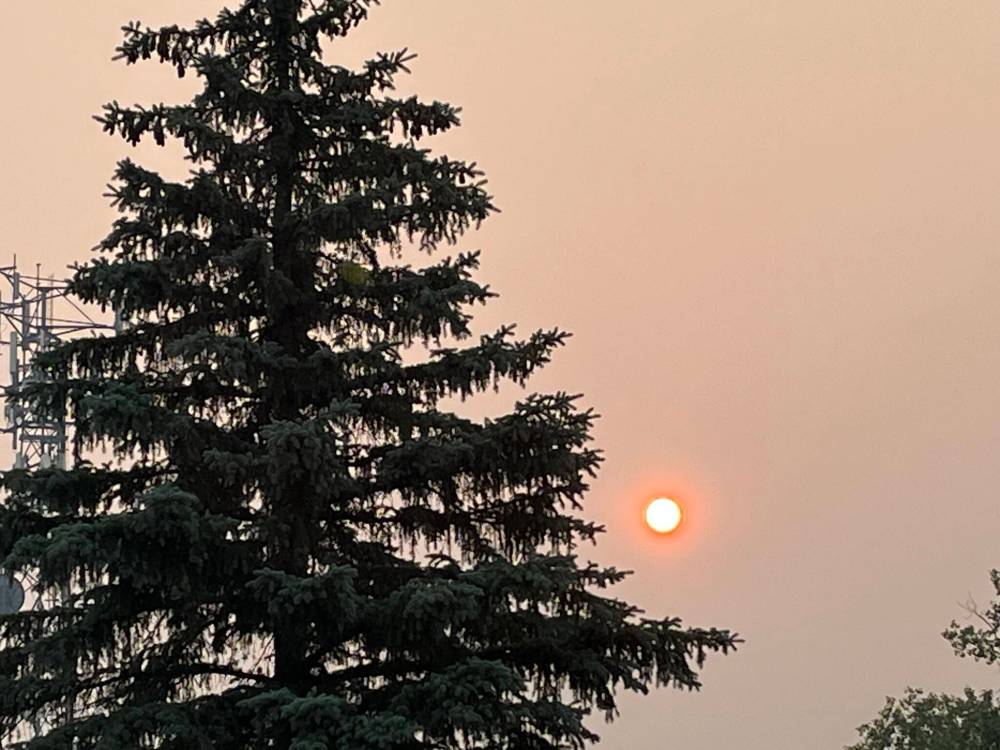
Russell Wangersky/Free Press
Wildfire smoke over Winnipeg during the summer of 2025. Adam Johnston says the city has to do more to prepare for increased extreme weather events in the future.
Winnipeg faces persistent challenges, including limited library hours during the summer (they could act as cooling places for the most vulnerable), and gaps in public and active transportation which make it harder for many residents to reach essential services.
Winnipeg must slash carbon emissions.
The 2018 climate action plan targeted 20 per cent reductions from 2011 levels and 80 per cent by 2050, yet overall emissions continue to rise.
Transportation accounts for nearly half of Winnipeg’s carbon emissions, mostly from private vehicles. The Transportation Master Plan aims for 50 per cent of trips to be made without private cars through transit, walking, cycling and ride-sharing.
We need improved transit funding to electrify and modernize the fleet while making service more frequent, reliable and affordable. Winnipeg should support reinstating the 50/50 funding agreement between the province and the city.
Winnipeg needs a complete, safe active transportation network linking residential streets, bike lanes and trails.
Safe infrastructure encourages walking and cycling, reduces car dependence and supports a healthier, more sustainable city. Reliable winter maintenance of bike lanes, paths and sidewalks is equally critical as climate change brings harsher freeze-thaw cycles.
Improving mobility is also an affordability and equity measure. Lower-income residents, newcomers and Indigenous people often rely on transit, walking and cycling.
Expanding sustainable transportation makes access to work, education and services more affordable and equitable.
Buildings and energy must be part of this transition.
The city should improve energy efficiency, support retrofits and expand access to affordable, low-carbon heating. Better-insulated buildings reduce emissions and keep residents safer during extreme heat, cold and power outages. Expanding curbside composting service to all residents at an accelerated rate would also encourage more participation, compared to the current system limited to inaccessible 4R locations.
Winnipeg must also accelerate adaptation. We must be prepared for flash floods, power outages, droughts and wildfire smoke. The city should increase cooling stations in vulnerable neighbourhoods, add splash pads in the inner city and expand Winnipeg Public Library hours on Saturdays and Sundays in summer so residents have places to learn, connect and cool down.
The city must improve green infrastructure through stormwater upgrades, rain gardens, permeable surfaces and an expanded tree canopy.
Winnipeg is targeting 24 per cent urban forest coverage by 2065, but coverage has fallen to 17 per cent following removals and pest control. The October 2019 snowstorm damaged ten per cent of the city’s tree inventory. Trees reduce carbon emissions, lower temperatures, help control flooding and filter air pollution, making them central to Winnipeg’s climate strategy.
Winnipeg has had a climate action plan since 2018, but plans only matter if they are implemented.
To honour these commitments, the city needs consistent funding for climate adaptation and emergency recovery.
In May, council voted 14–1 to move $18 million into the rainy-day fund, while Mayor Scott Gillingham said the chief financial officer was reviewing whether to lower its minimum balance. In a June 15 Free Press op-ed (Rainy day fund, meet climate change costs, Think Tank) Hersh Seth warned that delaying the climate resiliency plan could have disastrous consequences and urged voters to ask candidates whether they would make the fund sustainable and complete the strategy.
Climate resilience must be embedded across every department — from city council’s decisions to Public Works’ projects and frontline service delivery. The reserve fund must be sufficient and available, and the climate resiliency strategy — including emergency preparedness — must be ready for storms like those many severe thunderstorms this summer and the 2019 snowstorm.
Recently, a coalition of environmental groups led by Climate Reality Project Canada urged Winnipeg civic candidates to adopt a ten-point “People’s Climate Mandate,” which focuses on climate action measures ranging from investments in public and active transportation, energy and preventative measures from extreme heat.
As Inclusive Transportation author Veronica O. Davis emphasized at the 2026 Bike Winnipeg AGM, engagement must meet communities where they are, not just during elections. It must prioritize those most affected: low-income residents, Indigenous Peoples and visible minorities.

Listening to those most affected by climate change will ensure Winnipeg’s mitigation and adaptation strategies benefit neighbourhoods like Elmwood, the North End and downtown — not just Waverley West and North Kildonan.
Extreme weather has increasingly affected Winnipeggers lives over the last decade. Civic officials cannot slowly respond to dangers that touch every part of our lives. With the right leadership, Winnipeg can lead Canada on climate action instead of falling behind.
Local author Erna Buffie challenges us to ask: “What can we do to climate-proof our neighbourhoods and create safe spaces for our fellow creatures? What do we want our cities to look like 25 or 50 years from now?”
That is the challenge Winnipeg must meet as it updates its Climate Action Plan over the next year and as voters head into this fall’s Oct. 28 civic election.
Adam Johnston is the host of Not Necessarily The Automobile on 101.5 UMFM Thursday mornings at 11:30 am, a show on public and active transportation. He can be reached at notnecessarilytheautomobile@gmail.com