WEATHER ALERT

Risk experts say climate change to take big chunk of Canadian economy by 2050

Advertisement

Advertise with us

Canada will be more than $100 billion poorer by 2050 if the world doesn't work harder to fight climate change, says one of the world's largest insurers.

Read this article for free:


By clicking the button above, an account will be created and you will begin to receive some of our recommended newsletters. You may opt out of any newsletter by visiting your Email and Communication Preferences page or by clicking "unsubscribe" at the bottom of any email.

or

Already have an account? Log in here »

To continue reading, please subscribe:

Digital Subscription

One year of digital access for only $1.44 a week*

  • Enjoy unlimited reading on winnipegfreepress.com
  • Read the E-Edition, our digital replica newspaper
  • Access News Break, our award-winning app
  • Play interactive puzzles

*Billed as $5.77 plus GST every four weeks. After 52 weeks, price increases to the regular rate of $19.95 plus GST every four weeks. Offer available to new and qualified returning subscribers only. Cancel any time.

To continue reading, please subscribe:

Add Free Press access to your Brandon Sun subscription for only an additional

$1 for the first 4 weeks*

  • Enjoy unlimited reading on winnipegfreepress.com
  • Read the E-Edition, our digital replica newspaper
  • Access News Break, our award-winning app
  • Play interactive puzzles
Start now

*Your next Brandon Sun subscription payment will increase by $1.00 and you will be charged $17.95 plus GST for four weeks. After four weeks, your payment will increase to $24.95 plus GST every four weeks.

Hey there, time traveller!
This article was published 22/04/2021 (2020 days ago), so information in it may no longer be current.

Canada will be more than $100 billion poorer by 2050 if the world doesn’t work harder to fight climate change, says one of the world’s largest insurers.

That anticipated drop in GDP is much higher than the economic effect the COVID-19 pandemic is projected to have on the country’s gross domestic product, said Jerome Haegeli, chief economist for Swiss Re, a multinational corporation that insures insurance companies, large corporations and governments.

“That’s huge,” Haegeli said from Zurich on Thursday.

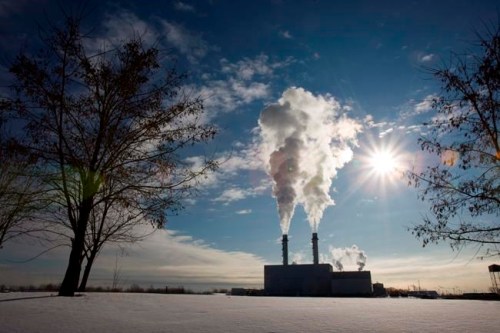
Smoke pours from the stacks at the Portlands Energy Centre in Toronto on Thursday January 15, 2009. THE CANADIAN PRESS/Frank Gunn

Swiss Re looked at 48 countries, as well as North America and the European Union as a whole, to try to assess the economic effects of climate change under different scenarios.

If temperatures rise by about 2.6 degrees Celsius, considered to be the most likely scenario under current climate policies, the global economy can expect to see a drop in GDP of 10 per cent within the next 30 years, the study says.

In Canada, the hit would be about seven per cent. Given the size of the economy, that means the country would be about $140 billion poorer than it would be if there were no climate change.

That’s almost as much as this fiscal year’s projected federal deficit of just under $155 billion.

Costs would come from reduced agricultural output, effects on human health,lowerlabour productivity, consequences of a rising sea level, tourism losses and increased household energy demands.

Even if the world is able to bring global warming to within the two-degree limit proposed by the Paris agreement, the study concludes the economic loss would still be about three per cent, or about $600 million, in Canada.

“(Climate change) is the No. 1 risk. There’s no question about it,” Haegeli said.

The good news is that Swiss Re concludes Canada is the fifth-best country in the world when it comes to resiliency. That’s due to our northern latitude and advanced economy and infrastructure.

The study was released on the opening day of a virtual meeting of world leaders convened by U.S. President Joe Biden.

Prime Minister Justin Trudeau announced at the meeting that Canada has increased its goal of reducing greenhouse gas emissions to at least 40 per cent of 2005 levels over the next nine years. The previous target was 36 per cent.

As well as measures that directly cut emissions, governments and corporations have to be much more open about their exposure to climate risks, Haegeli suggested. Many companies have promised their net emissions will be reduced to zero, but few have explained how.

“More needs to be done in the private sector,” he said. “We need to have more regular reporting about how private companies are going to achieve their climate goals.”

Companies also need to release more information on how the fight against climate change will affect their operations, he said. The report concludes a carbon tax of $125 a tonne would cut earnings in North American’s energy sector by 60 per cent.

Haegeli said the world has to get used to factoring climate into all its decisions.

“You need to take climate change into the public balance sheet.”

This report by The Canadian Press was first published April 22, 2021.

— Follow at @row1960 on Twitter

Report Error Submit a Tip

More Stories

Letters, Nov. 2

6 minute read 2:00 AM EST

Post-election reflection

The civic election offered both predictable and surprising results. The re-election of Mayor Scott Gillingham and the defeat of Transcona councillor Russ Wyatt were anticipated.

What was surprising was that, in addition to Wyatt, three other incumbents lost their bids for re-election. Devi Sharma (Old Kildonan), Ross Eadie (Mynarski) and Shawn Dobson (St. James) all went down to defeat, and it is clear to me their replacements will bring stronger voices to city hall.

A total of nine new councillors is a seismic shift in Winnipeg civic politics, not seen since the establishment of the 15-member council some 35 years ago. What is most interesting is the political leanings of the new councillors and how they will work with Mayor Gillingham.

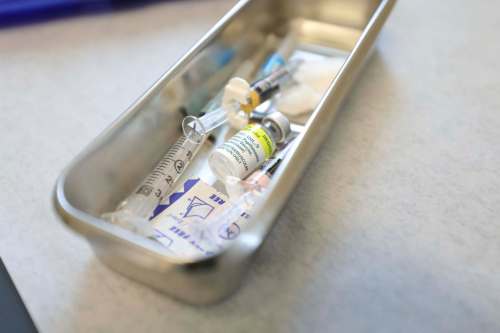
Why are Manitoba's school immunization programs so far from achieving herd immunity?

Maggie Macintosh  26 minute read Preview

Why are Manitoba's school immunization programs so far from achieving herd immunity?

Maggie Macintosh  26 minute read Saturday, May. 1, 2021

Sometimes, neither a lollipop nor a dinosaur sticker is enough to convince someone to get a needle.

Dr. Michele Feierstein, a pediatrician for more than 35 years, knows that all too well.

Feierstein has given thousands of immunizations to young patients throughout her career, but she has also had her fair share of difficult conversations with parents who are vaccine-hesitant or outright anti-vaxxers.

She does not bar families who have lukewarm feelings about or adamant views against immunization, whether they be rooted in misinformation, distrust, religious belief, or any other reason, from her practice at the Manitoba Clinic.

Read
Saturday, May. 1, 2021

Deluxe apartment tower taking shape in Tuxedo

Ben Waldman 4 minute read Preview

Deluxe apartment tower taking shape in Tuxedo

Ben Waldman 4 minute read Monday, Aug. 22, 2022

The owners of a shopping strip in the city’s wealthiest neighbourhood have identified the site of a longtime gas station on Corydon Avenue as an untapped residential resource.

Read
Monday, Aug. 22, 2022

Another embarrassing loss: Arniel

Mike McIntyre 7 minute read Preview

Another embarrassing loss: Arniel

Mike McIntyre 7 minute read Yesterday at 6:15 PM EST

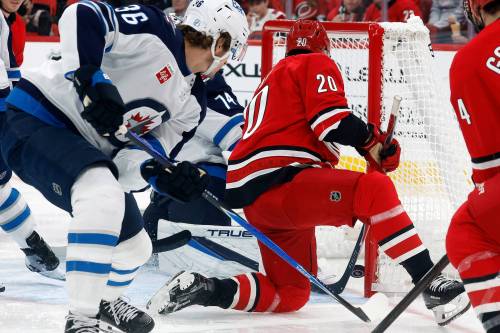
RALEIGH — No sticks were smashed. No walls punched. And nary a naughty word was uttered.

Instead, the Winnipeg Jets filed off the ice here at Lenovo Center on Sunday afternoon much like they’d just played the preceding game against the Carolina Hurricanes — with no emotion, no passion, no urgency.

You’d have thought yet another loss, this one in truly humiliating fashion and a ninth consecutive overall, might have triggered something.

Anything.

Read
Yesterday at 6:15 PM EST

Climate change to drain GDP more than COVID: study

Bob Weber, The Canadian Press 3 minute read Preview

Climate change to drain GDP more than COVID: study

Bob Weber, The Canadian Press 3 minute read Thursday, Apr. 22, 2021

Canada will be more than $100 billion poorer by 2050 if the world doesn't work harder to fight climate change, says one of the world's largest insurers.

That anticipated drop in GDP is much higher than the economic effect the COVID-19 pandemic is projected to have on the country's gross domestic product, said Jerome Haegeli, chief economist for Swiss Re, a multinational corporation that insures insurance companies, large corporations and governments.

"That's huge," Haegeli said from Zurich on Thursday.

Swiss Re looked at 48 countries, as well as North America and the European Union as a whole, to try to assess the economic effects of climate change under different scenarios.

Read
Thursday, Apr. 22, 2021

Expect a reasonable approach to keep Manitoba’s minimum wage out of cellar

Tom Brodbeck 5 minute read Preview

Expect a reasonable approach to keep Manitoba’s minimum wage out of cellar

Tom Brodbeck 5 minute read Tuesday, May. 31, 2022

The devil will be in the details when it comes to how much the Stefanson government will increase the minimum wage in 2022 under proposed legislation that’s expected to become law this week.

My prediction: government will boost the base wage by at least $1.10 an hour this year.

As expected, the Stefanson government plans to alter its inflation-based formula for setting the minimum wage, which now stands at $11.95 an hour. Normally, the base wage is indexed to the previous year’s rate of inflation. That’s sound policy during normal times. However, with inflation growing at rates not seen in more than 30 years, an immediate adjustment is required to ensure minimum-wage earners don’t lose purchasing power.

Conservative governments in Saskatchewan, Ontario and New Brunswick have all announced significant increases to their base wages in 2022, putting pressure on the Stefanson government to follow suit. Failure to do so would see Manitoba’s minimum wage (previously scheduled to rise 40 cents an hour to $12.35 on Oct. 1) rank lowest in the country.

Read
Tuesday, May. 31, 2022