Alberta considering its options after Supreme Court ruling on carbon tax: Kenney

Advertisement

Advertise with us

EDMONTON - Alberta Premier Jason Kenney says he hopes the Supreme Court decision upholding Ottawa’s right to levy a carbon tax on provinces doesn’t open the door to federal overreach in other areas.

Read this article for free:


By clicking the button above, an account will be created and you will begin to receive some of our recommended newsletters. You may opt out of any newsletter by visiting your Email and Communication Preferences page or by clicking "unsubscribe" at the bottom of any email.

or

Already have an account? Log in here »

To continue reading, please subscribe:

Digital Subscription

One year of digital access for only $1.44 a week*

  • Enjoy unlimited reading on winnipegfreepress.com
  • Read the E-Edition, our digital replica newspaper
  • Access News Break, our award-winning app
  • Play interactive puzzles

*Billed as $5.77 plus GST every four weeks. After 52 weeks, price increases to the regular rate of $19.95 plus GST every four weeks. Offer available to new and qualified returning subscribers only. Cancel any time.

To continue reading, please subscribe:

Add Free Press access to your Brandon Sun subscription for only an additional

$1 for the first 4 weeks*

  • Enjoy unlimited reading on winnipegfreepress.com
  • Read the E-Edition, our digital replica newspaper
  • Access News Break, our award-winning app
  • Play interactive puzzles
Start now

*Your next Brandon Sun subscription payment will increase by $1.00 and you will be charged $17.95 plus GST for four weeks. After four weeks, your payment will increase to $24.95 plus GST every four weeks.

Hey there, time traveller!
This article was published 25/03/2021 (2047 days ago), so information in it may no longer be current.

EDMONTON – Alberta Premier Jason Kenney says he hopes the Supreme Court decision upholding Ottawa’s right to levy a carbon tax on provinces doesn’t open the door to federal overreach in other areas.

“While we are disappointed with this decision, we have to respect that it’s a majority decision of the Supreme Court of Canada,” Kenney told a news conference Thursday.

“The best we can hope for is that the Supreme Court has invented a one-time-only carbon pricing exception to the Constitutional order.

Alberta Premier Jason Kenney listens as the 2021 budget is delivered in Edmonton Alta, Thursday, February 25, 2021. Alberta Premier Jason Kenney says he hopes the Supreme Court decision upholding Ottawa’s right to levy the carbon tax doesn’t open the door to federal overreach in other areas. THE CANADIAN PRESS/Jason Franson

“We’ll continue to fight to defend our exclusive provincial power to regulate our resource industries.”

Kenney said his government will now consider its options, but the guiding principle will be to impose the least cost and hardship on consumers and Alberta industries.

Asked if Alberta will resurrect a provincial carbon tax, Kenney said, “We are going to consult with Albertans and also talk to our allied provinces to determine the best way forward to protect jobs and the economy in Alberta, (and) to minimize the costs of any future policies on this province.”

The high court, in a 6-3 decision, ruled that climate change is a critical threat to the globe and that Canada cannot effectively combat it if each province can go its own way on greenhouse gas emissions.

It was responding to lower court challenges of the tax by Alberta, Saskatchewan, and Ontario.

The dispute revolved around the right of the federal government to legislate on matters of national interest versus provincial rights to develop and manage their natural resources.

Kenney’s United Conservative government campaigned and won the 2019 election around a centrepiece promise to scrap the Alberta NDP consumer carbon tax, which brought in $2 billion a year, most of it returned in rebates with the rest used for green initiatives.

Kenney labelled the NDP tax expensive, ineffective, and unfairly imposed on Albertans without prior notification.

His first bill as premier was to scrap the NDP tax, prompting Ottawa to impose its own fee at the start of 2020.

The federal levy is at $30 a tonne, heading up to $40 a tonne this year and then $50 a tonne by 2022, delivering at that time a projected $2.2 billion from Albertans. About 90 per cent of that levy goes back to Albertans in rebates.

Instead, the Alberta government has focused on taxing heavy emitters to produce revenue to further develop green technologies, calling that a fairer system than charging consumers who need to heat their homes or gas up their cars.

University of Calgary economist Trevor Tombe said the court decision can work for both Alberta and the nation.

A cross-Canada consumer tax, he said, would allow Canada to meet its climate targets while ensuring heavy emitters, such as Alberta’s fossil fuel industries, are not saddled with the lion’s share of the fees.

Tombe said a more level playing field would ease trade friction among provinces by reducing incentives for businesses to leave one jurisdiction to shop for a better green deal in another.

“That matters economically because differences in policy can distort economic activity, shift where businesses are located and that can potentially lower Canada’s productivity.”

Political scientist Duane Bratt said the court decision is another setback on the energy file for a premier who won in 2019 on a promise to “fight back” against those who would impede Alberta’s foundational oil and gas business.

Kenney has since put $1.3 billion into the Keystone XL oil pipeline expansion, only to see it cancelled by the U.S. government.

He created a “war room” called the Canadian Energy Centre to challenge false reports on the industry only to see it get caught up in controversies such as a Tweet-fight with the New York Times and more recently a petition campaign against a children’s Bigfoot cartoon.

Kenney also launched a public inquiry into foreign funding of those seeking to discredit oil and gas.

That inquiry, led by forensic accountant Steve Allan, has gone over time and over budget while being criticized for soliciting reports said to rely on junk climate science and conspiracy theories.

“Since (the 2019 Alberta election) I can’t identify a moment where they (the UCP) have won,” said Bratt, with Mount Royal University in Calgary.

Opposition NDP Leader Rachel Notley, who brought in the original Alberta carbon tax as premier, said Kenney’s “fight back” strategy has been a smoke-and-mirrors show to find scapegoats and divert attention from the fact he can’t adapt to the new energy economy.

“There’s been a lot of hot air from this premier before he was elected and since he was elected,” said Notley. “More and more the hot air is clearing and there is little of substance to see behind it.”

This report by The Canadian Press was first published March 25, 2021.

Report Error Submit a Tip

More Stories

Truckers convoy: How a TikToker, oil advocates and a Wexit organizer helped fire up the ‘Freedom Rally’ that’s heading to Ottawa

Kieran Leavitt - Edmonton Bureau,Alex McKeen - Vancouver Bureau, Toronto Star 7 minute read Preview

Truckers convoy: How a TikToker, oil advocates and a Wexit organizer helped fire up the ‘Freedom Rally’ that’s heading to Ottawa

Kieran Leavitt - Edmonton Bureau,Alex McKeen - Vancouver Bureau, Toronto Star 7 minute read Monday, Jan. 24, 2022

A GoFundMe raised more than $3 million to help the truckers with fuel, food and lodging.

Read
Monday, Jan. 24, 2022

Canada tops Dominican Republic in pre-qualifier

Jason Hills, The Canadian Press 4 minute read Preview

Canada tops Dominican Republic in pre-qualifier

Jason Hills, The Canadian Press 4 minute read Sunday, Nov. 17, 2019

EDMONTON - Canada's women's basketball team put its depth on display Sunday in a dominant 110-60 victory over the Dominican Republic in the final game of the FIBA Olympic pre-qualifying tournament.

All 12 players hit the scoresheet, including six in double digits, to help the Canadians finish 3-0 at the tournament and advance to the next Olympic qualifier in February.

Sami Hill led the way with 16 points, three rebounds, two assists and three steals, while 20-year-old Shaina Pellington recorded 14 points. Bridget Carleton and Jamie Scott had 13 points each and Ruth Hamblin had 11 points and five rebounds.

"We got to roll our whole lineups through, and it was fun when we got going," said Canada's coach Lisa Thomaidis. "It was nice to see different lineup contributing and building chemistry.

Read
Sunday, Nov. 17, 2019

Today’s horoscope

Georgia Nicols 4 minute read Preview

Today’s horoscope

Georgia Nicols 4 minute read 2:00 AM EST

MOON ALERT: There are no restrictions to shopping or important decisions today. The moon is in Leo.

ARIES (March 21-April 19)

Avoid disputes about shared property, inheritances, taxes, debt and insurance issues. This might also include shared expenses. Just coast. Parents should be vigilant about their kids. Social plans might suddenly change. It’s a good day to make art.

TAURUS (April 20-May 20)

Read
2:00 AM EST

B.C. declares state of emergency over wildfires

Amy Smart, The Canadian Press 5 minute read Preview

B.C. declares state of emergency over wildfires

Amy Smart, The Canadian Press 5 minute read Wednesday, Jul. 21, 2021

VANCOUVER - British Columbia's public safety minister has declared a provincial state of emergency over the growing wildfire threat to prepare for potential mass evacuations and help secure accommodation that might be needed by evacuees.

Mike Farnworth said he made the decision based on information from officials that weather conditions will lead to more severe fire behaviour and the potential for more evacuations.

"In a briefing last night, I received word that we'll be facing a few days of very difficult weather in the Interior," Farnworth said in a statement.

The state of emergency goes into effect on Wednesday and gives government agencies, the fire commissioner and the RCMP the authority to take whatever action they deem is necessary to fight the wildfires and protect people and communities.

Read
Wednesday, Jul. 21, 2021

Court ruling concludes Canadian Wheat Board saga

Laura Rance-Unger 4 minute read Preview

Court ruling concludes Canadian Wheat Board saga

Laura Rance-Unger 4 minute read Yesterday at 2:01 AM CDT

It remains to be seen whether the recent court ruling in a lawsuit filed after Canadian Wheat Board’s dissolution in 2012 puts the whole debate to rest, as some no doubt hope.

But either way, the dust has settled on the post-CWB world. The sun still rises and a new generation of farmers on the land only knows by name an institution that for generations influenced every aspect of Prairie grain farming.

The first Rural Revival column I wrote for this newspaper more than 30 years ago was about a thousand farmers from Western Canada demonstrating in support of the Wheat Board. It was in the aftermath of the Western Grain Marketing Panel report, one of several efforts that eventually included a plebiscite to help the federal government decide what to do about a vocal minority of farmers who wanted marketing “freedom.”

The polls at the time suggested about two-thirds of farmers were comfortable enough with the single-desk system for food wheat and barley to keep it around. It served as a counterbalance to canola, which they sold on the open market. They essentially had a dual market.

Read
Yesterday at 2:01 AM CDT

The long and winding road

Editorial 4 minute read Preview

The long and winding road

Editorial 4 minute read Yesterday at 2:01 AM CDT

As theatre goes, it sent a strong message.

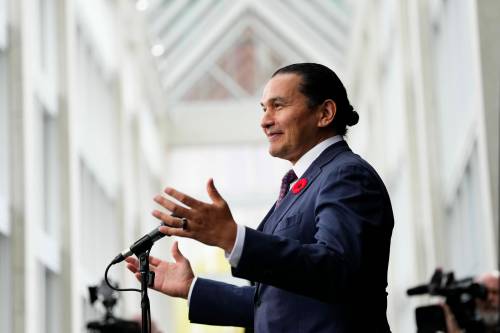
Manitoba Premier Wab Kinew, standing in front of microphones and television cameras, holding up his Indigenous status card and saying that he didn’t feel Canada should have “a race-based form of identification in this country, but that is a reality,” adding that it was time to abolish the Indian Act.

“I think it’s time to abolish the Indian Act, get rid of the Indian Act, move past the Indian Act, and it needs to be done with First Nations people and First Nations governments, of course. I think it’s long overdue that we have a relationship with Indigenous Peoples in Canada that reflects who we are as Canadians today,” he said.

The Indian Act — the name alone suggests how out-dated and out of place the law has become. Originally dating from 1876, the law was put in place to “amend and consolidate the laws respecting Indians” and gave the Minister of the Interior the responsibility to “control and management of the reserves, lands, moneys and property of Indians in Canada.”

Read
Yesterday at 2:01 AM CDT