Indigenous leaders wish Pope’s acknowledgment of genocide was made on Canadian soil

Advertisement

Advertise with us

A member of the National Indian Residential School Circle of Survivors says it's good Pope Francis acknowledged that what happened in the schools amounted to genocide, but that he should have said it before he left Canada.

Read this article for free:


By clicking the button above, an account will be created and you will begin to receive some of our recommended newsletters. You may opt out of any newsletter by visiting your Email and Communication Preferences page or by clicking "unsubscribe" at the bottom of any email.

or

Already have an account? Log in here »

To continue reading, please subscribe:

Digital Subscription

One year of digital access for only $1.44 a week*

  • Enjoy unlimited reading on winnipegfreepress.com
  • Read the E-Edition, our digital replica newspaper
  • Access News Break, our award-winning app
  • Play interactive puzzles

*Billed as $5.77 plus GST every four weeks. After 52 weeks, price increases to the regular rate of $19.95 plus GST every four weeks. Offer available to new and qualified returning subscribers only. Cancel any time.

To continue reading, please subscribe:

Add Free Press access to your Brandon Sun subscription for only an additional

$1 for the first 4 weeks*

  • Enjoy unlimited reading on winnipegfreepress.com
  • Read the E-Edition, our digital replica newspaper
  • Access News Break, our award-winning app
  • Play interactive puzzles
Start now

*Your next Brandon Sun subscription payment will increase by $1.00 and you will be charged $17.95 plus GST for four weeks. After four weeks, your payment will increase to $24.95 plus GST every four weeks.

Hey there, time traveller!
This article was published 02/08/2022 (1549 days ago), so information in it may no longer be current.

A member of the National Indian Residential School Circle of Survivors says it’s good Pope Francis acknowledged that what happened in the schools amounted to genocide, but that he should have said it before he left Canada.

Ken Young, who is the former Manitoba regional chief of the Assembly of First Nations, says he believes the Pope failed to make the acknowledgment during his Canadian visit last week because Canadian Catholic officials failed to brief him properly.

Francis apologized multiple times throughout the week for abuses of Catholic-run residential schools, but didn’t use the word “genocide” until he was asked by reporters on his plane back to Rome if he accepted that members of the church participated in genocide.

Francis said the reason he did not say that on his apology visit was because he felt “genocide” was a technical term.

The Truth and Reconciliation Commission referred to residential schools as a form of cultural genocide when it released its final report in 2015, and since then, a number of Indigenous groups have amended this to say it was genocide.

Young says he believes Francis, when at the end of the Canadian visit, was free to express his own point of view.

“It’s good that he said it … but he should have said it when he was talking to people here in Canada, and in particular the First Nation survivors of Indian residential schools, and of course the Métis and Inuit,” Young said in a phone interview Monday in Winnipeg.

“I understood what he meant and why he said it. A lot of people would be surprised because a lot of people don’t appreciate and understand what genocide means within the meaning of the UN convention.”

Kenneth Deer, a member of the Mohawk Nation of Kahnawake, near Montreal, and a member of the Haudenosaunee External Relations Committee, said he felt the statement from the Pope aboard the papal plane was likely an accurate indication of what he feels.

“I thought his statement was amazing, I’m glad he said it. I wish he’d said it while he was in Canada instead of over the ocean,” Deer said.

“I think what you heard from the Pope at that time is what he really feels because he was talking off the cuff; all the other statements were prepared statements.”

Last year, after the Tk’emlups te Secwepemc First Nation in British Columbia said ground-penetrating radar detected what are believed to be the remains of 215 Indigenous children at a former residential school in Kamloops, Toronto Metropolitan University (formerly Ryerson University) law professor Pamela Palmater said the United Nations Convention on the Prevention and Punishment of the Crime of Genocide applies to Canada’s actions.

She said the convention states that a genocide is committed when members of a group are killed, subjected to serious physical or mental harm, put in conditions to destroy them, become victims to measures intended to prevent births or have their children forcibly transferred to another group.

Guelph University professor David MacDonald said at the time that the forcible transfer of children, which is part of the UN convention, occurred in the system of residential schools in Canada.

Deer said the Pope’s acknowledgment is important given many people were arguing against the findings of the Truth and Reconciliation Commission that the residential schools were a cultural genocide.

“But now we have the Pope, the head of the Catholic Church, saying yes it’s a genocide, so that’s why it’s very important,” Deer said.

Young, meanwhile, said he doesn’t think there’s a difference between “genocide” and “cultural genocide.”

“It’s either genocide or it’s no genocide,” Young said. “That’s the way I see it. It’s kind of black or white, I guess, but that’s my view.”

This report by The Canadian Press was first published Aug. 2, 2022.

Report Error Submit a Tip

The Free Press acknowledges the financial support it receives from members of the city’s faith community, which makes our coverage of religion possible.
More Stories

Railways report more accidents with dangerous goods

Dylan Robertson 6 minute read Preview

Railways report more accidents with dangerous goods

Dylan Robertson 6 minute read Monday, Jan. 20, 2020

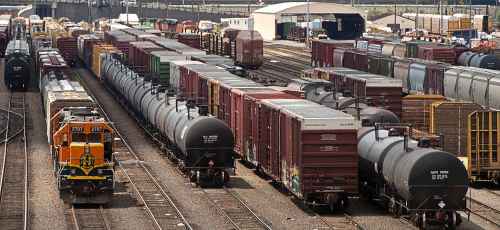
OTTAWA — The number of rail accidents involving dangerous goods more than doubled in Canada in 2018.

There were 25 accidents involving dangerous goods in 2018, involving one death, according to Transport Canada data published Monday.

There were 11 accidents recorded a year prior, and five in 2016.

These accidents involve dangerous goods — flammable or corrosive substances — that either exploded or leaked.

Read
Monday, Jan. 20, 2020

Director Schrader returns to silver screen with complex view of religion and belief

Alison Gillmor 4 minute read Preview

Director Schrader returns to silver screen with complex view of religion and belief

Alison Gillmor 4 minute read Thursday, Jun. 14, 2018

Bleak, wintry and rigorously controlled — until it’s not — this Book of Job-like drama from American filmmaker Paul Schrader looks at the challenges of faith.

The 71-year-old Schrader, known for scripting four Martin Scorsese films (including Taxi Driver and Raging Bull) and for directing his own (including American Gigolo, Affliction and Auto Focus), grew up in a strict Calvinist home — he famously did not see a film until he was 17 — and has always been drawn to stories of agonizing and uncertain redemption.

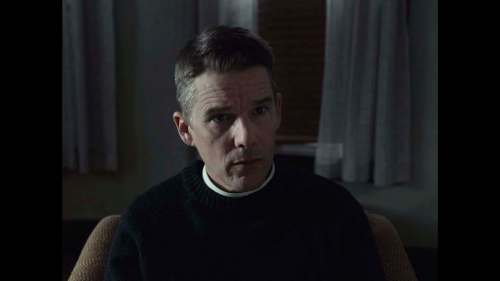
As the Rev. Toller (Ethan Hawke) wrestles with what it means to lead a righteous life in our badly broken world, his spiritual fate remains in doubt. It is certain, however, that First Reformed marks a cinematic rebirth for Schrader after recent disasters like The Canyons and Dog Eat Dog. Serious, complex and moving, this is not a perfect film, but even its flaws are powerful.

Toller is a solitary man who has come to the ministry late in life, after a family tragedy and a failed marriage. First Reformed, a historic church in upstate New York that was once a stop on the Underground Railroad, has since been reduced to an austerely beautiful tourist shop, more of a museum than a place of worship.

Read
Thursday, Jun. 14, 2018

Adult education should be the foundation of the North

Jim Silver 4 minute read 2:00 AM CDT

Major economic developments are, we are being told, coming to northern Manitoba, focusing on the port of Churchill and the railway system that leads to it, and the production and export via that port of various commodities. Many challenges, particularly environmental, lie along that path, and they deserve particularly serious consideration if any development is to proceed.

One aspect of northern development about which almost nothing has been said is: “Who will do the work in the north?”

For decades past and still today, great reliance has been placed on bringing skilled tradespeople and other skilled workers to northern Manitoba from the south. The result has been that not only has the bulk of corporate profits been drained south, but so too have wages. As a result, rates of poverty are higher and formal educational levels are lower in the north than elsewhere in Manitoba. This is obviously detrimental to the north and particularly to those who live in the north.

If northerners themselves are to benefit from economic development in the north by forming the skilled labour force that will be needed, then we will need more of those northerners to be educationally prepared to undertake training for skilled employment.

Brian Bowman wins mayoral battle

Aldo Santin and Mary Agnes Welch 5 minute read Preview

Brian Bowman wins mayoral battle

Aldo Santin and Mary Agnes Welch 5 minute read Thursday, Oct. 23, 2014

In the end, it wasn’t even close.

A mayoral race that was supposed to be a head-to-head battle between privacy lawyer Brian Bowman and former NDP MP and MLA Judy Wasylycia-Leis turned into a rout on election night. Wasylycia-Leis, the experienced politician, had held what looked like an unassailable lead for months, but Bowman, the outsider who promised Winnipeggers a better, prosperous future, chipped doggedly away at it.

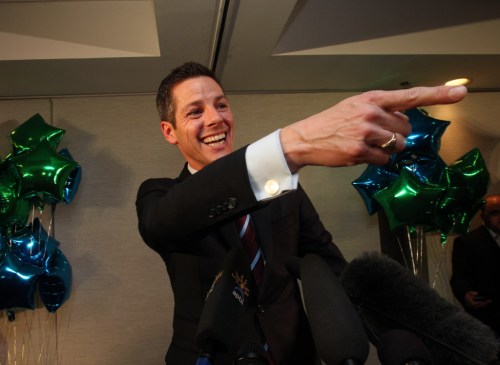
“I’m excited to tell you that positive change is coming to city hall,” Bowman told roaring supporters at the Inn At The Forks after making his way into the small ballroom accompanied by his wife and two young sons.

He said he hadn’t expecting such a landslide victory, but had believed that the campaign was building momentum.

Read
Thursday, Oct. 23, 2014

Prairie opportunists are knocking and prime minister should answer the door

Dan Lett 6 minute read Preview

Prairie opportunists are knocking and prime minister should answer the door

Dan Lett 6 minute read Tuesday, Oct. 29, 2019

In preparation for Halloween, Alberta Premier Jason Kenney and Saskatchewan Premier Scott Moe have spent an inordinate amount of time rattling their chains and howling like indignant spirits about the raw deal they are getting from the rest of the country.

In the wake of a federal election in which the governing Liberals failed to elect a MP in either province, Kenney and Moe are summoning apocalyptic visions of secession. We've heard a lot of that before but Western separatists, inspired by the Alberta and Saskatchewan first ministers, are warning everyone that this time it's serious.

Now, before anyone gets too spooked, it's important to remember that a good politician is — first and foremost — an opportunist. These are the folks with the pure political instinct to recognize a moment in which they can gain the upper hand and then seize on it like a ravenous dog on a bone. Imagine that, and you'll have a pretty clear picture of what Kenney and Moe are up to.

In short, the two premiers want two big-ticket items from Ottawa.

Read
Tuesday, Oct. 29, 2019

NDP introduces last-minute rent-hike bill, Tories say it will cause administrative nightmare

Carol Sanders 4 minute read Preview

NDP introduces last-minute rent-hike bill, Tories say it will cause administrative nightmare

Carol Sanders 4 minute read Yesterday at 7:29 PM CDT

A day before the legislative session ends, the NDP government introduced a bill to ensure landlords can’t charge tenants backpay for approved above-guideline rent increases.

Bill 59, the Residential Tenancies Amendment Act (2), would prohibit a landlord who has applied for a rent increase above the maximum permitted by regulation from charging tenants the new rate until it is approved.

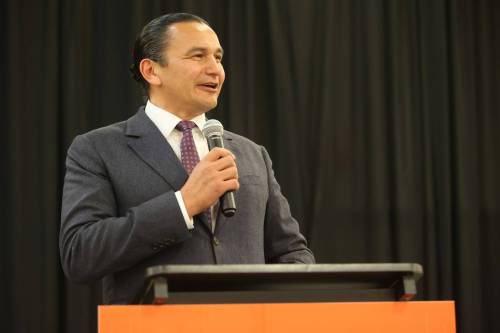
Premier Wab Kinew announced earlier this month that renters would not have to pay the increases until the provincial Residential Tenancies Branch hears landlords’ arguments and issues its decisions.

“We recently passed legislation in the house to make sure life will be more affordable,” Kinew said at a news conference on Oct. 20, referring to a new rent bill introduced in March and expected to become law before the session ends on Oct. 29. He was flanked by Winnipeg tenants facing rent increases of more than 50 per cent.

Read
Yesterday at 7:29 PM CDT