Manitoba residential school survivors set Alberta course to see Pope

Advertisement
Read this article for free:
or
Already have an account? Log in here »
To continue reading, please subscribe:
Digital Subscription
One year of digital access for only $1.44 a week*
- Enjoy unlimited reading on winnipegfreepress.com
- Read the E-Edition, our digital replica newspaper
- Access News Break, our award-winning app
- Play interactive puzzles
*Billed as $5.77 plus GST every four weeks. After 52 weeks, price increases to the regular rate of $19.95 plus GST every four weeks. Offer available to new and qualified returning subscribers only. Cancel any time.
To continue reading, please subscribe:
Add Free Press access to your Brandon Sun subscription for only an additional
$1 for the first 4 weeks*
- Enjoy unlimited reading on winnipegfreepress.com
- Read the E-Edition, our digital replica newspaper
- Access News Break, our award-winning app
- Play interactive puzzles
*Your next Brandon Sun subscription payment will increase by $1.00 and you will be charged $17.95 plus GST for four weeks. After four weeks, your payment will increase to $24.95 plus GST every four weeks.
Read unlimited articles for free today:
or
Already have an account? Log in here »
Hey there, time traveller!
This article was published 17/06/2022 (1594 days ago), so information in it may no longer be current.
A group of residential school survivors from Indigenous communities served by the Archdiocese of Saint Boniface will travel to Alberta to see Pope Francis speak when he visits the Prairie province in late July.
A total of 55 representatives, about seven from each community, will be selected by the chiefs and band councils from the communities to travel by bus to Alberta. Transportation and accommodations will be paid for by the archdiocese.
Survivors will come from Poplar River, Berens River, Bloodvein, Little Grand Rapids/Pauingassi, Hollow Water, Manigotagan and Sagkeeng/Fort Alexander.
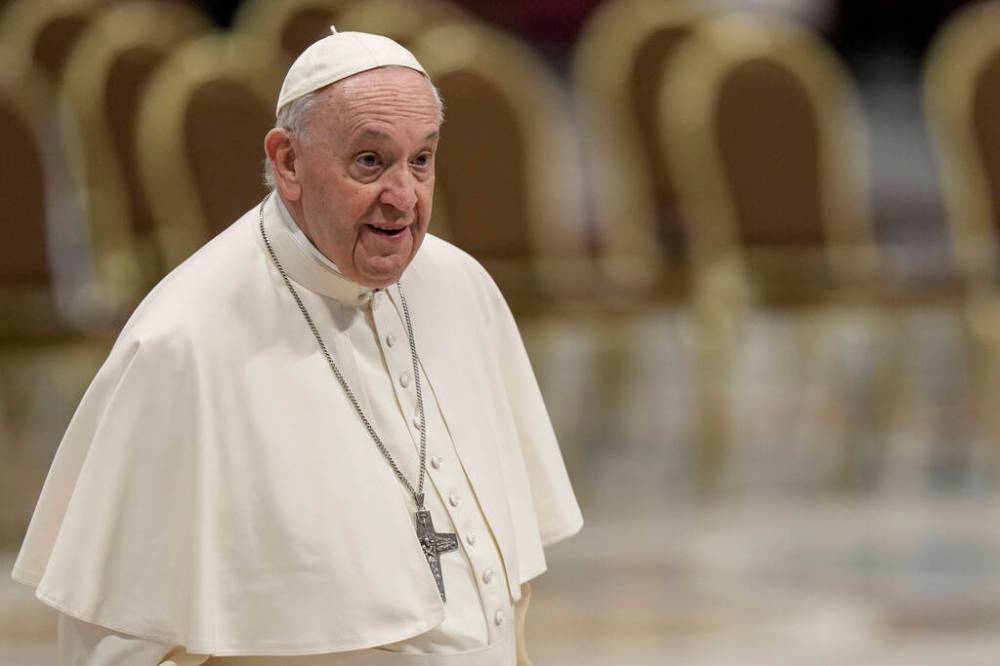
They will be accompanied by Archbishop Albert LeGatt, who said he looks forward to “spending time on the bus getting to know each other, to be with one another, to establish relationships.”
For LeGatt, the visit is an opportunity to highlight the “changing and improving quality of the relationships” between the Roman Catholic Church and Indigenous people in Canada.
The papal visit “is a gift that opens doors,” he said, adding the Pope is “carrying a message of reconciliation and walking in harmony” with Indigenous people.

LeGatt encouraged those unable to go to Alberta to see the Pope to follow along via the media, “to be present for those moments.”
After the Pope returns to Rome, Canadian Roman Catholics are invited “to inform ourselves, particularly from Indigenous voices and perspectives, to thus open ourselves up, to read Indigenous literature, to hear Indigenous stories, and to connect, one on one, with Indigenous people in our communities.”
The papal visit (during which Pope Francis will make stops in Edmonton, Quebec City and Iqaluit), LeGatt added, is “one step in the long journey of reconciliation which remains at hand.”
A spokesperson for the Archdiocese of Winnipeg said they are also making plans for taking residential survivors to Alberta, but nothing is finalized.
faith@freepress.mb.ca
The Free Press is committed to covering faith in Manitoba through our Religion in the News project. This reporting continues because readers like you step forward to fund it.
Donate now to support our reporting on religion.
Your donation is eligible for a charitable tax receipt.
BECOME A FAITH JOURNALISM SUPPORTER
John Longhurst has been writing for Winnipeg's faith pages since 2003. He also writes for Religion News Service in the U.S., and blogs about the media, marketing and communications at Making the News.
Our newsroom depends on a growing audience of readers to power our journalism. If you are not a paid reader, please consider becoming a subscriber.
Our newsroom depends on its audience of readers to power our journalism. Thank you for your support.
Related Articles
Commonwealth must confront past: Prince Charles


Advertisement Advertise With Us
Advertisement Advertise With Us
The Free Press acknowledges the financial support it receives from members of the city’s faith community, which makes our coverage of religion possible.