NDP leader would back federal intervention in court challenge to Quebec’s Bill 21

Advertisement

Advertise with us

OTTAWA - Jagmeet Singh says he would support federal intervention in a court challenge to a Quebec law known as Bill 21, which bans teachers and some other public-sector workers from wearing religious symbols on the job.

Read this article for free:


By clicking the button above, an account will be created and you will begin to receive some of our recommended newsletters. You may opt out of any newsletter by visiting your Email and Communication Preferences page or by clicking "unsubscribe" at the bottom of any email.

or

Already have an account? Log in here »

To continue reading, please subscribe:

Digital Subscription

One year of digital access for only $1.44 a week*

  • Enjoy unlimited reading on winnipegfreepress.com
  • Read the E-Edition, our digital replica newspaper
  • Access News Break, our award-winning app
  • Play interactive puzzles

*Billed as $5.77 plus GST every four weeks. After 52 weeks, price increases to the regular rate of $19.95 plus GST every four weeks. Offer available to new and qualified returning subscribers only. Cancel any time.

To continue reading, please subscribe:

Add Free Press access to your Brandon Sun subscription for only an additional

$1 for the first 4 weeks*

  • Enjoy unlimited reading on winnipegfreepress.com
  • Read the E-Edition, our digital replica newspaper
  • Access News Break, our award-winning app
  • Play interactive puzzles
Start now

*Your next Brandon Sun subscription payment will increase by $1.00 and you will be charged $17.95 plus GST for four weeks. After four weeks, your payment will increase to $24.95 plus GST every four weeks.

Hey there, time traveller!
This article was published 14/12/2021 (1779 days ago), so information in it may no longer be current.

OTTAWA – Jagmeet Singh says he would support federal intervention in a court challenge to a Quebec law known as Bill 21, which bans teachers and some other public-sector workers from wearing religious symbols on the job.

The NDP leader said Tuesday he always believed the law was discriminatory but has hardened his stance on court action following the case of a teacher in Chelsea, Que., who was reassigned because she wears a hijab.

Fatemeh Anvari, a Grade 3 teacher, was told she could no longer teach in a classroom because her hijab contravened the Quebec law.

New Democratic Party leader Jagmeet Singh responds to a question during a news conference in Ottawa on December 7, 2021. THE CANADIAN PRESS/Adrian Wyld

Parents and children, along with community members, have protested outside the school to voice opposition to the law and express support for the teacher.

Speaking at an Ottawa news conference, Singh said it was unfair that a Muslim woman who wears a hijab would not be allowed to teach in Quebec, but her brother, who does not wear any religious symbols, would be permitted to do the job.

“Given what we have seen in Chelsea, given that we saw a woman that was removed from the classroom just because of the way she looks … now is the moment to be very clear and say if this case gets to the federal level then the federal government should support the three million Quebecers who are opposed to this law and opposed to discrimination,” he said.

Singh has previously criticized the law but stopped short of calling for federal intervention in the past.

The NDP leader, who is Sikh and wears a turban, said Tuesday he has experienced discrimination himself.

“The federal government should support the Quebecers who are fighting this discrimination in court,” he added.

Prime Minister Justin Trudeau said earlier this week that he deeply disagrees with Bill 21 and his government has not ruled out intervening in a legal battle against the law “at some point in time.”

Tory Leader Erin O’Toole has said the issue is a matter for Quebec.

At a news conference on Tuesday, Bloc Québécois Leader Yves-François Blanchet said in French: “We understand in Quebec, once again, that the federal parties are unanimously against Quebec on the issue of secularism.”

This report by The Canadian Press was first published Dec. 14, 2021.

Report Error Submit a Tip

The Free Press acknowledges the financial support it receives from members of the city’s faith community, which makes our coverage of religion possible.

More Stories

Railways report more accidents with dangerous goods

Dylan Robertson 6 minute read Preview

Railways report more accidents with dangerous goods

Dylan Robertson 6 minute read Monday, Jan. 20, 2020

OTTAWA — The number of rail accidents involving dangerous goods more than doubled in Canada in 2018.

There were 25 accidents involving dangerous goods in 2018, involving one death, according to Transport Canada data published Monday.

There were 11 accidents recorded a year prior, and five in 2016.

These accidents involve dangerous goods — flammable or corrosive substances — that either exploded or leaked.

Read
Monday, Jan. 20, 2020

La lang di Michif ta-pashipiikan

By Melissa Martin and Ruth Bonneville 24 minute read Preview

La lang di Michif ta-pashipiikan

By Melissa Martin and Ruth Bonneville 24 minute read Saturday, Sep. 25, 2010

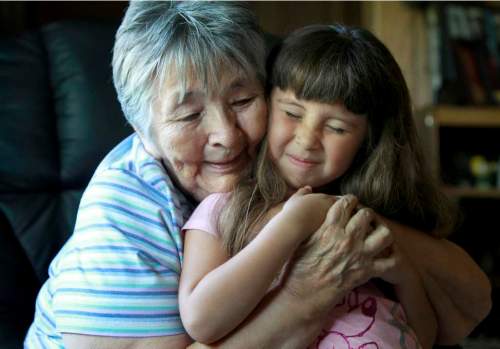
CAMPERVILLE, MAN. -- Seated in the living room of her tiny, impeccably ordered house, Grace Zoldy takes a little girl's hand and begins a language lesson.

"La viande," the woman says, her hazel eyes dancing under a fringe of silver bangs. "That means meat."

"Deux poisson," she says next, a nod to the goldfish circling a nearby tank. The little girl likes to come watch them. "Two fish."

The sounds are familiar to anyone who took elementary-school French. But Zoldy is not French, and her words aren't either: they are something rare, something studied in universities in countries that Grace, when she was learning these words as a toddler in Camperville, didn't know existed.

Read
Saturday, Sep. 25, 2010

Manitobans head to the polls as municipal election wraps up

By Matthew Frank 4 minute read Preview

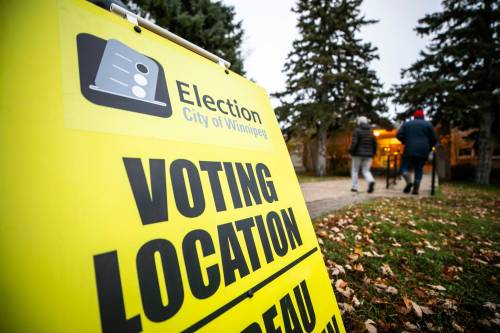
Manitobans head to the polls as municipal election wraps up

By Matthew Frank 4 minute read Updated: 12:33 PM CDT

Alison Ivey has never missed voting in an election.

Shortly after 8 a.m., she lined up at Strathmillan School, in Silver Heights, to cast her vote on the final day of the Manitoba municipal election.

Ivey, 69, said she’s hopeful Winnipeg will choose the right people to serve the city. Homelessness was the biggest issue for Ivey when deciding who she would select on the ballot.

“I think it’s a shame in this day and age that we still that problem. It should have been addressed years ago,” she said.

Read
Updated: 12:33 PM CDT

Lula’s historic Brazilian election victory

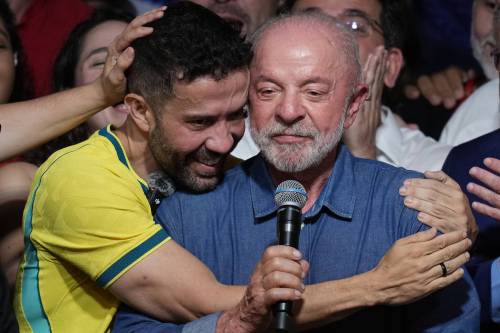
Peter McKenna 5 minute read Preview

Lula’s historic Brazilian election victory

Peter McKenna 5 minute read Yesterday at 2:01 AM CDT

This was supposed to go down as one of the closest presidential elections in Brazilian history — until it wasn’t. In the end, 80-year-old leftist President Luiz Inácio (Lula) da Silva of the Workers Party bested (by some four million votes) Flávio Bolsonaro, the hard-right Liberal Party leader and senator, by a lopsided 3.5 per cent of the popular vote.

Speaking of Brazilian history, it rarely happens that the second-place finisher in the first round ends up winning the second, run-off contest in such a decisive manner. More significant, Lula has now won an unprecedented (non-consecutive) fourth term as an elected Brazilian president.

While Bolsonaro has waffled on making a concession speech (like his father in 2022), the writing on the wall shows clearly that he lost badly. He has evidently taken issue with a ruling by a justice of the Supreme Court that extended polling hours country-wide by an additional two hours in light of high voter turnout and other interruptions.

Flávio’s supporters, many galvanized around the “never Lula” camp, were desperate for change — even if it meant the kind of change that could turn Brazil on its head. So Lula resorted to one of the oldest political tricks in the campaign handbook — namely, using fear of an anti-democratic Bolsonaro to swing voters to his side (along with a host of last-minute announcements involving financial incentives to Brazilians). With a right-leaning Congress, voters were understandably worried that Flávio would go about systematically dismantling Brazil’s democratic ethos and institutions.

Read
Yesterday at 2:01 AM CDT

The importance of political trust

Paul G. Thomas 5 minute read 2:00 AM CDT

Political trust refers to people’s positive expectations that the political system, the institutions which comprise it and the actors who participate in its operations will do what they have said they will do, that they will act in the public interest and that they will conduct themselves in a manner which does not disrespect the democratic process.

Political scientists use the terms “diffuse” and “specific” to differentiate between trust in the political system as a whole, and trust in individual actors. Asked to rank occupations in terms of trustworthiness, respondents typically place politicians at or near the bottom of the list. Individuals who have first-hand experience dealing with politicians tend to have more positive viewpoints.

Unfortunately, systematic surveys on trust levels in Manitoba are rare, so any discussion must be based on national results.

Beginning in the late 1960s, a slow erosion of trust in Canadian politicians and political institutions began, with only occasional, short-lived upticks. In the summer of 2025, a national Environics survey found that only a minority of Canadians had a lot of trust in political actors and institutions, such as the political parties and Parliament. The survey report also revealed that trust levels had held steady over the past 15 years.

Remembering Canada’s first national internment

Peter Manastyrsky 4 minute read Preview

Remembering Canada’s first national internment

Peter Manastyrsky 4 minute read 2:00 AM CDT

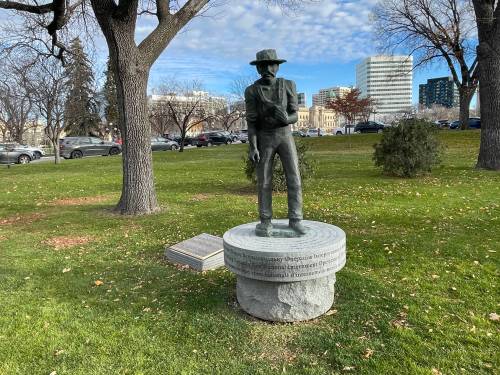
Canada’s first national internment operation, from 1914 to 1920, is a part of Canadian history that is at times forgotten. Oct. 28 marks the anniversary of the Canadian government passing an order-in-council (essentially an executive decree) in 1914, under the War Measures Act. The order legally authorized the arrest and internment of Canadian civilians as enemy aliens during the First World War, and thousands of Canadians were sent to internment camps across the country.

The war of 1914-18 created difficulty for new Canadians hoping to become naturalized citizens. Many new immigrants to Canada came from regions of Europe that was under the rule of the Austro-Hungarian Empire at the start of the First World War.

The Canadian government, under Prime Minister Sir Robert Borden introduced internment camps throughout Canada, fearing that many eastern European immigrants would have some form of affiliation with the Austro-Hungarian Empire.

Even though there was never any evidence of disloyalty, people were imprisoned needlessly and forced to do heavy labour in 24 internment camps throughout Canada’s frontier hinterland. There were two identified internment camps in Manitoba, one in Brandon and the other in Winnipeg.

Read
2:00 AM CDT