Archbishop, Manitoba Liberal leader meet on residential schools apology

Advertisement
Read this article for free:
or
Already have an account? Log in here »
To continue reading, please subscribe:
Digital Subscription
One year of digital access for only $1.44 a week*
- Enjoy unlimited reading on winnipegfreepress.com
- Read the E-Edition, our digital replica newspaper
- Access News Break, our award-winning app
- Play interactive puzzles
*Billed as $5.77 plus GST every four weeks. After 52 weeks, price increases to the regular rate of $19.95 plus GST every four weeks. Offer available to new and qualified returning subscribers only. Cancel any time.
To continue reading, please subscribe:
Add Free Press access to your Brandon Sun subscription for only an additional
$1 for the first 4 weeks*
- Enjoy unlimited reading on winnipegfreepress.com
- Read the E-Edition, our digital replica newspaper
- Access News Break, our award-winning app
- Play interactive puzzles
*Your next Brandon Sun subscription payment will increase by $1.00 and you will be charged $17.95 plus GST for four weeks. After four weeks, your payment will increase to $24.95 plus GST every four weeks.
Read unlimited articles for free today:
or
Already have an account? Log in here »
Hey there, time traveller!
This article was published 15/07/2021 (1936 days ago), so information in it may no longer be current.
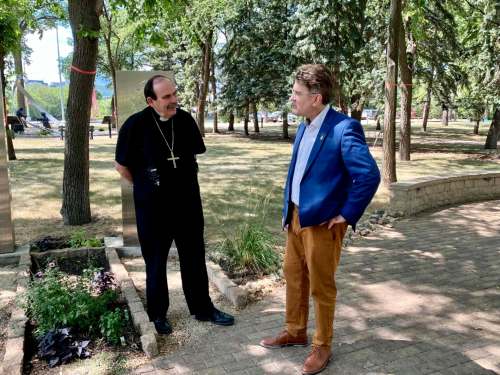
For Archbishop Albert LeGatt, it was “a meeting of kindred spirits.”
That’s how the leader of the Roman Catholic Archdiocese of St. Boniface described his July 9 discussion with Dougald Lamont, leader of the Manitoba Liberal party.
The meeting came about after Lamont issued a public letter to the archbishop asking him to consider a request for the Pope to “recognize the wrongs and harms of the past that were the result of residential schools, and ask First Nations in Canada, as well as other Indigenous peoples, forgiveness for the harms that were done.”

This would be an “incredibly an important act of healing, reconciliation and justice,” Lamont wrote.
In response, the archbishop issued a public invitation to Lamont, along with invitations to Nahanni Fontaine (NDP MLA for St. Johns) and Dan Vandal (Winnipeg Liberal MP and northern affairs minister).
The meeting with Lamont was positive, the archbishop said, adding the two agreed to keep working at the issue together.
Their goal, LeGatt said, “is to bring people together to establish right relationships so we can walk together in a good way and a good spirit.”
The two discussed is the place of forgiveness in the process, along with Lamont’s idea of how the biblical Year of Jubilee from the book of Leviticus — a time when the debts of the poor were to be cancelled — could be applied to the context of the relationship between the Roman Catholic Church and Indigenous people.
“That could mean how the Catholic Church could ease the burdens and blockages that are stopping peace, harmony and co-operation between Indigenous and non-Indigenous people,” the archbishop said.
“For Catholics, that means asking for forgiveness, not just for historical figures in the past, but the whole of the church today,” he said, adding, “We were part of a fundamentally flawed and sinful system that brought evil, suffering and damage into people’s lives.”
For Lamont, the meeting affirmed his belief the archbishop “really gets it.”
“He has tremendous sympathy, understanding, and commitment to reconciliation, healing, and justice in order to recognize the wrongs of the past,” the Liberal leader said, adding the archbishop believes a papal apology is appropriate.

Lamont said he is interested in reaching out to other Christian denominations and “governments and churches need to work together” to promote reconciliation and healing.
“This is work that we all share, all Canadians and all Manitobans,” Lamont said, adding what is required “is more than an apology. Justice and reconciliation means mending and changing our relationship to Indigenous peoples in ways that change lives for the better.”
It also means making amends “for healing to be a possibility.”
Discussions are still underway between the archbishop and Fontaine about a meeting. He said he has not received a reply from Vandal’s office.
faith@freepress.mb.ca
The Free Press is committed to covering faith in Manitoba through our Religion in the News project. This reporting continues because readers like you step forward to fund it.
Donate now to support our reporting on religion.
Your donation is eligible for a charitable tax receipt.
BECOME A FAITH JOURNALISM SUPPORTER
John Longhurst has been writing for Winnipeg's faith pages since 2003. He also writes for Religion News Service in the U.S., and blogs about the media, marketing and communications at Making the News.
Our newsroom depends on a growing audience of readers to power our journalism. If you are not a paid reader, please consider becoming a subscriber.
Our newsroom depends on its audience of readers to power our journalism. Thank you for your support.
Related Articles
Archbishop asks for forgiveness after priest accuses residential school survivors of lying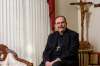
Advertisement Advertise With Us
Advertisement Advertise With Us
The Free Press acknowledges the financial support it receives from members of the city’s faith community, which makes our coverage of religion possible.