No Cheers: Tokyo Olympic Village considering ban on alcohol

Advertisement

Advertise with us

TOKYO (AP) — The Olympic Village has traditionally been a fun place to be, housing thousands of young athletes and staff ready to party and share a few beers and bubbly toasts.

Read this article for free:


or

Already have an account? Log in here »

To continue reading, please subscribe:

Subscribe and receive a limited-edition Free Press branded hat or tote.

Digital Subscription

One year of digital access for only $205*

  • Enjoy unlimited reading on winnipegfreepress.com
  • Read the E-Edition, our digital replica newspaper
  • Access News Break, our award-winning app
  • Play interactive puzzles

*First annual payment billed as $205.00 + GST for one year. This annual subscription will automatically renew at $233.00 + GST every 52 weeks (10% off the regular annual price of $259.35). Offer available to new and qualified returning subscribers only. Cancel any time.

To continue reading, please subscribe:

Add Free Press access to your Brandon Sun subscription for only an additional

$1 for the first 4 weeks*

  • Enjoy unlimited reading on winnipegfreepress.com
  • Read the E-Edition, our digital replica newspaper
  • Access News Break, our award-winning app
  • Play interactive puzzles
Start now

*Your next Brandon Sun subscription payment will increase by $1.00 and you will be charged $17.95 plus GST for four weeks. After four weeks, your payment will increase to $24.95 plus GST every four weeks.

Hey there, time traveller!
This article was published 09/06/2021 (1933 days ago), so information in it may no longer be current.

TOKYO (AP) — The Olympic Village has traditionally been a fun place to be, housing thousands of young athletes and staff ready to party and share a few beers and bubbly toasts.

But not at the Tokyo Olympics, which are to open in just over six weeks amid a pandemic. These are going to be the “no cheers” Olympics with testing and vaccinations taking priority over fun and games.

It’s not clear if alcohol will be allowed in the village, which will house 11,000 Olympic athletes and 4,400 Paralympians. Organizers say they have yet to decide on a policy, which is expected by the end of the month.
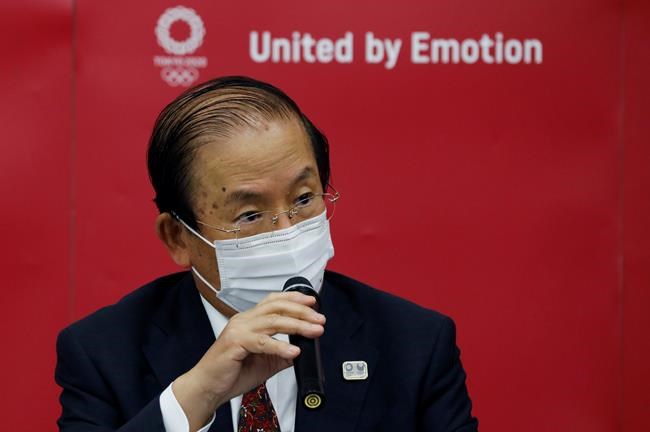
Tokyo organising committee CEO Toshiro Muto speaks at a news conference after IOC Executive Board Meeting in Tokyo, Wednesday, June 9, 2021. (Kim Kyung-Hoon/Pool photo via AP)

Toshiro Muto, the CEO of the Tokyo organizing committee, said Wednesday it might be difficult to ban alcohol from the athletes’ private rooms in the village, but public areas in the village might be a different matter.

“In the case that they were to drink inside their own rooms — this is equivalent to cases where we are drinking in our own home.” Muto said, speaking to Japanese media on Wednesday after an online meeting with the International Olympic Committee executive board.

“Can we prohibit that? That’s not conceivable,” Muto added. “It would be very difficult to do so.”

But he said it might be banned from dining areas and other public areas in the village.

Tokyo and much of the rest of the country is under a state of emergency, with many bars and restaurants closing early and banning alcohol sales. The emergency order ends on June 20 and it’s not clear if it will be extended.

Depending how the question is asked, 50-80% of Japanese people oppose holding the Olympics. If the state of emergency is extended, many Japanese residents might not be happy seeing athletes partying in the village when regular citizens cannot do the same in local pubs.

New cases have been falling in Tokyo over the last several weeks. Japan overall has attributed about 14,000 deaths to COVID-19, good by global standards but not as good as some Asian neighbors.

“We have not yet clearly decided on the (alcohol) policy,” Muto said. “We hope to do so by the end of this month.”

Looking for more fun? There’s the matter of GPS monitoring.

Muto said athletes — as well as media, broadcasters and others — will have to sign papers allowing organizers to use GPS to monitor their movements at the Olympics through smartphones.

Athletes will be isolated in a bubble-atmosphere in the village and are expected to stay there, or be in a similar bubble at venues or training sites.

Everyone else entering Japan for the Olympics will be tested twice before leaving home, and upon arrival in Japan. They will have to agree to limit their movements for the first 14 days and submit an activity plan.

“We are not going to monitor at all times the behavior,” Muto said. “It’s not for that purpose. The thing is, though, if there should be issues pertaining to their activity then, since the GPS function will be on, we’ll be able to verify their activities.”

___

More AP Olympics: https://apnews.com/hub/olympic-games and https://twitter.com/AP_Sports

Report Error Submit a Tip

More Stories

Letters, Sept. 23

7 minute read Yesterday at 2:01 AM CDT

Banning gambling ads

Re: Sweeney’s sexist U.S. gambling-site ad isn’t the real problem, Sept. 16

I applaud Dan Lett’s opinion piece regarding online gambling.

Reporting of increasing social issues due to the proliferation of gambling addictions has been thin. Online gambling (not just sports gambling) is super-charging this serious and growing problem.

Hydro board members visit First Nation communities to discuss damage from past developments

Free Press staff 3 minute read Preview

Hydro board members visit First Nation communities to discuss damage from past developments

Free Press staff 3 minute read Tuesday, Sep. 22, 2026

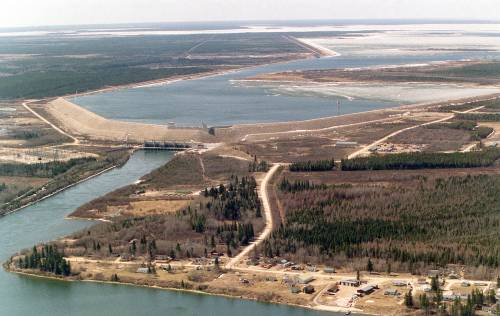
Members of the Manitoba Hydro board visited Misipawistik Cree Nation and Chemawawin Cree Nation last week to learn more about the impacts of the Grand Rapids Generating Station and strengthen relationships with communities affected by hydroelectric development.

The two-day visit included spending time at culturally significant sites and discussions with leadership and community members, and a tour of generating stations and Grand Rapids fish hatchery, a Manitoba Hydro news release said.

The visit is part of Manitoba Hydro’s ongoing engagement with Indigenous communities affected by hydroelectric development, the release said. In 2024, the Manitoba Hydro board visited Gillam and met with First Nations that partner in the Keeyask Generating Station.

Last week’s visit to Misipawistik and Chemawawin came just weeks after the Federal Court on Sept. 3 ordered Ottawa pay Opaskwayak Cree Nation $27 million over damages suffered due to the construction of the Grand Rapids hydro dam in the 1960s.

Read
Tuesday, Sep. 22, 2026

Changing Transit Plus drivers’ status a ‘ridiculous anti-worker provision,’ councillor says

Joyanne Pursaga 5 minute read Preview

Changing Transit Plus drivers’ status a ‘ridiculous anti-worker provision,’ councillor says

Joyanne Pursaga 5 minute read Tuesday, Sep. 22, 2026

Some fear a change of status for Winnipeg Transit Plus drivers could allow them to be paid less and receive fewer benefits.

However, council’s public works chairwoman said pay protections are now embedded in contracts and the change is needed to attract enough workers.

Three years ago, city council passed a motion that required Winnipeg Transit Plus drivers to be employees of companies the city hires to provide accessible transit service.

Coun. Brian Mayes said that clause prevents “sub-minimum wages” from being permitted for subcontracted drivers and ensures drivers can access multiple benefits.

Read
Tuesday, Sep. 22, 2026

Gillingham promises to make north Main revitalization a second-term priority

Joyanne Pursaga 3 minute read Preview

Gillingham promises to make north Main revitalization a second-term priority

Joyanne Pursaga 3 minute read Tuesday, Sep. 22, 2026

Scott Gillingham says he will work to “reset and renew” north Main Street, if he wins a second term as mayor.

The incumbent candidate promised Tuesday to devise a long-term plan to rejuvenate that section of the thoroughfare, noting it has recently suffered from decay.

“It has a rich history, a deep and proud history. But the last couple of years, to say it’s been underperforming would be an understatement…. So many stretches of Main Street here, I see derelict buildings, boarded-up businesses, piles of rubble after fires that sit waiting to be cleaned up,” Gillingham said.

“We can disrupt what is going on and turn the tide on north Main Street.”

Read
Tuesday, Sep. 22, 2026

Failure to exploit NDP weaknesses leaves PCs in tailspin

Tom Brodbeck 5 minute read Preview

Failure to exploit NDP weaknesses leaves PCs in tailspin

Tom Brodbeck 5 minute read 3:59 PM CDT

Manitoba’s Progressive Conservative party is getting slaughtered.

There’s no other way to put it.

The latest Abacus Data poll is brutal for the Tories. The NDP isn’t merely ahead — it is dominating across virtually every major demographic, geographic and age group.

Instead of closing the gap after nearly three years in opposition, the PCs are watching it get wider.

Read
3:59 PM CDT

Some rural U.S. areas that lost service got back on track with subsidized transport; what direction will Canada take?

Dylan Robertson 10 minute read Preview

Some rural U.S. areas that lost service got back on track with subsidized transport; what direction will Canada take?

Dylan Robertson 10 minute read Friday, Jul. 27, 2018

OTTAWA – Nevada’s Mineral County went years without bus service. Its rural towns, spread out like most of northern Manitoba, lost Greyhound service in the 1990s, ending a lifeline to the outside world.

“It impacted a lot of people,” recalls Chris Hegg, vice-chairman for the county's board of commissioners. “We're kind of on the frontier, as they call it.”

He recalls ads in the local newspaper, where adults working in cities offered to pay local residents with a car to bring their senior parents to medical and veteran appointments in Reno or Las Vegas. “It became a barter service,” he said.

Those ads finally stopped when a subsidized bus service started serving the county seat of Hawthorne in 2014.

Read
Friday, Jul. 27, 2018